The short version
- Court coverage depends more on recovery and positioning than on raw speed.
- You cannot see yourself standing still after a shot. Video can.
- Being ready when your opponent hits is the habit that buys the most time.
- Where you stand between shots decides how far you have to run for the next one.
- Movement habits change slowly. Give each one three or four weeks.
You reach the first wide ball. You even get it back with interest. Then the next one goes into the open court and you are nowhere near it. If that sounds familiar, you have probably wondered how to move better on a tennis court and decided the answer is that you are too slow.
For most club players that is the wrong diagnosis. The second ball is rarely lost in the sprint. It is lost in the second you spent admiring the first shot, and in the two steps you did not take back towards the middle.
Why you can’t feel poor court coverage
Movement errors are invisible from the inside. When you hit a good ball, your attention follows it. You have no sense of standing still, because you are busy watching. Only afterwards, on video, do you see a player rooted to the spot near the tramlines while the opponent lines up the reply.
Positioning is just as hard to feel. Few players could say how far behind the baseline they stood in the last rally, or whether they drifted to one side during the set. And the exhaustion of chasing balls feels like hard work, when it is often the result of covering extra distance from a poor starting place.
How to film your movement around the court
Set one phone on a tripod two to three metres behind the baseline, in landscape, around net height or higher. Make sure the whole court is in the frame, with some space behind the baseline at your end so you stay in shot when you are pushed back. Do not move the phone once the session starts, and keep it out of the sun. In ContactFrame you then line up the four corners of the court.
A Match session is the best test, since movement habits show most when the score matters. A Practice session of baseline points works too. A cooperative rally down the middle tells you little, because nobody is making you run.
The movement numbers that show your court coverage
ContactFrame reports four things about how you moved.
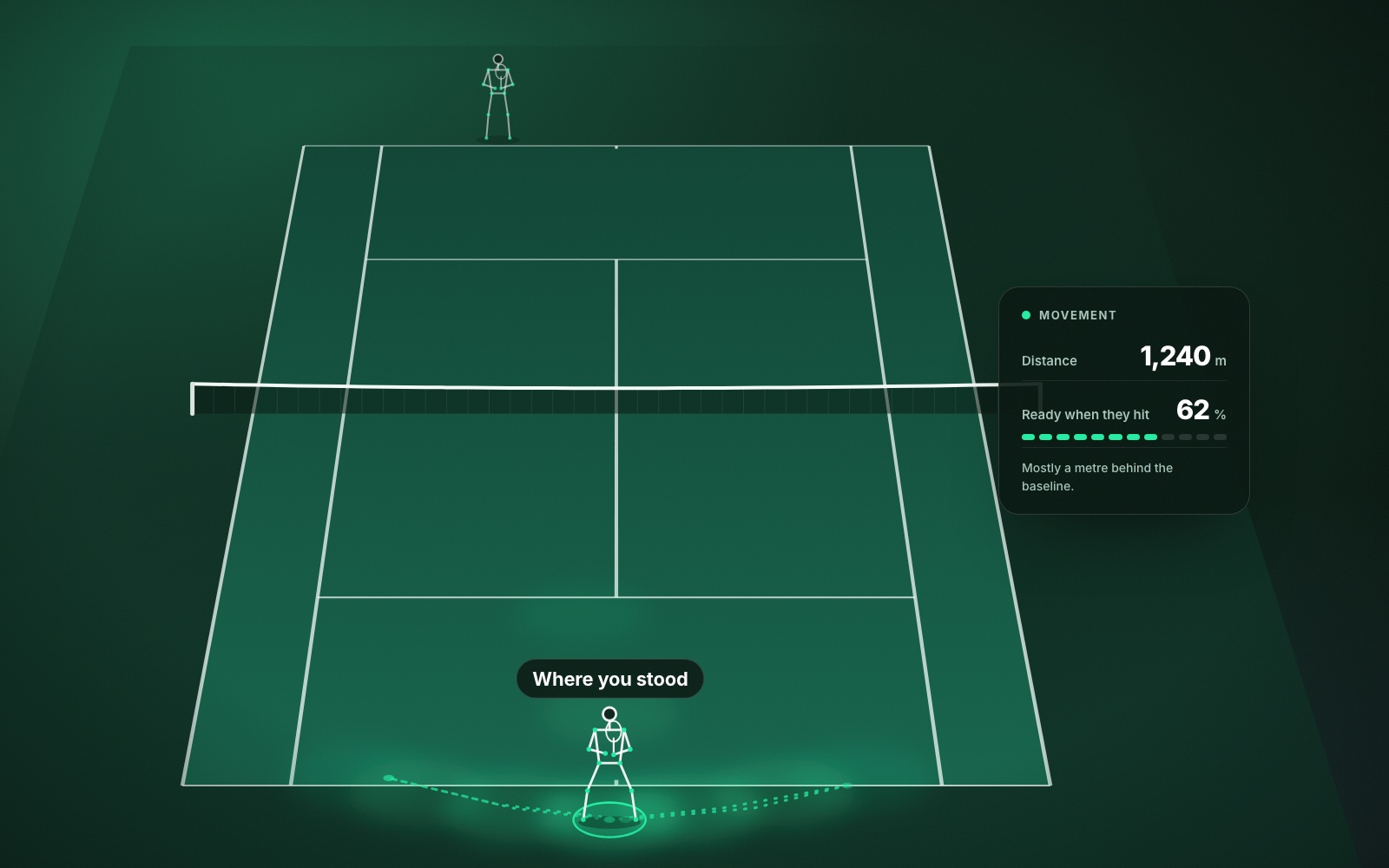
- How far you moved. Useful as context. A high distance is not a good or bad sign on its own. Set against the same opponent over several sessions, it shows whether you are running more or less for the same tennis.
- Where you stood. Your position over the session. Look for long spells in the wrong place: stuck far behind the baseline, parked on one side, or hovering between the service line and the baseline.
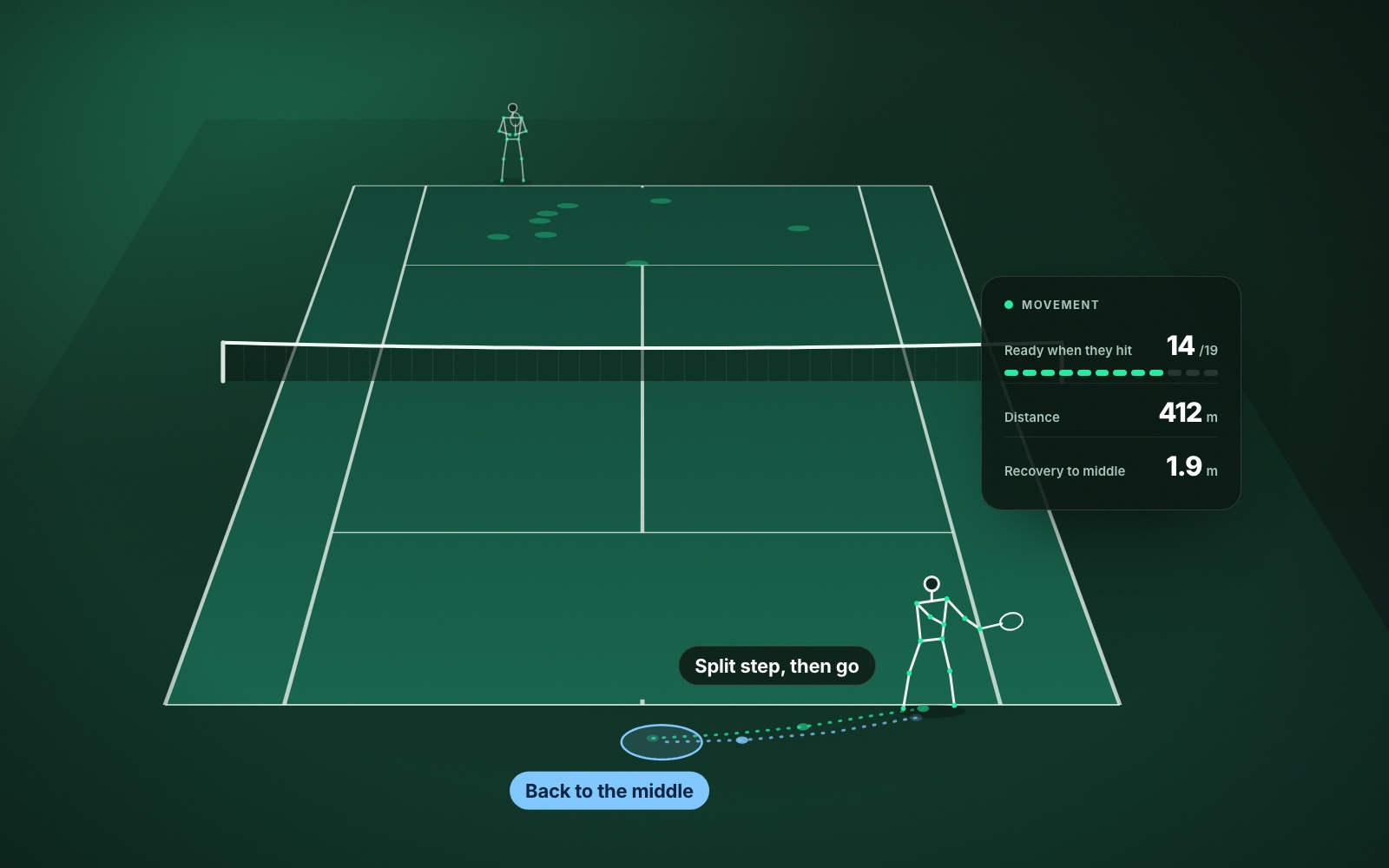
- How well you recovered to the middle. The key figure for the second-ball problem.
- How often you were ready when your opponent hit. This is about timing. Were you balanced and set, or still moving and still watching?
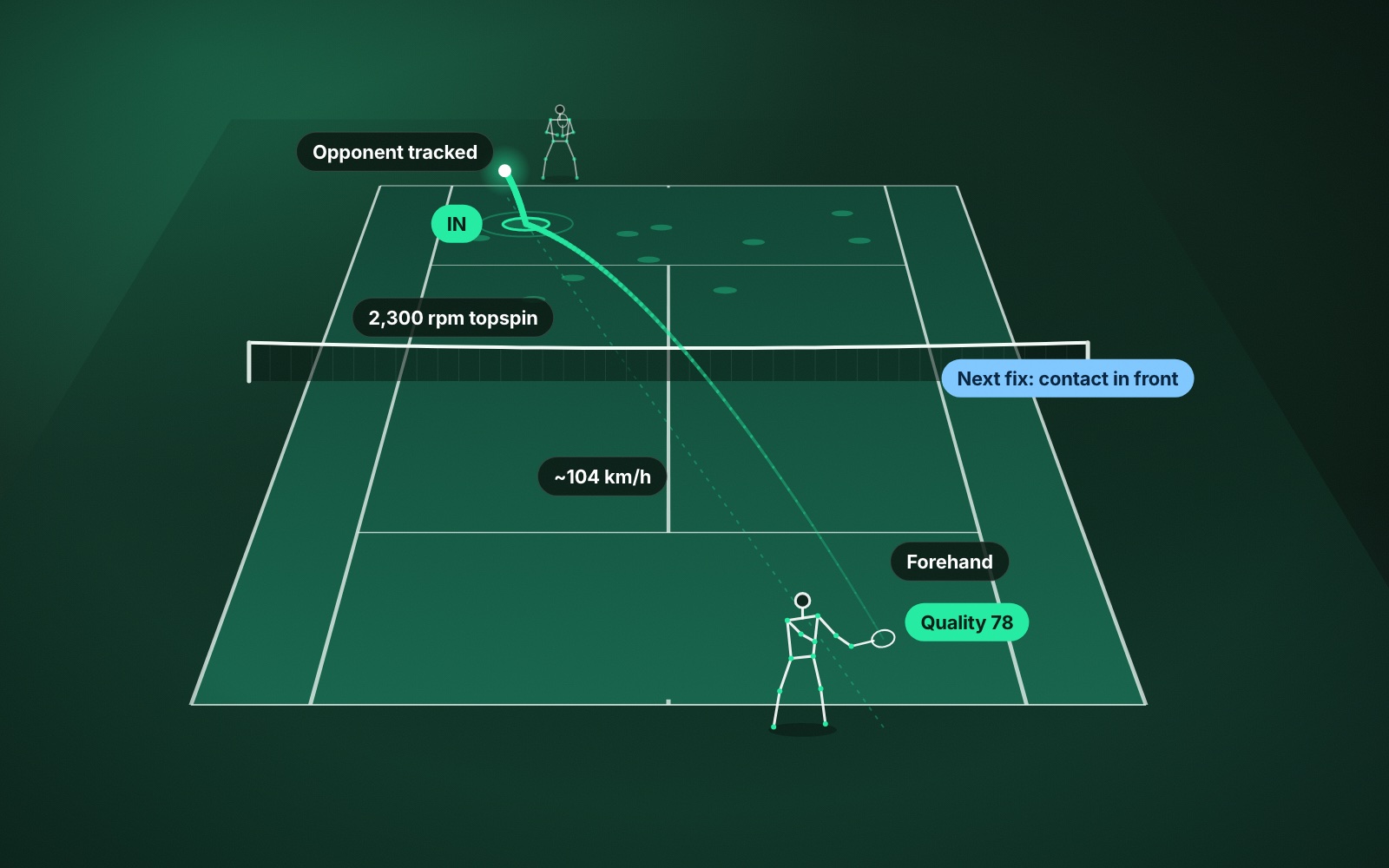
Pair these with the shot figures. If the balls you miss come mostly after wide shots, or your longest rallies end with you out of position, the two sets of numbers are describing the same habit. What AI video analysis measures has the full list.
Four ways to improve court coverage in tennis
1. Hit and go
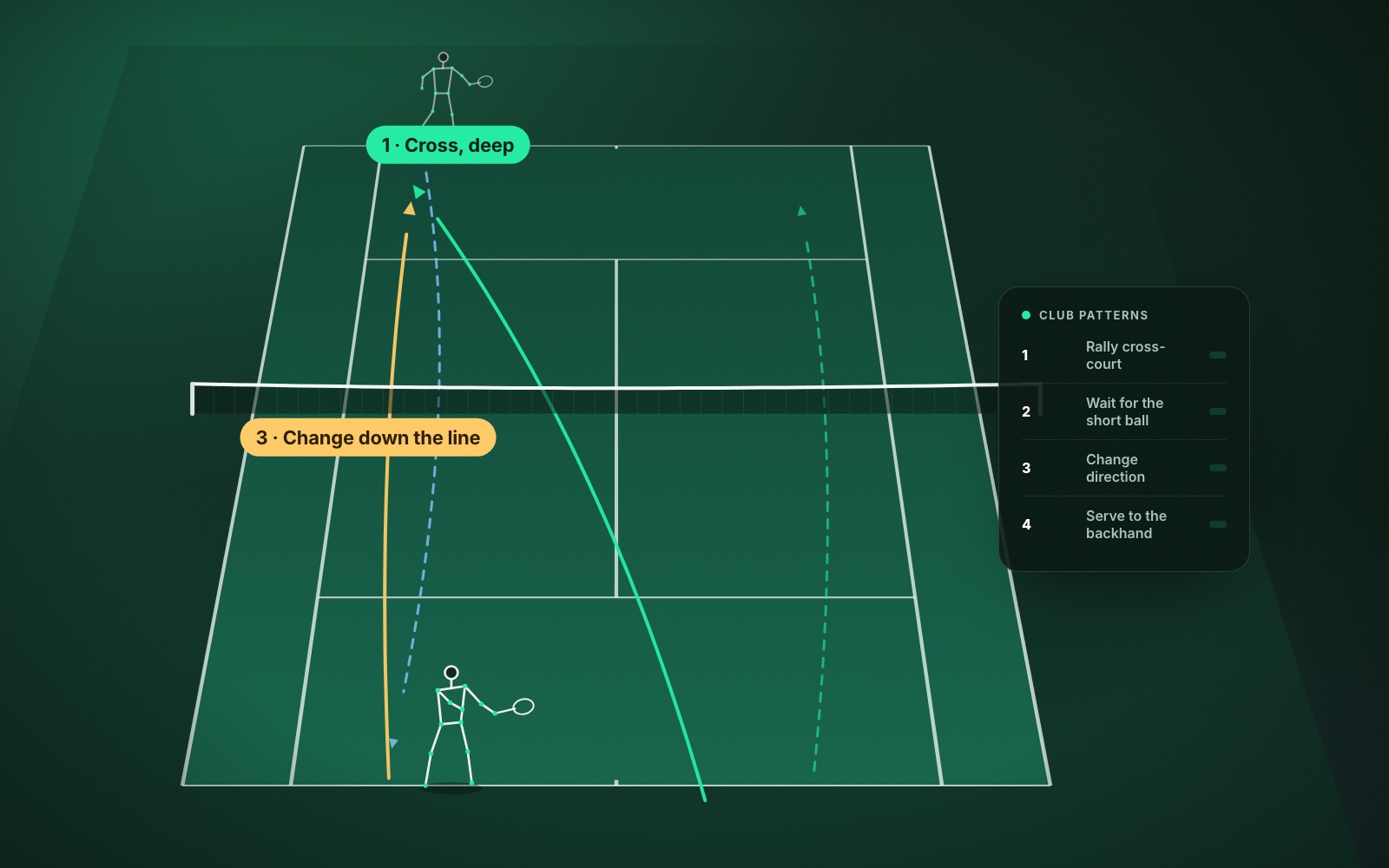
Make recovery part of the stroke. As soon as the ball leaves your strings, push off the outside foot and move back towards the middle with side steps, facing the net. In practice, rally cross-court with a partner and touch the centre mark with your racket between every shot. It is harder than it sounds.
The number to watch: recovery to the middle. It should rise in practice first, then in matches.
2. Split as they hit
A split step is a small hop that lands as your opponent makes contact, so that you are on your toes and can push off in either direction. Most club players either skip it or do it late. Have your partner feed or rally while you say “split” out loud at their contact. Timing the word fixes the timing of the feet.
The number to watch: how often you were ready when your opponent hit. Then check playback in slow motion for a handful of points to see what “ready” looked like.
3. Fix your waiting position
Look at where you stood. If you spent the set three metres behind the baseline, you gave your opponent time and angles. If you waited in the area between the service line and the baseline, balls landed at your feet. For neutral rallies, wait a step or so behind the baseline and adjust from there.
The number to watch: where you stood, compared between sessions, with distance moved as a check. A better waiting position often means you cover less ground for the same rallies.
4. Play the wide-ball point
Have a partner start each point by feeding a wide ball, then play it out. Your first shot should be high, deep and cross-court. That ball takes longer to travel, which gives you time to get back. A flat reply down the line arrives quickly and leaves the court open.
The number to watch: recovery again, with points won in the drill. You should start winning more of the points that begin with you on the run.
How to re-measure your movement
Film a comparable session every week or two, ideally against the same opponent, and compare the movement figures in Trends. Change one habit at a time. If you work on recovery and the split step in the same week, you will not know which one helped.
Movement habits are stubborn because they run without thought. Expect three or four weeks before a new one holds in practice, and longer before it holds in the third set of a match. Readiness tends to improve first. Positioning takes the longest. For the stepping patterns themselves, see how to improve tennis footwork.
What video can’t tell you about your movement
The figures describe where you were and when. They do not measure anticipation, the reading of an opponent’s body and racket that lets good players start early. That comes from playing a lot of tennis. They also say nothing about your fitness, strength or any old injury that limits you. Speak to a physio or a qualified trainer about those, not an app.
The ideal recovery spot also shifts with the shot you have just played, and judging that is tactical. A coach can walk you through it on court in ten minutes, and singles strategy for club players covers the thinking behind it. When you want to test the new habits where it counts, a league match on The Ladder is a good place to do it.
Common questions
How can I move better on a tennis court?
Recover towards the middle straight after every shot, split step as your opponent hits, and stand in a sensible position between shots. These three habits cover more court than extra sprint speed does. Filming yourself shows which one you are missing.
What is recovery in tennis?
Recovery is the movement back to a good position after you have hit, so that you can reach the next ball. In a baseline rally that position is near the middle of the court, shifted a little depending on where you sent the ball. It starts the moment the ball leaves your strings.
Where should I stand during a tennis rally?
For most club rallies, a step or so behind the baseline and close to the centre is a sound default. Move back against deep, heavy hitters and step in when you have sent a strong ball. The area between the service line and the baseline is a poor place to wait.
Can an app track my movement in tennis?
Yes. ContactFrame’s movement figures show how far you moved, where you stood, how well you recovered to the middle and how often you were ready when your opponent hit. They come from the same single-phone recording as your shot data.
Do I need to be fit to cover the court well?
Fitness helps, especially late in a match, but good habits matter more at club level. A player who recovers early and split steps on time reaches more balls than a quicker player who watches their own shots. Build the habits first and the fitness alongside.
See how you really move.
Distance, position, recovery and readiness from one phone on a tripod.
Explore The Lab