The short version
- Most double faults come from slowing the arm down. A good second serve is swung just as fast, with more spin.
- In a Match session, ContactFrame separates first and second serves, so you can see what the second one really does.
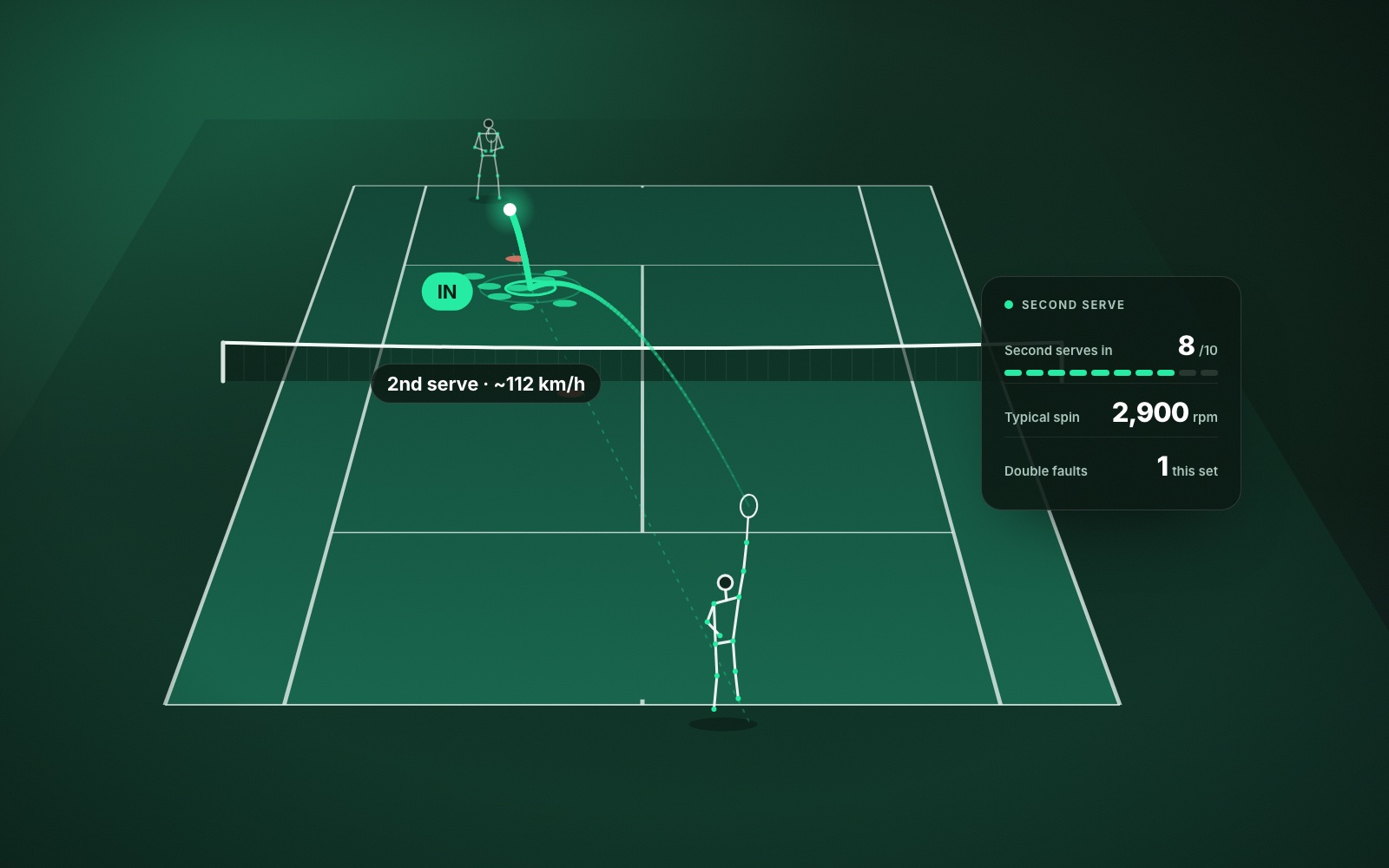
- Watch three things: how many second serves went in, their spin, and how deep they landed.
- Practise second serves under mild pressure. A second serve that only works in a relaxed basket is not finished.
- Give it six to eight weeks. Spin serves get worse before they get better.
You miss the first serve, bounce the ball twice, and already your arm has decided to be careful. The second serve floats out of your hand at half speed and either drops into the net or sits up to be hit past you. If you are searching for how to improve your second serve in tennis, that careful arm is almost always the place to start.
The second serve is the shot your whole service game leans on. When you trust it, you can swing freely at the first. When you do not, you end up with two nervous serves.
Why you keep double faulting
The instinct under pressure is to slow down and guide the ball. It feels safe. It is the opposite. A slow swing puts little spin on the ball, so nothing pulls it down into the box, and tiny errors in timing become big errors in where it lands.
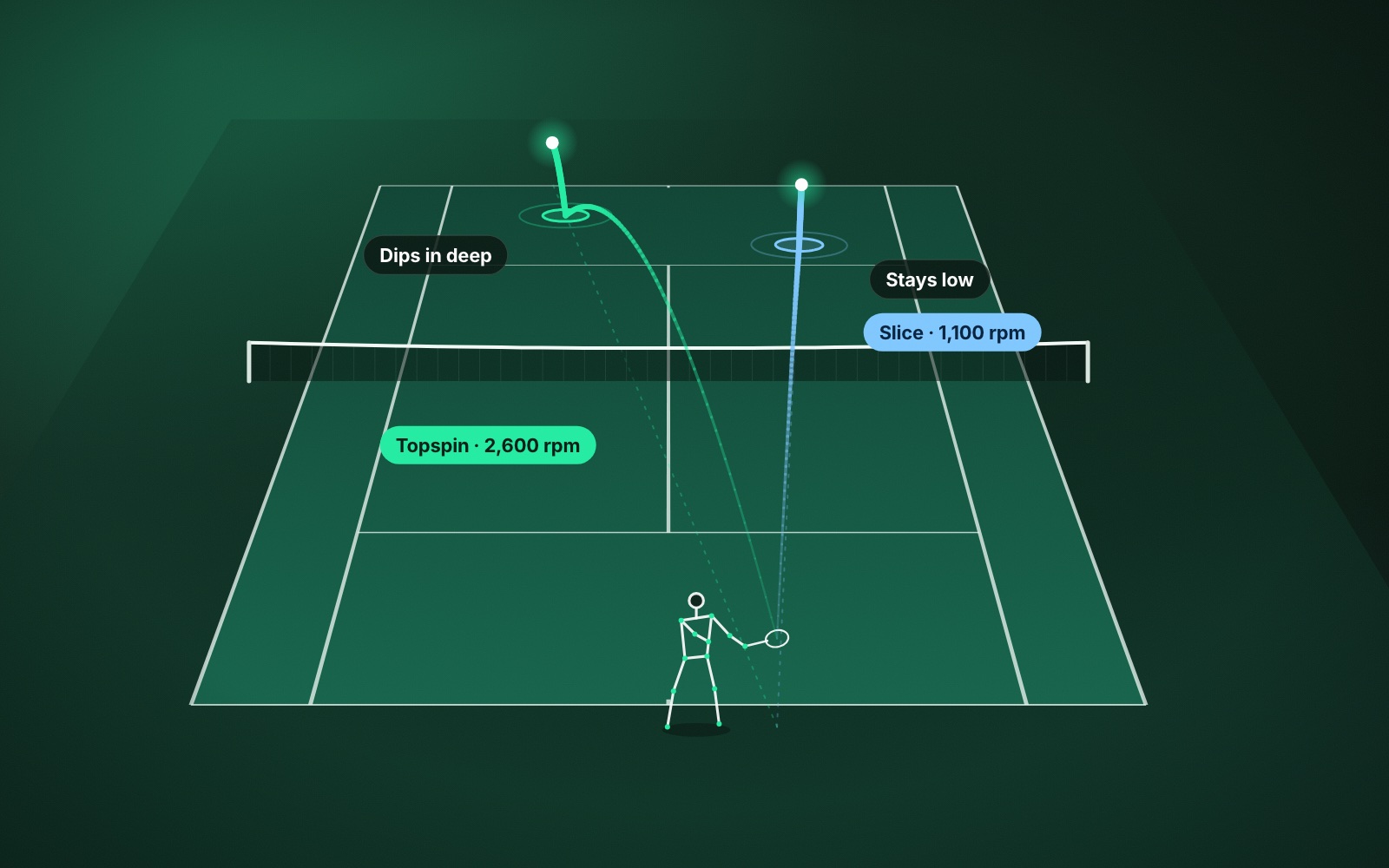
Good second serves work the other way round. The arm moves as fast as it does on the first serve, but the racket brushes up and across the ball. Spin makes the ball clear the net with room to spare and then dip. That dip is your margin.
Feel is unreliable here because a spin serve feels wrong at first. It feels slow and loopy, as if you have mishit it. Players abandon it after one bad practice and go back to the push. A measurement gets you past that stage, because you can see the spin going up even while the serve still feels strange.
How to film your second serve
Record two kinds of session. First, a Match session against a partner, because ContactFrame separates first and second serves only when there are points being played, and a second serve hit with a score on the line is the only kind that counts. Second, a practice basket where every ball is a second serve.
The setup is the same for both: phone in landscape on a tripod, two to three metres behind the baseline, around net height or higher, whole court in view, not facing the sun, and not moved once you have lined up the court corners. Serve from the camera end when you can. How to record a tennis match on your phone has the full walkthrough.
The second serve numbers to look at
- Second serves in. From a match session, compare how many second serves you hit with how many landed. Every one that missed was a double fault, a point handed over without your opponent touching the ball.
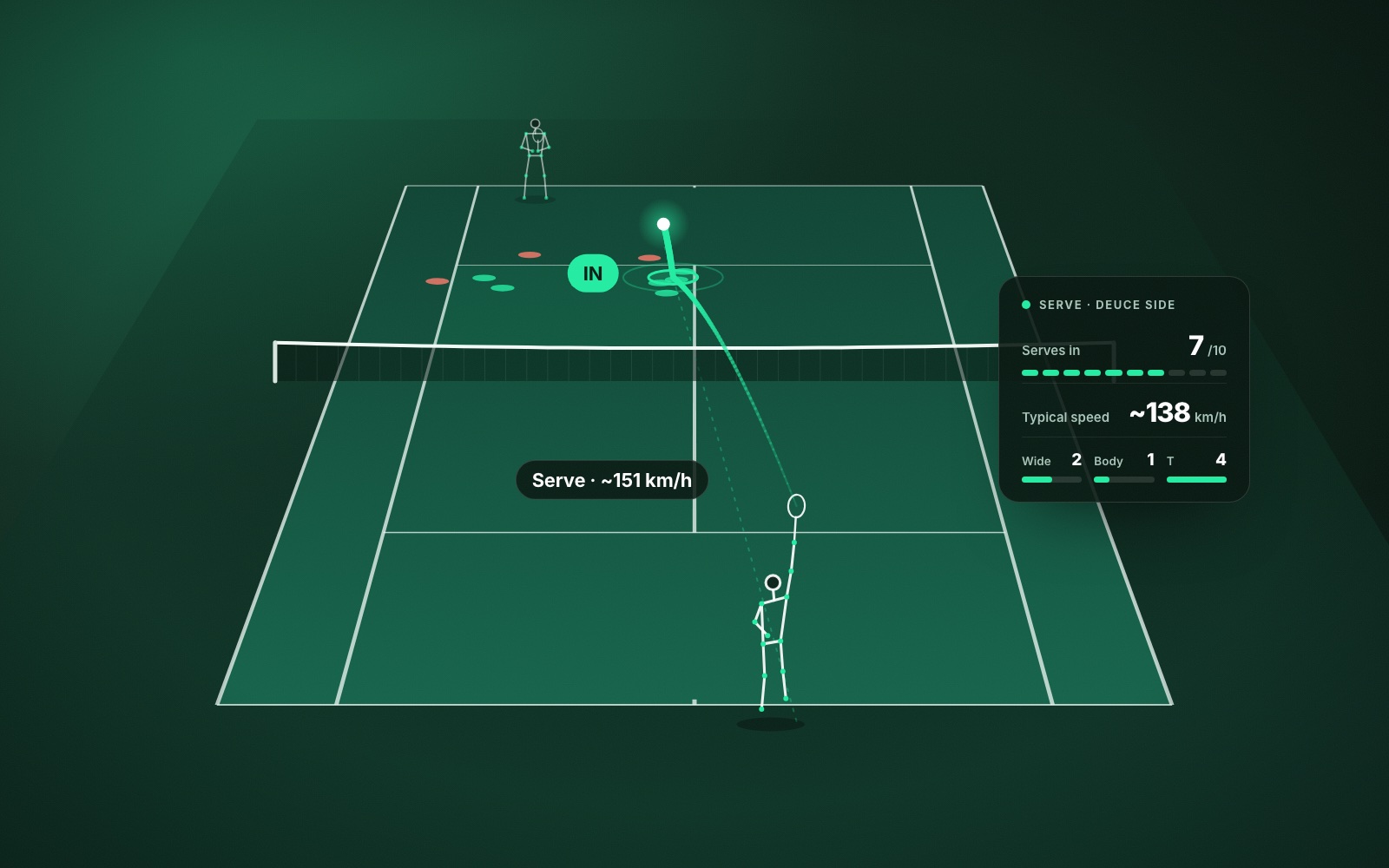
- Spin. Compare the rpm on your second serves with your first. If the two are similar, your second serve is a slower first serve, with no extra safety built in. ContactFrame shows spin only when the reading is solid, so expect some serves without a figure.
- Speed. A second serve should be slower than the first, but look at how much. A very large drop usually means the arm is decelerating.
- Where it bounced. Second serves that land short in the box invite an attacking return. Look for bounces in the back half of the service box, and check whether they cluster on one side.
If rpm is new to you, tennis spin explained covers what the figures mean in plain terms.
Four drills for a more reliable second serve
1. Spin from the service line
Stand on the service line and serve into the box with as much brush as you can, swinging up at the ball. It should arc over the net and drop. Hit ten, step back a metre, hit ten more, and work your way to the baseline over a few sessions.
The number to watch: spin. You are looking for your second serve rpm to pull clearly away from your first. Speed is irrelevant in this drill.
2. Same arm, more shape
From the baseline, alternate one first serve and one second serve. The rule is that the swing must feel equally fast on both. Only the contact changes.
The numbers to watch: speed and spin together. Say your first serves average 145 km/h and your second serves 85 km/h with barely more spin. That is a push. After a few weeks of this drill you would hope to see the second serve quicker and carrying noticeably more spin, with more of them landing.
3. One serve only
Play a practice set where each of you gets a single serve per point. Miss it and you lose the point. This is the most useful second serve practice there is, because every serve carries the same consequence as a real second serve.
The number to watch: serves in across the set. Film it as a Match session and compare it with your relaxed basket. The gap between the two figures is the size of your pressure problem.
4. Deep or it does not count
Lay a line of balls or a towel across the service box, halfway back. Hit twenty second serves. Only serves that land beyond the marker score.
The number to watch: bounce positions on the placement map. A second serve that is in but short is half a job. You want the cluster moving towards the service line without the in-count dropping.
A second serve that only works in a relaxed basket is not finished.
How to re-measure and what to expect
Record a match session every two or three weeks and look at the same four numbers. Trends in ContactFrame line sessions up so you can see whether second serves in and spin are both rising.
Expect a dip first. For the first week or two, a new spin serve often goes in less than the push it replaces. That is normal, and it is why you practise it in baskets and one-serve sets before trusting it in a league match. Six to eight weeks of two sessions a week is a fair timescale for it to feel like yours.
Once it holds, the knock-on effect shows up in your first serve. Players who trust their second serve hit the first with more freedom, and the work in improving your first serve pays off faster.
What video analysis cannot tell you about your second serve
ContactFrame measures what the ball did. It does not analyse your ball toss, your grip or the racket face, and all three matter a great deal on a spin serve. Where you place the toss changes the kind of spin you can produce, and the wrong grip makes real spin close to impossible.
If your spin number will not move after three or four weeks of honest practice, that is the signal to see a coach. One lesson on grip and toss, followed by measured practice on your own, is a good use of both. The same applies if serving hurts your shoulder, elbow or back: stop and get advice.
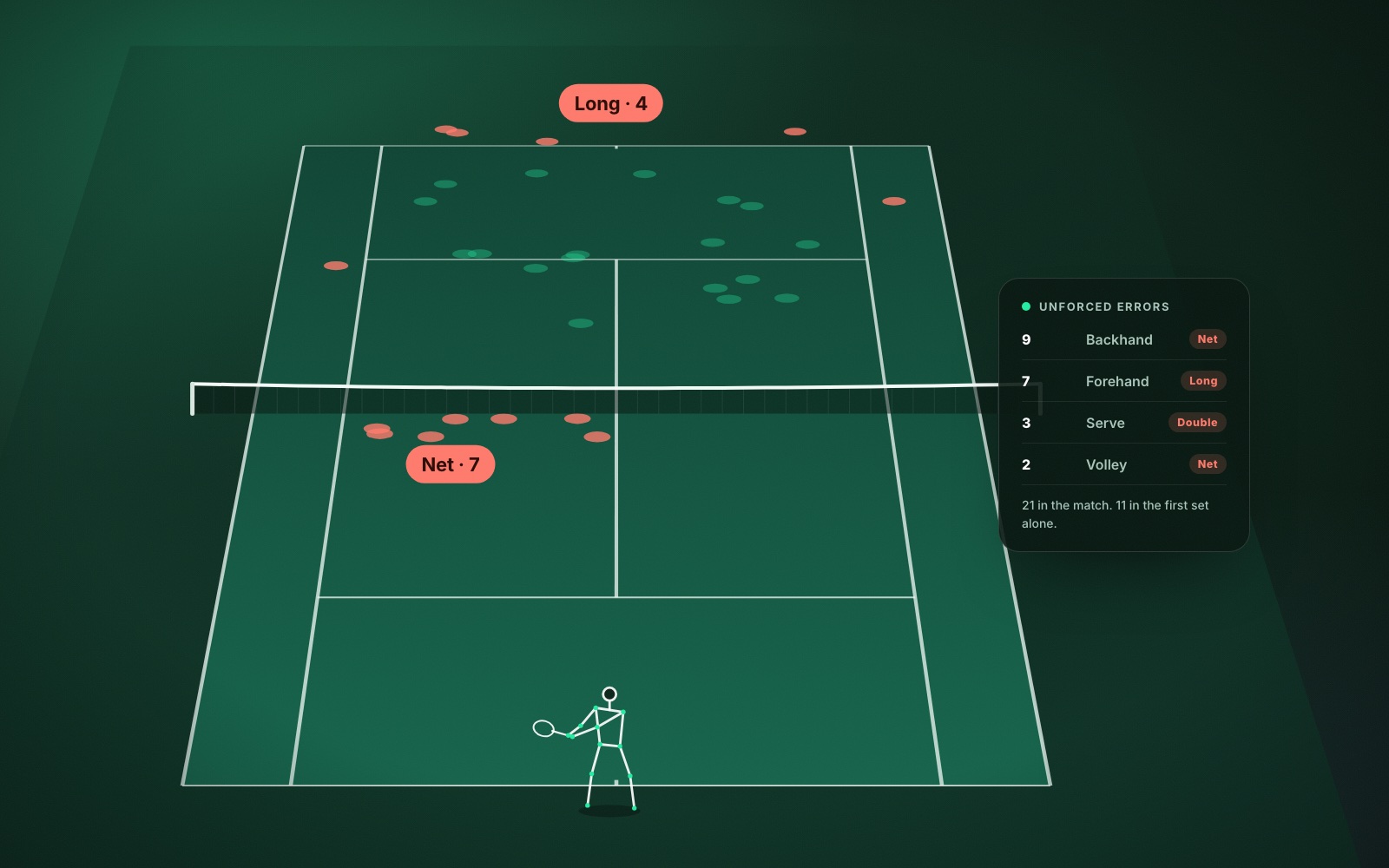
Fewer double faults also means fewer free points given away overall, which is the theme of how to cut unforced errors. To try this on your own serve, see how The Lab works and join the list.
Common questions
How do I stop double faulting in tennis?
Stop easing the ball in. Keep your swing speed up and put more spin on the ball so it clears the net with room and drops into the box. Then practise second serves on their own, with something at stake, until the swing holds under pressure.
Should my second serve be slower than my first?
It will be slower, because more of your swing goes into spin than pace. The racket should not move slower. If your second serve is slow and has little spin, it is a pushed first serve, and that is the version that breaks down in tight games.
What type of second serve is best for club players?
A slice or topspin serve aimed at a big target, usually the body or the middle of the box. Both curve the ball down into the court and give you margin. Which one suits you depends on your motion, and a coach can help you choose.
How many double faults is too many?
There is no fixed number, but if you are giving away more than a point or two per set on double faults, the second serve is costing you games. Compare your own match sessions over time instead of chasing somebody else’s figure.
Can an app measure spin on my second serve?
ContactFrame measures spin in rpm from a single phone video and shows it when the reading is solid. That lets you compare the spin on your first and second serves and see whether a change in practice has carried into a match.
Build a second serve you can trust.
Record a match and see your first and second serves side by side: how many went in, how fast, how much spin.
See The Lab