
 Featured · The lab
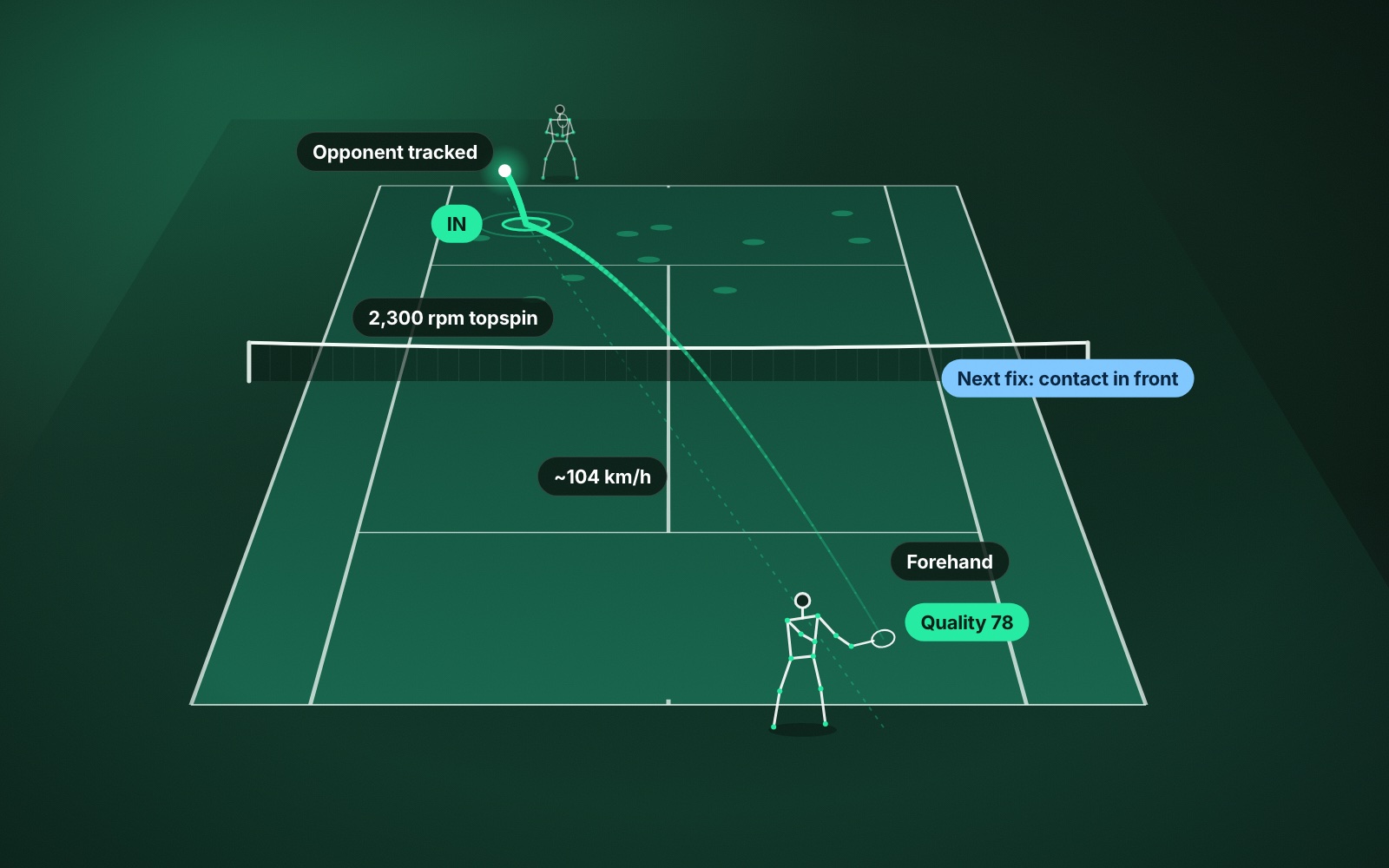
What AI tennis video analysis actually measures
In, out, speed, spin, quality, mechanics. A plain-English guide to what the numbers mean, and what they don’t.
Read the pieceThe ContactFrame journal
Practical guides to improving your tennis with AI video analysis, and to finding leagues, tournaments and players at your level.
Featured · The lab
In, out, speed, spin, quality, mechanics. A plain-English guide to what the numbers mean, and what they don’t.
Read the piece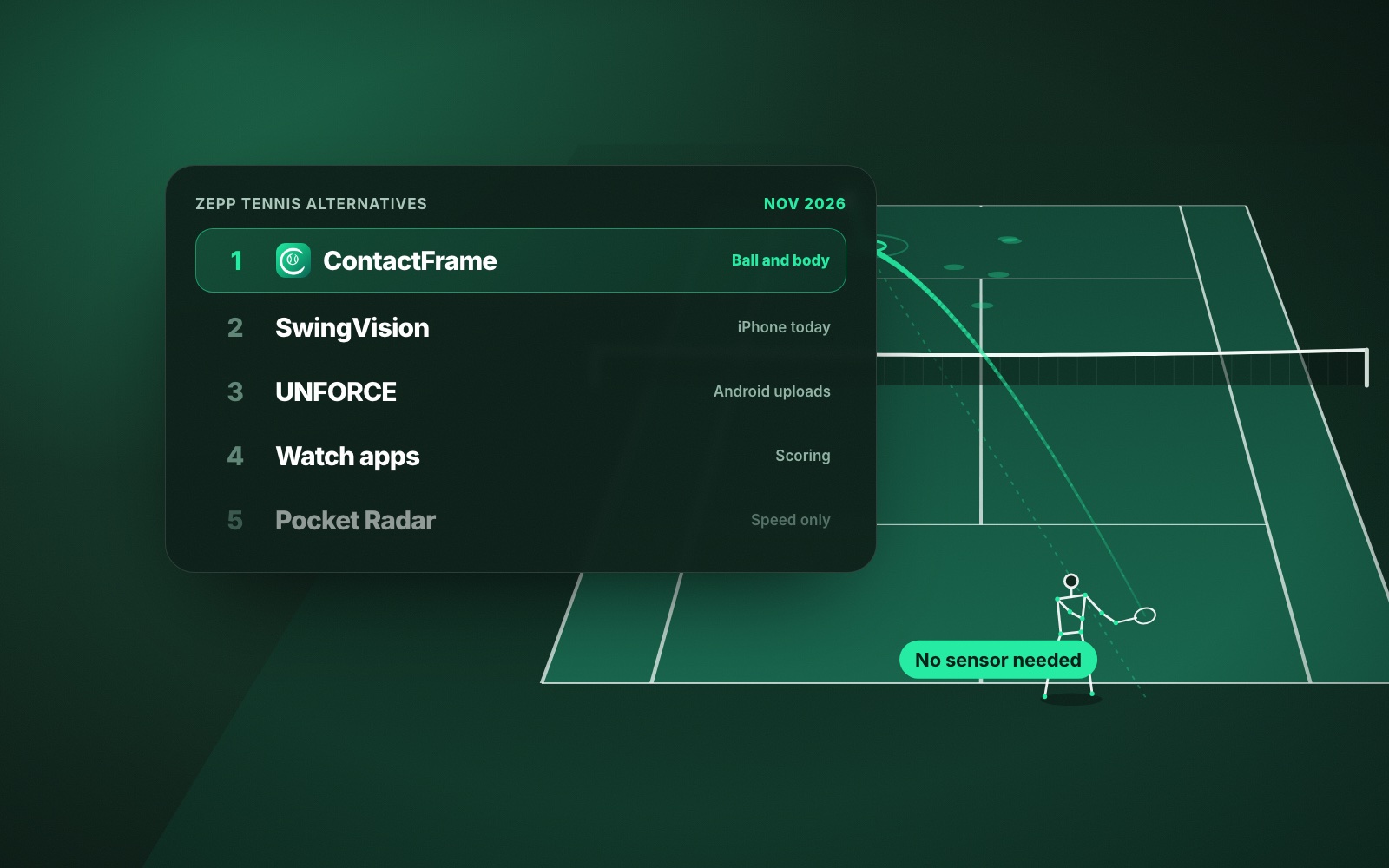 Compare
What happened to the Zepp tennis sensor, and the phone, watch and radar options that do the job now.
Read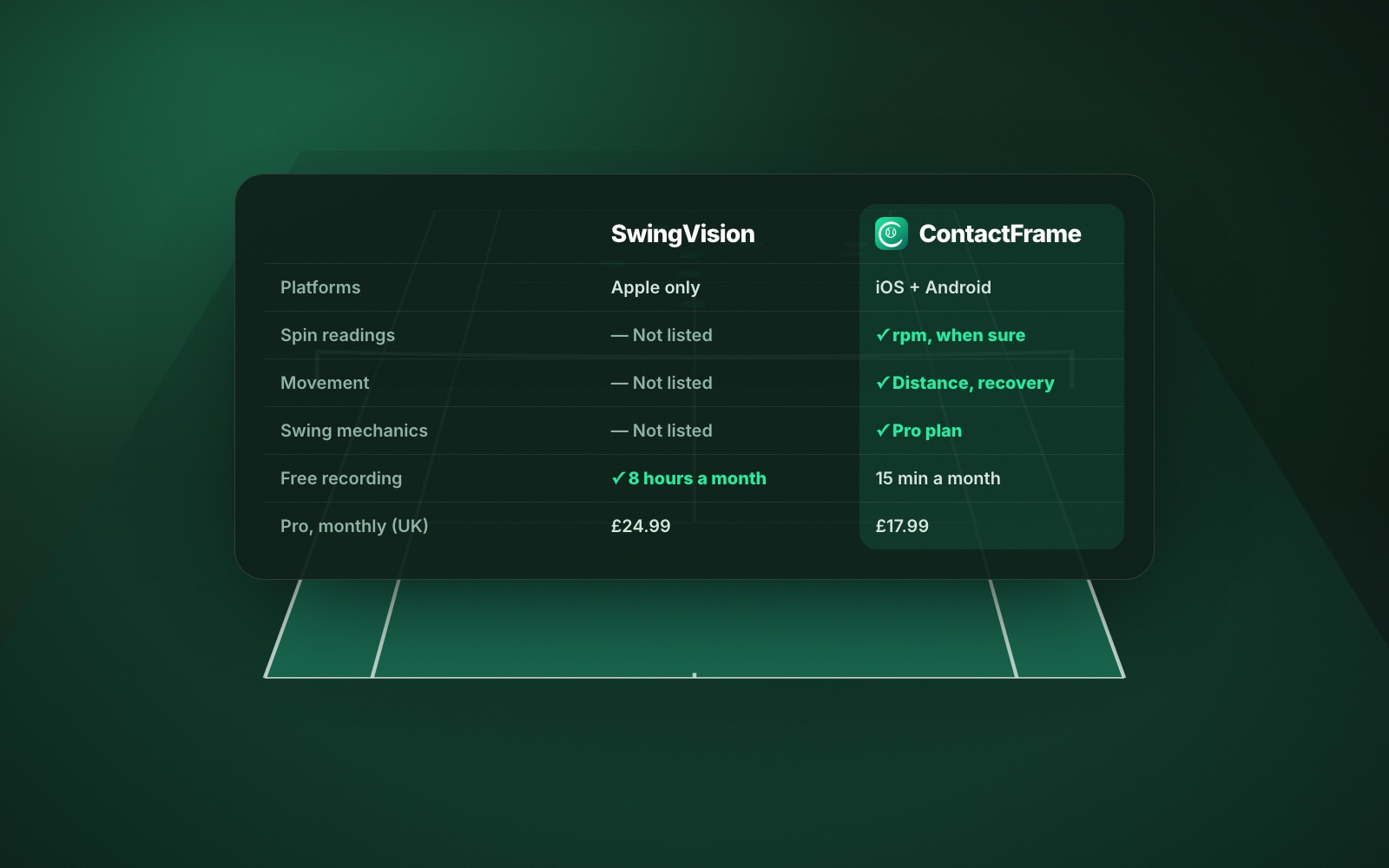 Compare
A fair head-to-head of two one-camera tennis apps: insight, platforms, UK prices and extras.
Read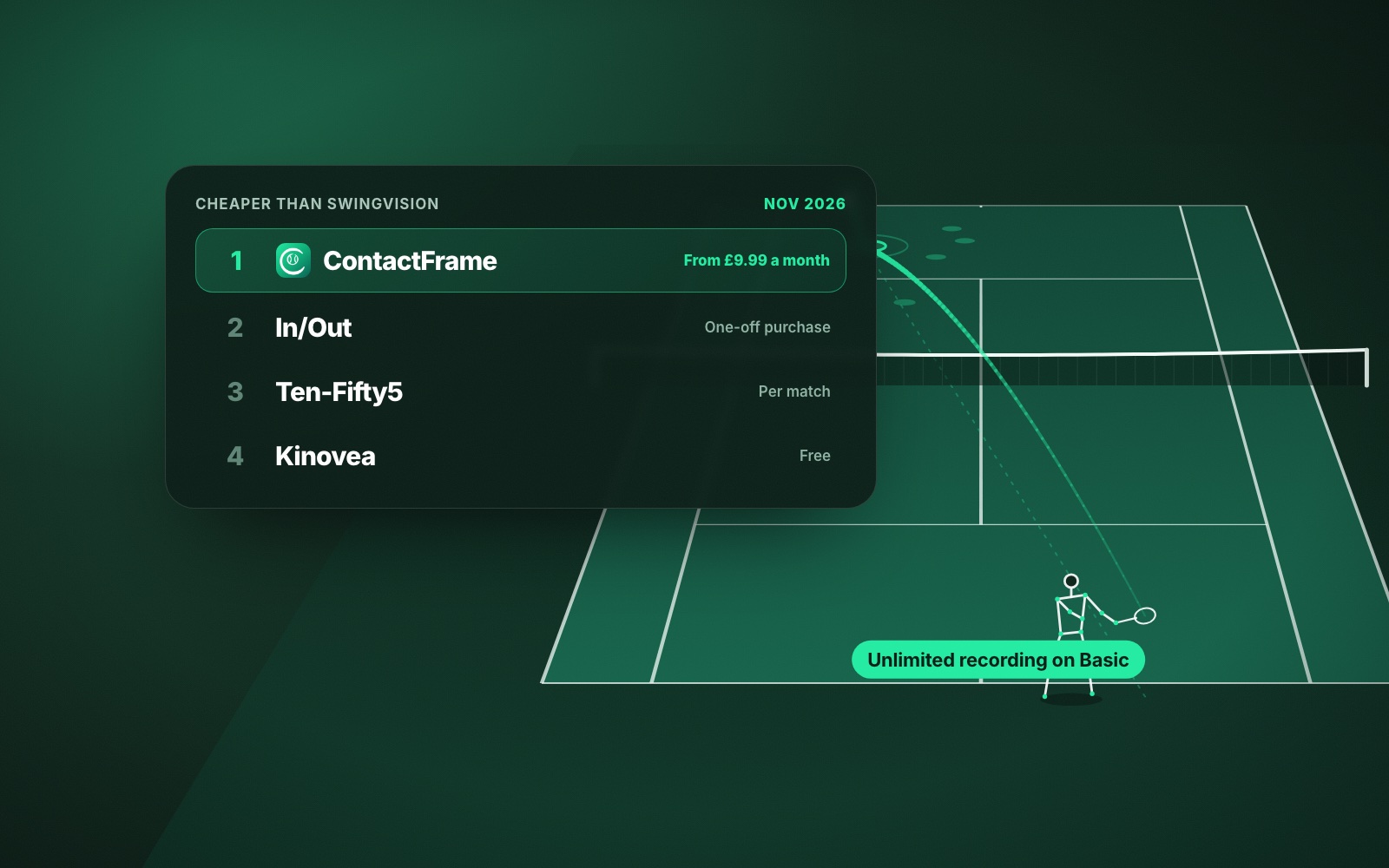 Compare
What SwingVision costs in pounds on each plan, and the cheaper or pay-once alternatives.
Read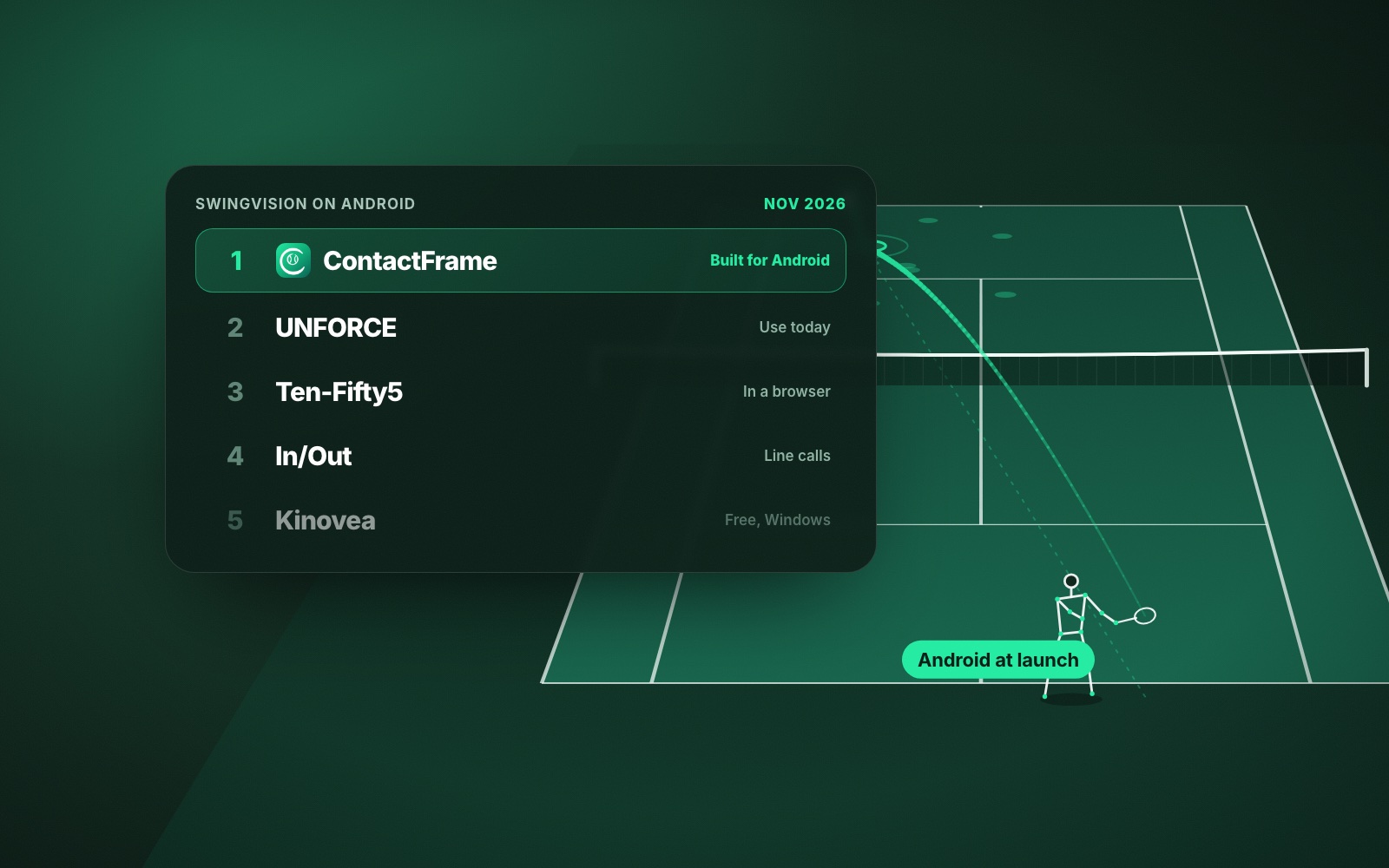 Compare
No SwingVision app for Android yet, so here are six tennis video options that work for Android owners.
Read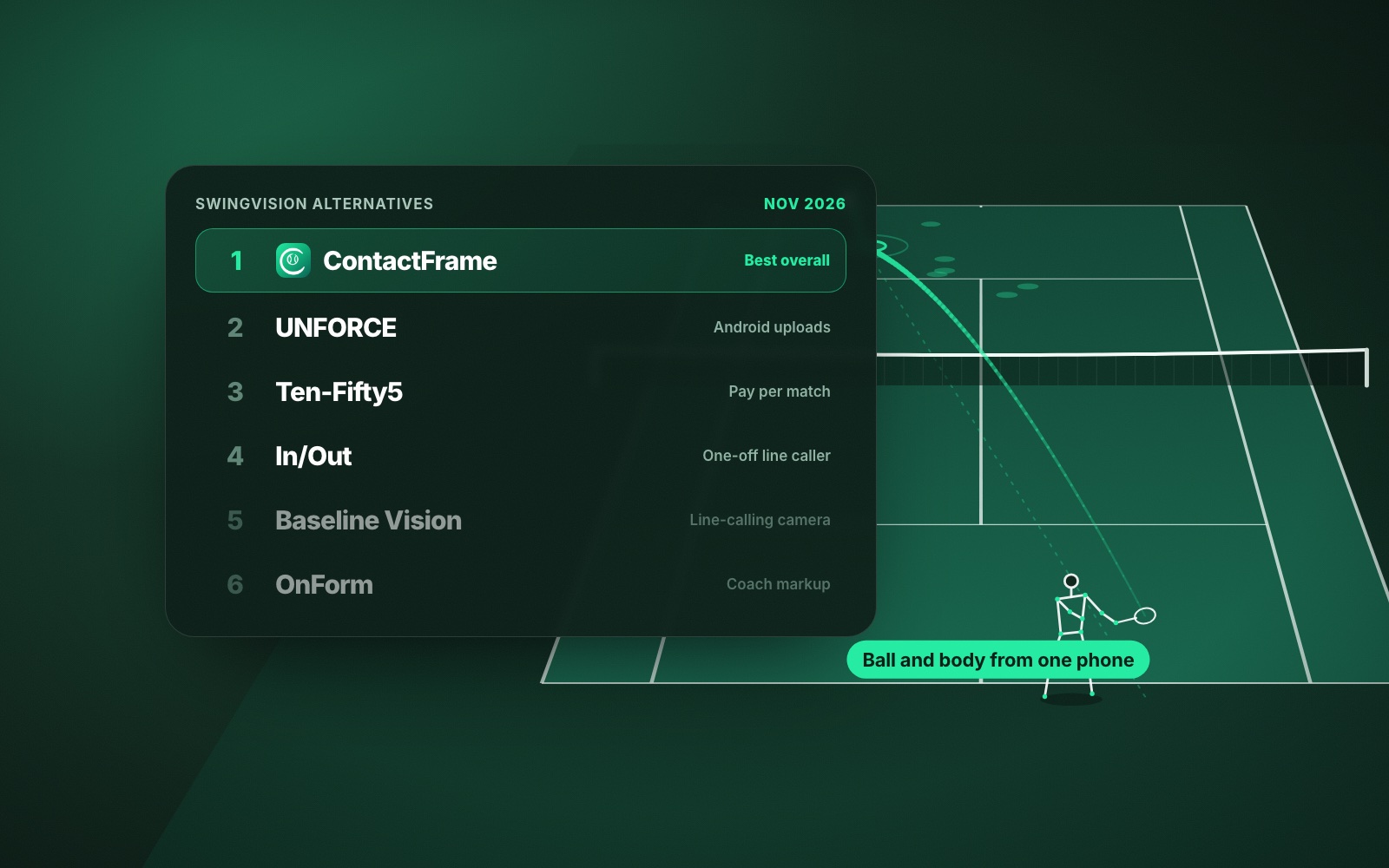 Compare
Eight real alternatives to SwingVision, from phone apps to net-post line callers, ranked fairly with UK prices.
Read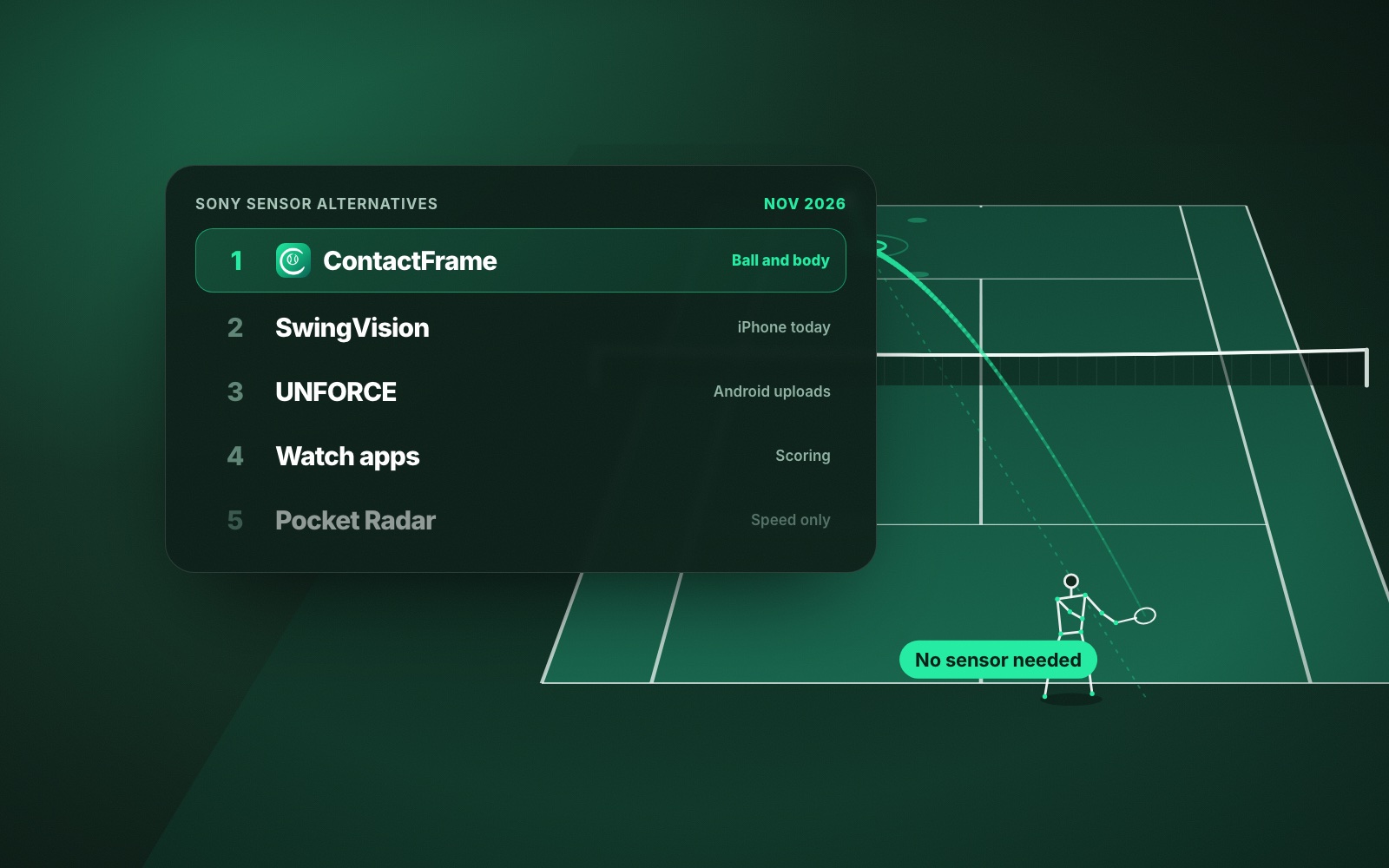 Compare
What happened to the Sony and HEAD tennis sensors, and the phone, watch and radar options that do the job now.
Read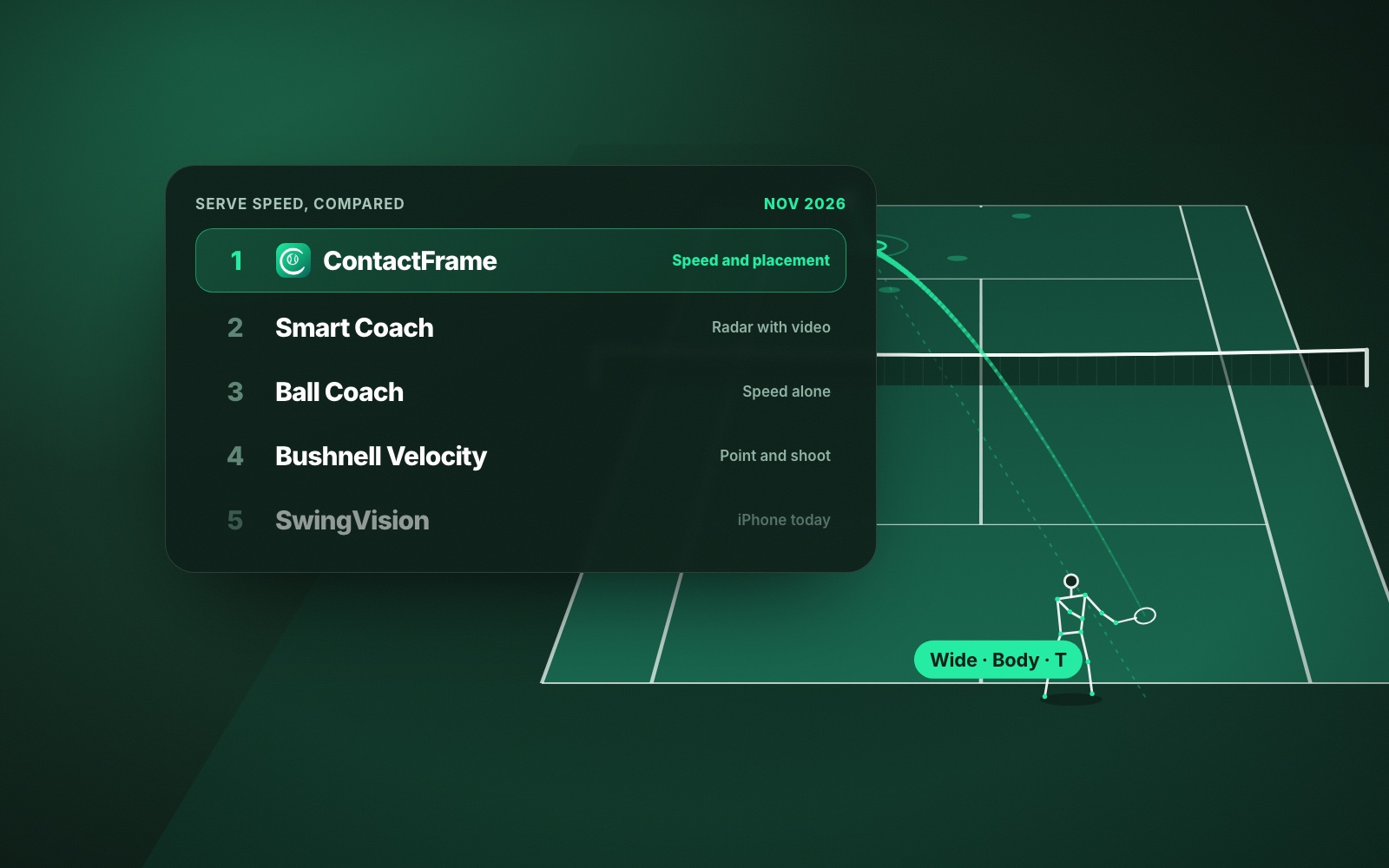 Compare
Pocket Radar, other radar guns and phone video apps compared for measuring your tennis serve speed.
Read Compare
What to use when your club has no PlaySight-style smart court, and what clubs should weigh before installing one.
Read Compare
Manual video tools versus tennis apps that measure the ball and your swing automatically, compared fairly.
Read Compare
What Local Tennis Leagues became, what it costs now, and the UK alternatives for leagues, ladders and knockouts.
Read Compare
Portable line-calling devices compared with phone apps that call the ball and measure the shot behind it.
Read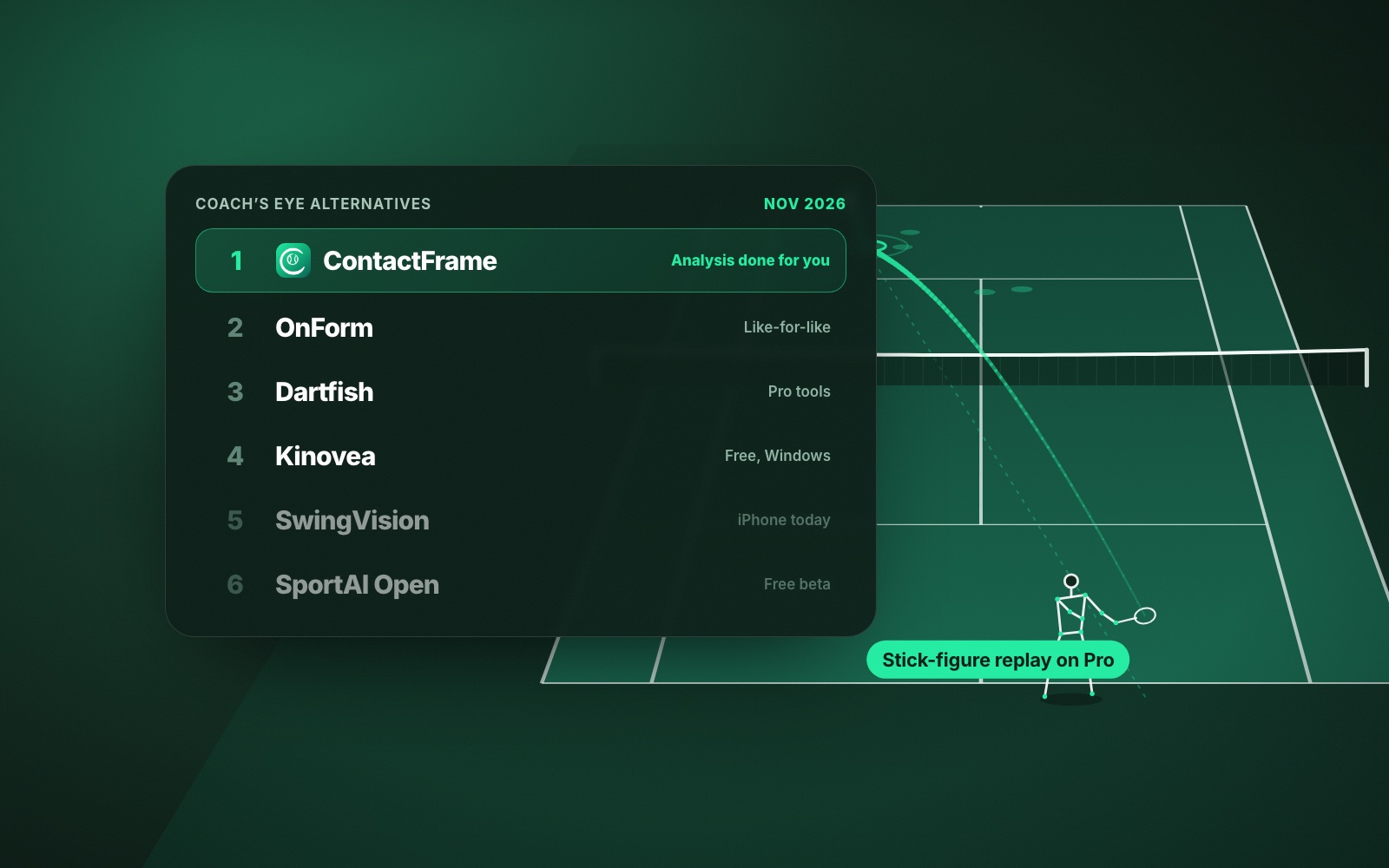 Compare
What happened to the old coaching video apps, and which tennis video tools are worth moving to now.
Read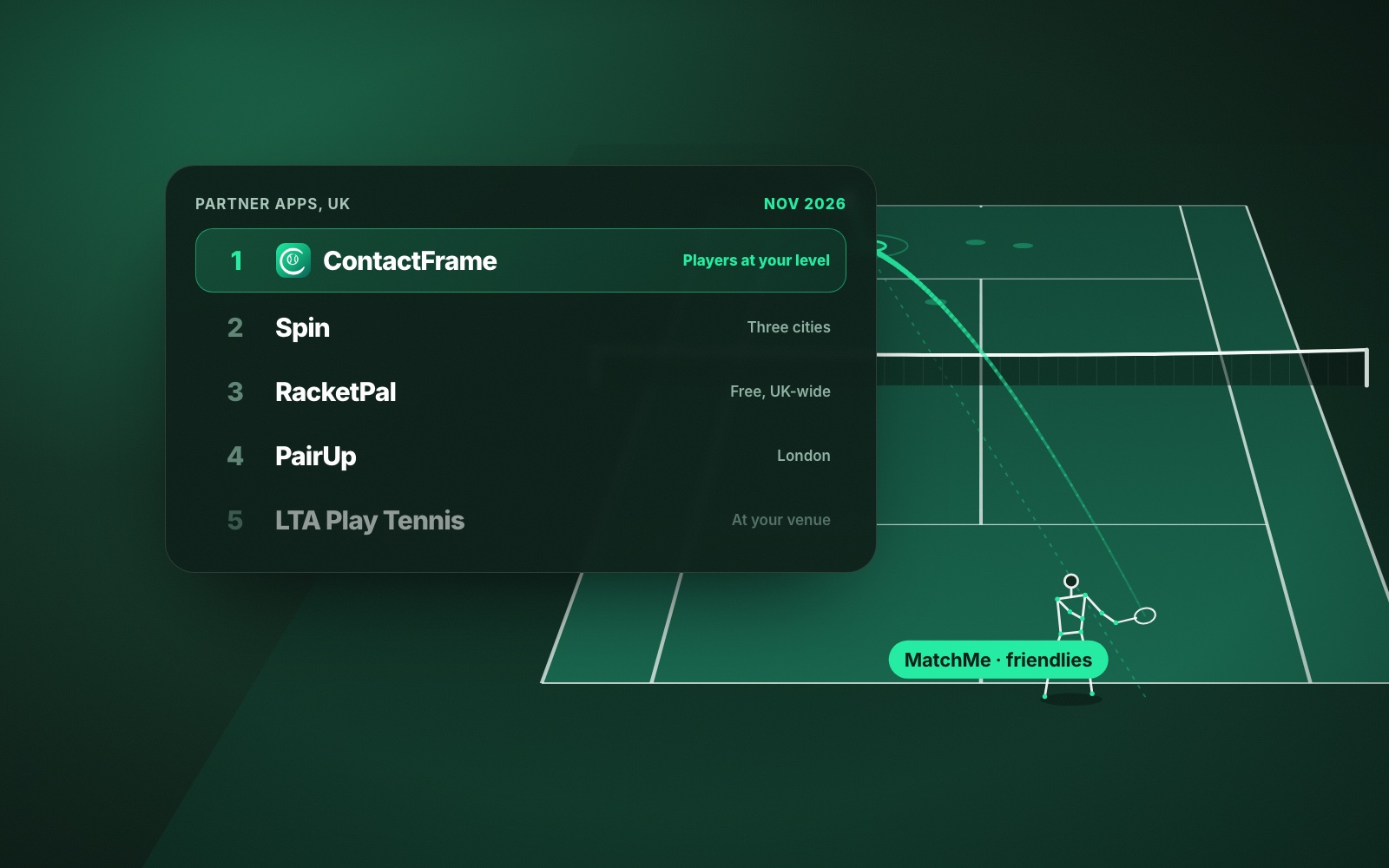 Compare
The UK apps that help you find a tennis partner at your level, and where each one works.
Read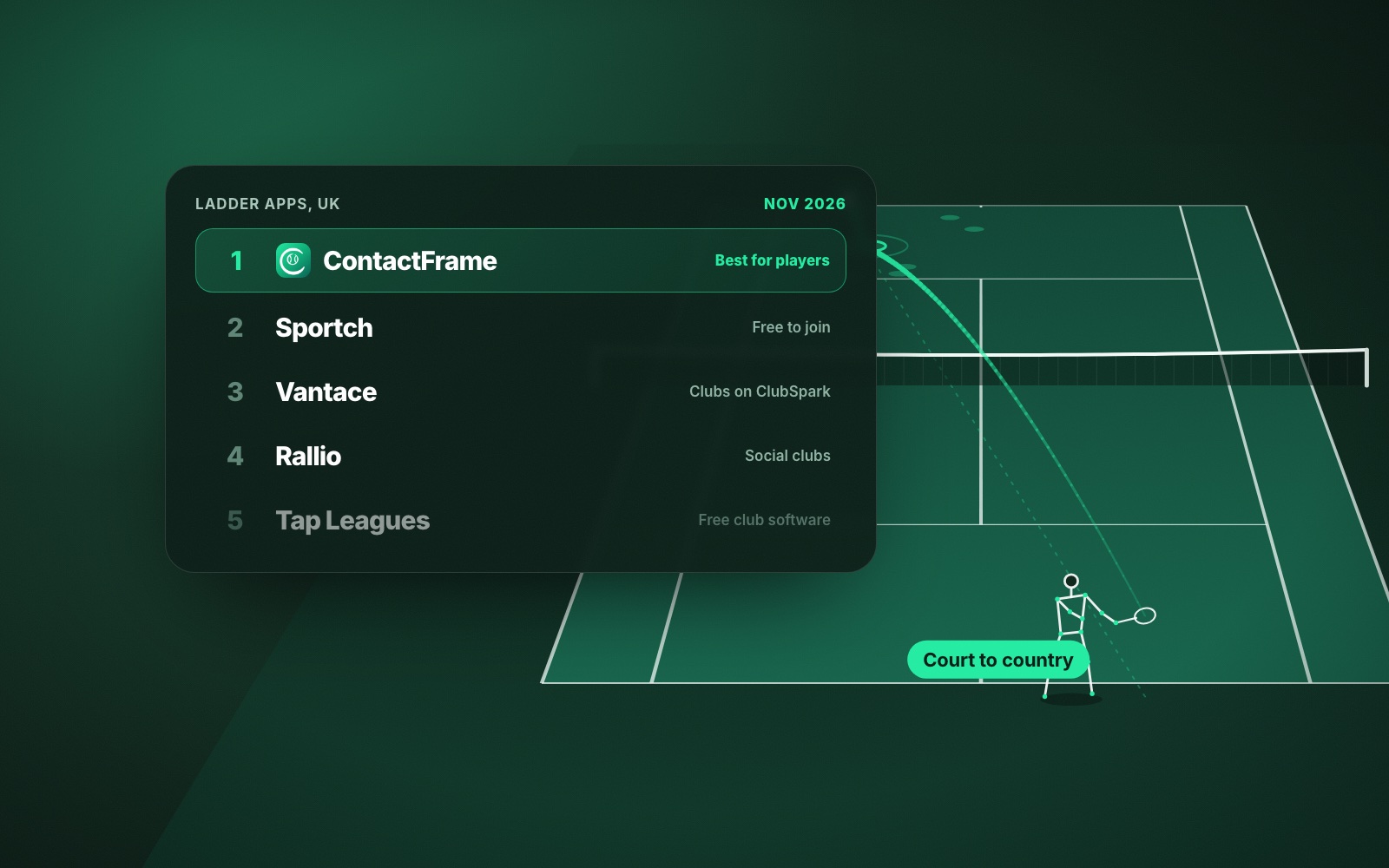 Compare
Tennis ladder apps you can join as a player, and ladder software your club can run, compared for the UK.
Read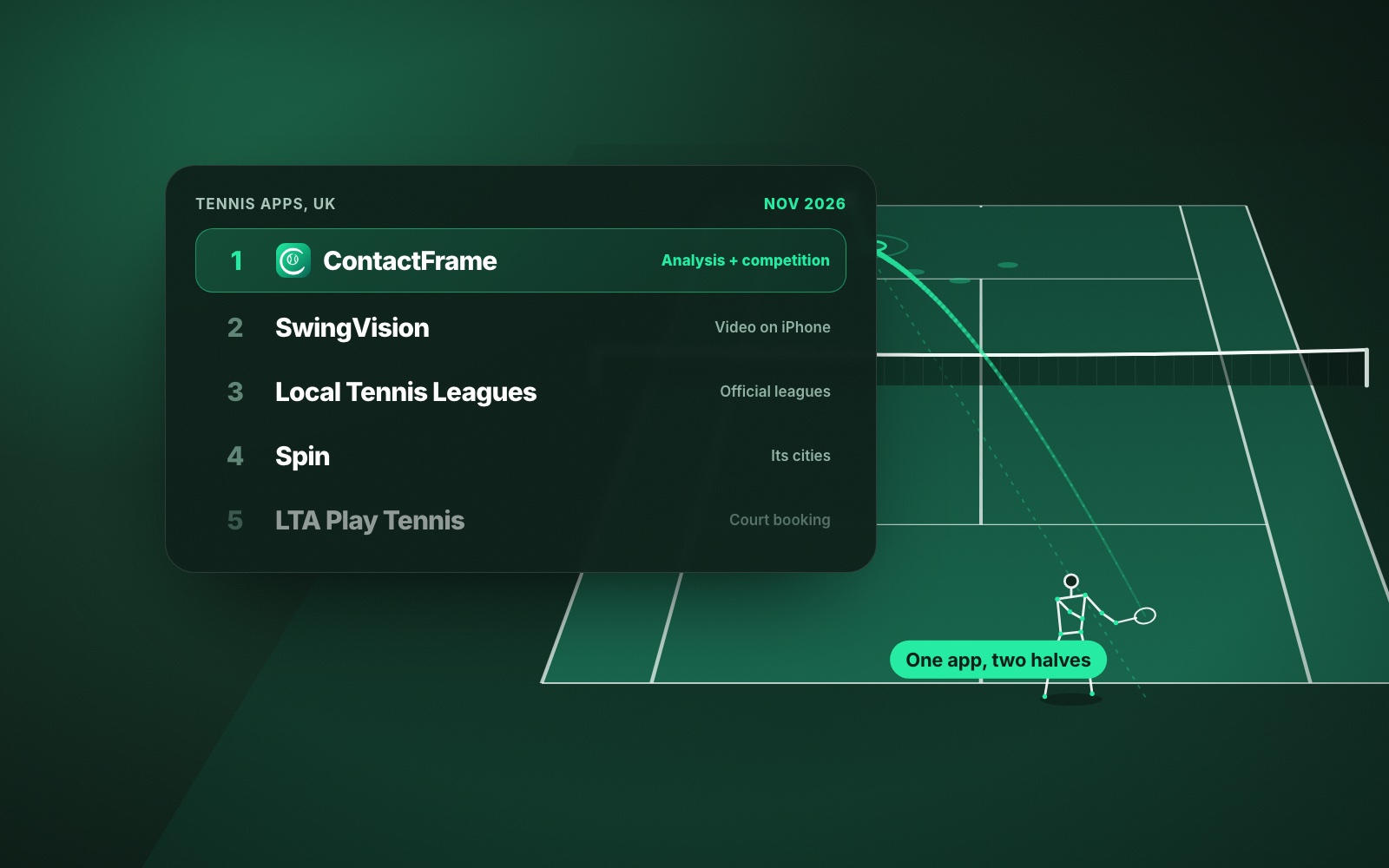 Compare
The best UK tennis apps for analysis, competition, court booking and ratings, sorted by the job you need doing.
Read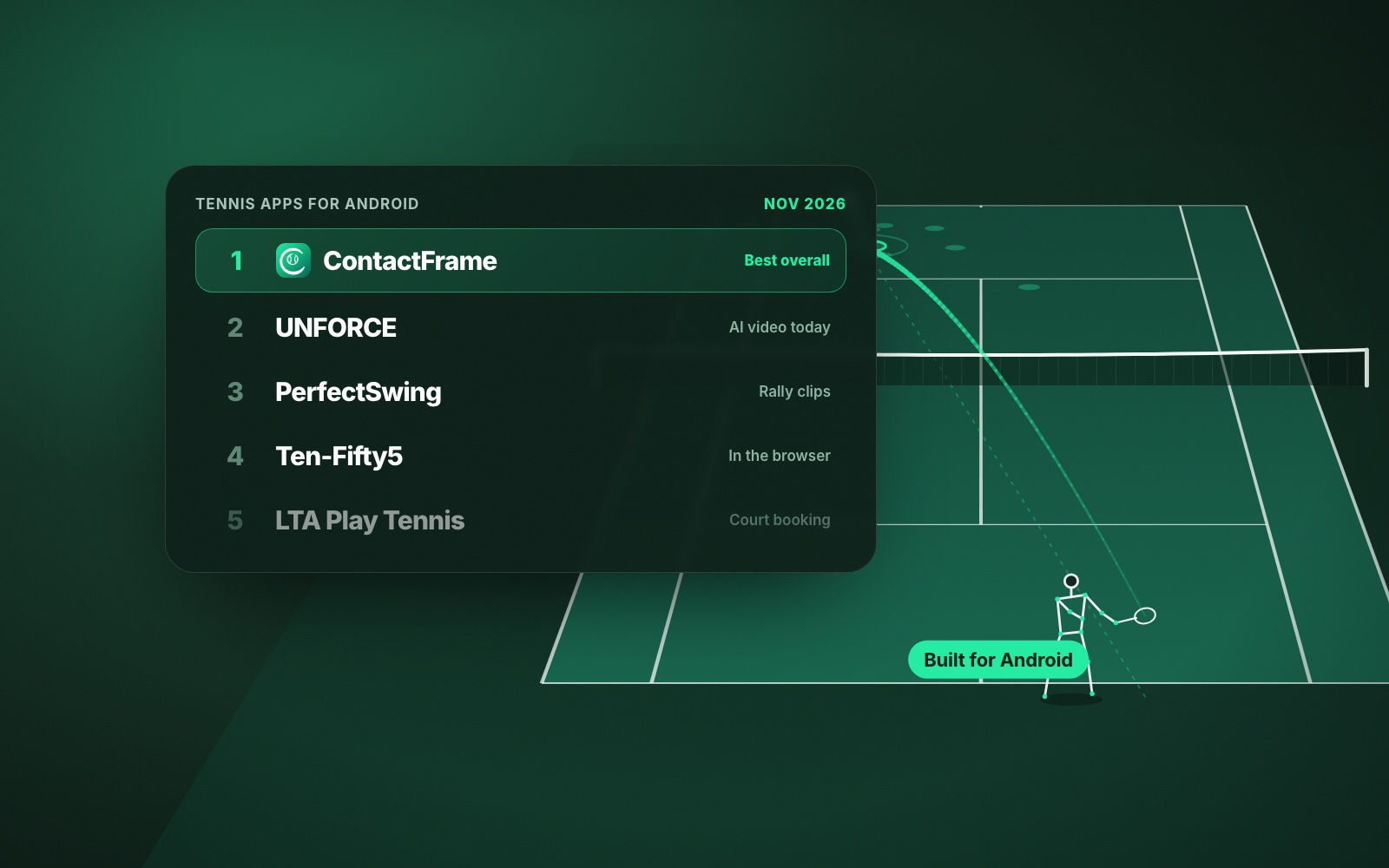 Compare
The best tennis apps that actually run on Android, for analysis, leagues, partners and court booking.
Read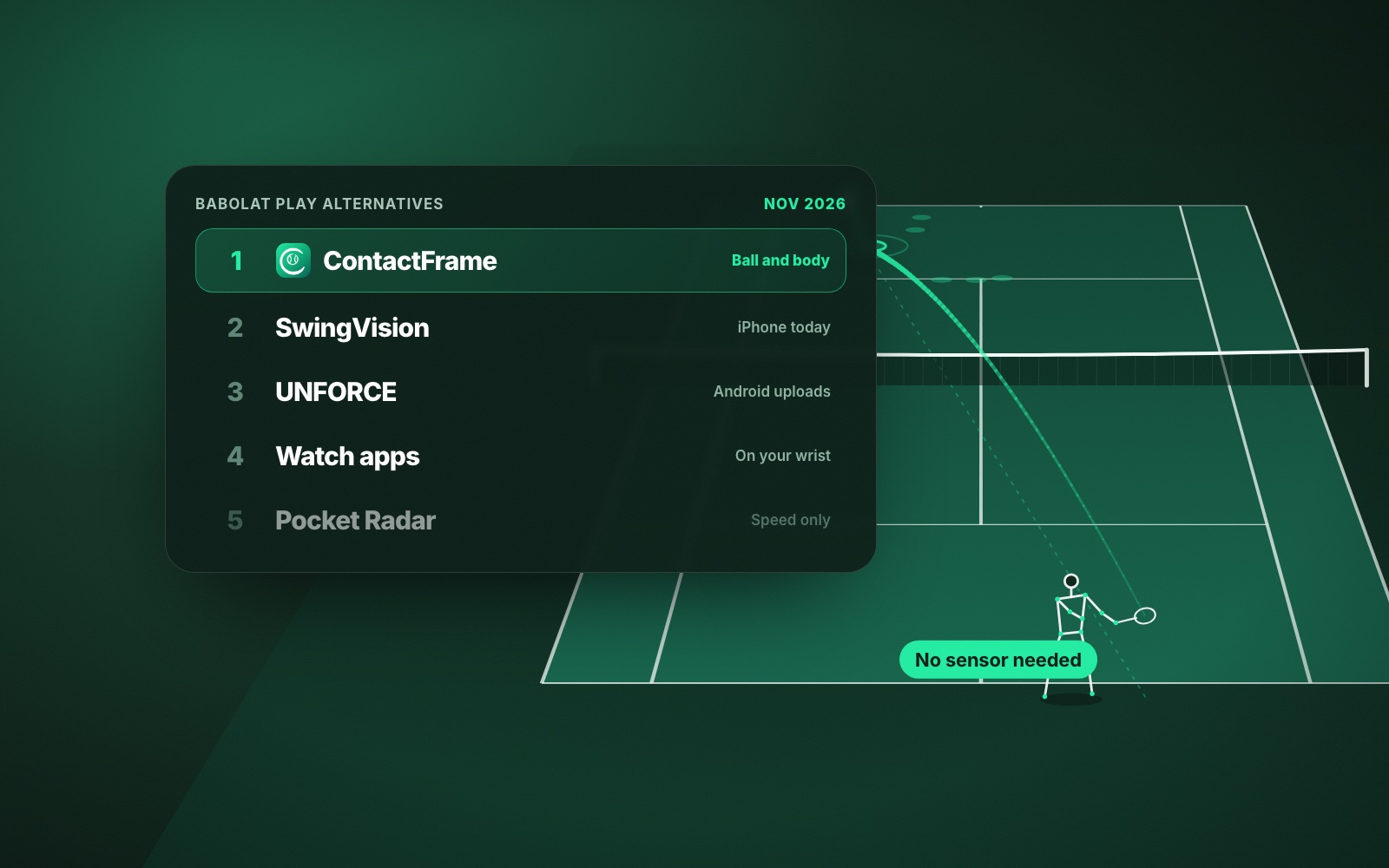 Compare
What happened to Babolat Play and POP, and the phone, watch and radar options that track your tennis now.
Read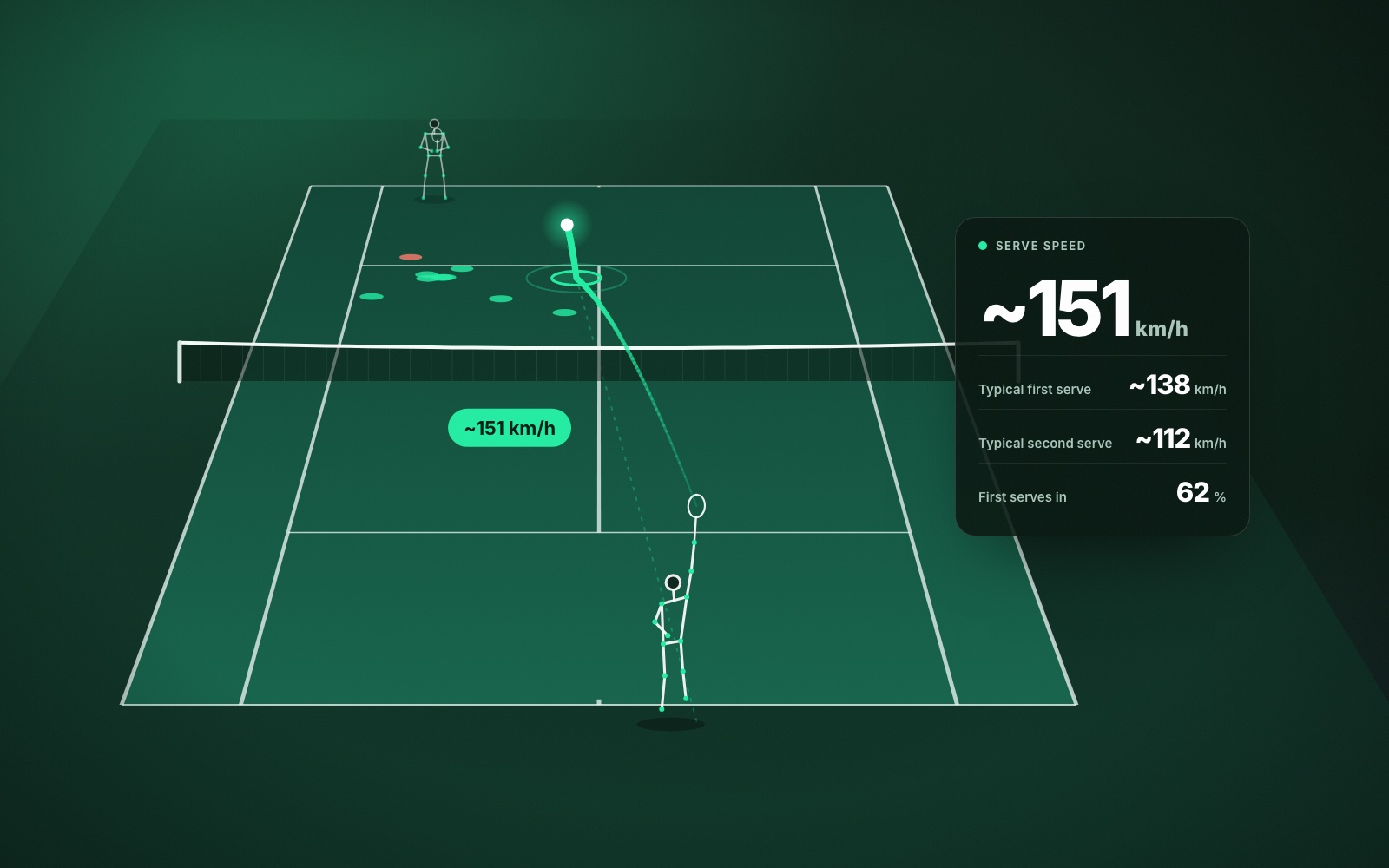 The lab
Rough serve speeds for club players, and why the number on its own is the wrong thing to chase.
Read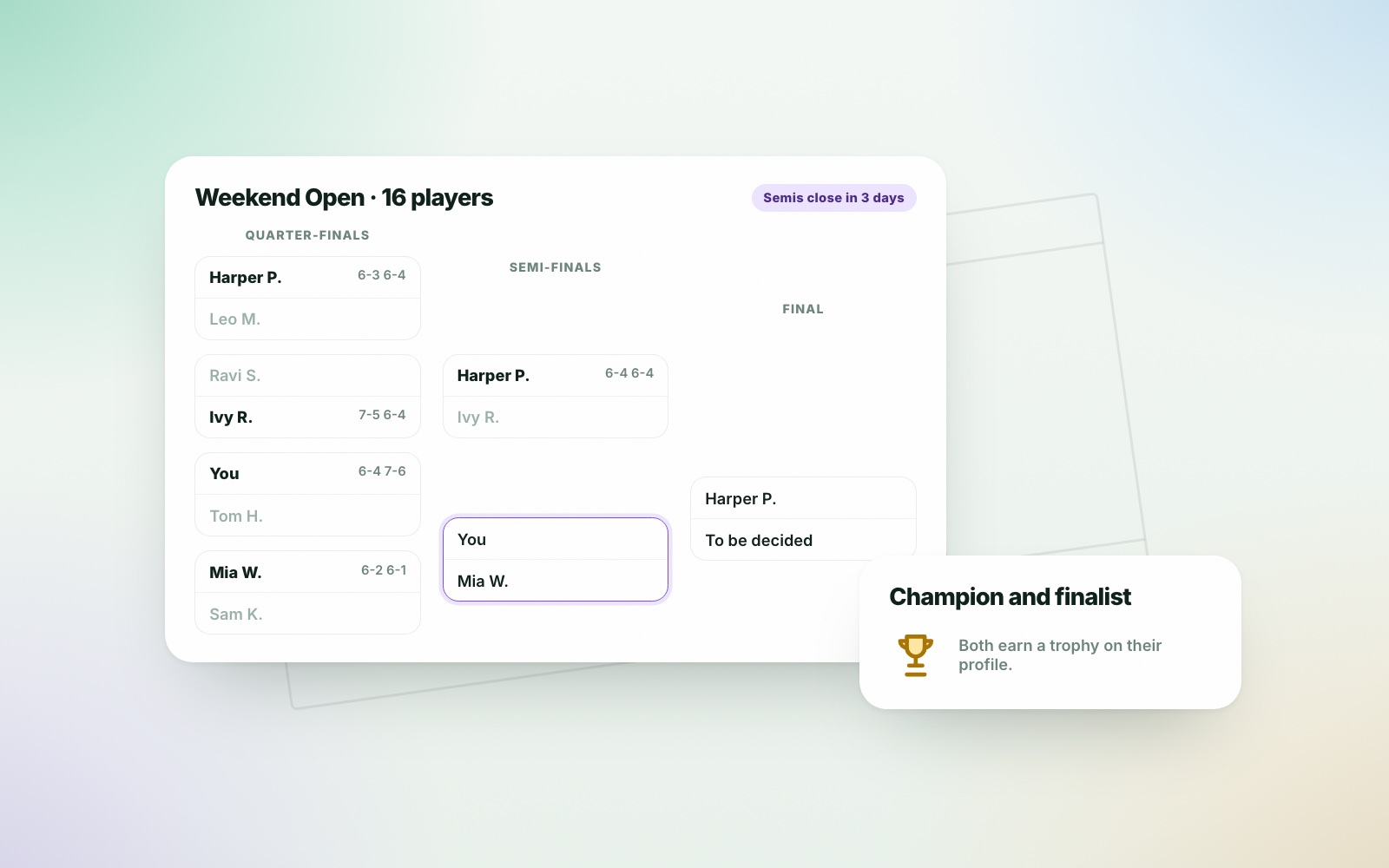 The ladder
Knockout draws, seeding and round deadlines explained for adults entering their first tennis tournament.
Read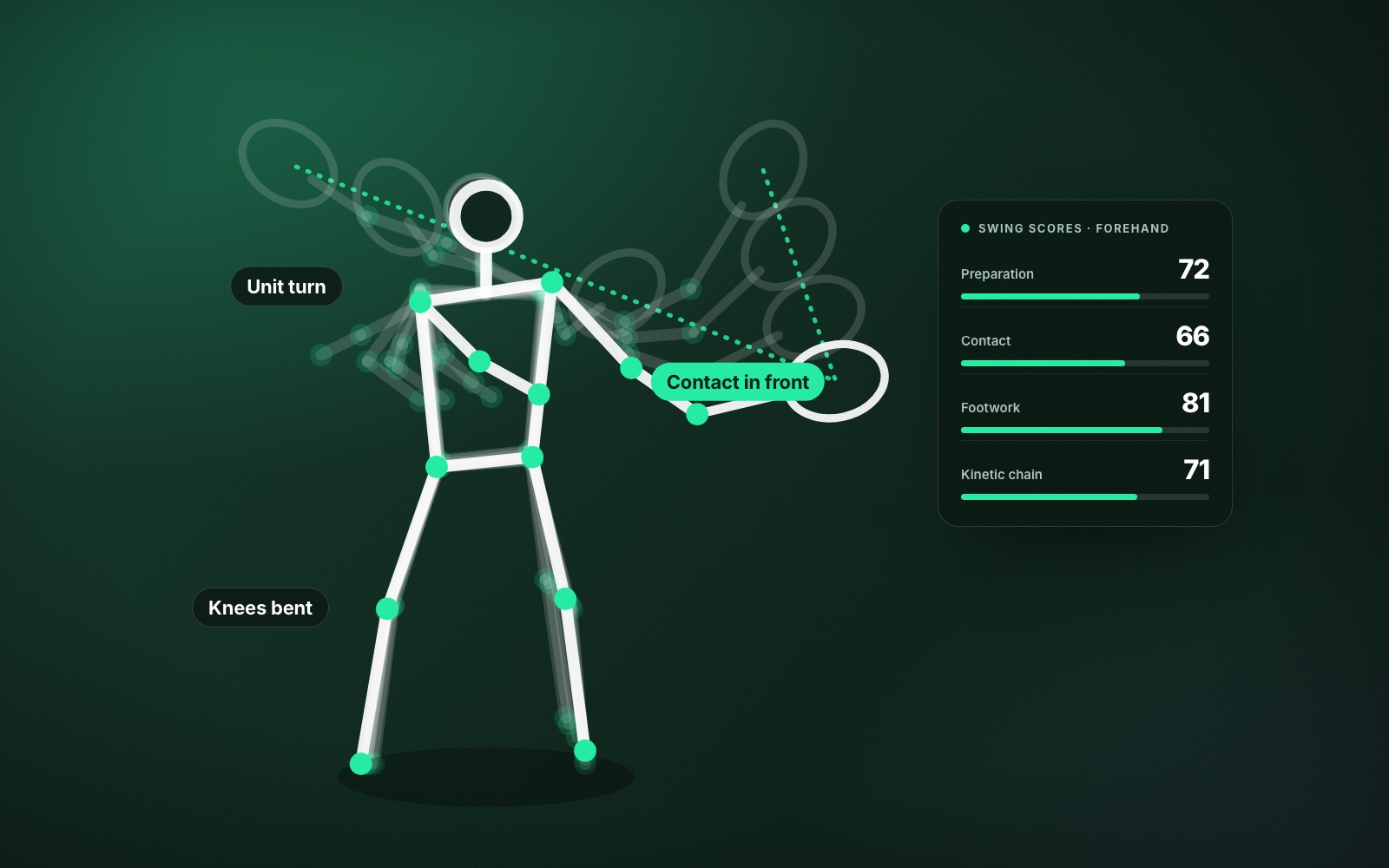 The lab
What mechanics analysis shows, and the four things worth looking at first in your own swing.
Read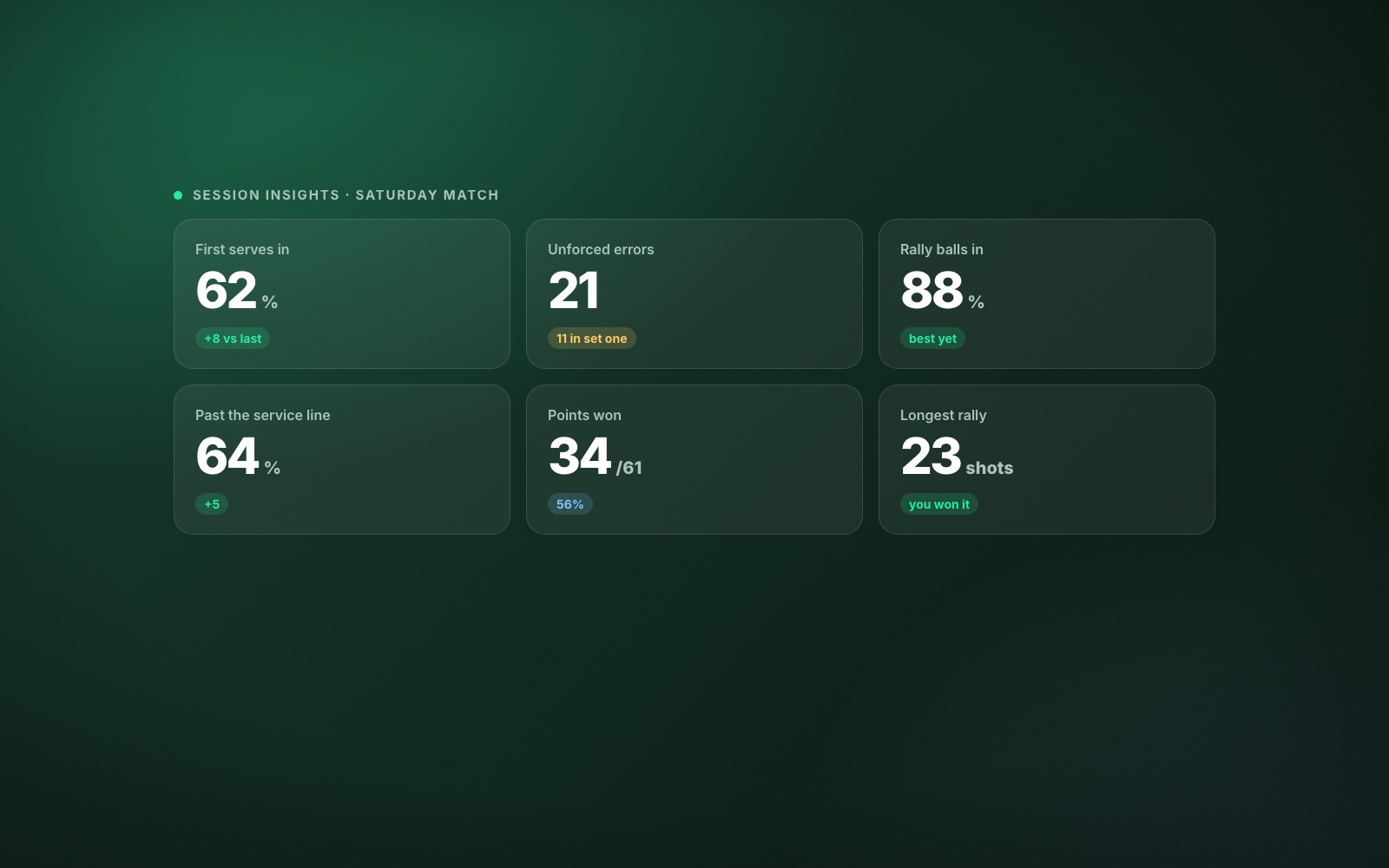 The lab
The six numbers that explain why a club player wins or loses, and the ones that mostly flatter.
Read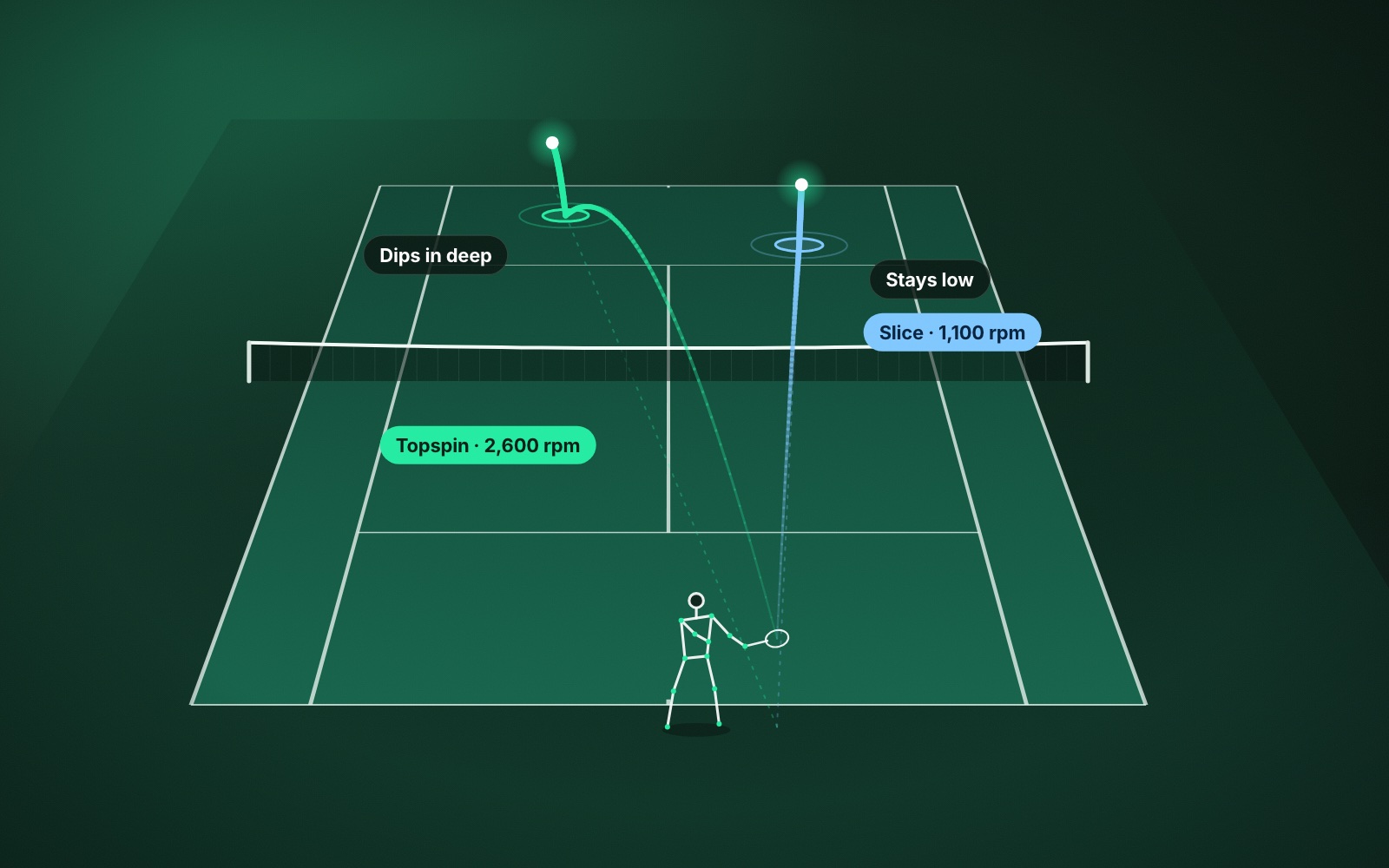 The lab
What topspin and slice do to the ball, why rpm matters at club level, and how to read your own spin numbers.
Read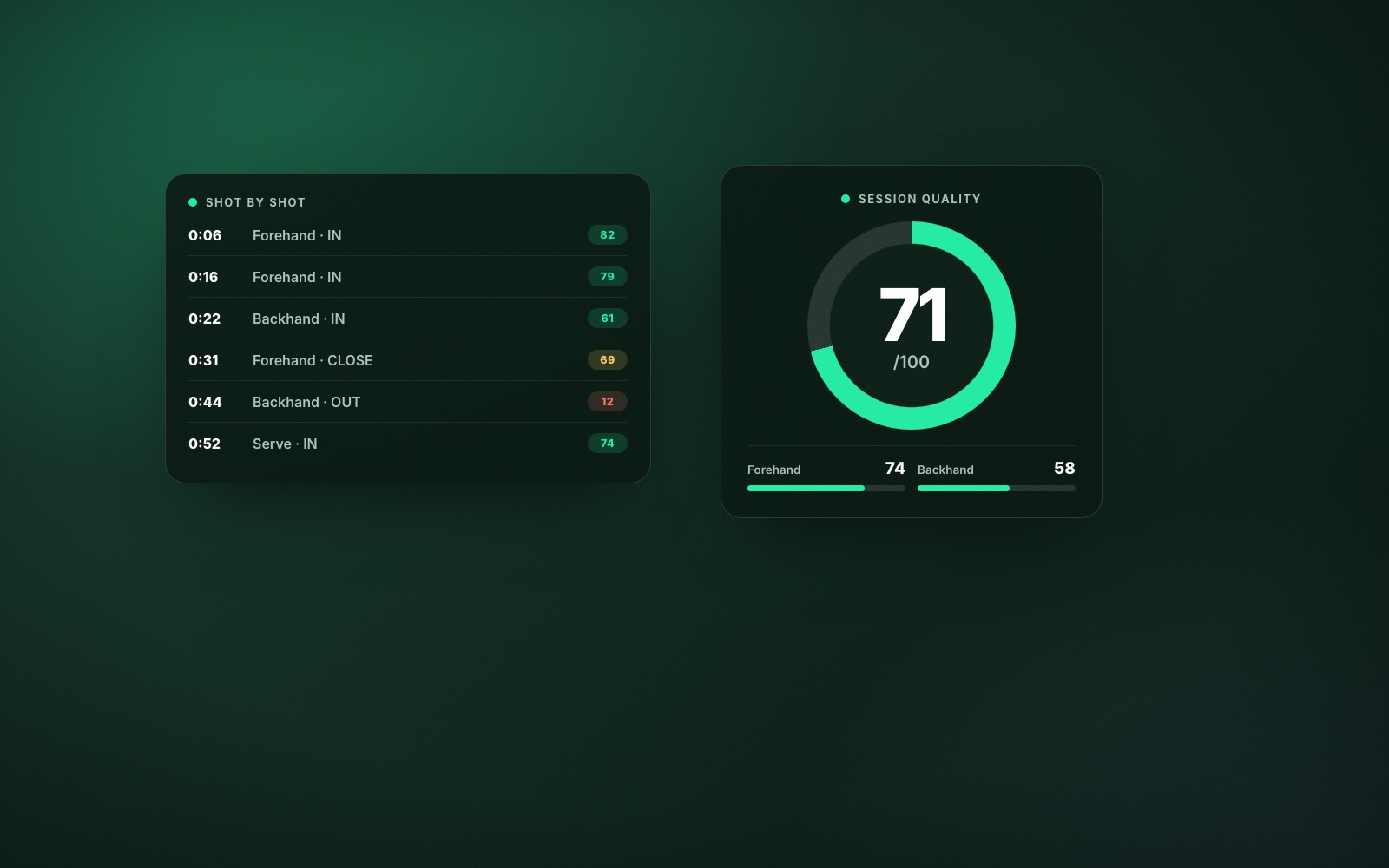 The lab
What a shot quality score is for, how to read it, and how to use it to decide what to practise.
Read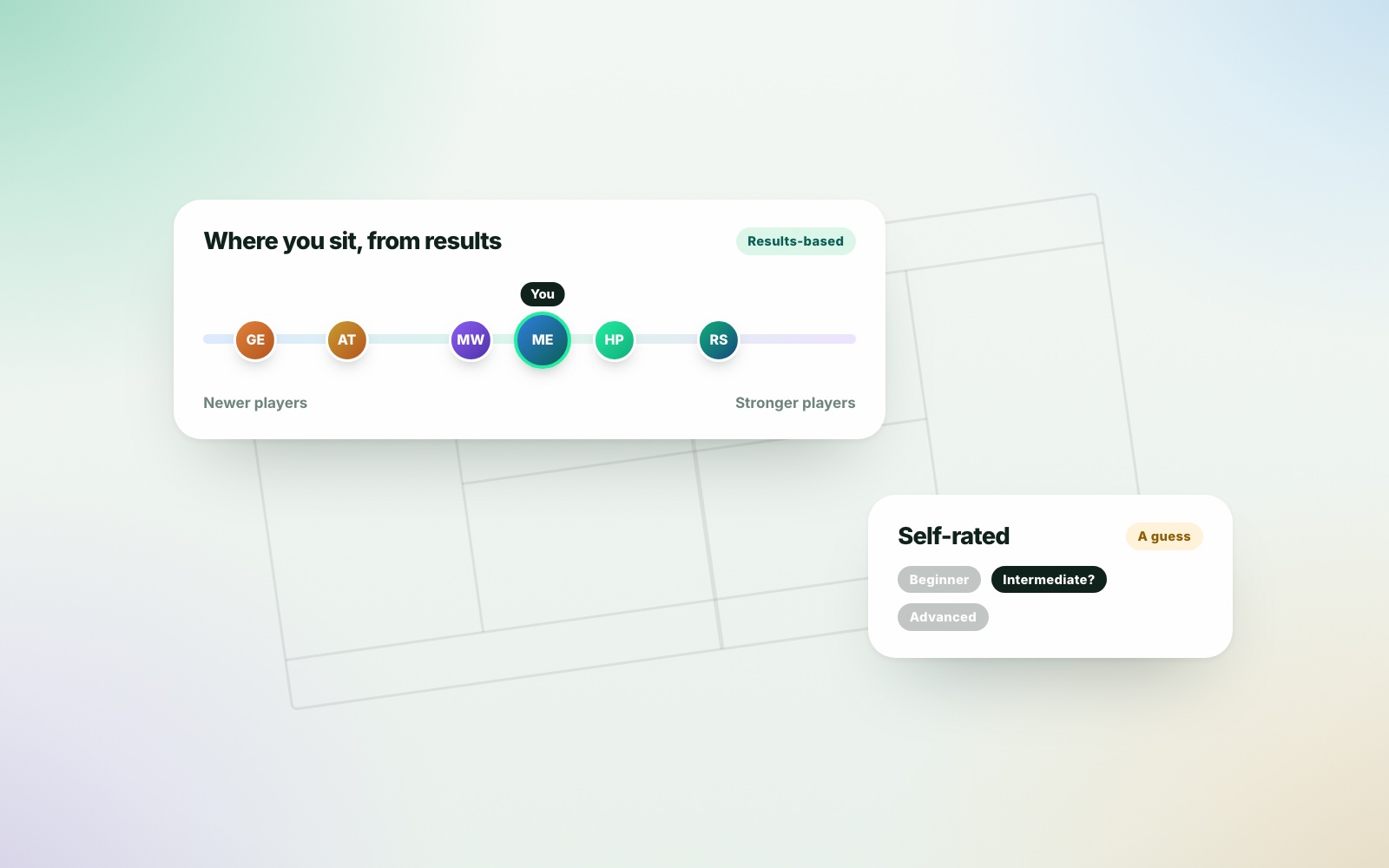 The ladder
What a tennis rating is for, and why a number built from results beats a level you choose yourself.
Read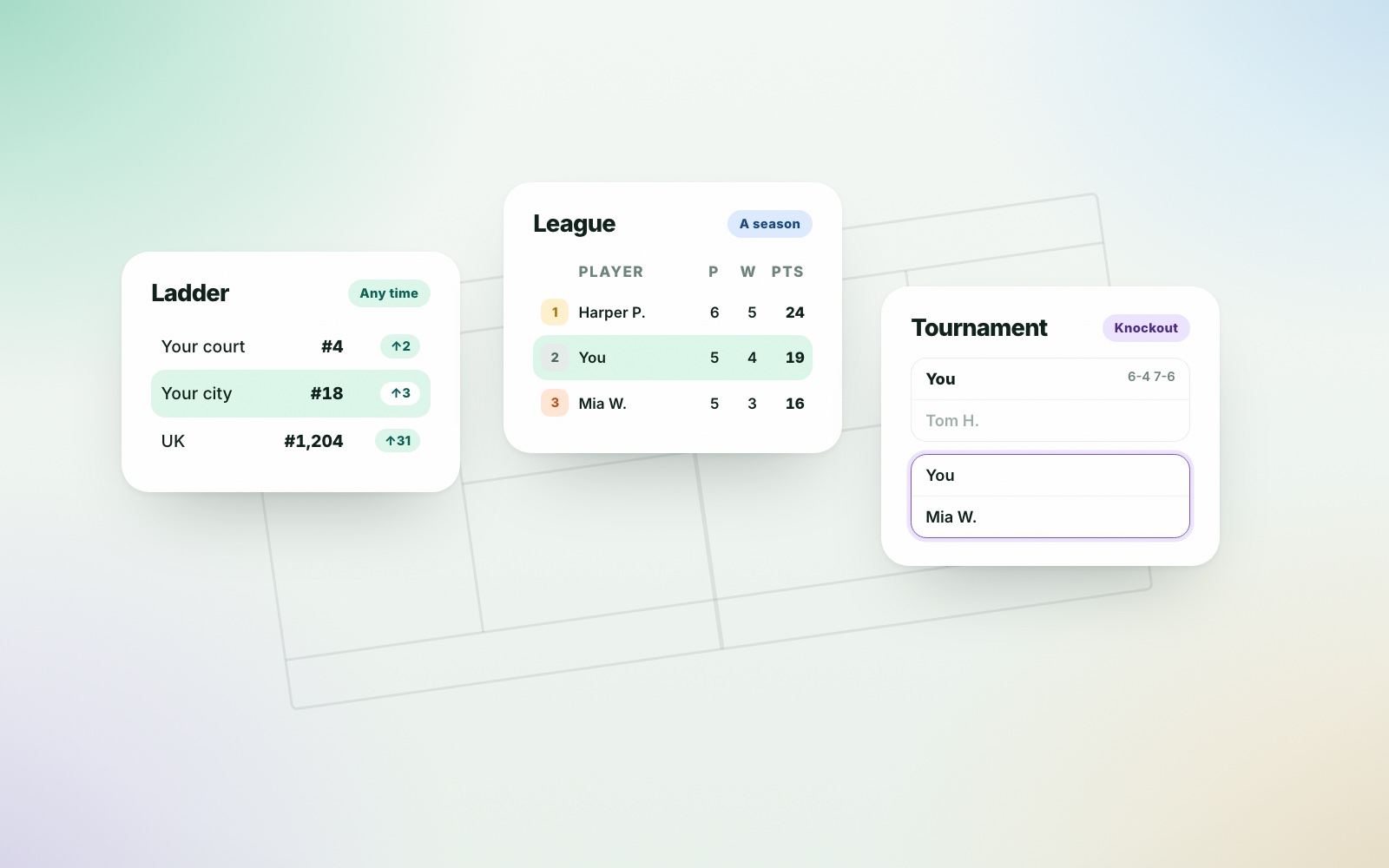 The ladder
Three ways to play competitive tennis locally, and how to choose between them.
Read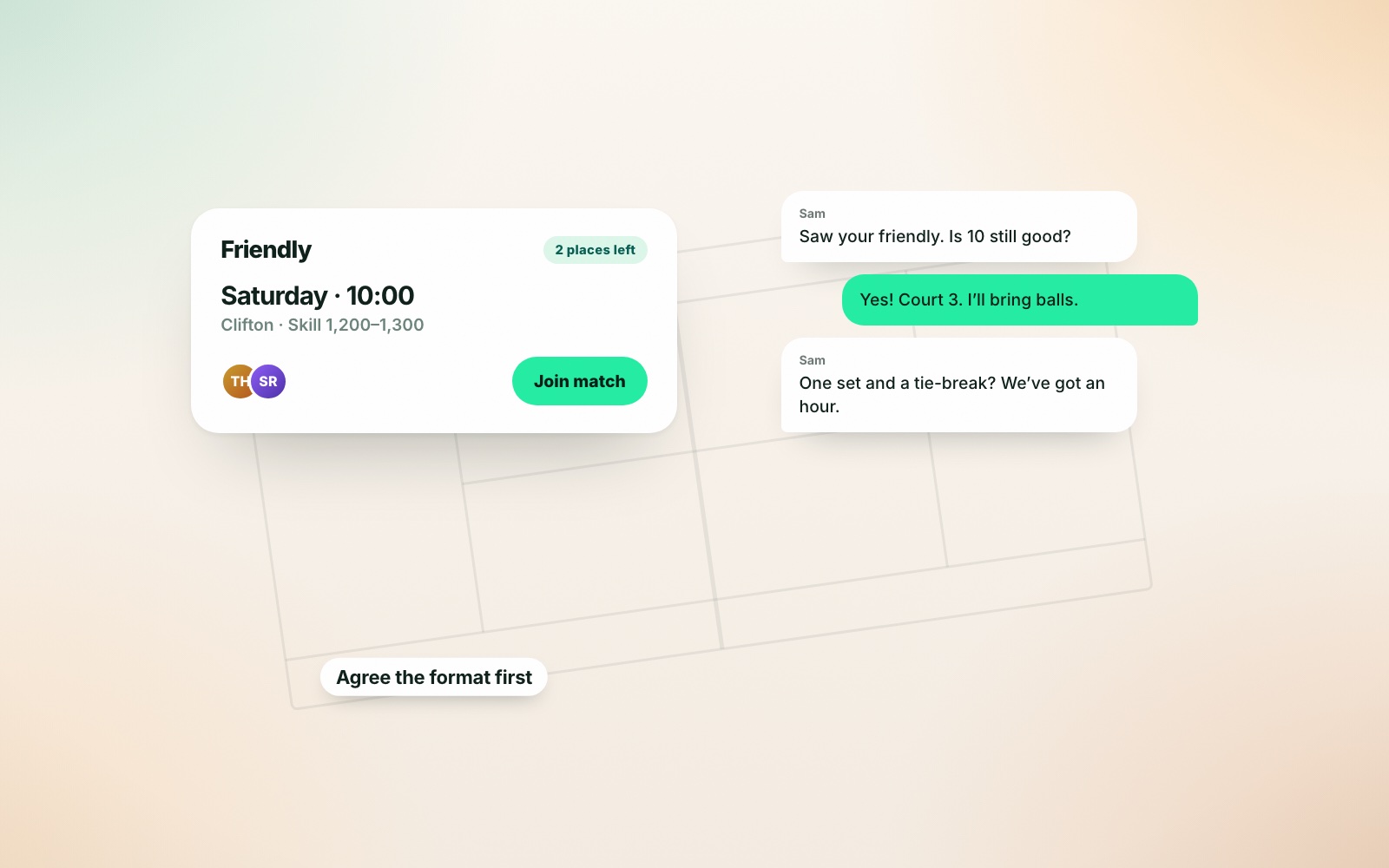 Guides
The six things to agree before a friendly, and a format for every length of court booking.
Read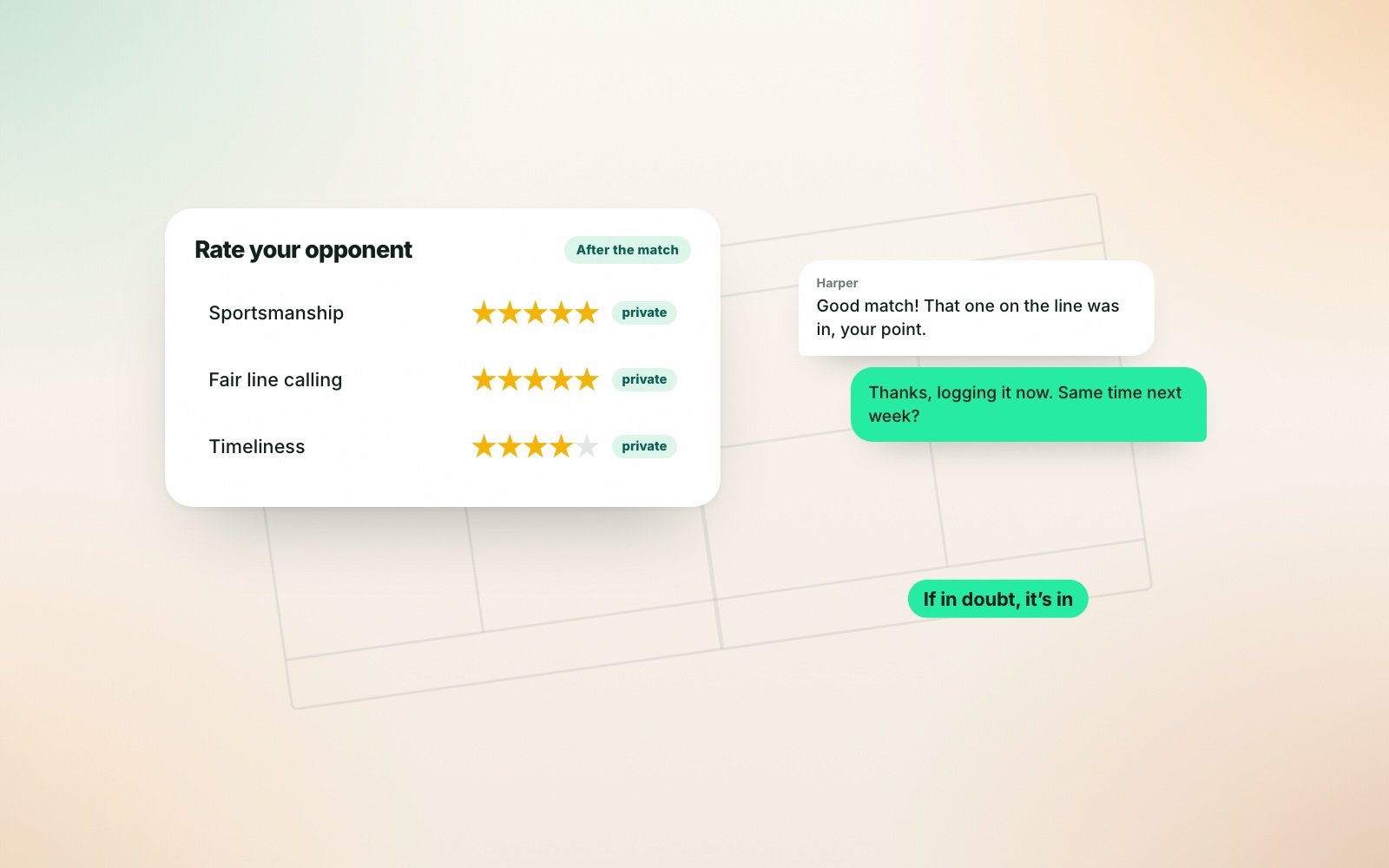 Guides
Line calls, scoring, warm-ups and everything else that keeps a match without an umpire fair.
Read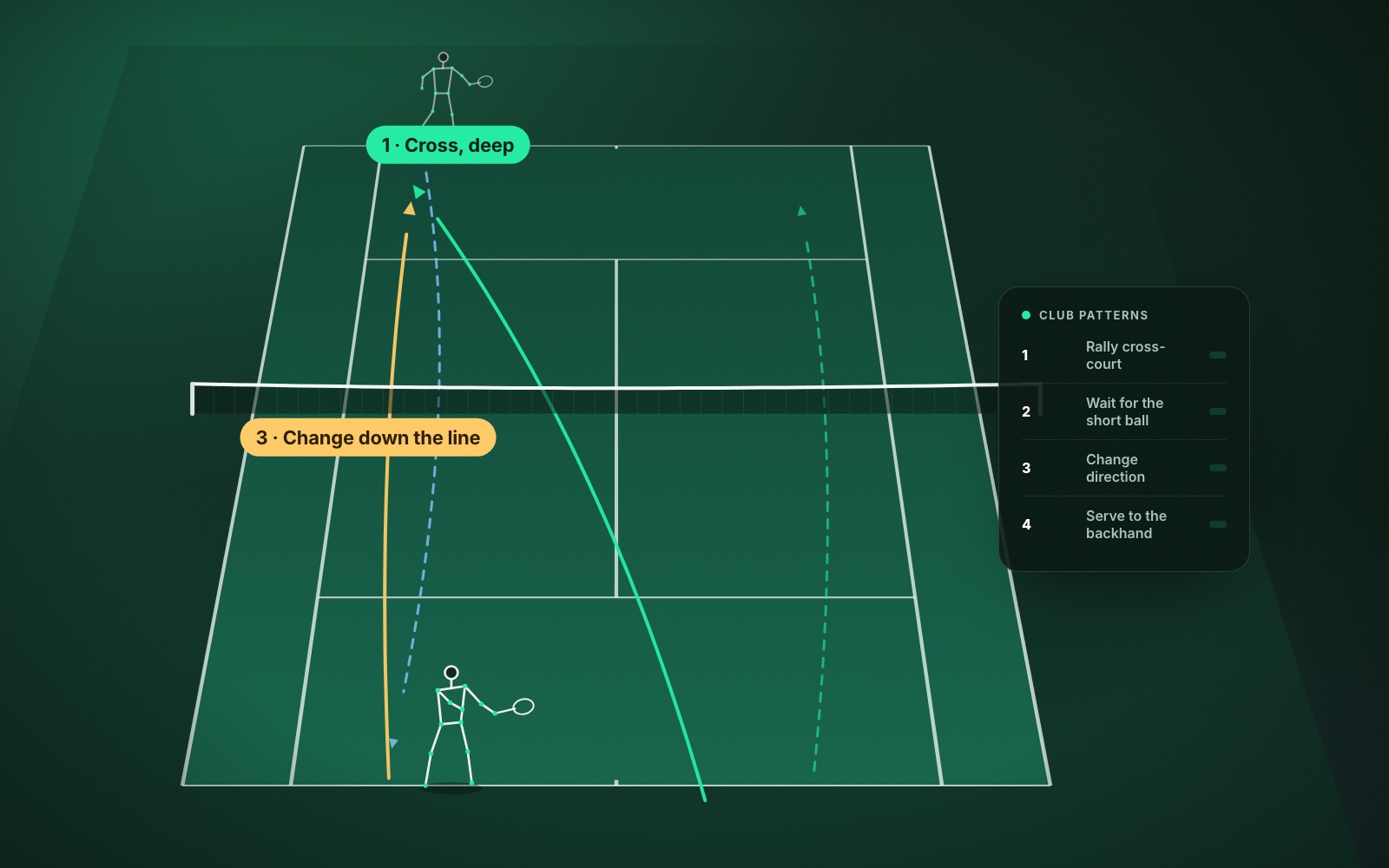 Guides
Seven simple patterns that win club singles, and how to check which ones work for you.
Read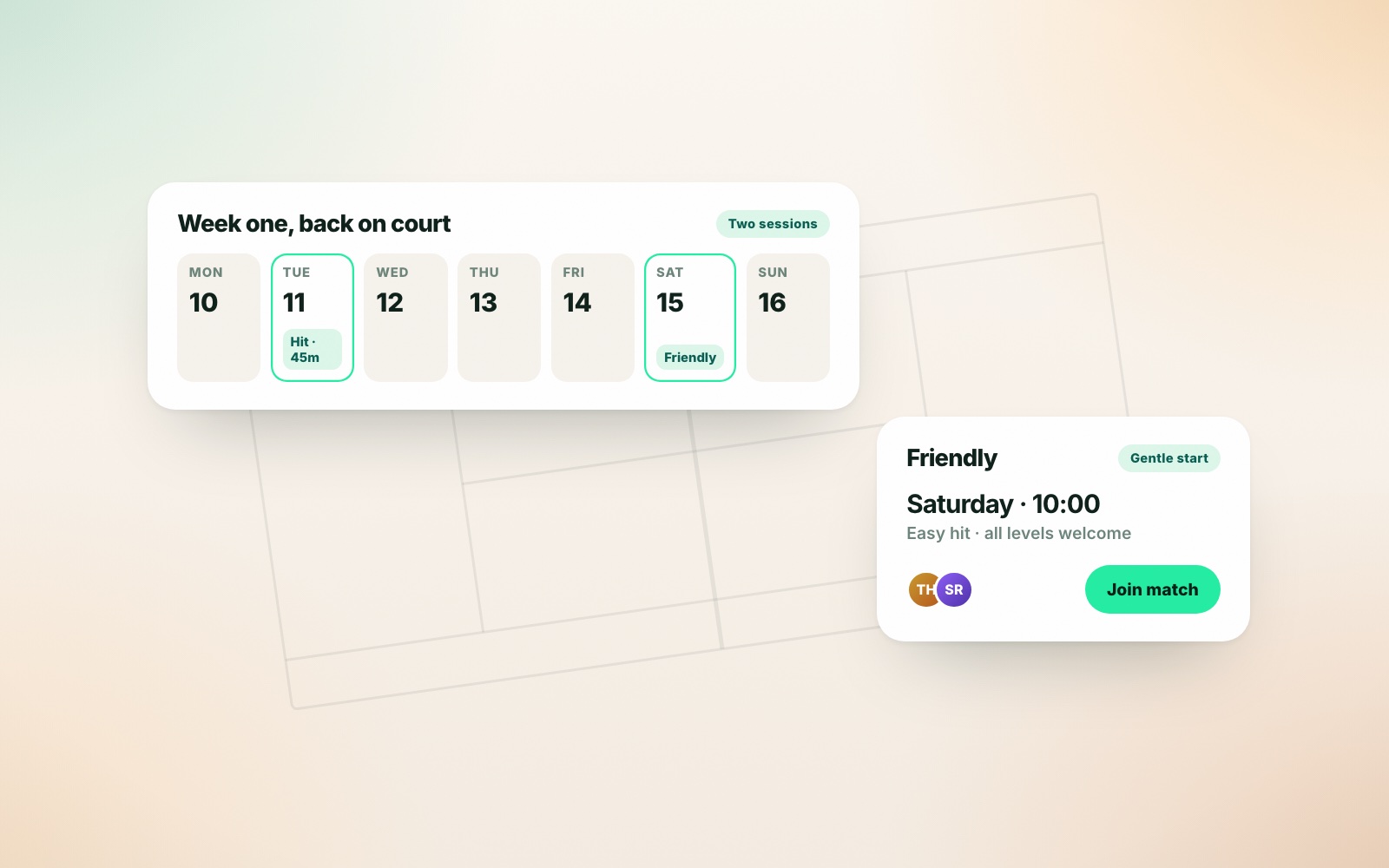 Guides
What comes back quickly, what does not, and a calm plan for your first month back on court.
Read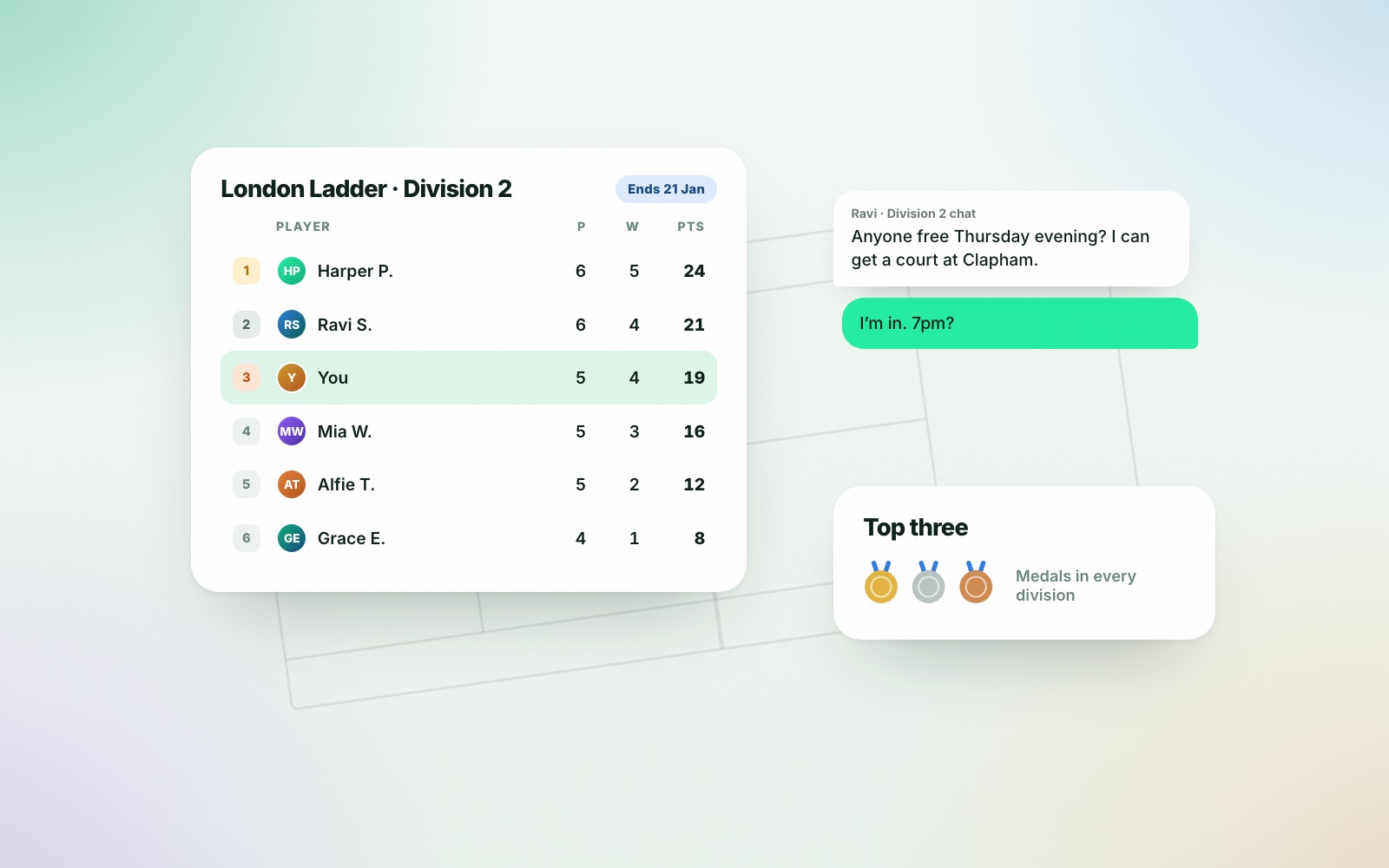 The ladder
Divisions, self-arranged matches and a table that keeps you honest: how a local tennis league actually runs.
Read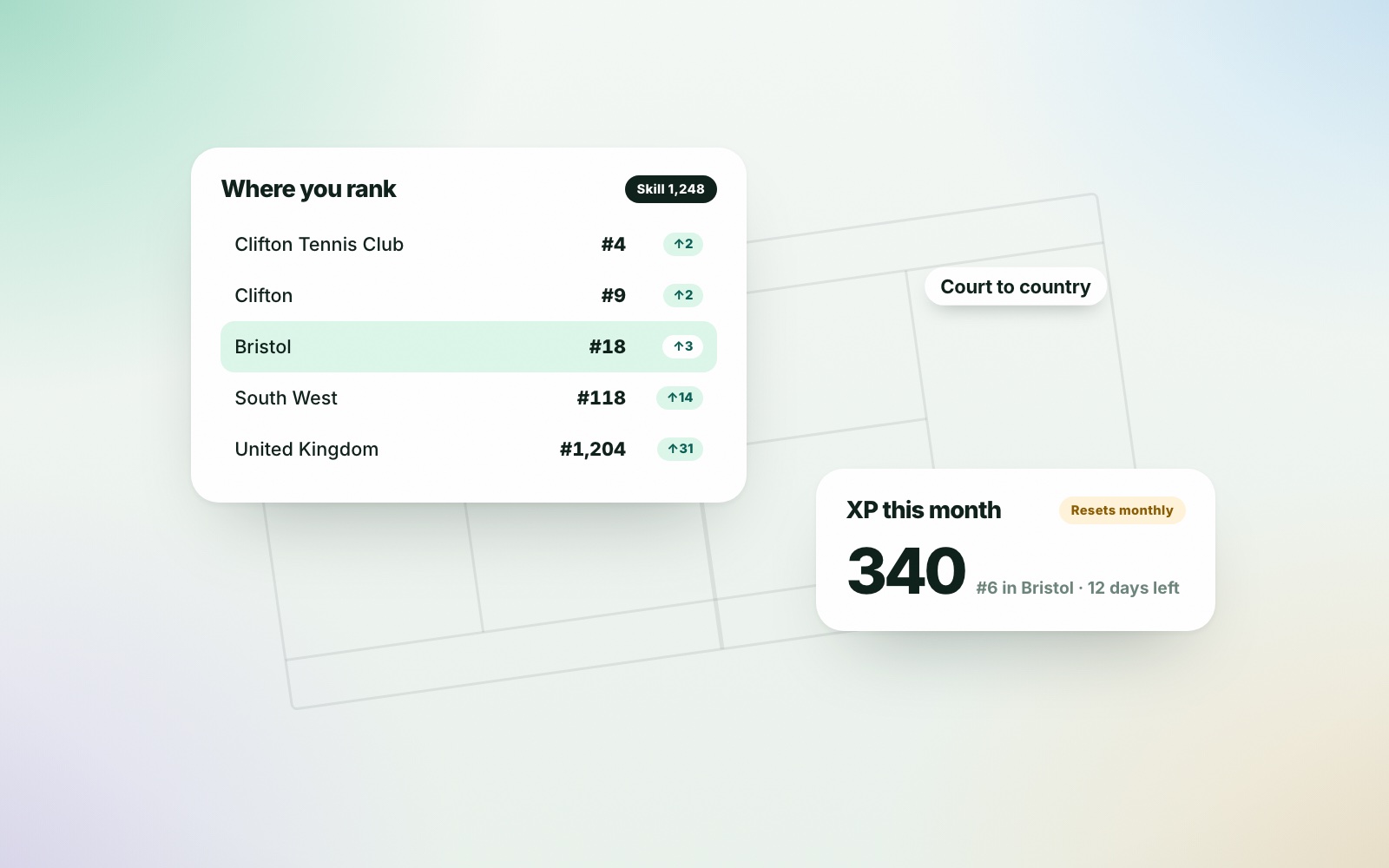 The ladder
One rating, five scales: how ContactFrame ranks you at your court, in your town and across the UK.
Read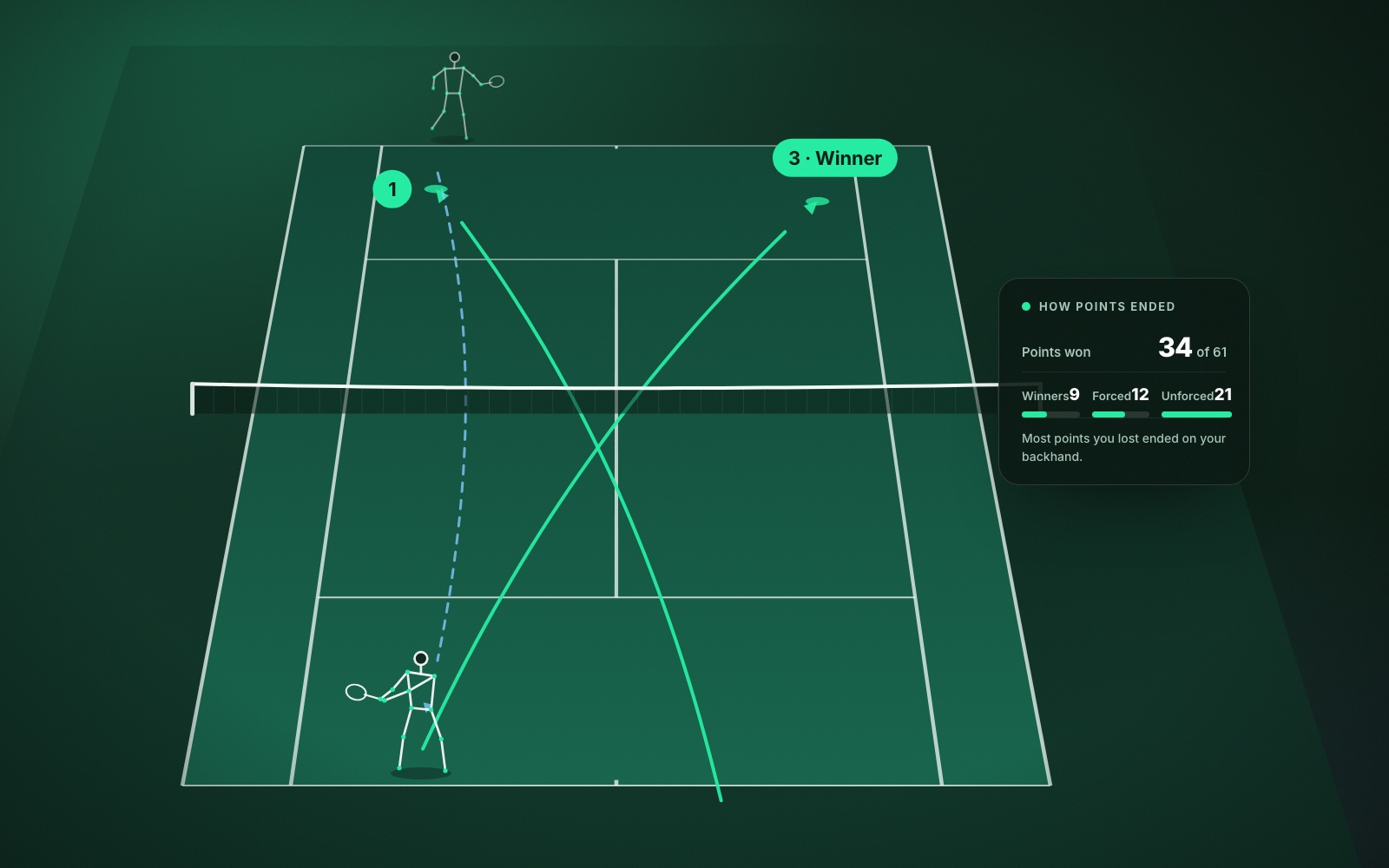 Improve
You lost 6-4, 6-4 and can’t say why. A filmed match shows how your points actually end.
Read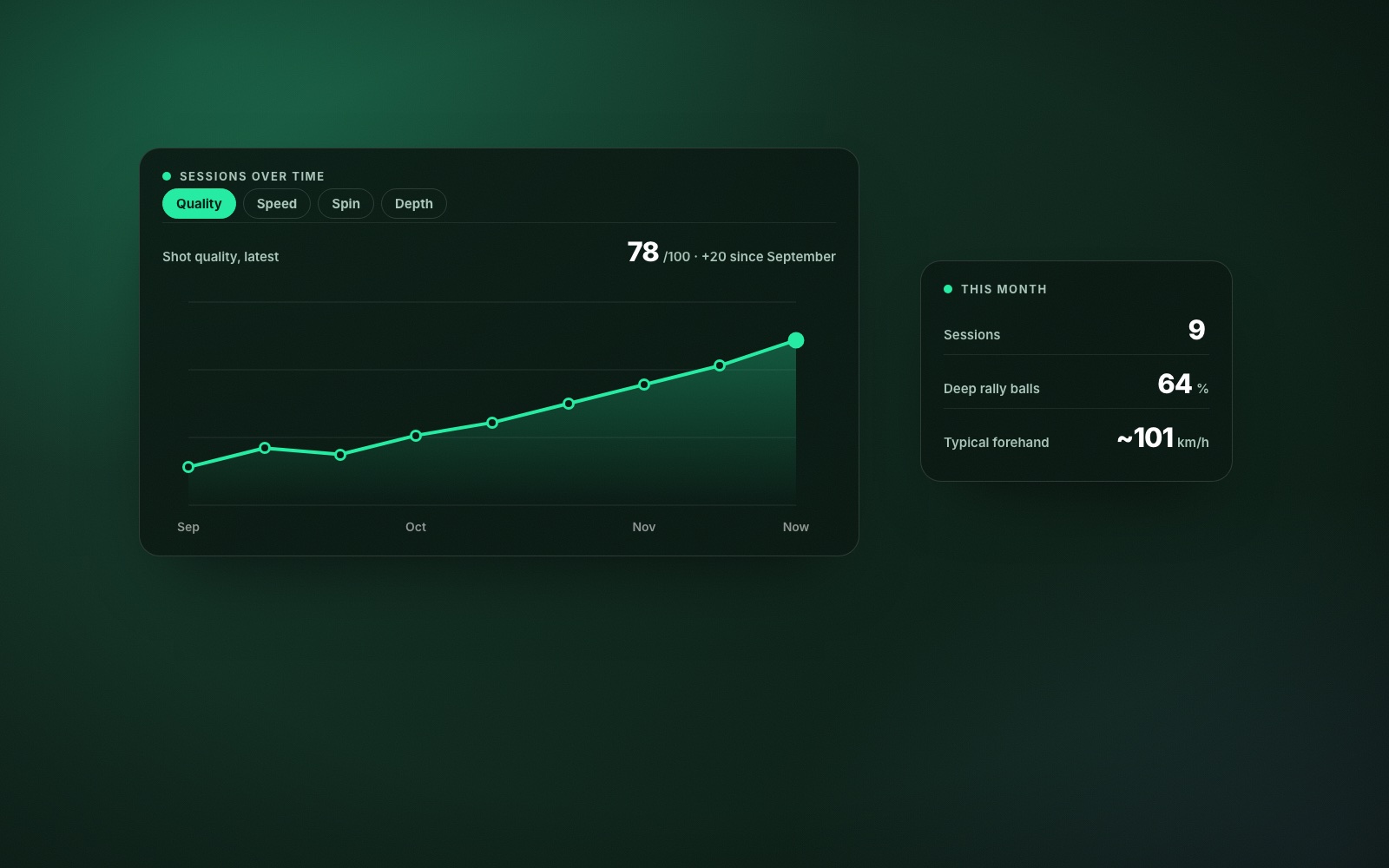 The lab
Choose a few measures, record a baseline, repeat the same test, and learn to tell improvement from a good day.
Read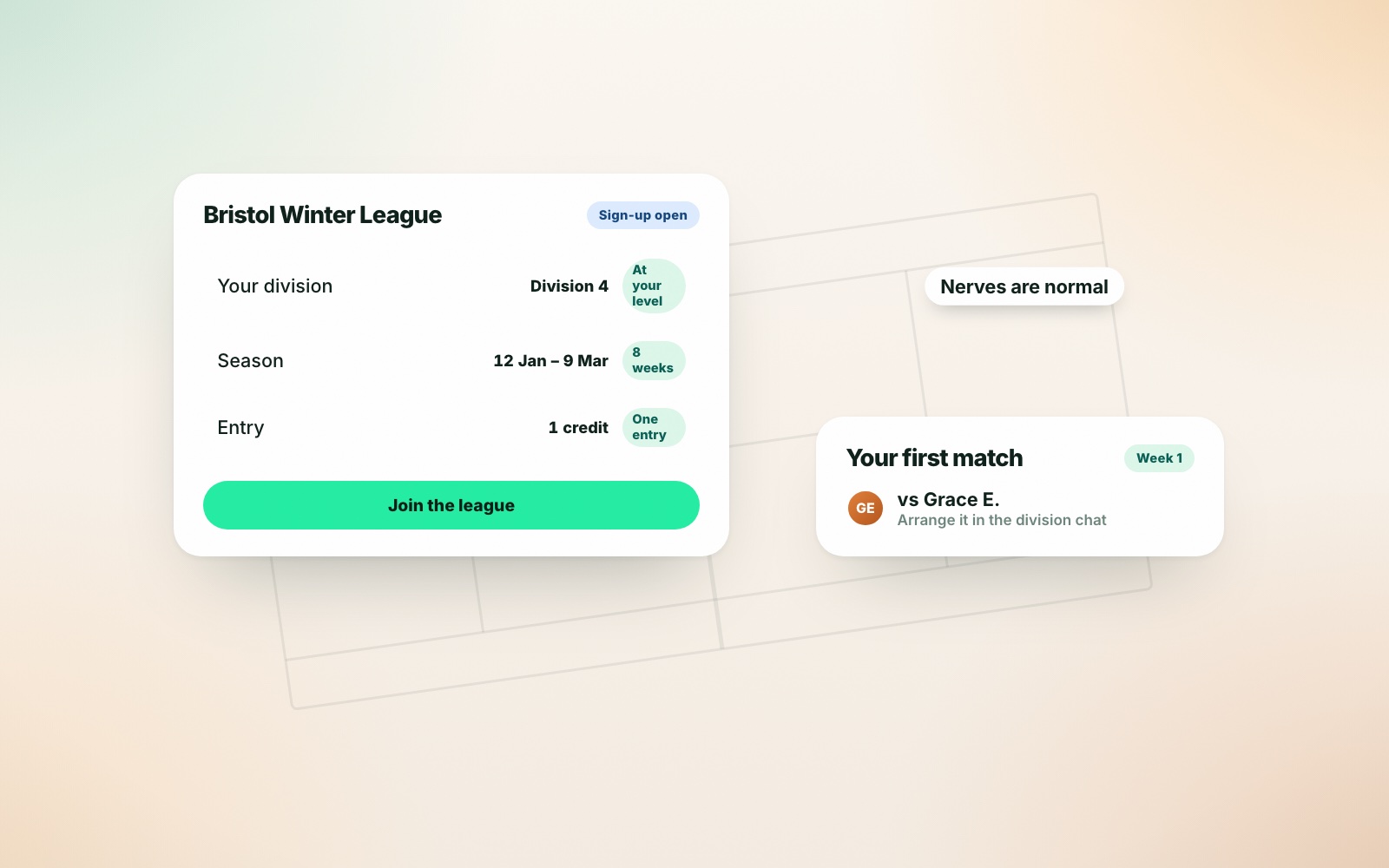 Guides
How to tell when you are ready, choose a first league or tournament and get through match one.
Read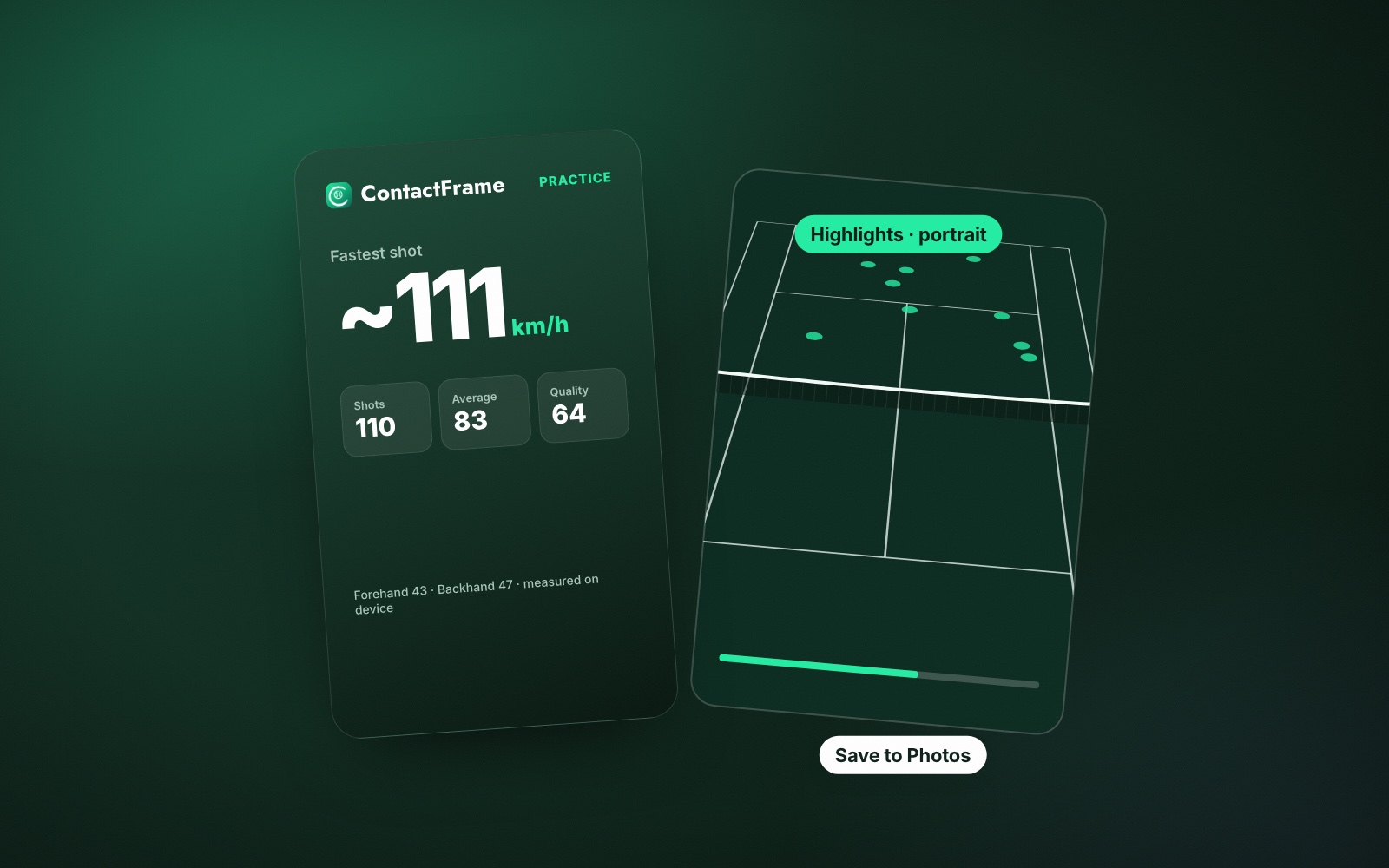 The lab
How to turn a filmed session into a clip or a stat card people will actually watch.
Read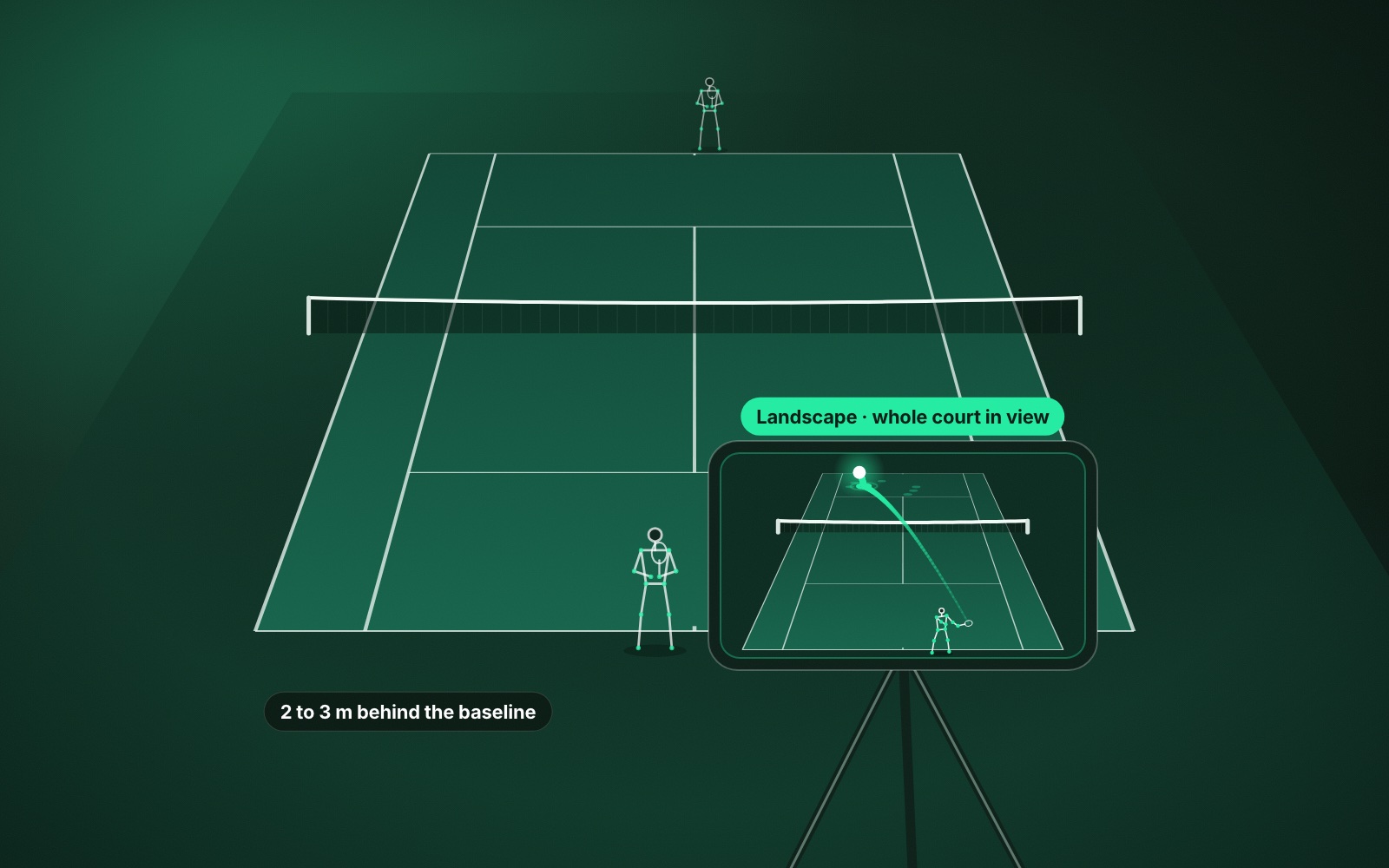 The lab
Where to put the phone, how high, and the handful of mistakes that spoil most club match footage.
Read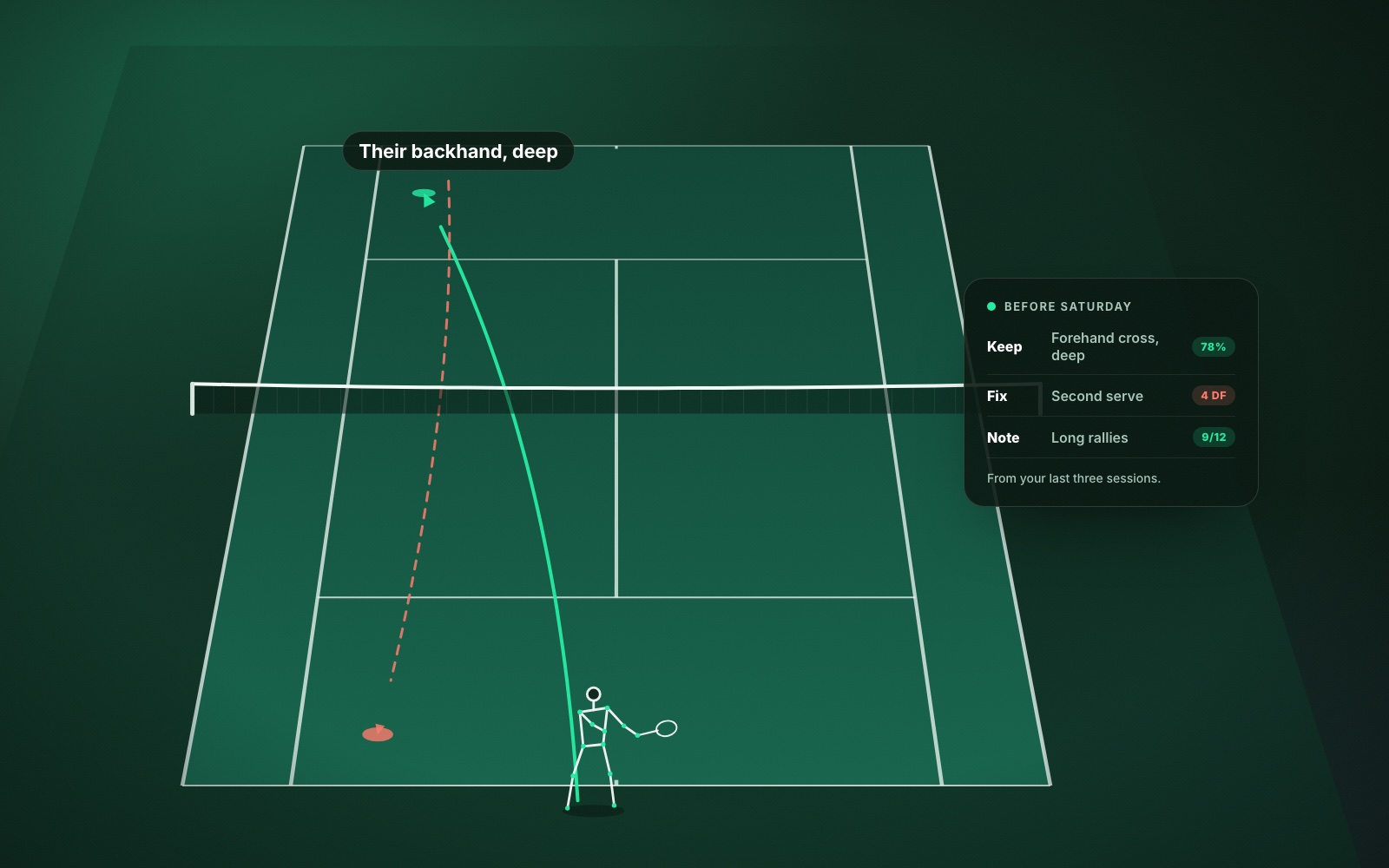 Improve
You usually can’t scout a club opponent. You can study yourself, and walk on court with a plan you trust.
Read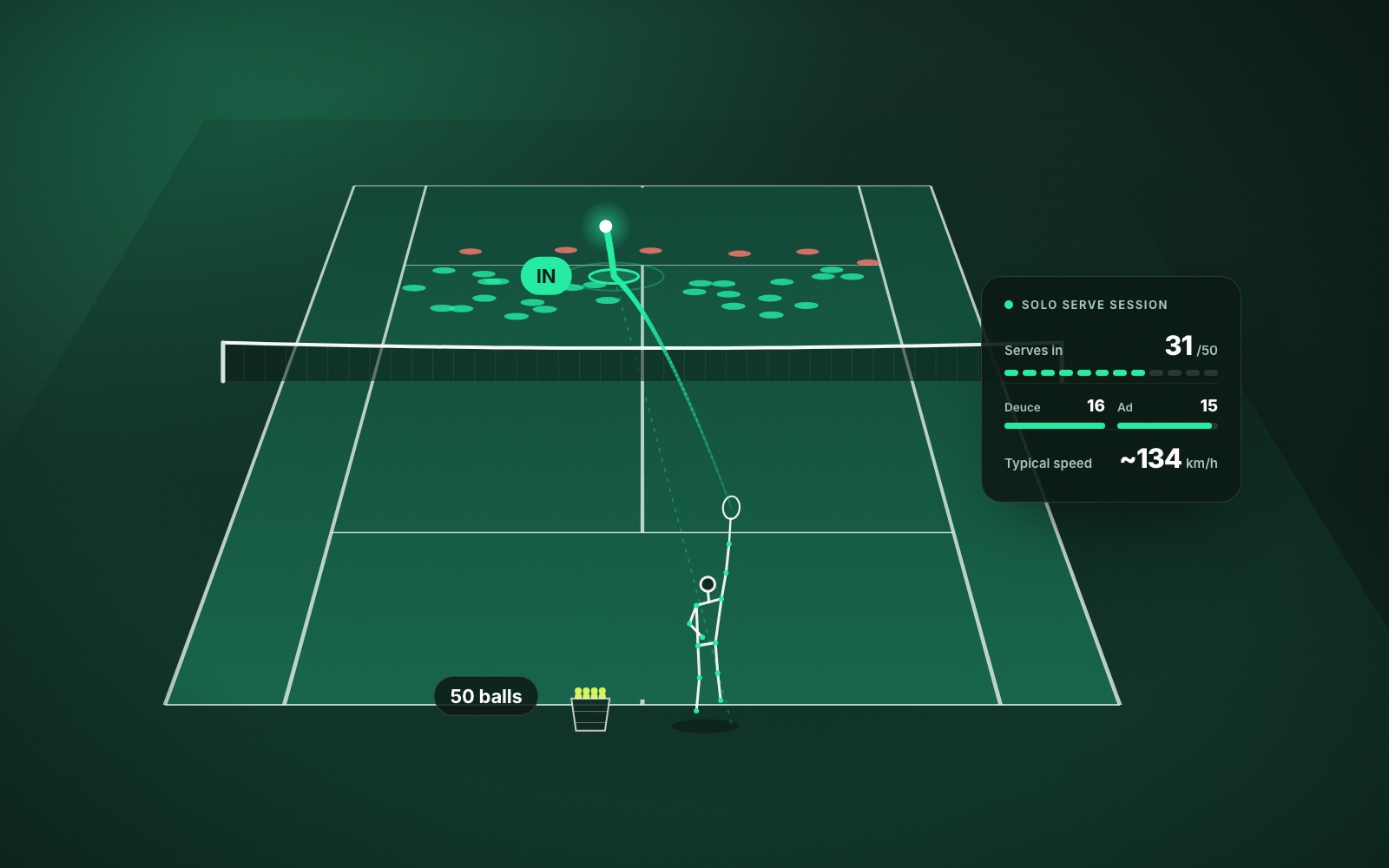 Improve
Your partner has cancelled and the court is booked. A solo session can be the most useful hour of your week.
Read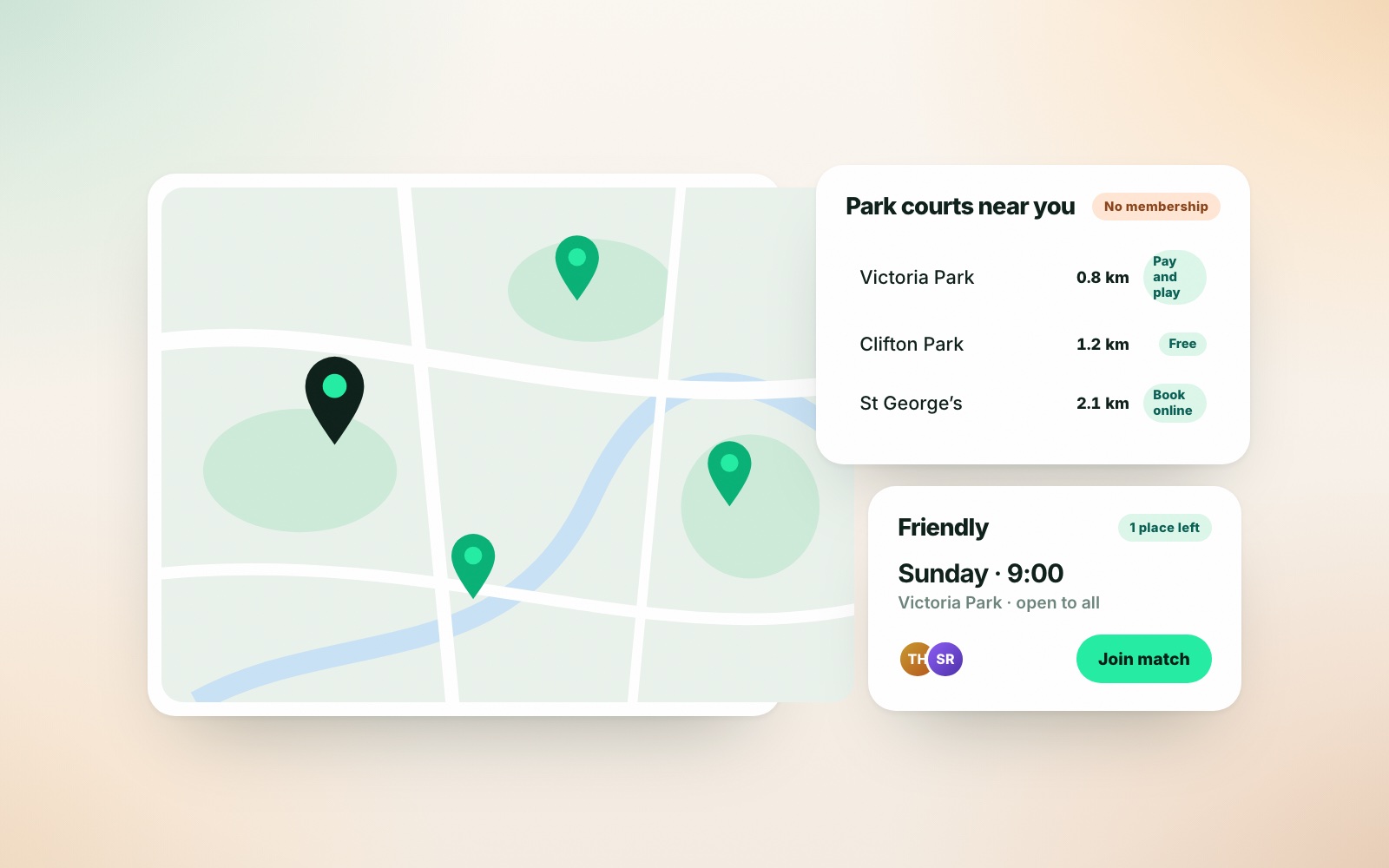 Guides
Courts, partners, competition and coaching: how to get all four without a club membership.
Read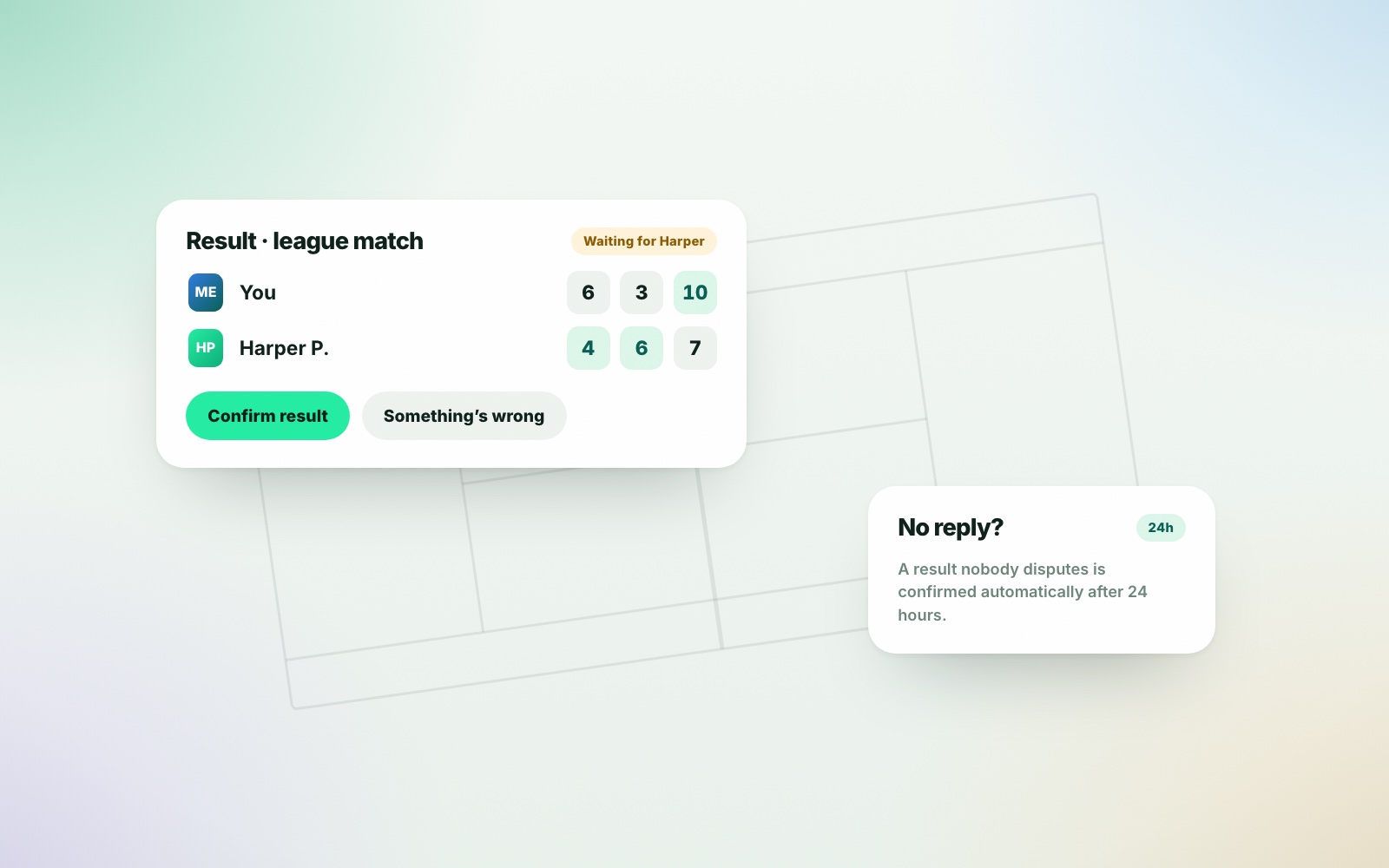 The ladder
One player logs it, the other confirms it, and silence settles it after 24 hours.
Read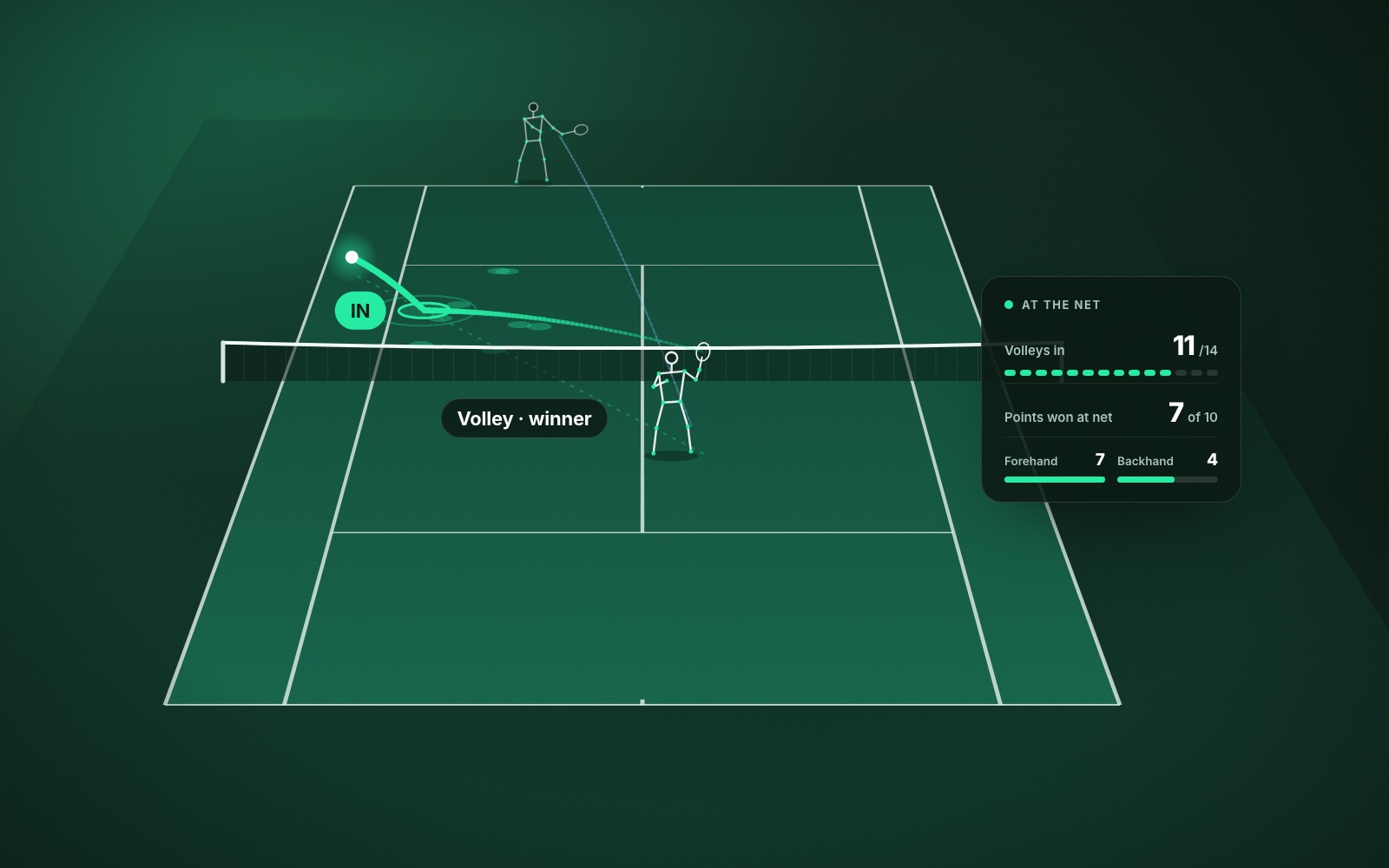 Improve
Stand closer, swing less, aim deeper. Then check on video whether your volleys actually changed.
Read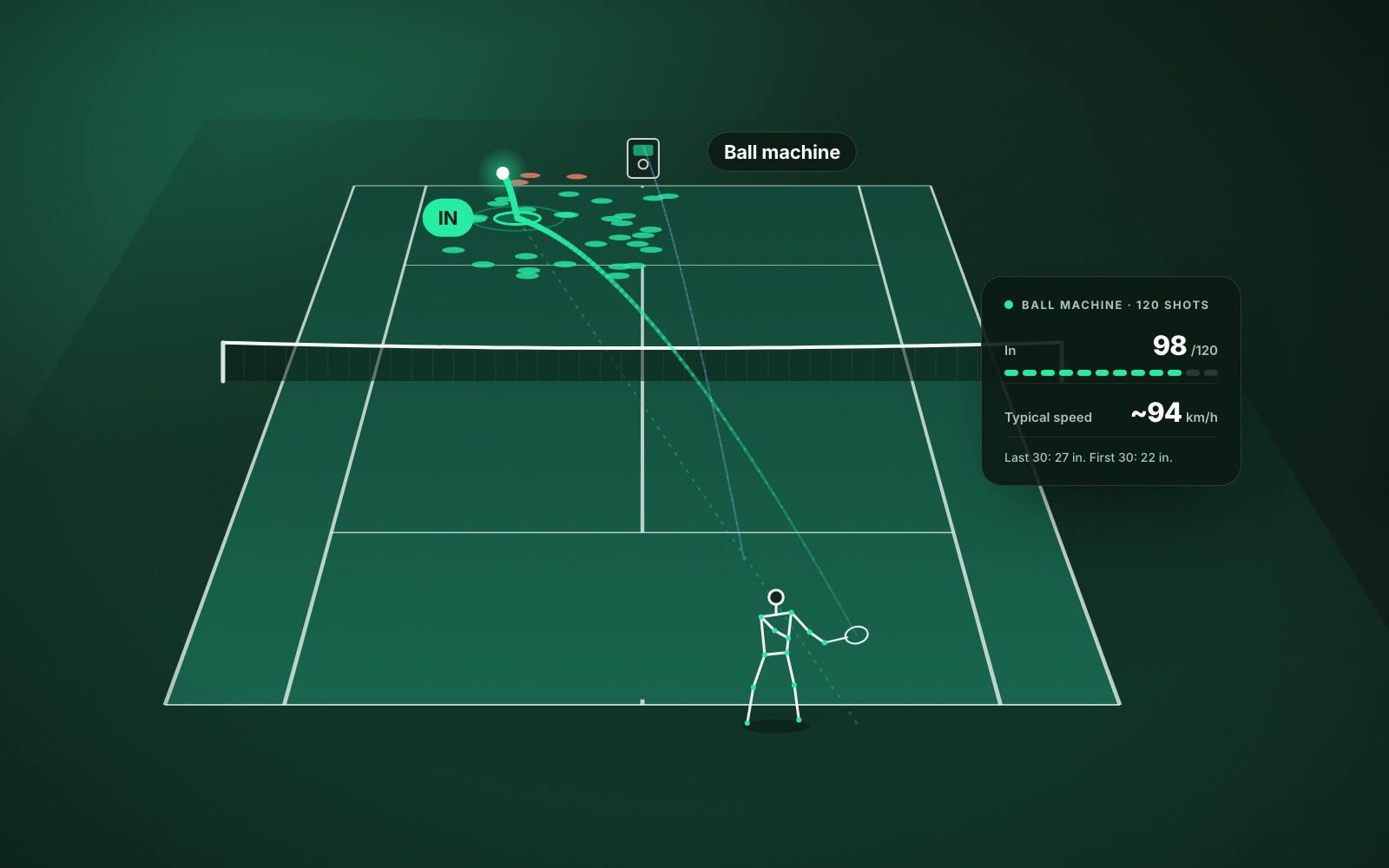 Improve
An hour on the ball machine feels productive. Filming it shows whether anything actually changed.
Read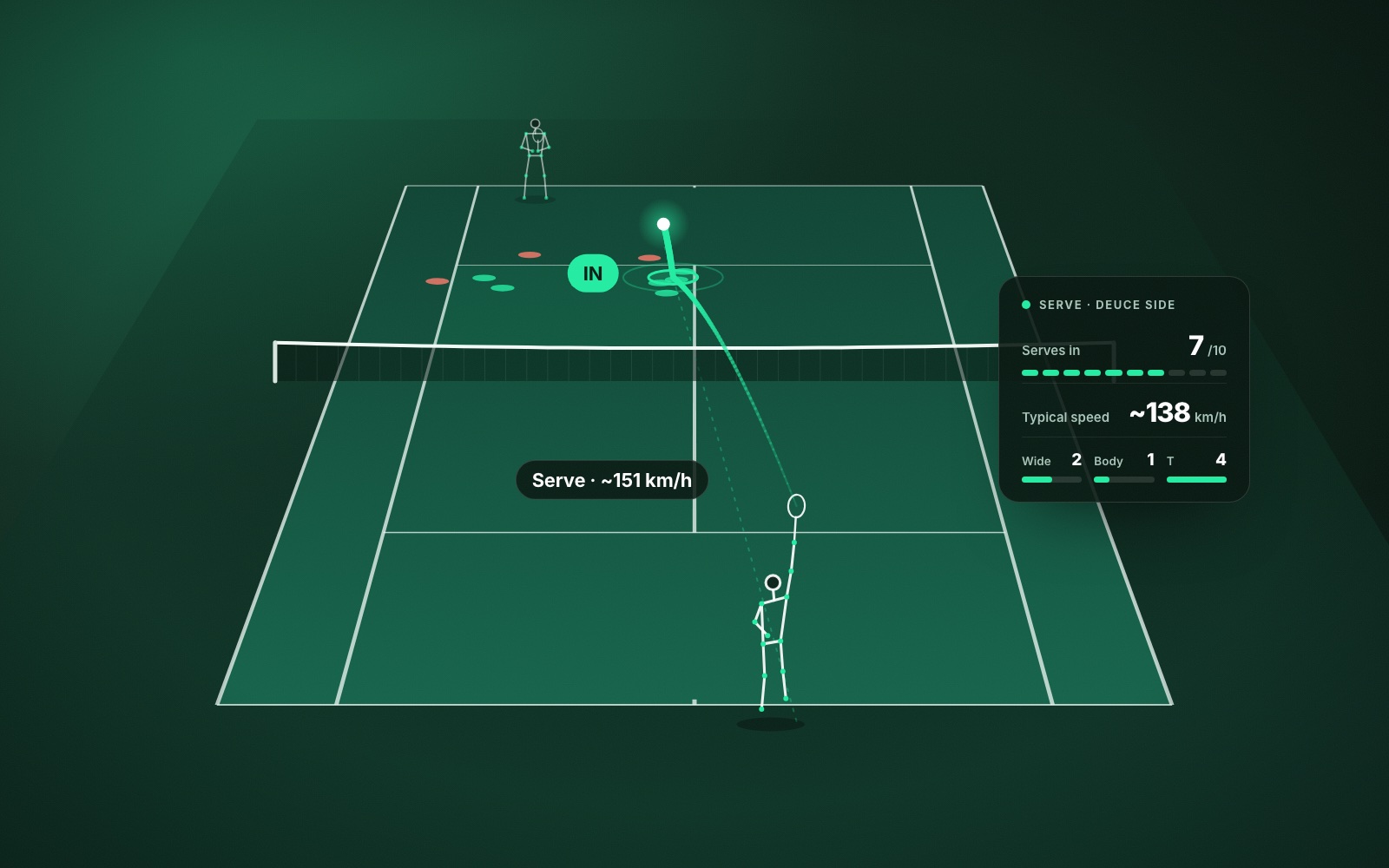 Improve
Film a basket of serves, read three numbers, and practise the one that is holding your serve back.
Read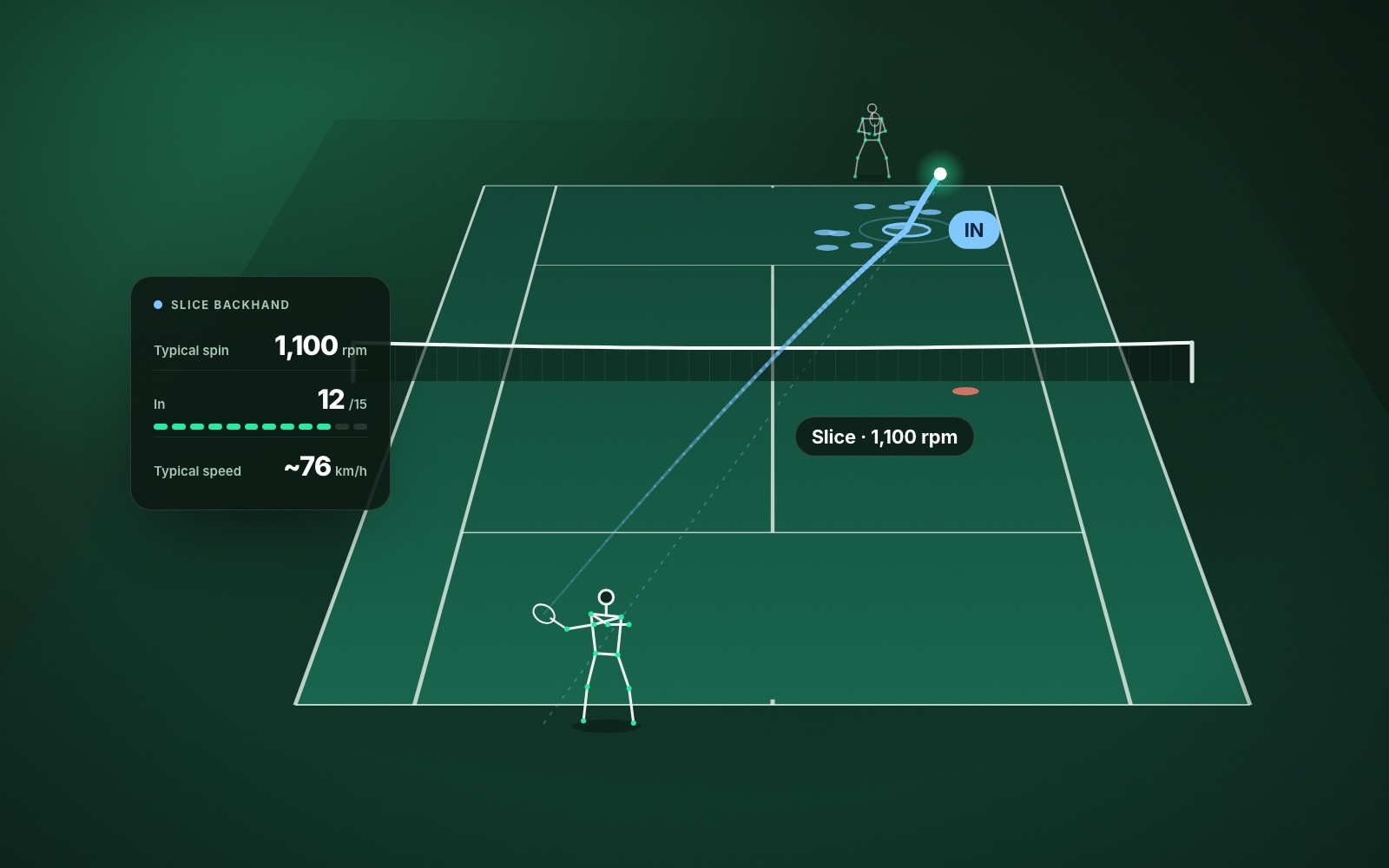 Improve
A good slice skids low and deep. A bad one floats. Video tells you which one you are hitting.
Read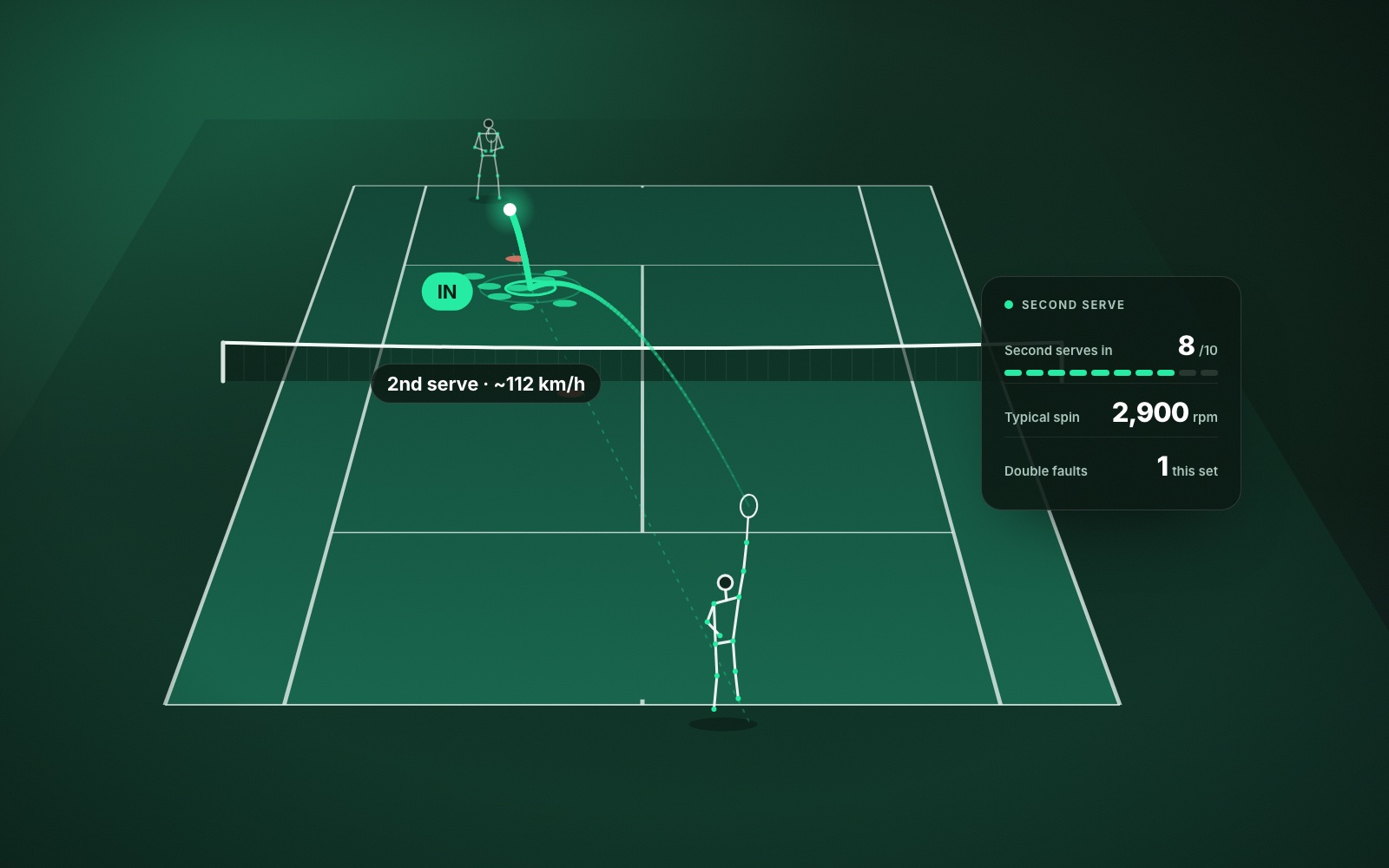 Improve
Stop double faulting by building a second serve with more spin and the same swing, then measuring whether it holds.
Read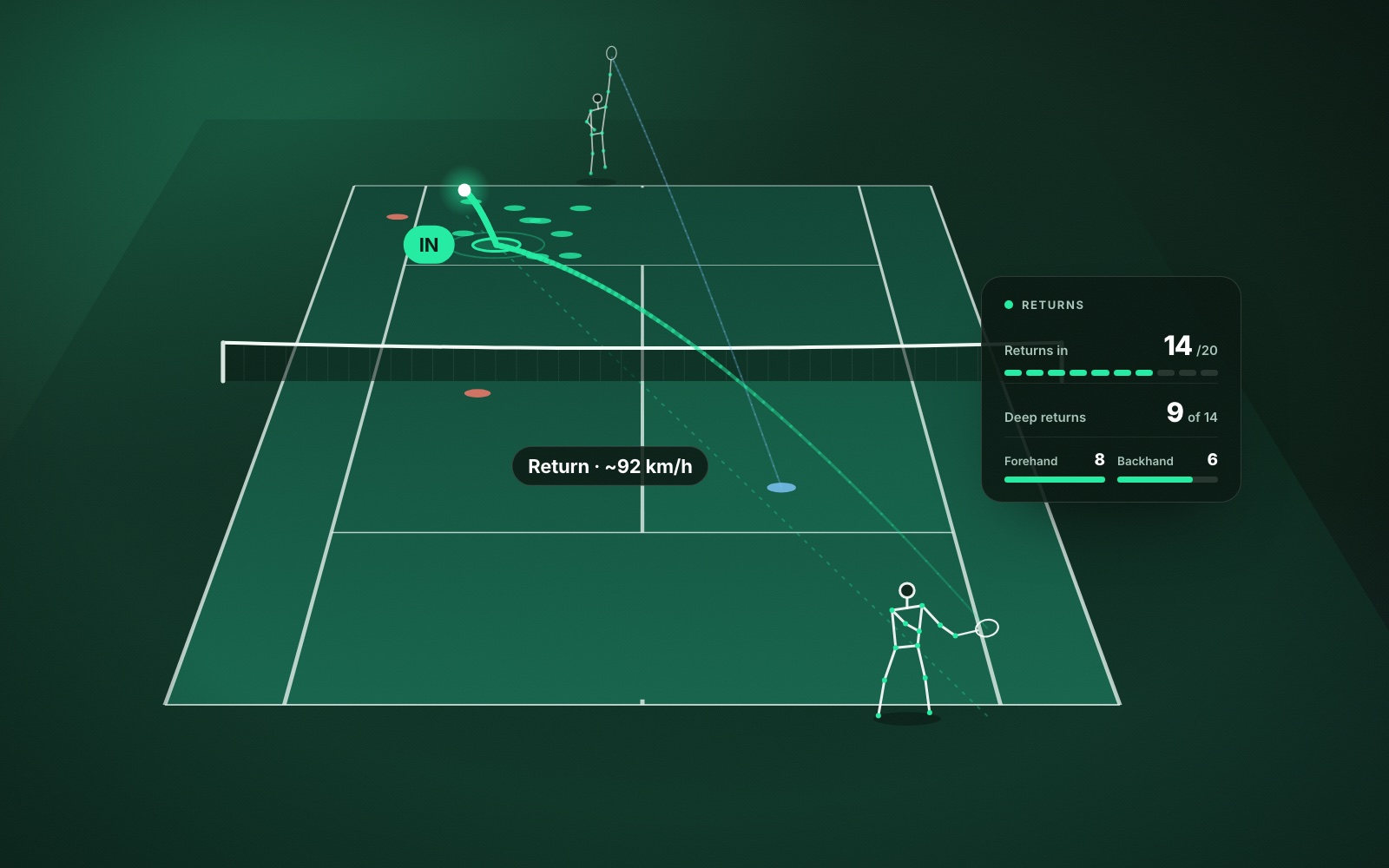 Improve
Nobody practises the return. Film it, check your readiness and depth, and start more points on level terms.
Read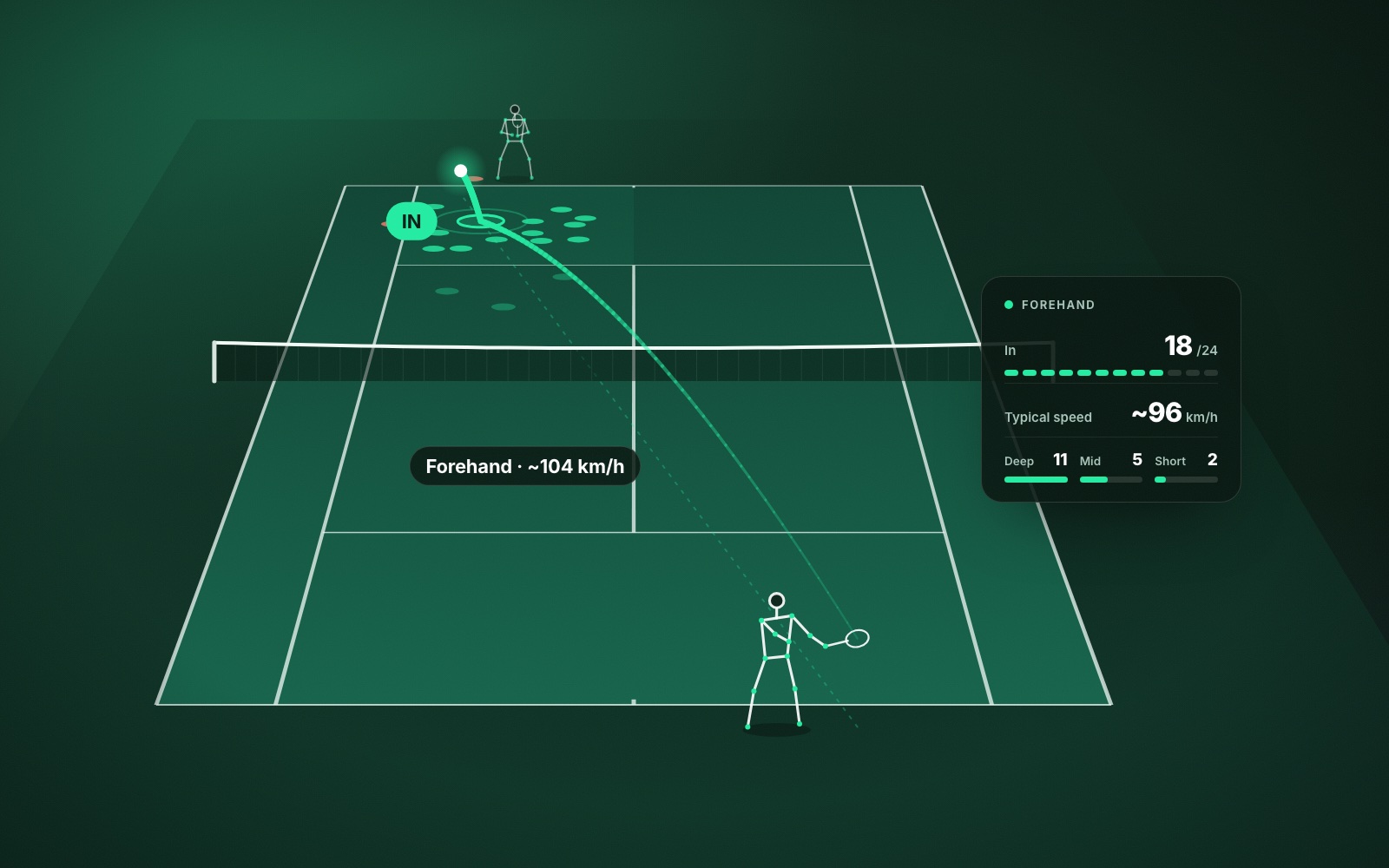 Improve
Your forehand feels like a weapon. The numbers show whether it is, and what to practise if it is not.
Read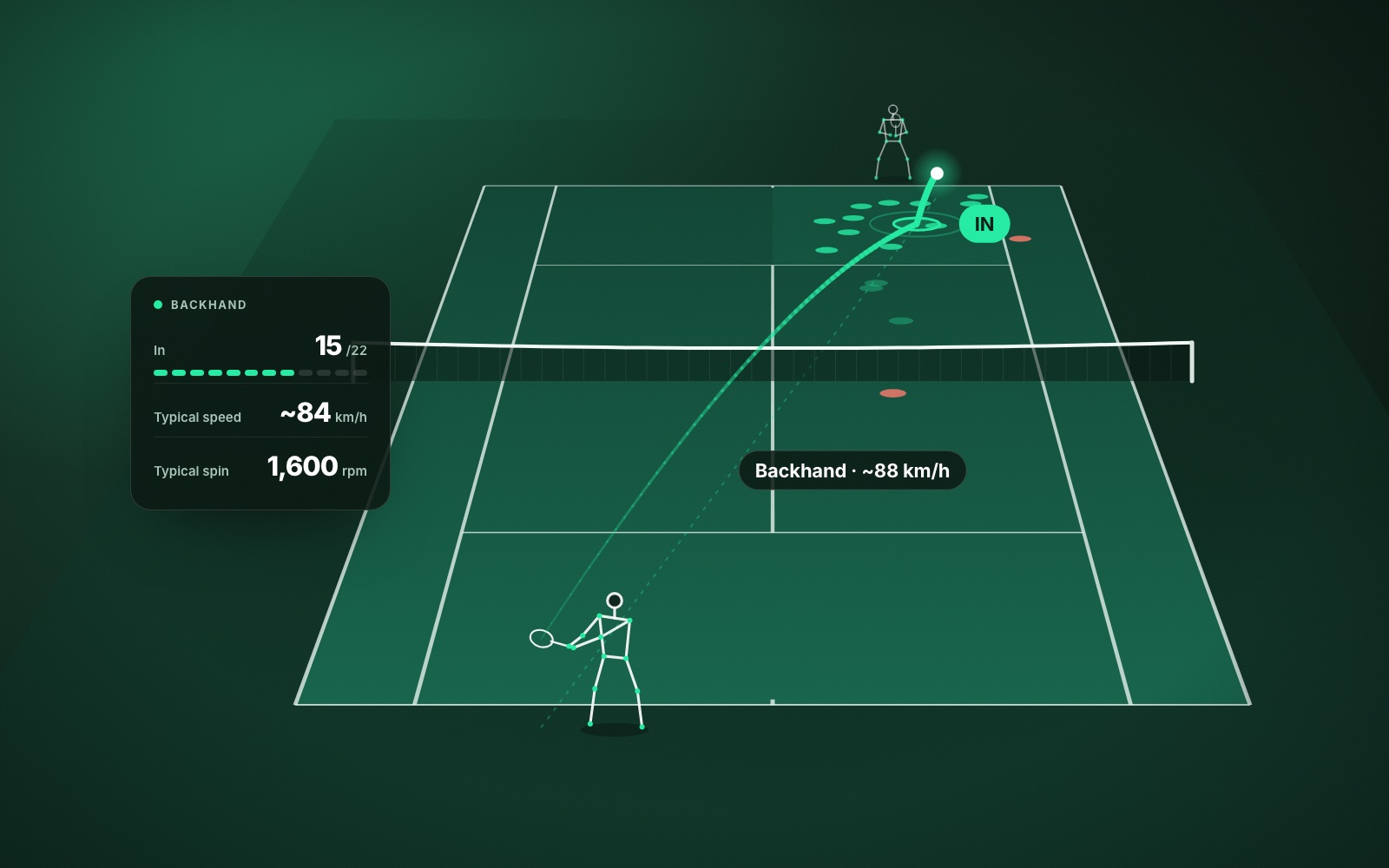 Improve
Measure the gap between your backhand and your forehand, then close it one drill at a time.
Read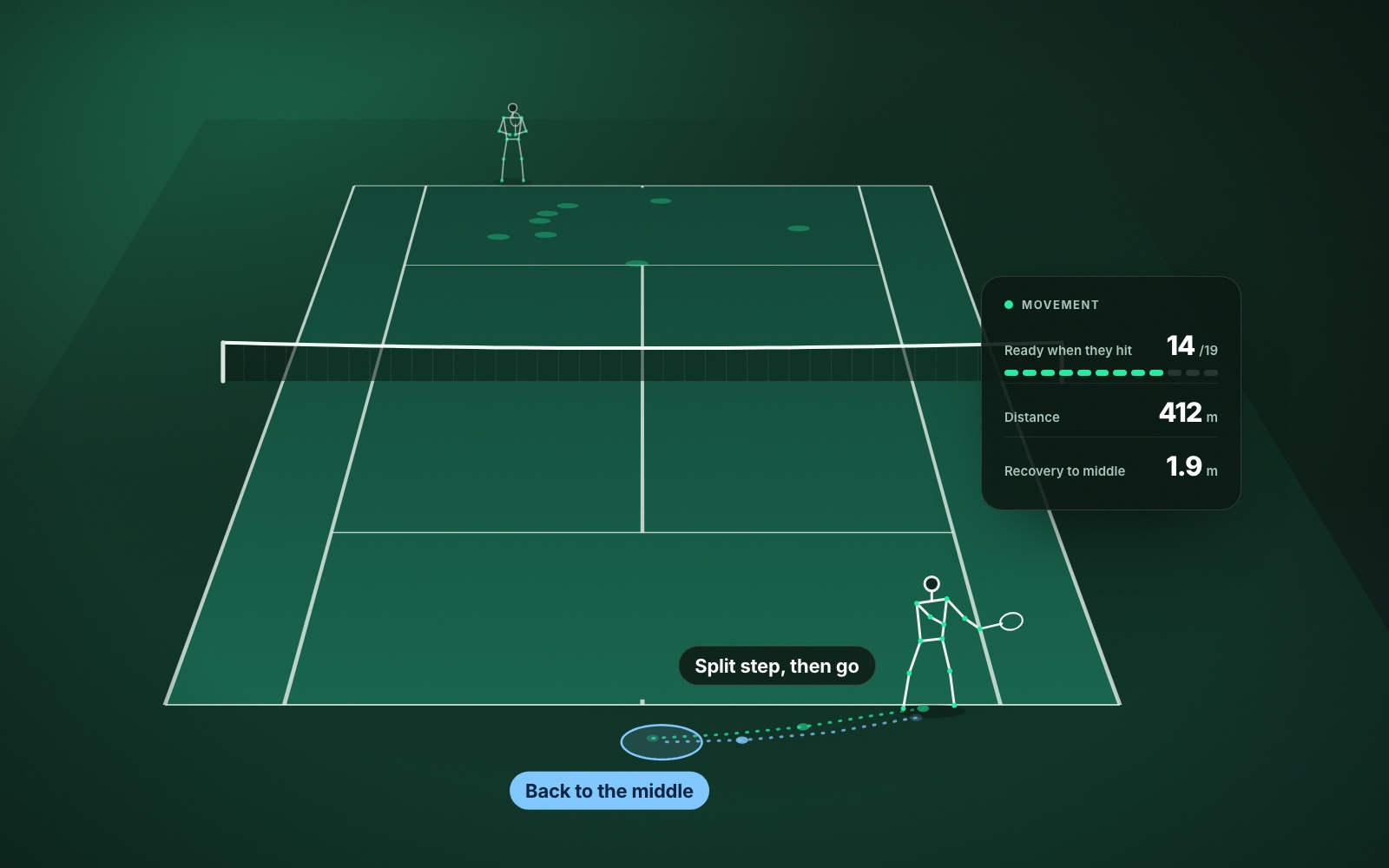 Improve
Bad shots usually start with the feet. Measure your readiness and recovery, then drill the habits that fix them.
Read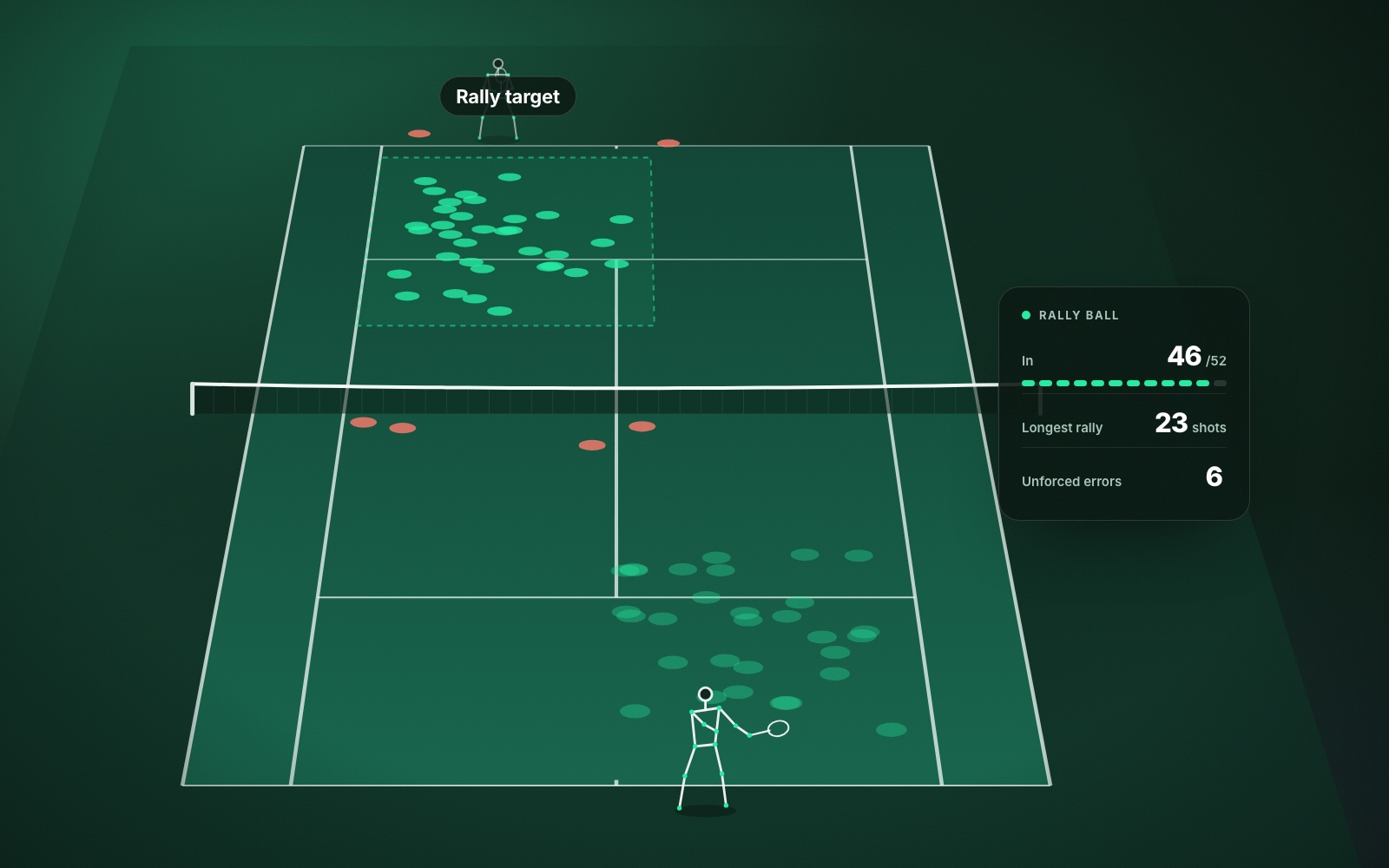 Improve
Find out which shot breaks down and on which ball of the rally. Then practise that, not everything.
Read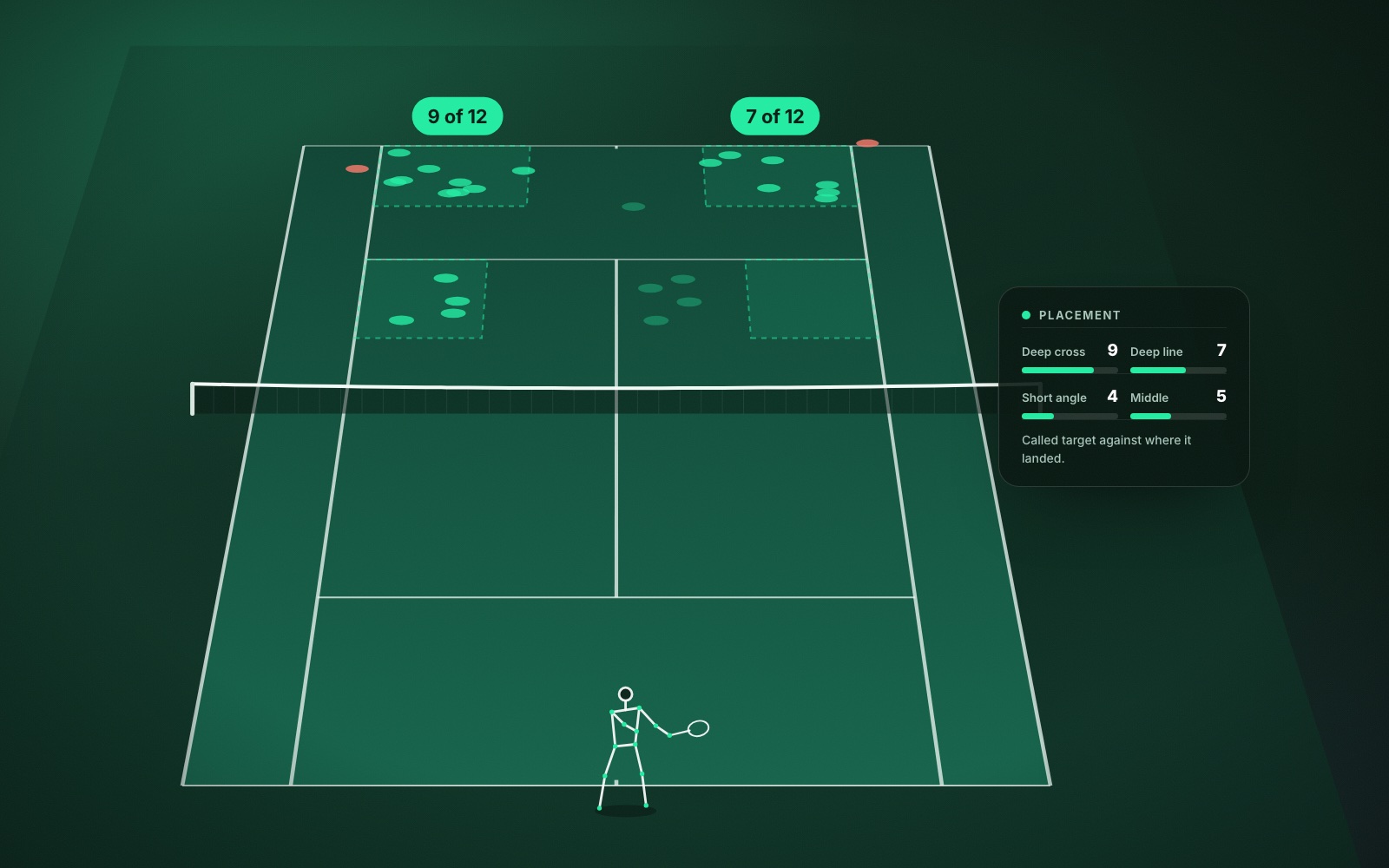 Improve
You aimed for the corner and the ball went somewhere else. Here is how to measure that gap and shrink it.
Read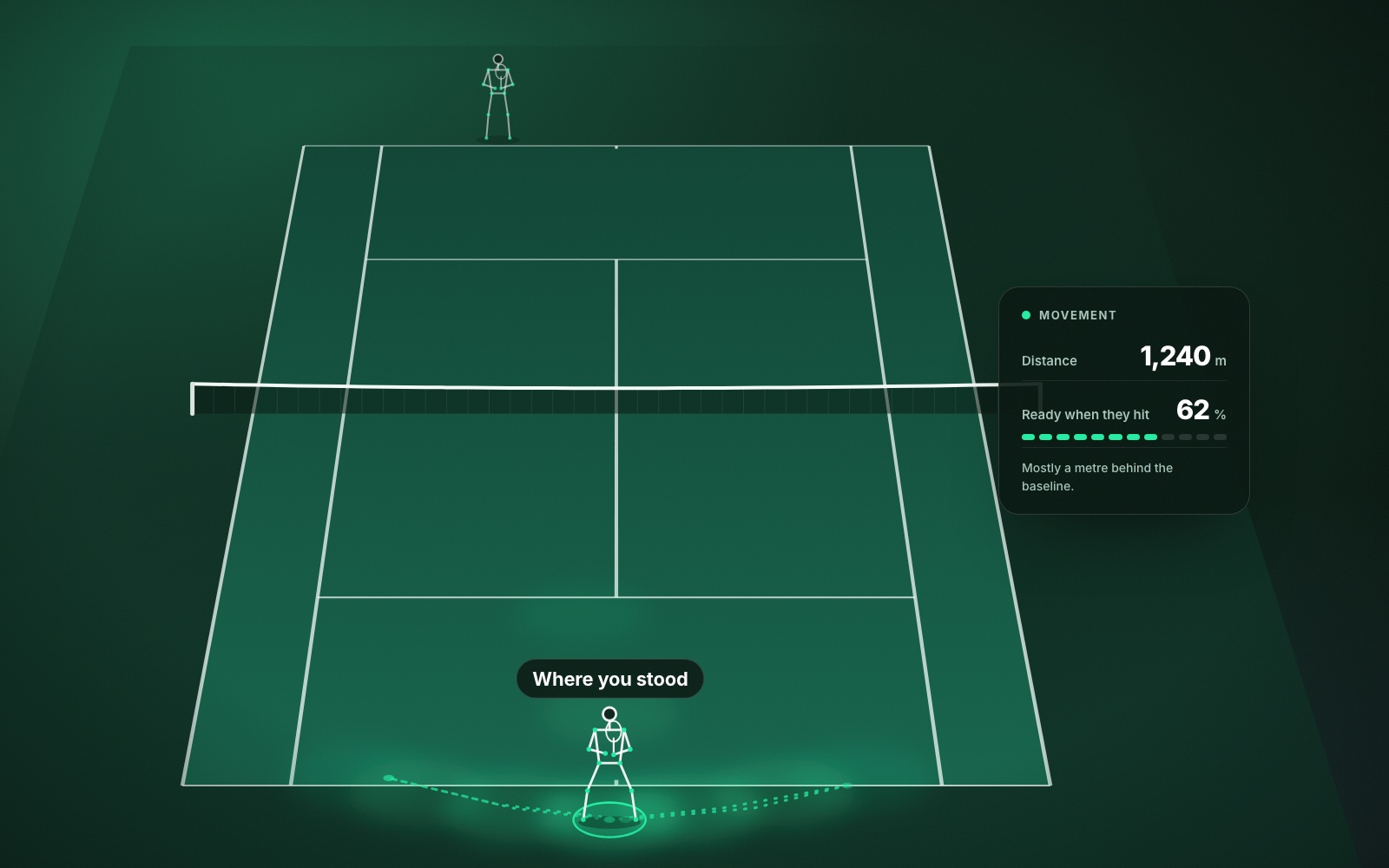 Improve
Poor court coverage is rarely about speed. It is about where you stand and how quickly you get back.
Read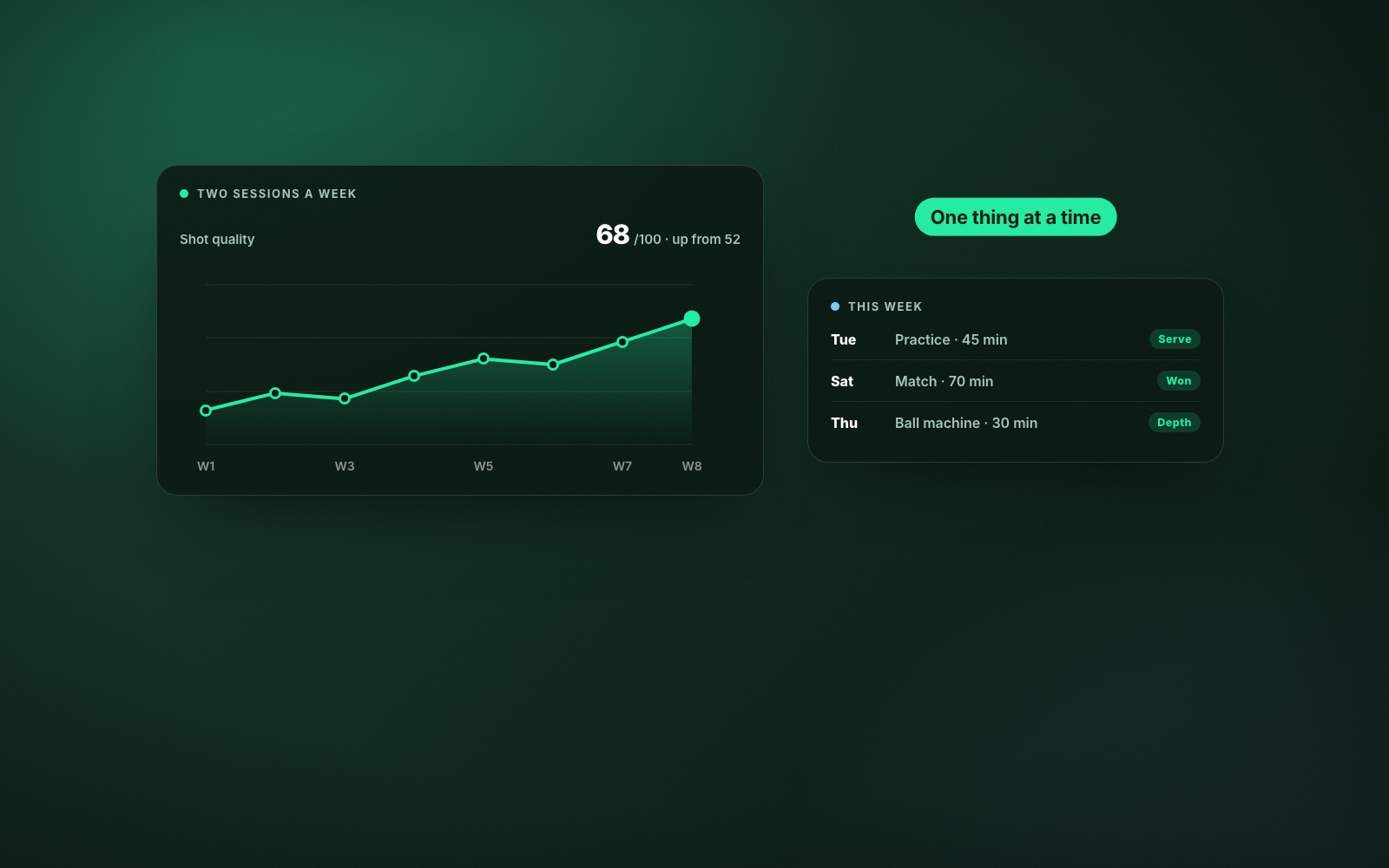 Improve
Adults don’t have ten hours a week. What they can have is a clear picture of their game and one thing to work on.
Read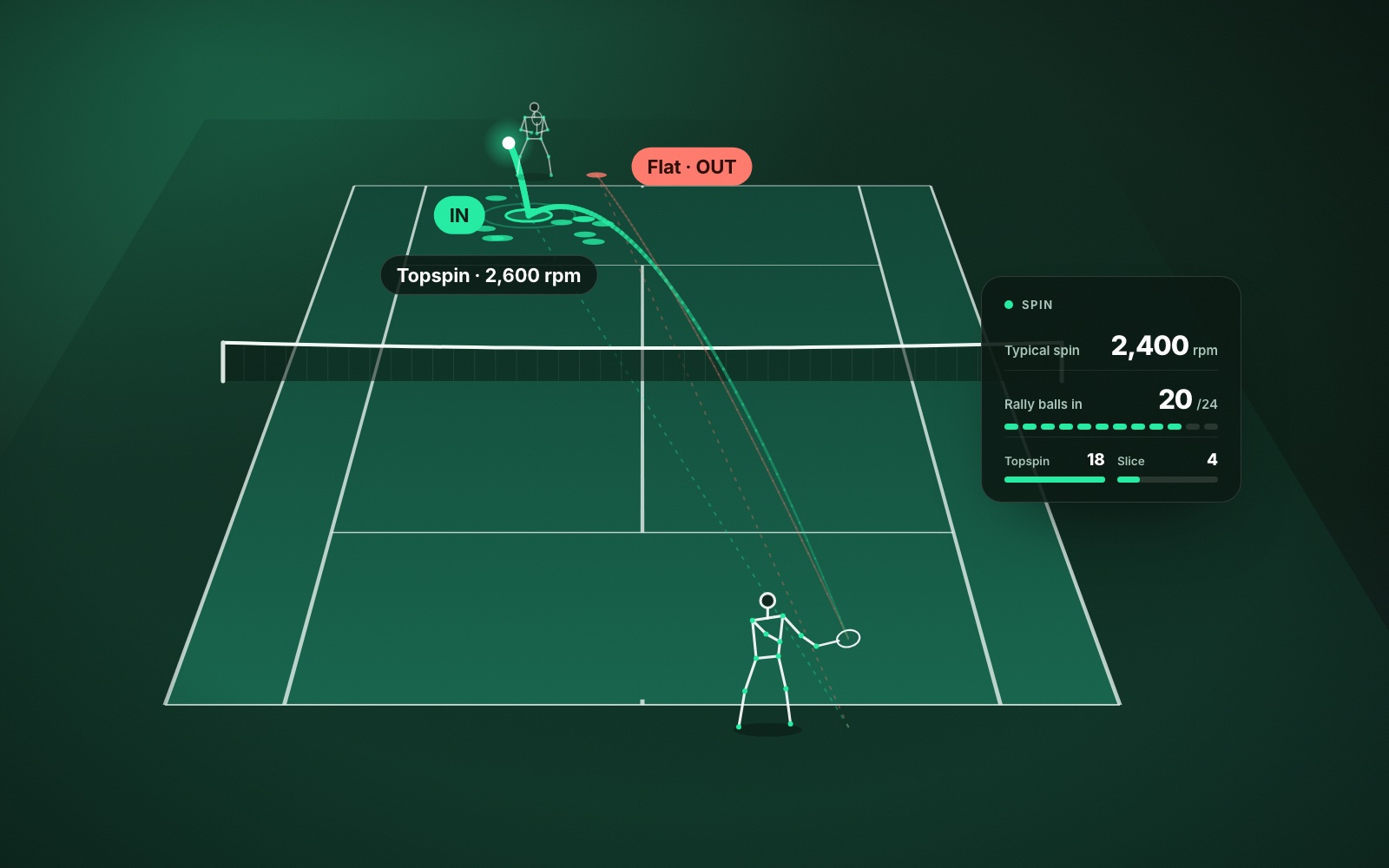 Improve
You cannot feel rpm. Measure it, then use three drills to raise your topspin without losing depth.
Read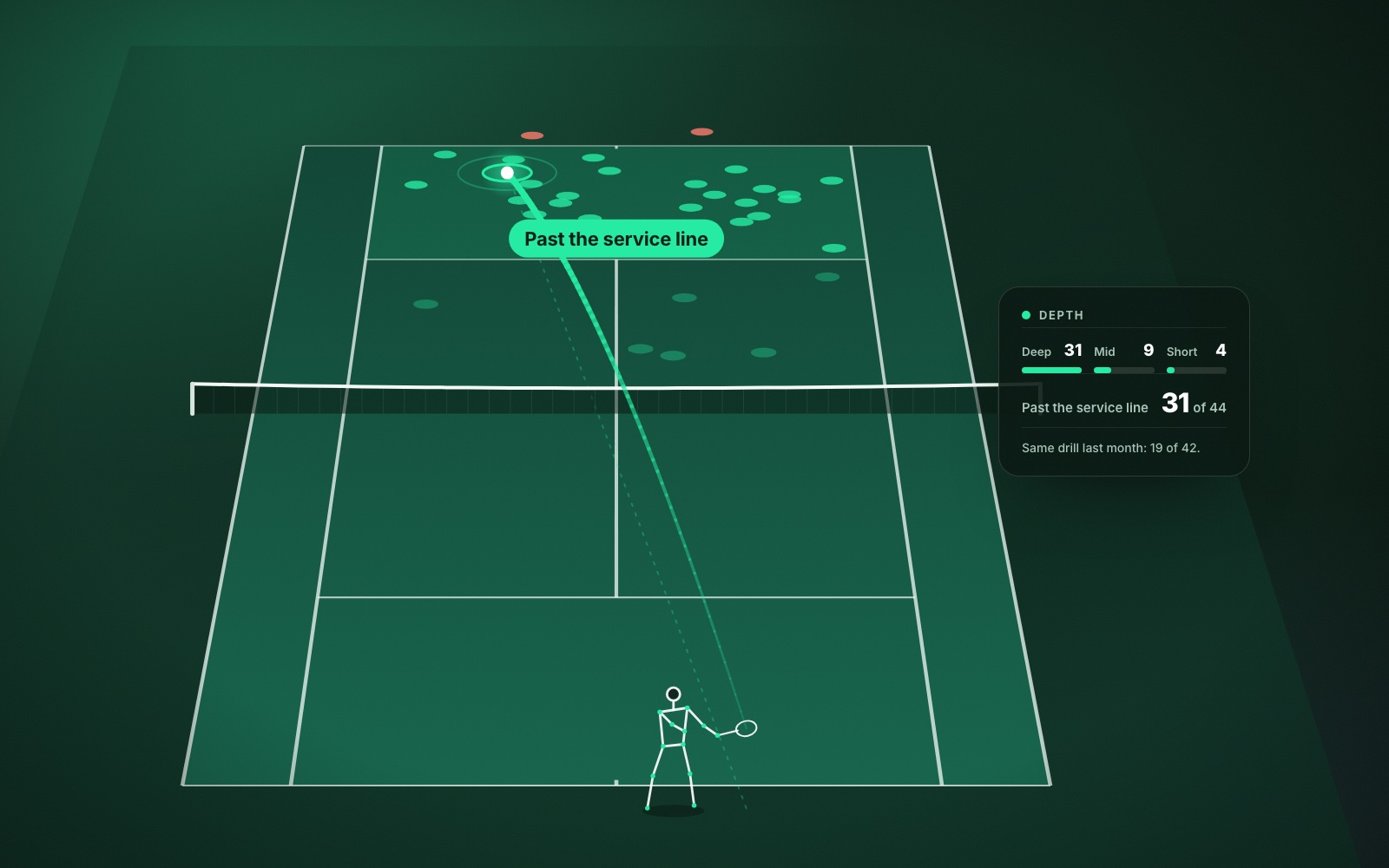 Improve
Most club players think they hit deeper than they do. See where your shots really land, then move them back.
Read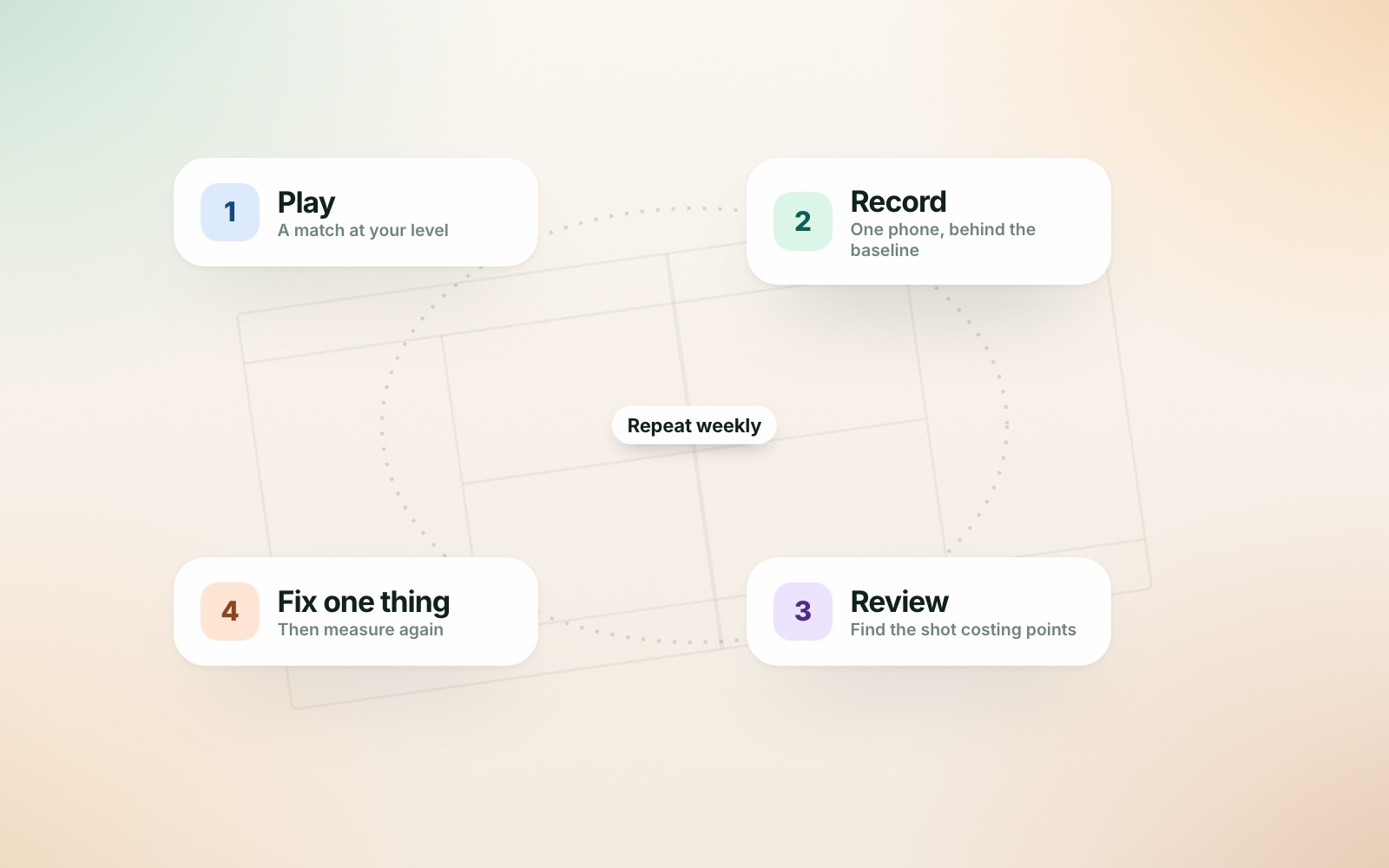 Guides
No shortcuts, but a shortest route: what to work on first and how to know it is working.
Read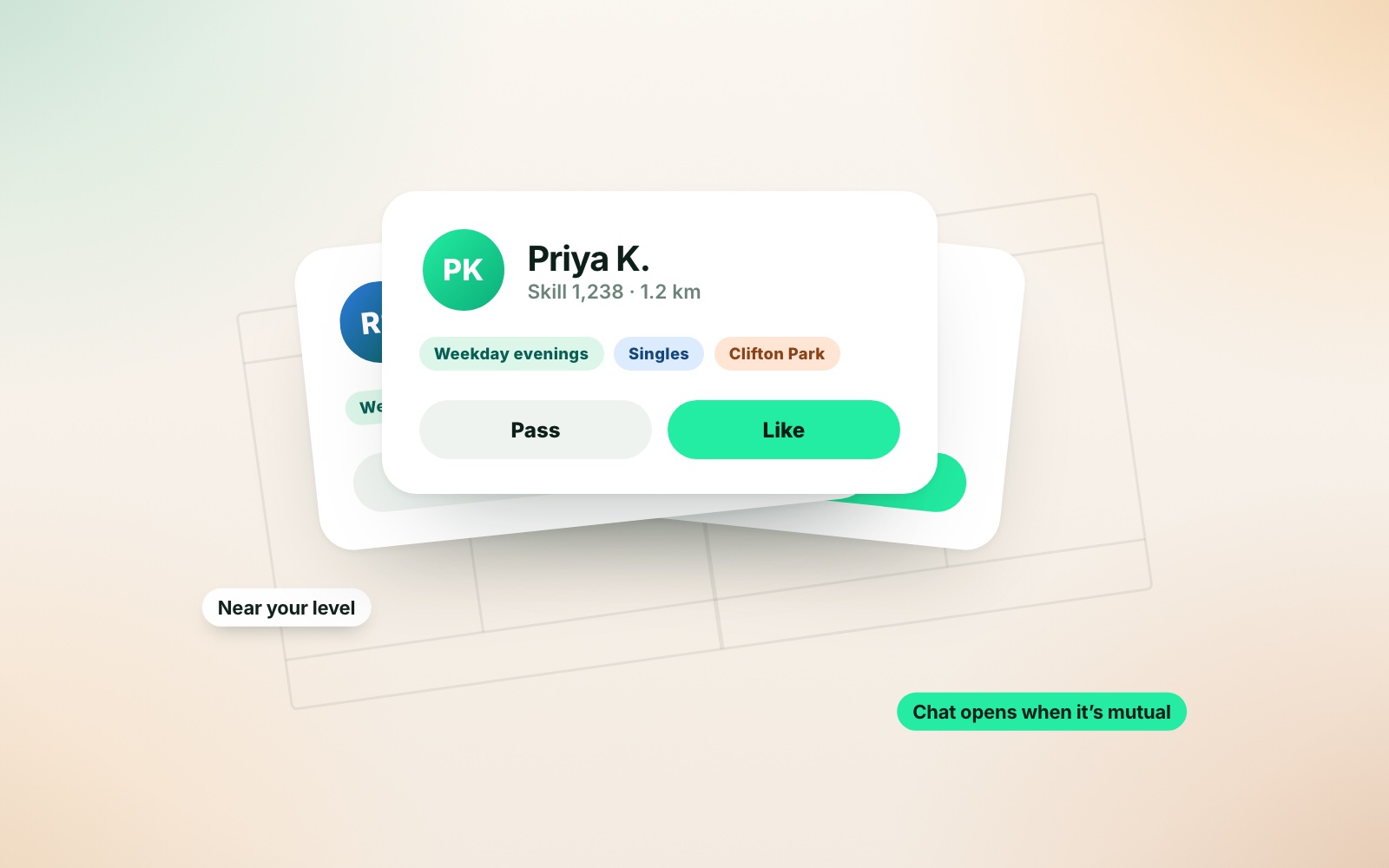 Guides
Where UK players actually find a hitting partner at their level, and how to keep one.
Read Guides
How to find public and club tennis courts in the UK, and what to check before you travel.
Read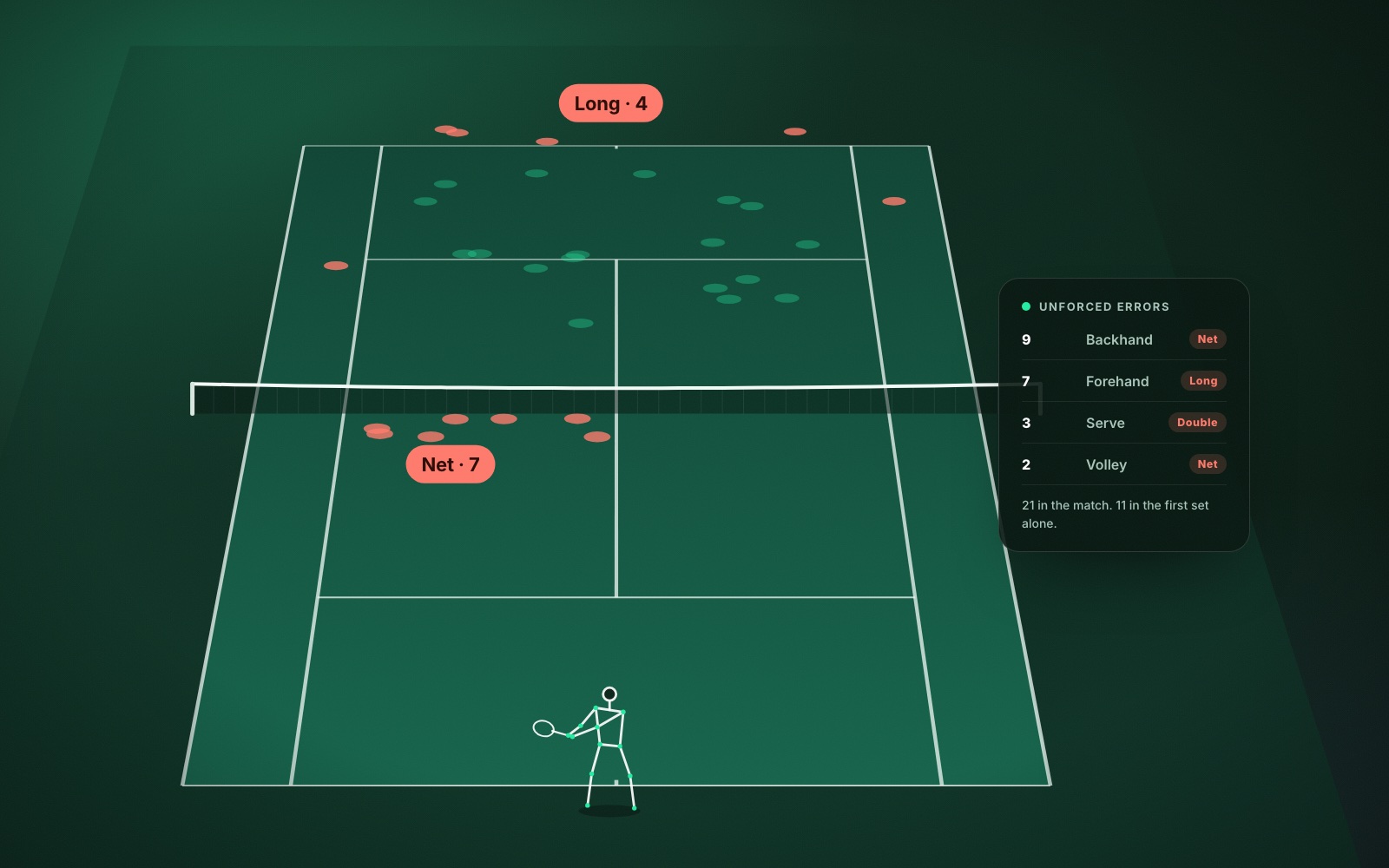 Improve
Nobody counts their own errors honestly. Film a match, sort the misses by type, and fix the biggest group first.
Read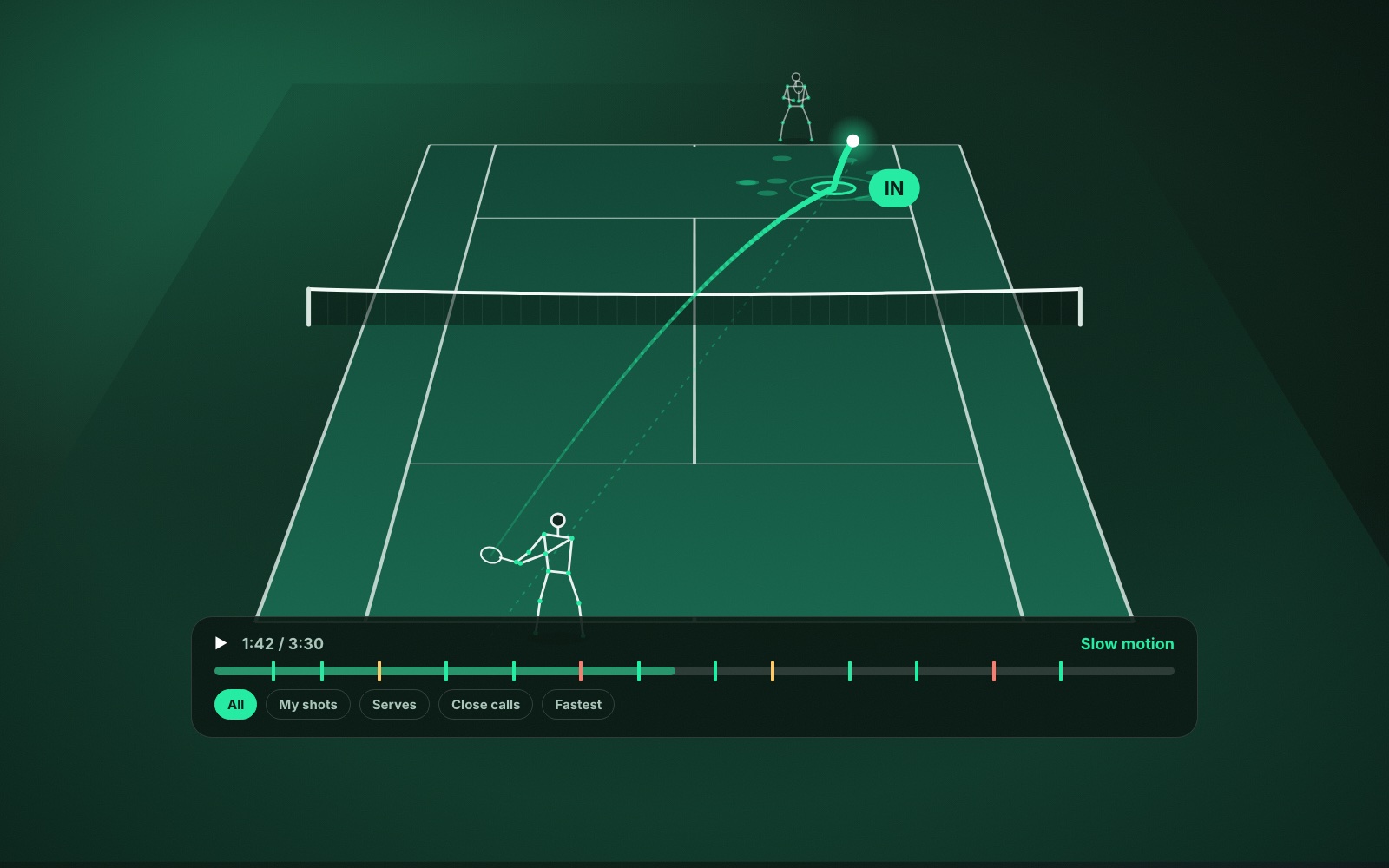 The lab
A simple order to watch your match in, what to write down, and how to end with one thing to practise.
Read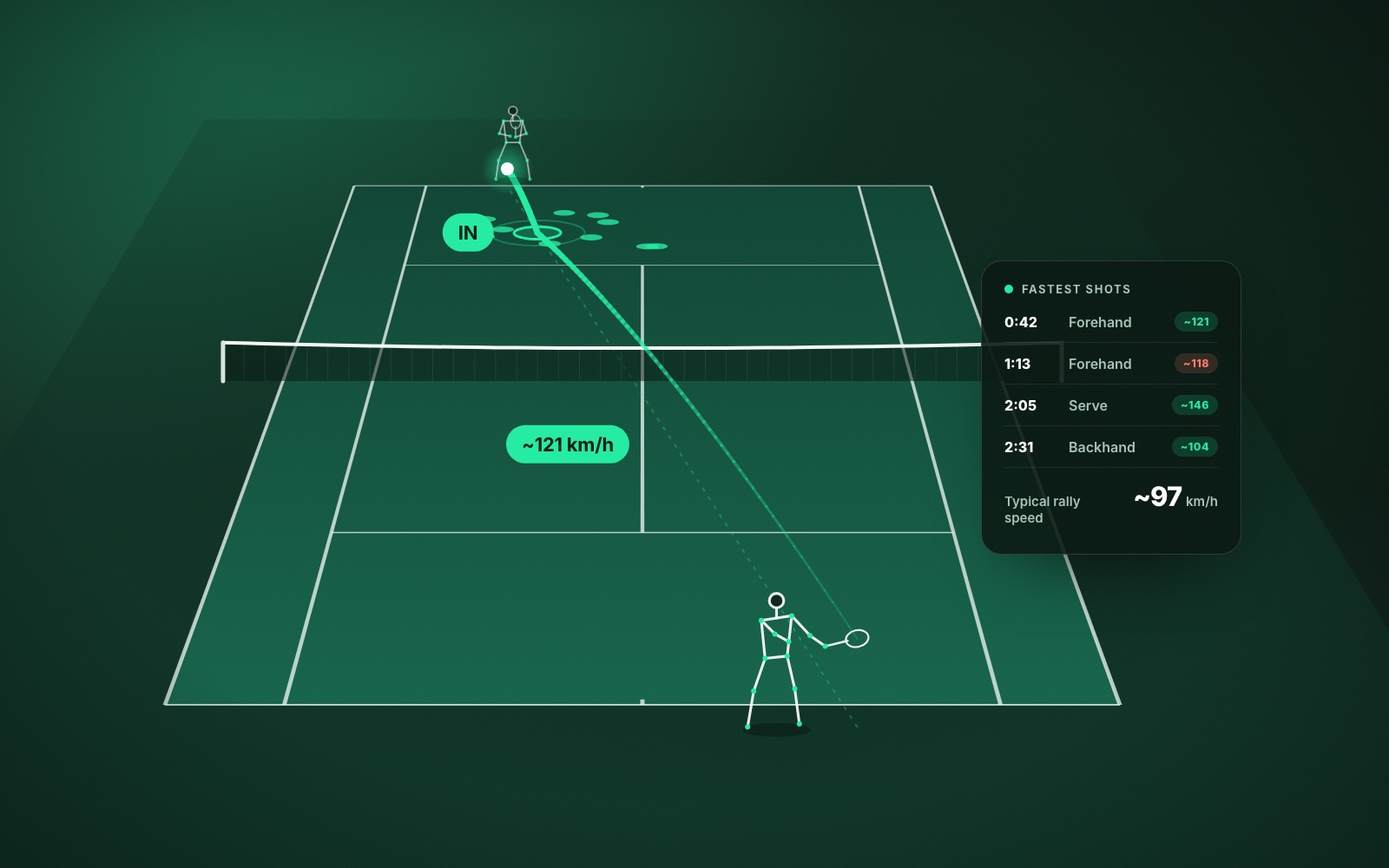 Improve
Swinging harder rarely makes the ball go faster. Measuring ball speed shows what actually does.
Read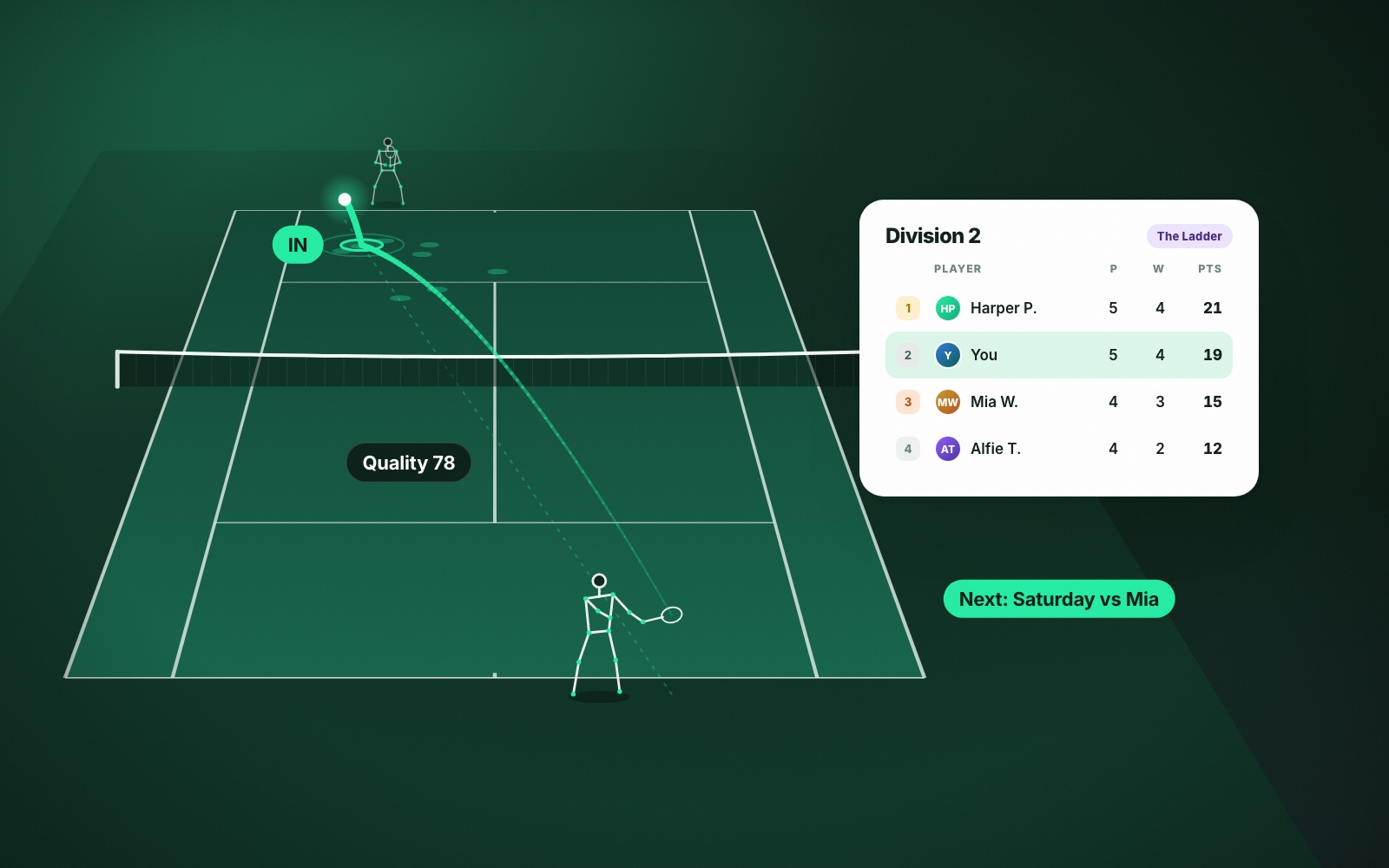 The lab
Find matches at your level, film them on one phone, see every shot measured, and fix one thing at a time.
Read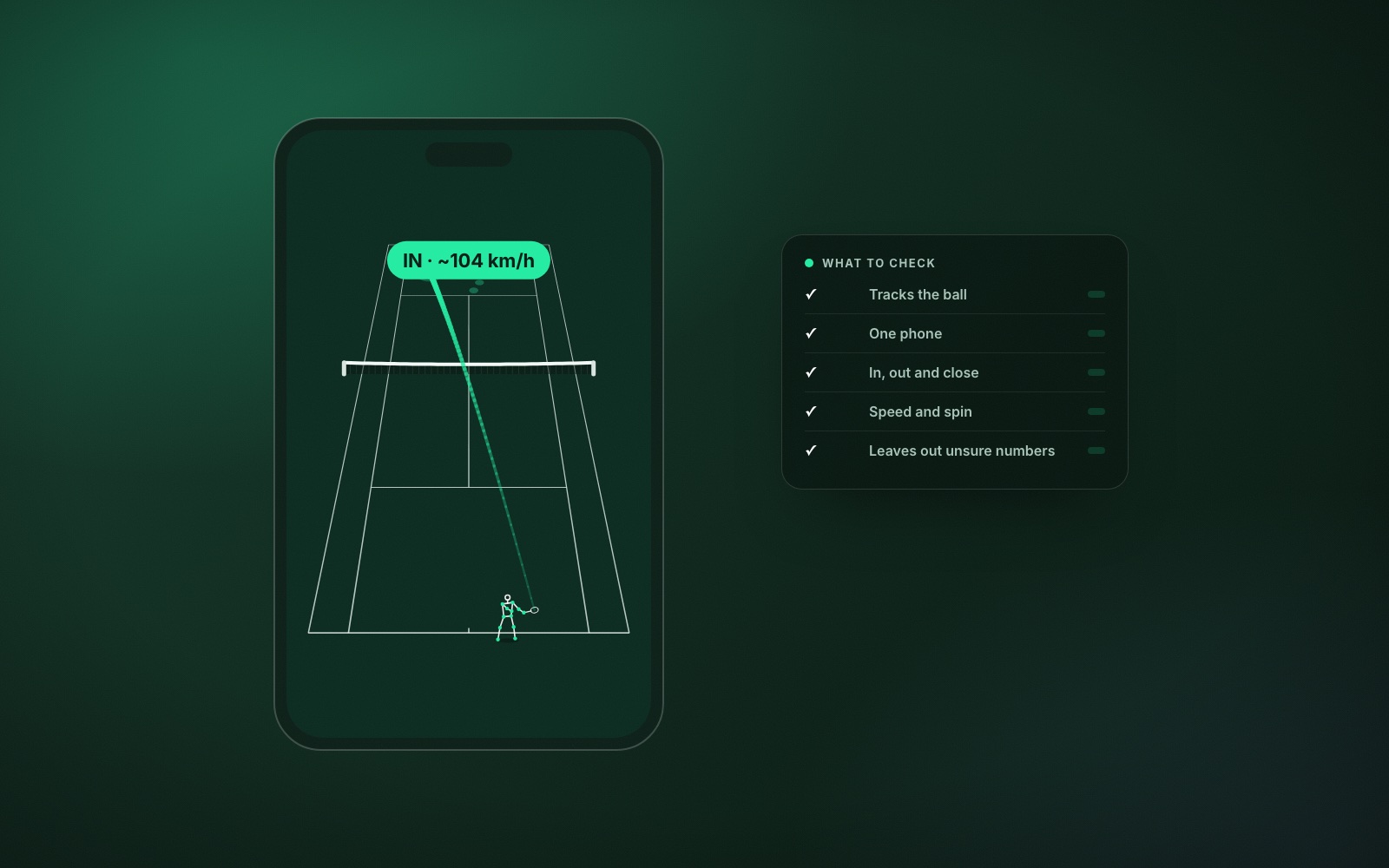 The lab
Nine things that separate a useful tennis video analysis app from a slow-motion player with a logo.
Read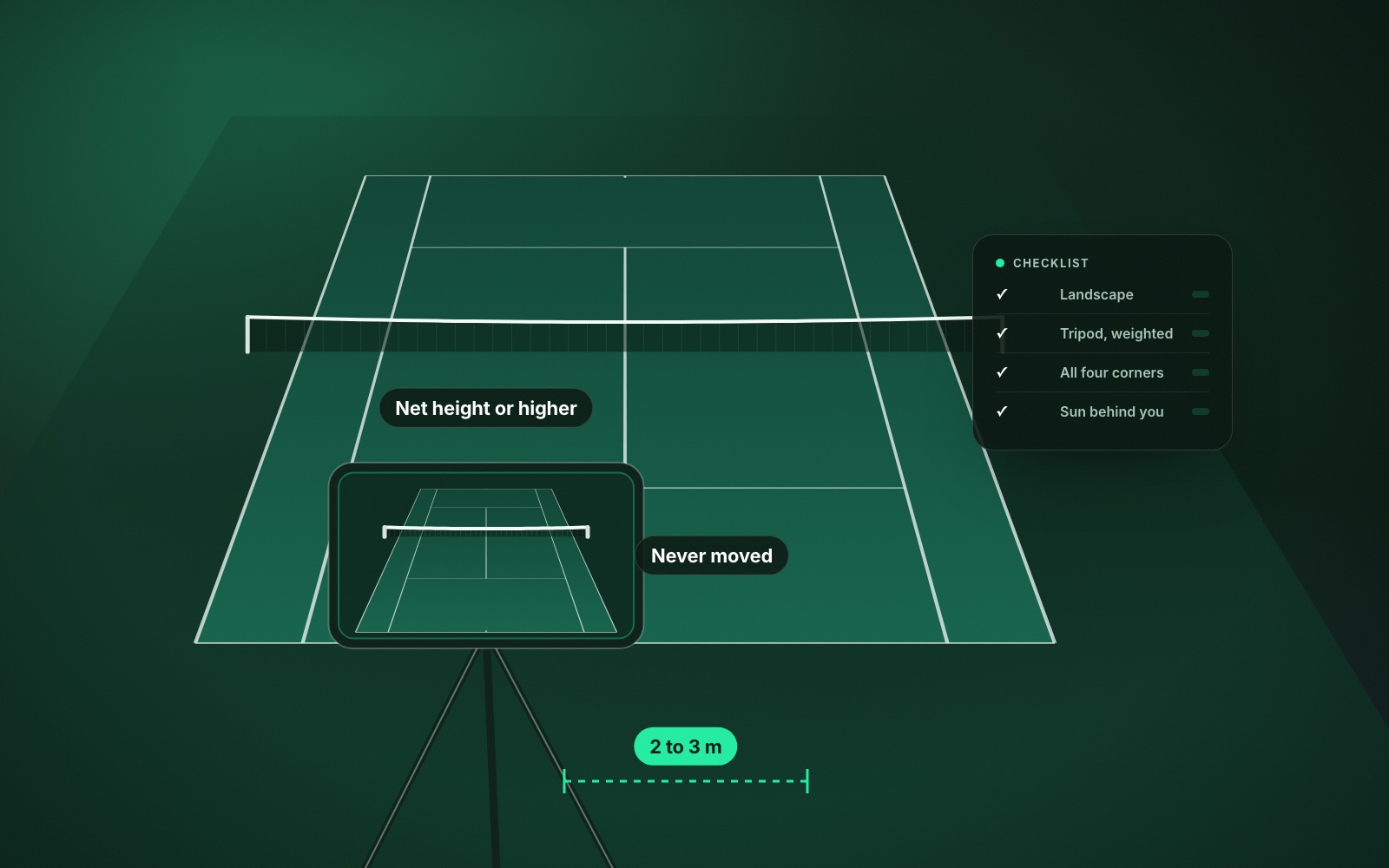 The lab
What kind of tripod or fence mount to use, where to put it and how to stop the phone letting you down.
Read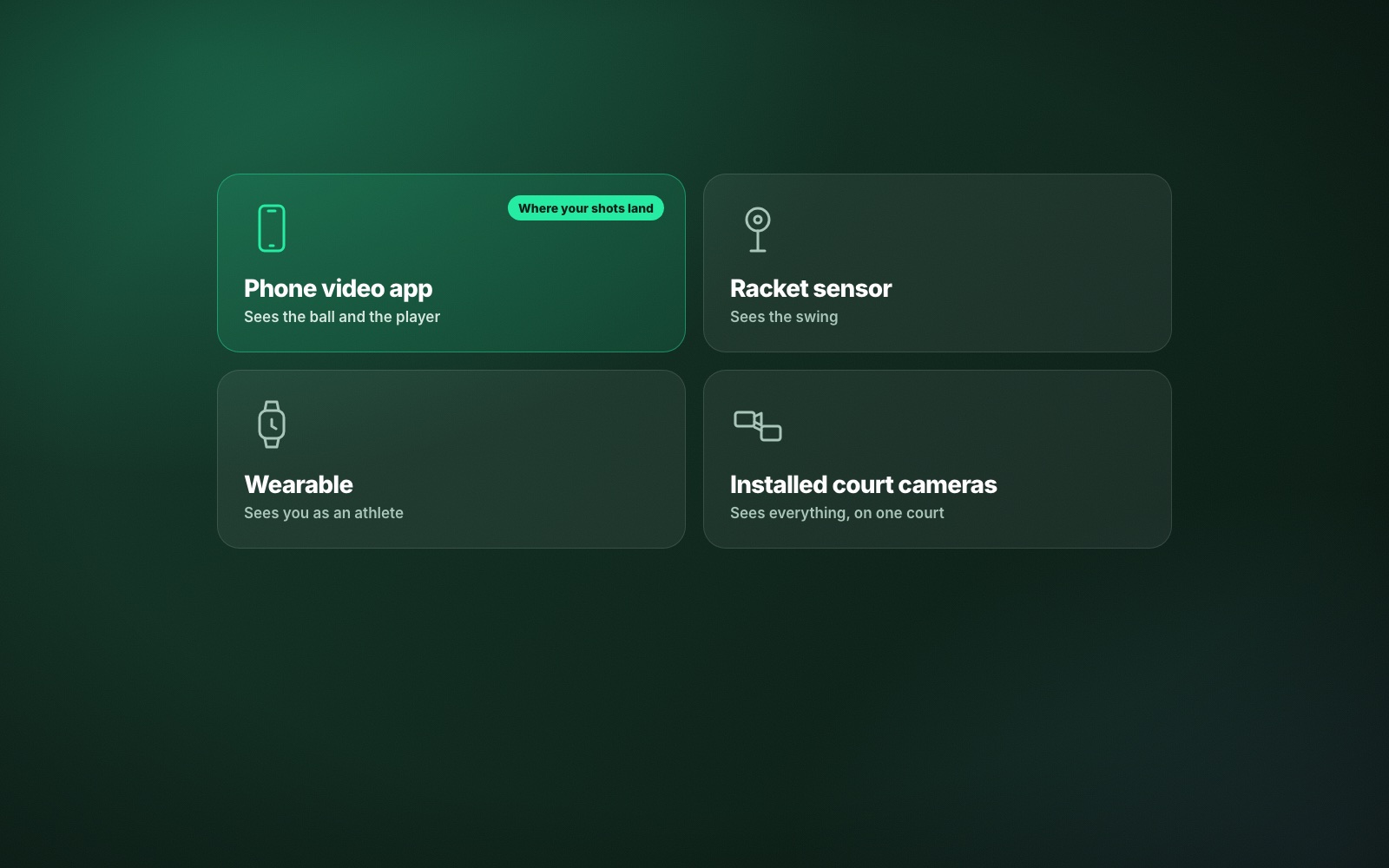 The lab
Phone apps, racket sensors, wearables and smart courts: what each kind of AI tennis tool is good at, and how to choose.
Read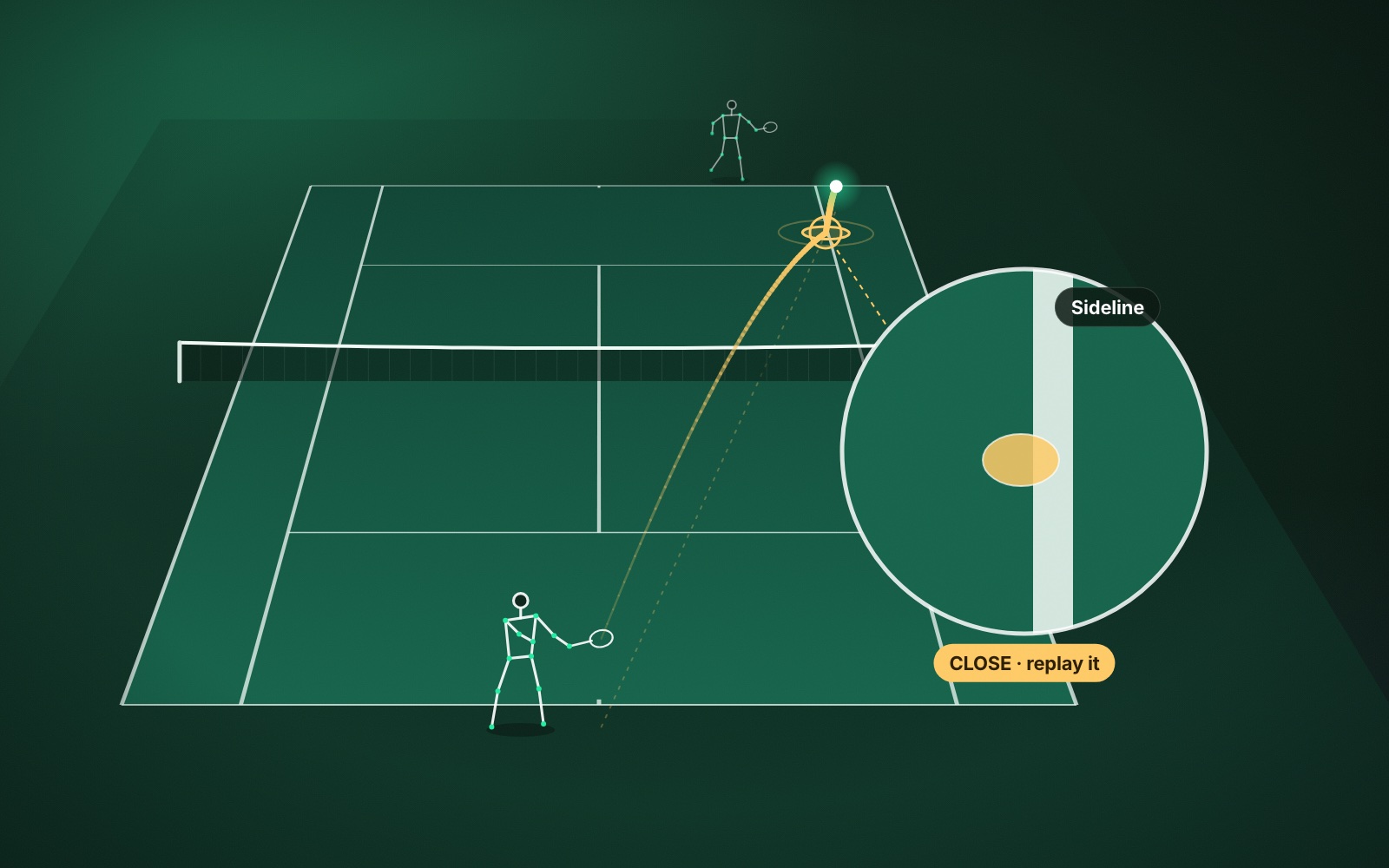 The lab
What in, out and close calls from a phone are good for, and why they are a review tool and not an umpire.
Read The lab
AI measures every shot. A coach decides what to change and how. Here is how to use the two together.
Read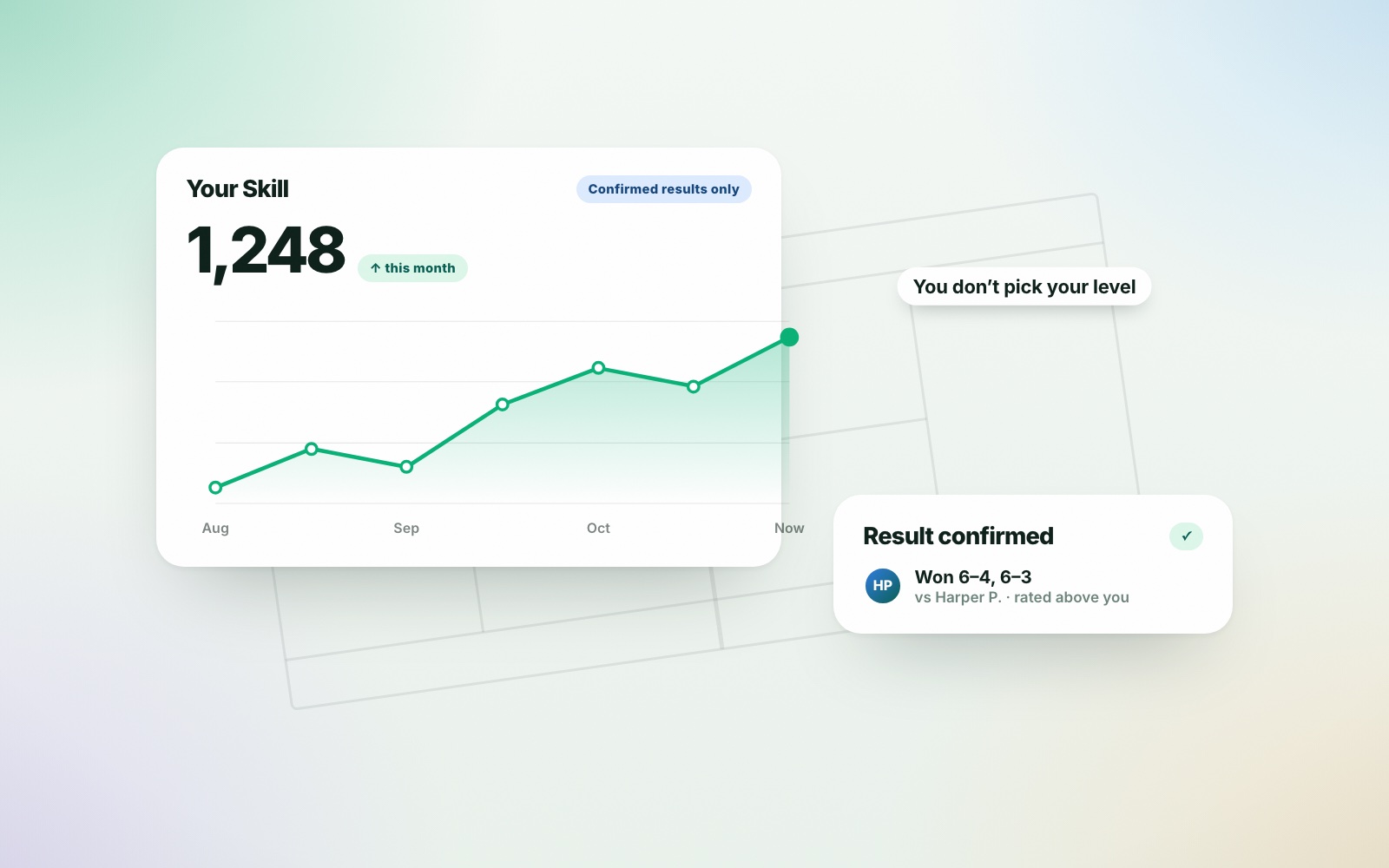 The ladder
A rating built from confirmed results, not a level you pick yourself. Here’s what moves it, and why.
Read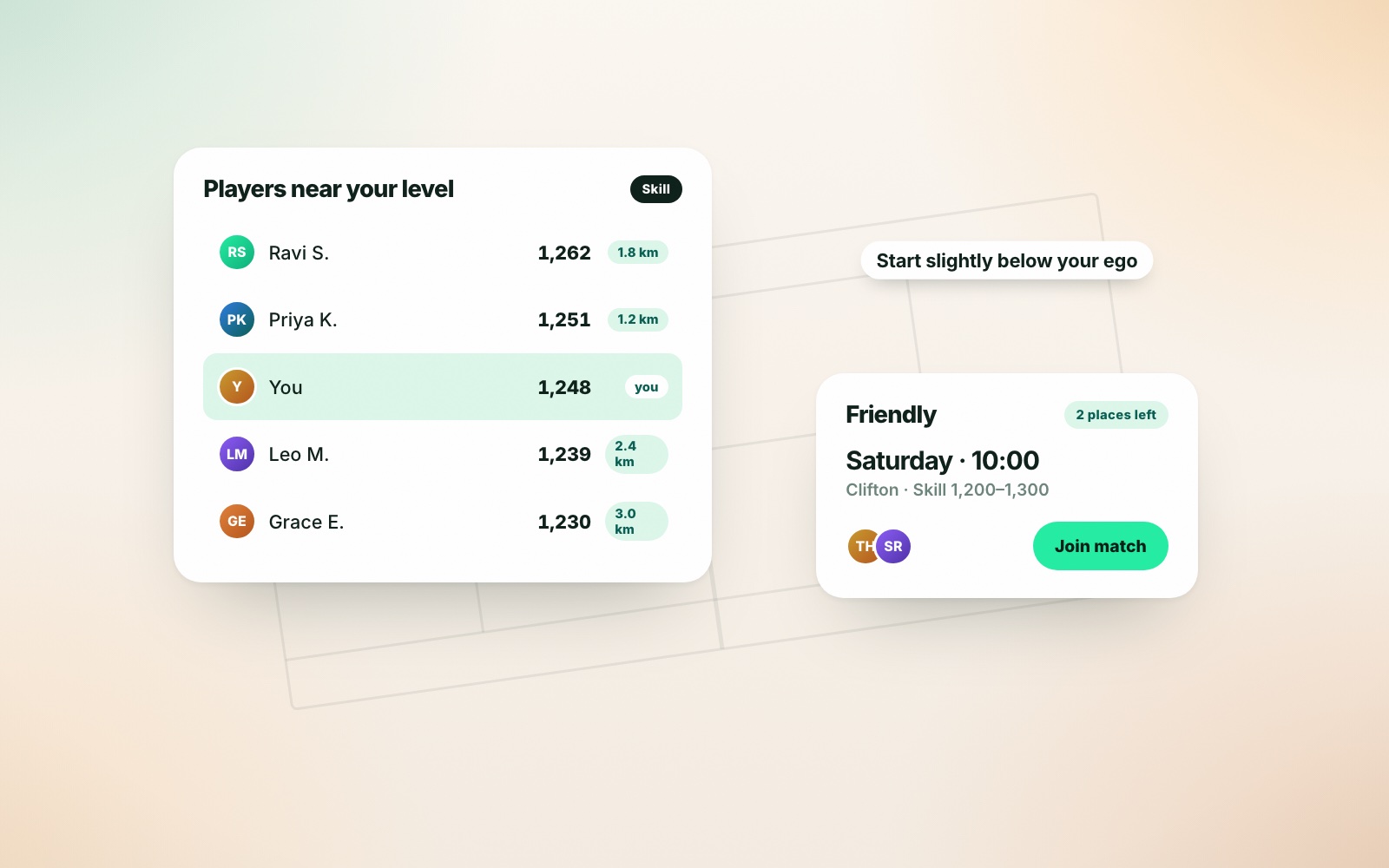 Guides
New to an area, coming back after a break, or stuck in the same four-player loop? Start here.
Read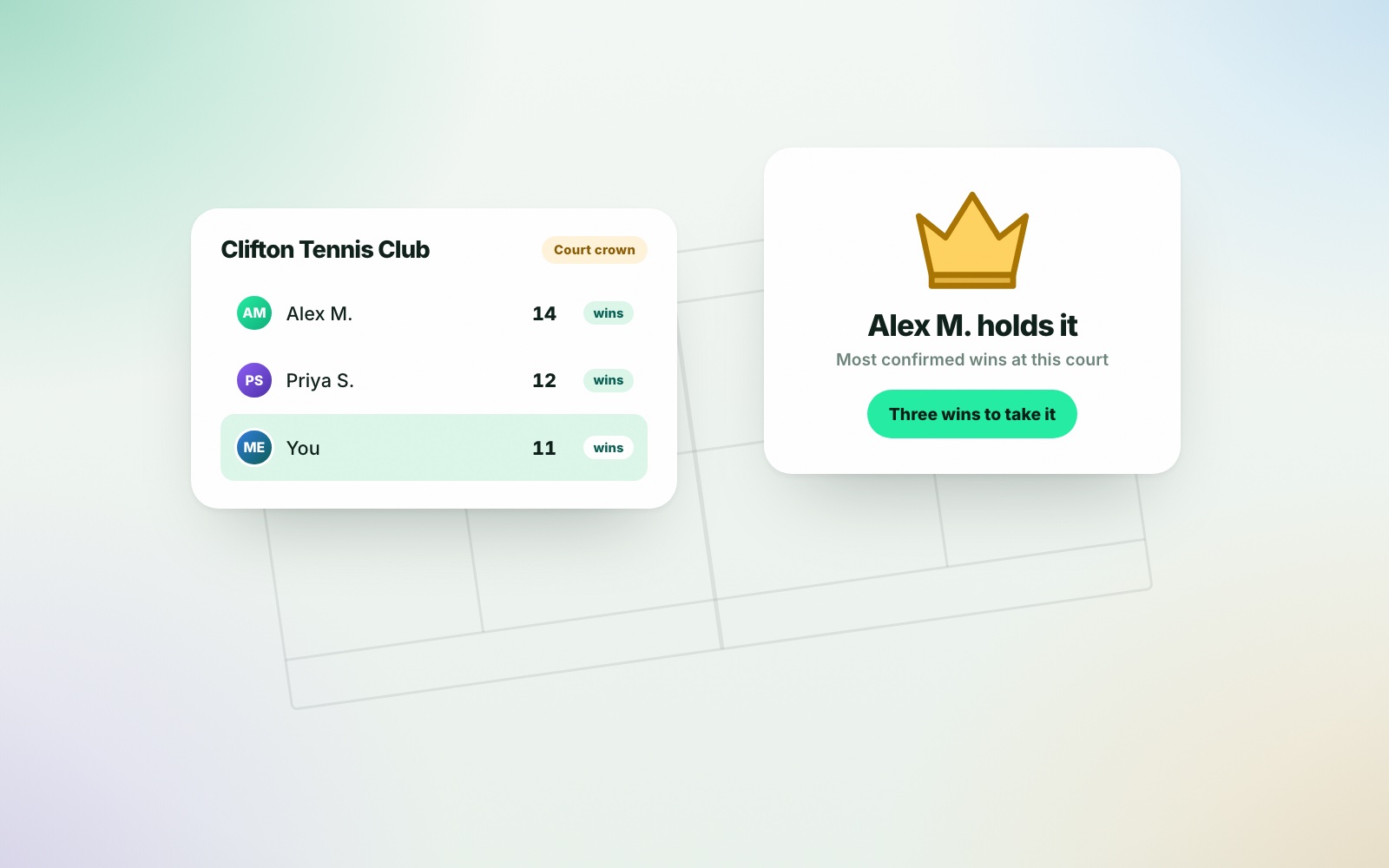 The ladder
The most local ranking in tennis: the player with the most confirmed wins at a court holds it.
ReadNo pieces in that section yet.
Early access
Join the list for launch news and early access to the UK ladder and global video analysis.
“The ladder finds the match. The lab tells you why you lost it.”
That’s the whole idea.