The short version
- A slice is a long, smooth swing from high to low and forwards. Chopping straight down makes the ball float.
- ContactFrame counts slices as their own shot type and labels spin as topspin or slice.
- Speed and depth tell a skidding slice from a floating one. Slow and short is the pattern to fix.
- Practise the slice for three jobs: neutral rally ball, approach shot, and defence when stretched.
- The slice improves fast with volume. Three to five weeks is realistic for a clear change.
There are two kinds of slice at club level. One stays low, skids through the court and makes your opponent dig the ball up from their shoelaces. The other hangs in the air, lands in the service box and waits to be hit. Learning how to hit a slice backhand properly is mostly about turning the second kind into the first.
The awkward part is that both feel similar off the strings. You cut under the ball, it goes over, and from your end of the court you cannot easily tell what it did after the bounce.
Why feel misleads you on the slice
A slice feels safe, so players rarely question it. It goes in. But “in” hides a lot. A floating slice that lands short invites your opponent forward, and you lose the point two shots later without ever blaming the slice.
The feeling of cutting sharply under the ball is misleading too. A steep chop feels like lots of spin. It produces a ball that climbs, slows and sits up. An effective slice comes from a longer, shallower swing that travels forwards through contact, with the body side on and the weight moving into the shot.
Slice backhand technique in brief
- Turn early. Shoulders side on to the net, racket back high, around shoulder height.
- Swing high to low, and forwards. A shallow downward path through the ball, not a chop.
- Firm wrist, contact in front. The racket face slightly open, steady through the hit.
- Finish towards the target. A long follow-through, with the non-hitting arm going back for balance.
Most coaches teach the slice with a continental grip. If you are unsure of yours, that is a five-minute check with a coach and worth doing before you groove anything.
How to film your slice
Record a Practice session where you agree with your partner to slice every backhand, or a Ball machine session with the feed to your backhand side. Thirty to forty slices is enough to read.
Phone in landscape, on a tripod, two to three metres behind the baseline, about net height or higher, the whole court visible, sun out of the lens, and no moving it once you have lined up the corners in ContactFrame. Play from the camera end. If you have not filmed before, start with the best phone setup for filming tennis.
The slice numbers that matter
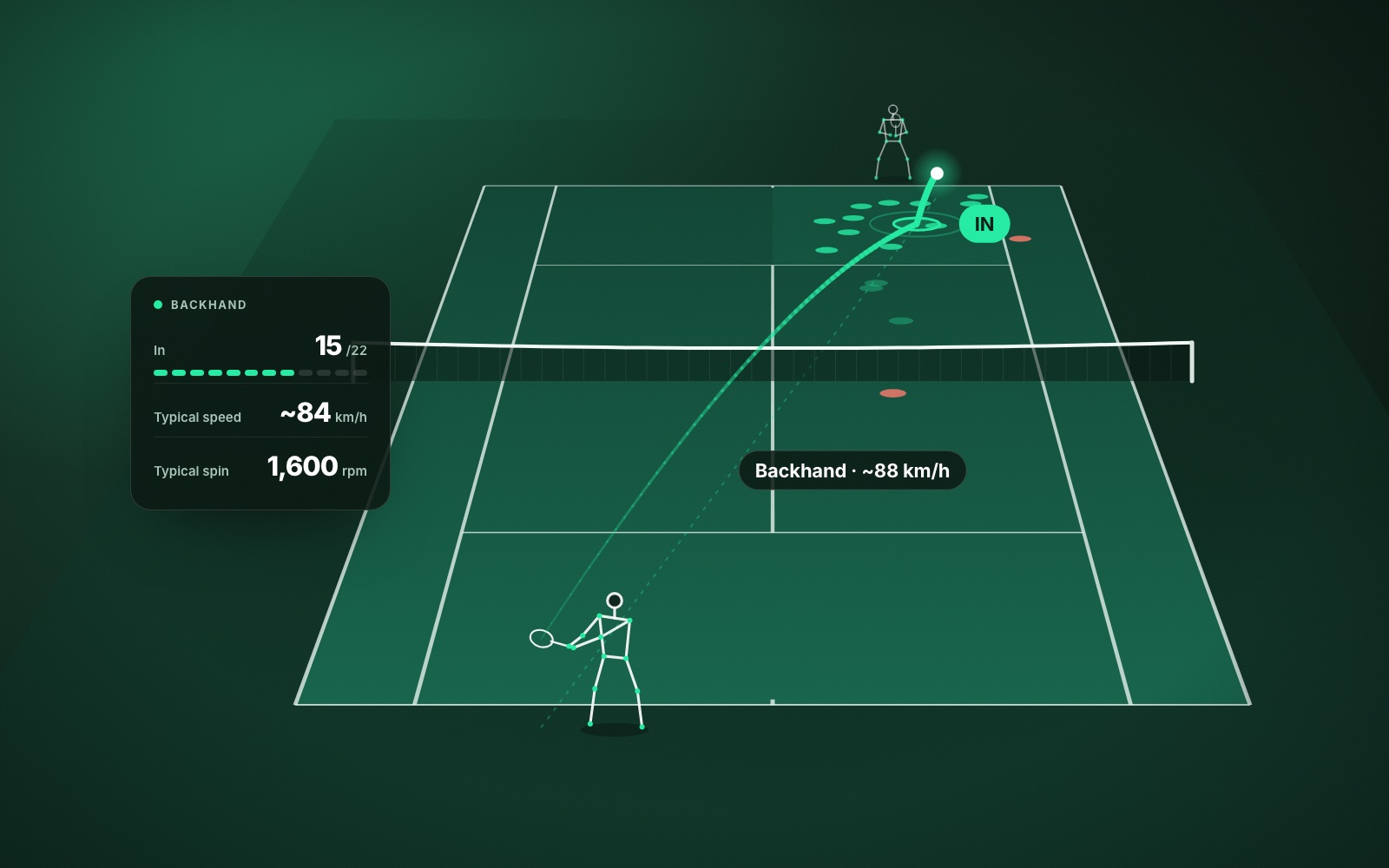
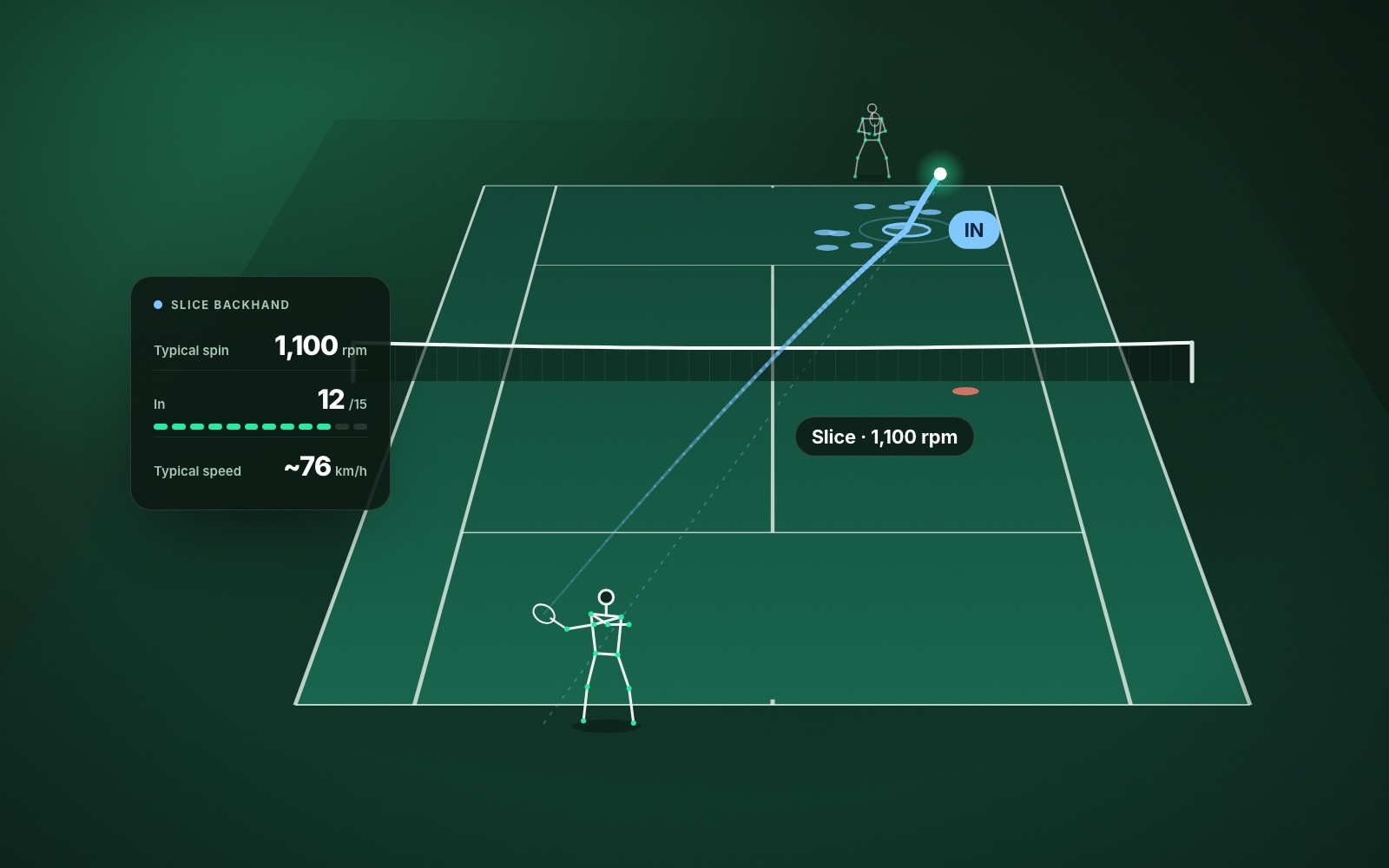
ContactFrame breaks the session down by shot type, and slice is one of them, so these numbers are separate from your topspin backhands.
- How many landed in. This should be high. The slice is a control shot. If it is missing often, check whether the misses are long, which points to an open face or too much lift.
- Speed. A slice is slower than a drive, but it should not be a lob. Very low speeds go with the floating slice.
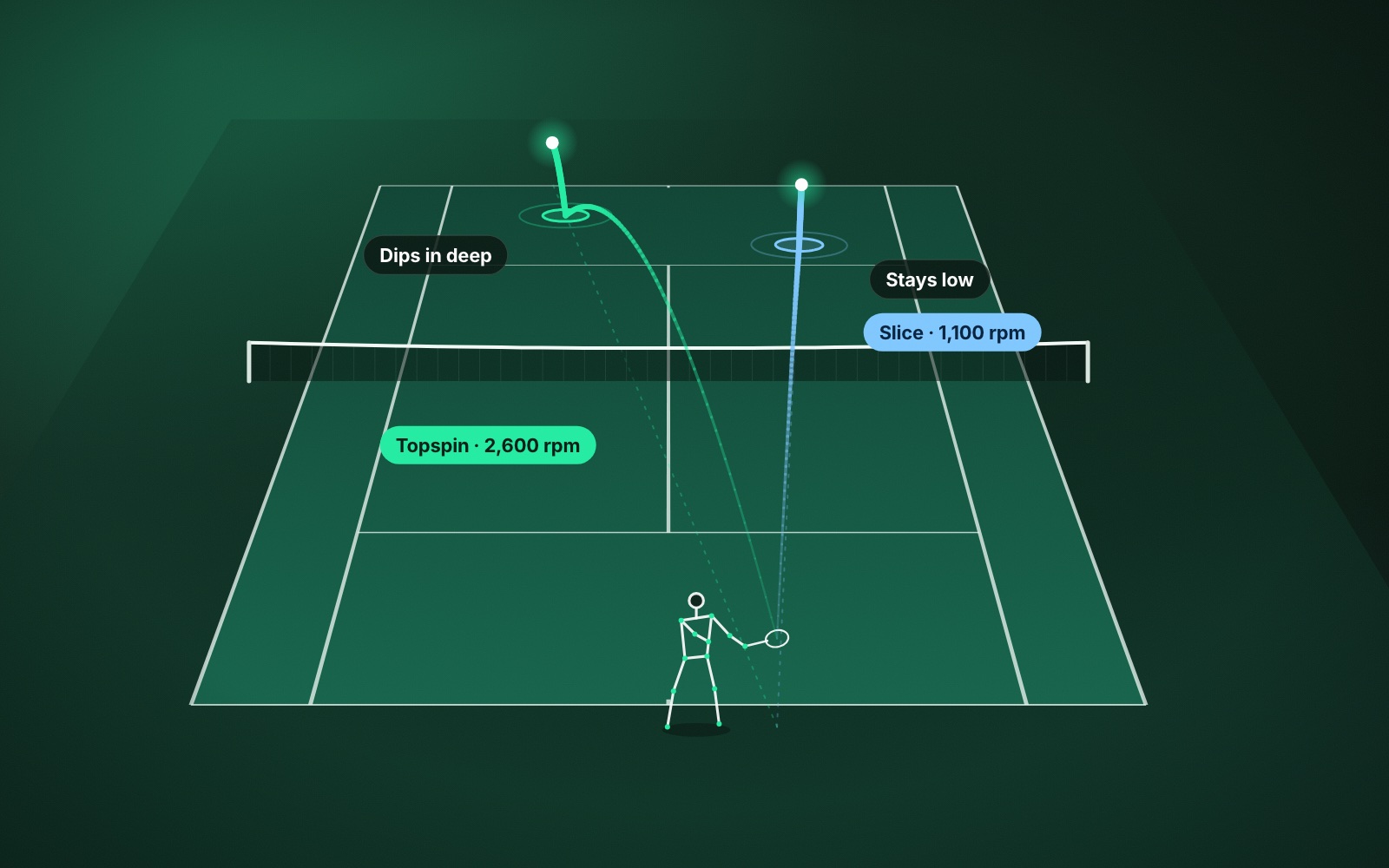
- Spin. Shown in rpm and labelled slice when the reading is solid. Use it to compare your own sessions. More backspin is only useful if speed and depth hold up.
- Where it bounced. The shot placement map shows depth. A rally slice should land well past the service line.
Say your slices average 58 km/h and most bounce around the service line. That is the floater. The aim is the same shot a little quicker and a couple of metres deeper, with the in-count unchanged. For what the spin figures mean, see tennis spin explained.
Four drills to improve your slice
1. Deep crosscourt slice
Rally crosscourt, backhand side, slicing every ball. Put a marker two metres inside the baseline and aim past it. Think “through the ball” on every swing.
The numbers to watch: bounce positions and speed. Deeper and slightly faster, together, means you are driving through the shot instead of chopping.
2. Slice approach down the line
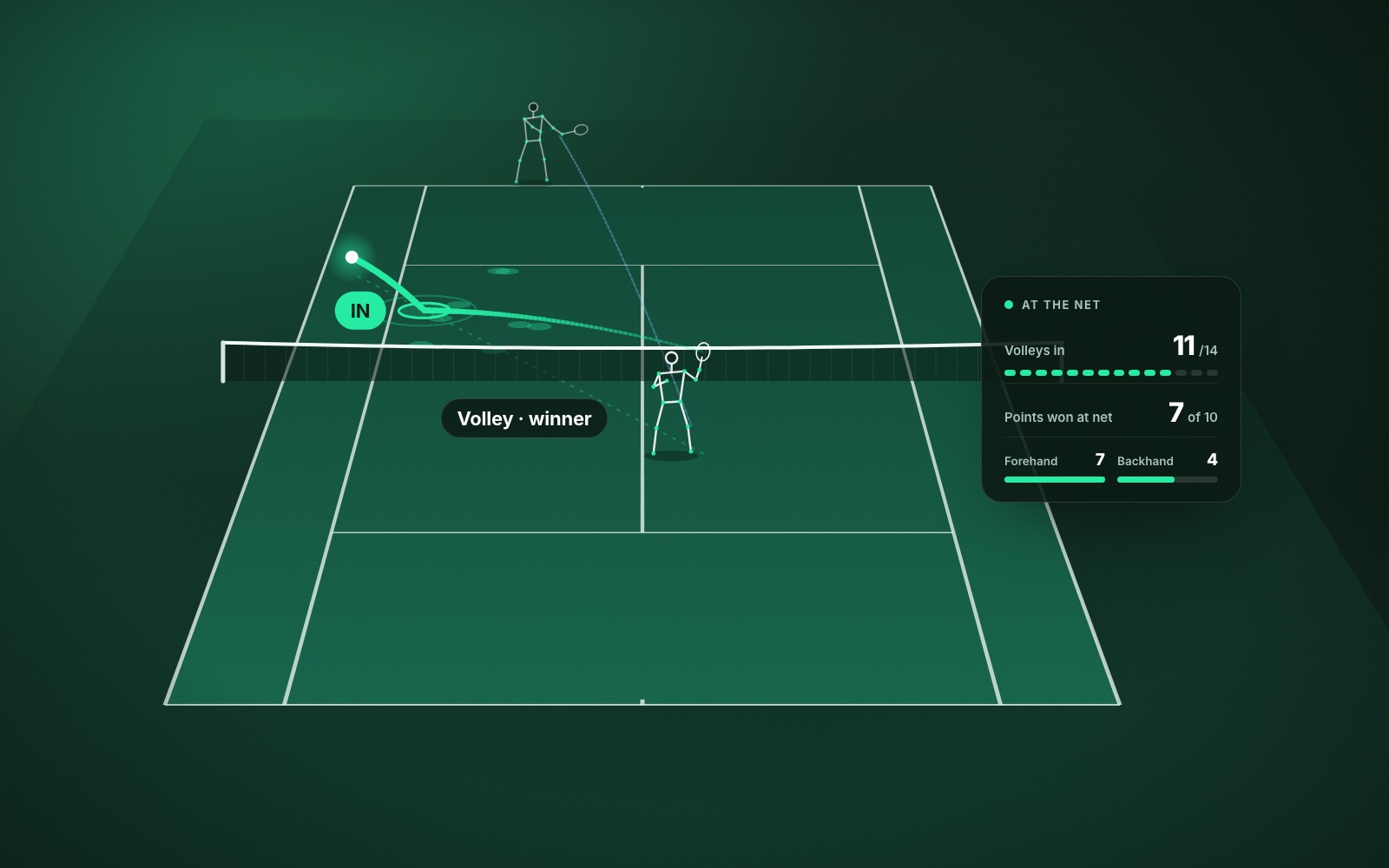
Your partner or the machine feeds a shorter ball to your backhand. Slice it down the line, deep, and follow it to the net. Play one volley, then reset. A low, deep slice is a classic approach shot because your opponent has to hit up.
The numbers to watch: where the approach bounced, and where you stood for the volley. You want the approach landing deep near the sideline and your position well inside the service line by the time the next ball comes. The volley itself is covered in how to improve your volleys.
3. Stretched and wide
Have balls fed wide to your backhand so you are reaching. Slice them back high over the middle of the net and deep, then recover. This is the defensive slice, and its job is to buy time.
The numbers to watch: in-count on the wide balls, and how well you recovered to the middle. A defensive slice has worked if the ball is in, deep, and you are back in position for the next one.
4. Drive, drive, slice
In a crosscourt backhand rally, hit two topspin backhands and then a slice, and repeat. The change of pace and height is what makes the slice awkward in a match, and you need to be able to switch without thinking.
The number to watch: slice in-count compared with drill one. If it falls when you mix the shots, the grip change or the preparation is rushed. Slow the rally down until it holds.
How to re-measure your slice
Re-film drill one every two weeks with the same number of balls. In Trends, look for slice speed and depth edging up while the in-count stays put. Then record a Match session and check how many slices you chose to hit and where they landed.
The slice is a compact stroke and improves quickly with volume. Three to five weeks of regular practice usually brings a clear change. Using it at the right moments takes longer, and singles strategy for club players has ideas for when to play it.
What the video cannot tell you
ContactFrame does not analyse your grip or racket-face angle, and the slice depends on both more than most shots. A face that is too open is the usual cause of a floater, and you will not find that in the numbers, only its effect.
On the Pro plan, shot mechanics score parts of the swing such as preparation and contact and offer one Next fix, which helps with a late turn or contact too close to the body. For the face and the grip, see a coach. One lesson, then measured practice on your own, is an efficient way to learn this shot. It also sits alongside the topspin work in how to improve your backhand.
To film your first slice session, see how The Lab works.
Common questions
How do you hit a slice backhand in tennis?
Turn side on, take the racket back high with the face slightly open, and swing down and forwards through the ball with a firm wrist, finishing out towards your target. Most coaches teach it with a continental grip. Keep your weight moving forwards.
Why does my slice float or pop up?
Usually because you are chopping steeply down at the ball instead of swinging through it, or the racket face is too open. Think of a long, shallow swing that travels towards the target, and step into the shot.
When should I use a slice in a match?
Use it to change the pace of a rally, to approach the net with a low ball, to deal with very low or wide balls, and to defend when you are stretched. It is also a good answer to high balls on a one-handed backhand.
Is a slice backhand good for beginners and club players?
Yes. It is a simple, compact swing that keeps you in points when you are under pressure, and low skidding balls trouble many club opponents. It works alongside a topspin backhand, not in place of one.
Can an app tell the difference between slice and topspin?
ContactFrame measures spin in rpm and labels it topspin or slice when the reading is solid, and it counts slices as a separate shot type. That lets you look at your slice numbers on their own.
Find out if your slice skids or floats.
ContactFrame counts your slices separately and shows their speed, spin and depth.
See The Lab