The short version
- Inconsistency is specific. It is usually one shot, one direction or one stage of the rally.
- Use the breakdown by shot type to find the shot with the lowest share landing in.
- The rally summary shows how long your points last. Many club points end within the first four shots.
- Bigger targets, more height over the net and a pace you can repeat fix most of it.
- Judge progress on unforced errors in matches over six to eight weeks, not on one good practice.
Every club player has been told to “just get one more ball back”. It is true, and it is no help at all. It does not tell you which ball you are missing, or why. If you want to know how to be more consistent at tennis, the first job is to turn a vague failing into a specific one.
Inconsistency is never spread evenly across your game. It lives somewhere: the backhand down the line, the third ball of a rally, the forehand when you are pulled wide. Find the address and the practice becomes obvious.
Why “be more consistent” is hard to act on
From the inside, errors feel random. You miss a forehand long, then a backhand in the net, then a volley wide, and conclude that you are erratic in general.
Memory makes it worse. You remember the dramatic errors and the ones at big moments. The quiet pattern, such as the same crosscourt backhand landing short and getting punished again and again, never registers as an error at all.
There is also a common misreading of the cure. Players try to be consistent by being careful: a slower arm, a shorter swing, aiming to just clear the net. That brings tension and a ball with no margin. Real consistency comes from a relaxed, repeatable swing aimed at a big target.
What to film
You need two recordings to compare. One is a Practice session of cooperative rallying, with Consistency chosen as the session focus. The other is a Match session. The gap between them is informative in itself.
Set the phone in landscape on a tripod two to three metres behind the baseline, at net height or higher, with the full court in view. Keep it out of the sun, do not touch it mid-session, and line up the four corners when ContactFrame asks. If you are filming a match for the first time, this guide to recording a match will save you a wasted session.
The consistency numbers to read in ContactFrame
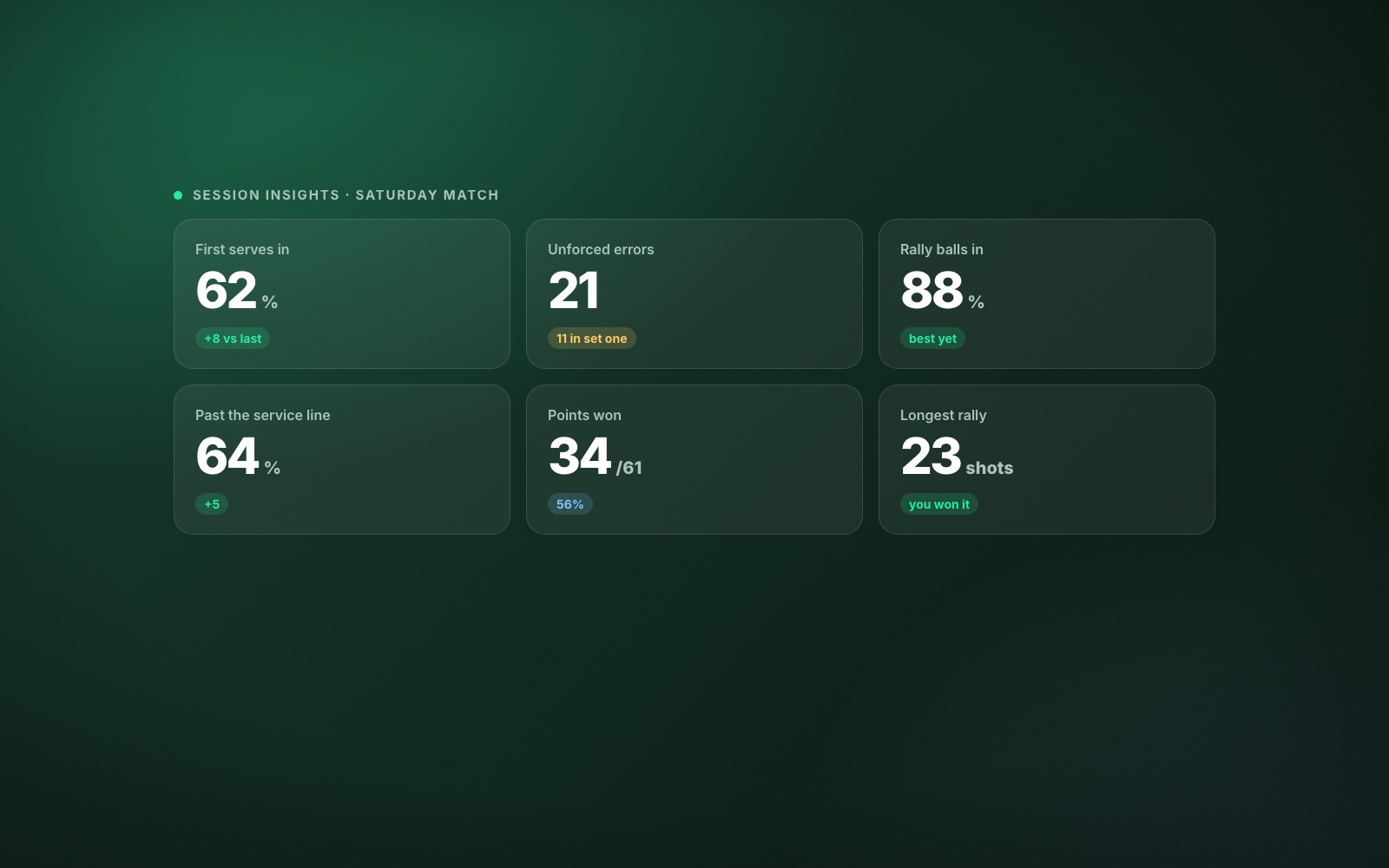
- Landed in, by shot type. Session insights break the session down into serve, forehand, backhand, slice and volley, with how many of each went in. One line will stand out. That is your first target.
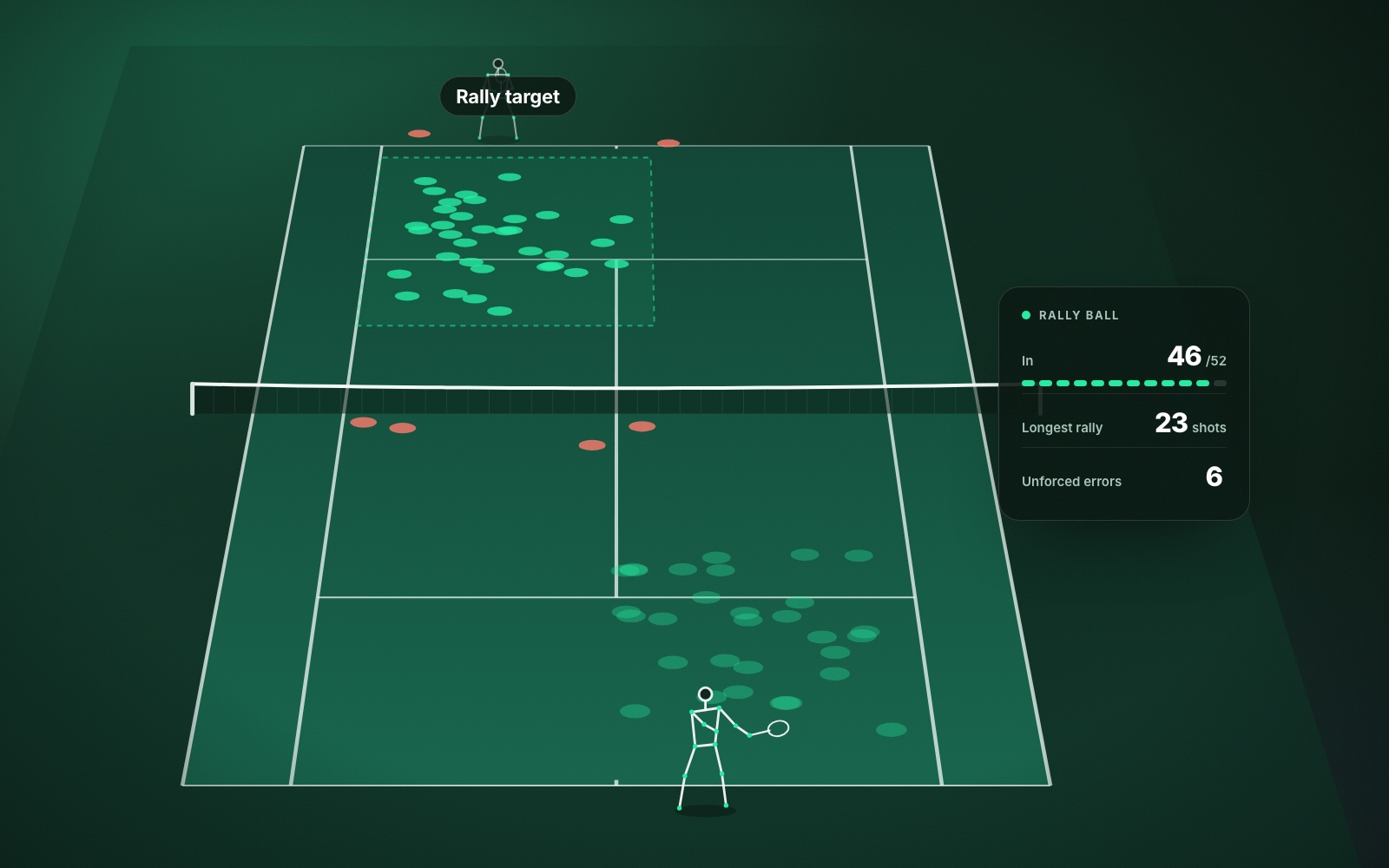
- Rally summary and longest rallies. How long your rallies run. If most points in a match are over within four shots, baseline steadiness is not yet the issue. The serve, return and first groundstroke are.
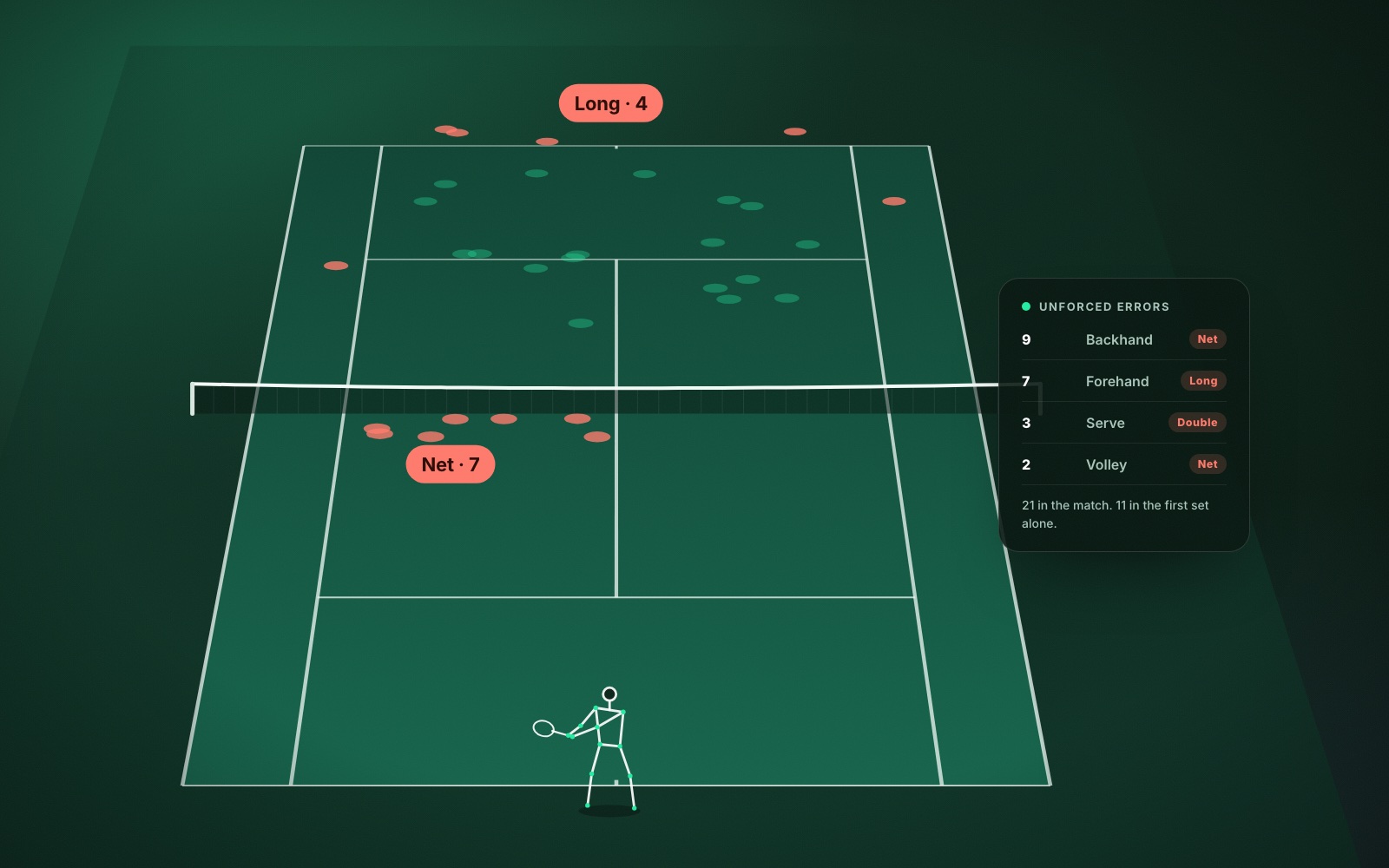
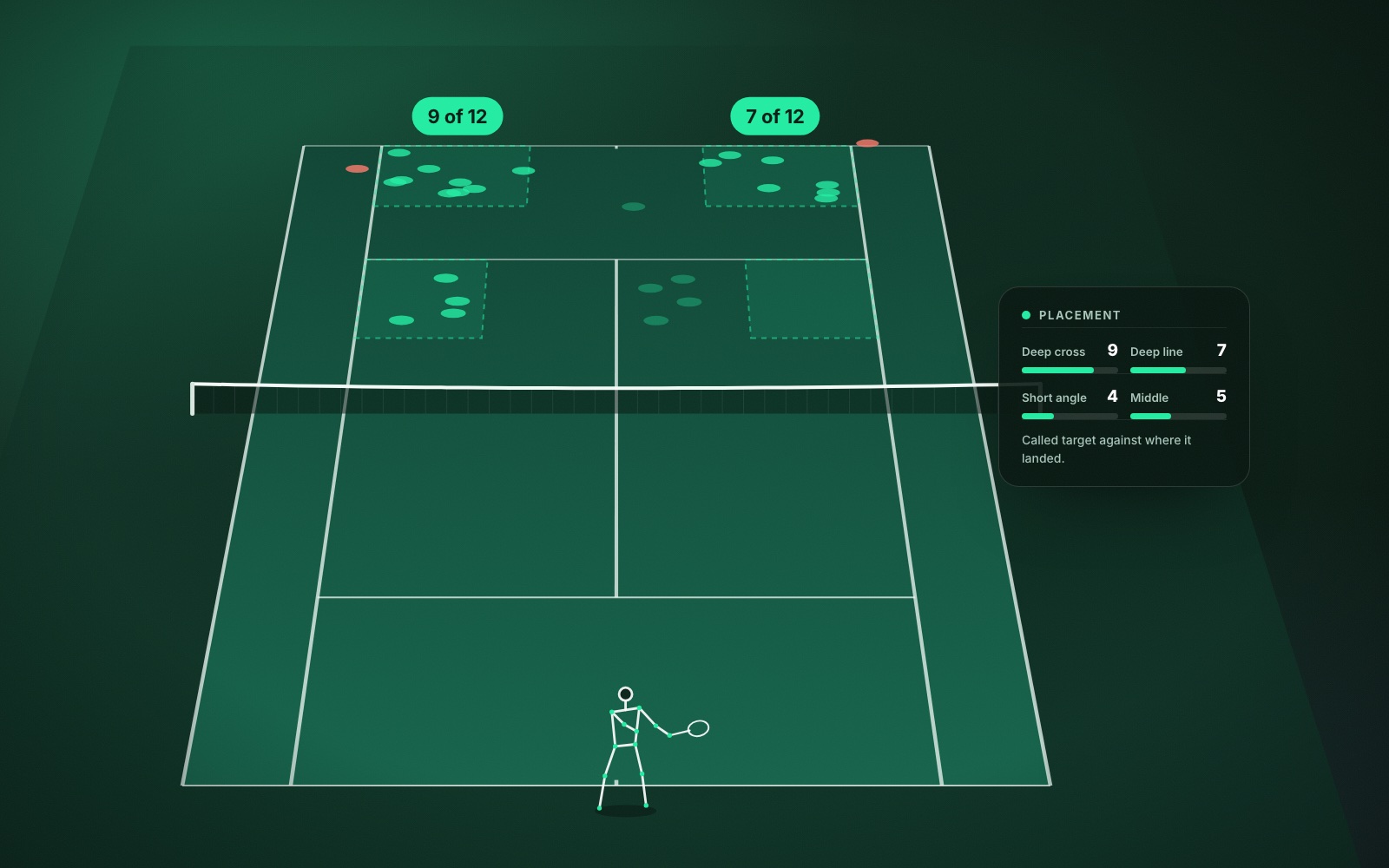
- Shot placement map. Where your shots bounced, including the ones that missed. Misses bunched beyond the baseline have a different cause from misses spread wide of the sidelines.
- Unforced errors. In a match, ContactFrame lists unforced errors separately from forced ones. This is the figure you are ultimately trying to bring down.
- Close calls. A lot of balls landing right on or near the lines means your targets are too small.
Say your forehands land in 78% of the time in a rally session and 61% in a match, while your backhand barely changes. Your forehand is the shot that tightens under pressure, and that is a different problem from a backhand that is simply unreliable. The tennis stats that matter for club players goes further into reading these.
Three changes that make you more consistent
1. Move your targets in
Put four cones on the court, each about two metres inside the baseline and two metres inside a sideline. Those are your corners now. Rally with a partner aiming only at the cones or anywhere between them.
The numbers to watch: the placement map and close calls. Your bounce marks should pull in from the lines, and the number of close calls should fall. Balls aimed at a cone that drift a metre are still in. Balls aimed at a line that drift a metre are not. More on choosing targets in how to improve shot placement.
2. Rally to twenty, crosscourt
With a partner, rally crosscourt and count each ball that lands past the service line. The pair of you are trying to reach twenty without a miss. When it breaks down, note the count and start again. Do forehand and backhand diagonals.
The numbers to watch: longest rallies and the rally summary. Over a few weeks the typical rally length should rise, not only the best one. Crosscourt is the right direction for this: the net is lowest in the middle and the diagonal gives you the longest court to hit into.
3. Errors cost double
Play a practice tiebreak to ten. A winner or a forced error scores one point as normal. An unforced error costs the player who made it two. It changes behaviour within a few points. You start choosing the higher-margin shot because the scoring punishes anything else.
The number to watch: unforced errors, by recording it as a Match session. Compare the figure with your normal matches. This drill closes the gap between practice consistency and match consistency, because it brings the consequence into practice.
Check your feet before you blame your swing
A good share of inconsistent hitting is really inconsistent positioning. If you arrive late or off balance, a sound swing still produces a poor ball. ContactFrame’s movement measures show how often you were ready when your opponent hit and how well you recovered to the middle. If those are low, start with improving your footwork and your shot numbers may follow without any change to technique.
How to re-measure and how long it takes
Film the crosscourt rally drill every two weeks and a match every three or four. In Trends, follow three lines: landed in for your weakest shot, typical rally length, and unforced errors in matches.
Practice numbers move first, often within two or three weeks. Match numbers lag behind, and that is normal. Six to eight weeks is a fair timescale to see unforced errors come down in matches. Judge it across several sessions. One clean set against a weaker opponent is not a trend, and one bad day against a strong one is not a relapse.
What video cannot tell you about consistency
ContactFrame shows which shots missed and where they landed. It does not see your grip or racket face, which may be the mechanical reason one shot is unreliable, and it cannot read what you were thinking when you went for a low-percentage winner at 30–40.
Shot selection and nerves are a large part of consistency, and those are conversations to have with a coach or a regular hitting partner. If one shot stays stuck at the bottom of your breakdown for two months despite practice, take the session to a lesson. For the wider picture, how to cut unforced errors picks up where this leaves off.
Everything in this article works on the free plan. See what each plan includes.
Common questions
How do I become more consistent at tennis?
Aim at bigger targets well inside the lines, hit higher over the net, and rally at a pace you can repeat. Then find the specific shot that breaks down most often and give it extra practice. Consistency comes from margin, not from being careful.
Why am I consistent in practice but not in matches?
In practice the ball comes to you at a steady pace and nothing is at stake. In a match you are moving, the ball varies, and tension tightens your swing. Practise with a score or a consequence so the two feel closer.
How many unforced errors is normal in club tennis?
It varies a great deal by level and style, and club matches are usually decided more by errors than by winners. The number worth tracking is your own from match to match, and whether it is falling.
Should I hit softer to be more consistent?
Not softer, but within yourself. Find the fastest pace at which most of your shots still land in and rally at that. Pushing the ball with a slow, tentative swing often produces more errors, not fewer.
Can AI analysis show where my tennis errors come from?
ContactFrame breaks each session down by shot type with how many landed in, shows where every ball bounced, summarises your rallies, and in a match lists unforced errors. Together they show which shot is failing and where.
Find the shot that breaks down.
ContactFrame shows how many of each shot landed in, how long your rallies last, and where the errors come from.
See The Lab