The short version
- Unforced errors decide most club matches. Start there.
- First serves in and double faults tell you more than your fastest serve.
- Depth is the quiet stat: where your rally ball lands decides who attacks next.
- Fastest shot, total winners and distance covered are fun, but they rarely tell you what to practise.
- One match is a small sample. Look for the same pattern across several sessions before you act on it.
Professional broadcasts throw tennis match stats at you all afternoon: aces, break points converted, net points won, average rally length. Open an analysis app after your own match and you get a similar wall of figures. The trouble is knowing which of them should change what you do on Thursday night.
Most of them should not. A handful of stats explain nearly all club results, and the rest are interesting without being useful. This guide separates the two.
Why most tennis match stats do not help club players
Professional stats describe a game where both players can rally thirty balls without missing, so points are decided by small edges in serve, return and attack. Club tennis is decided differently. Most points end when somebody misses a ball they could have made.
A stat is worth your attention if it passes two tests. It should explain points won or lost, and it should point at something you can practise. “Break points converted” passes the first and fails the second. “Backhands landed in” passes both.
The tennis stats that matter most
1. Unforced errors, and which shot they came from
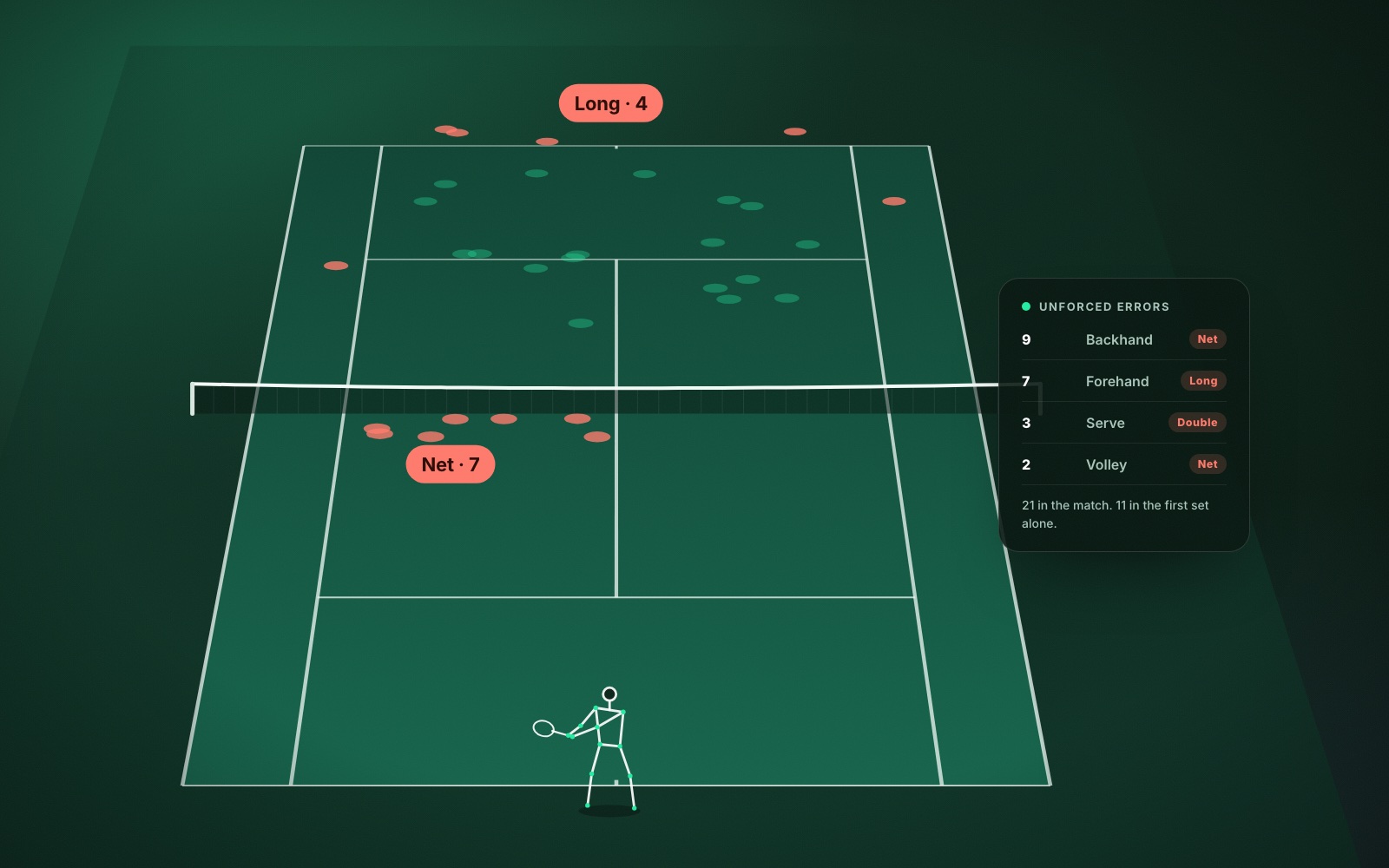
The total matters less than the breakdown. Twenty unforced errors spread evenly is one kind of match. Twenty with fourteen off the backhand is a practice plan.
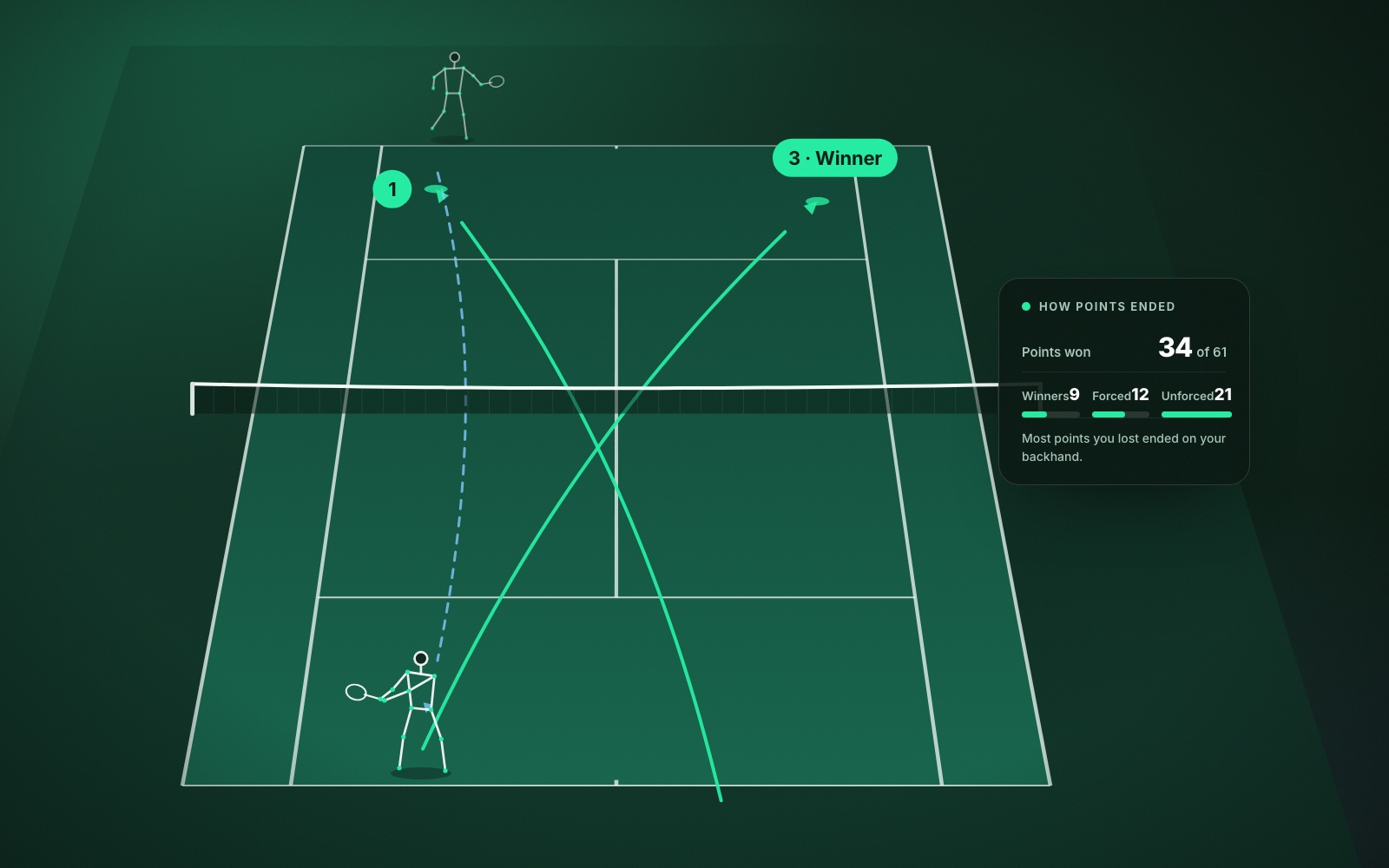
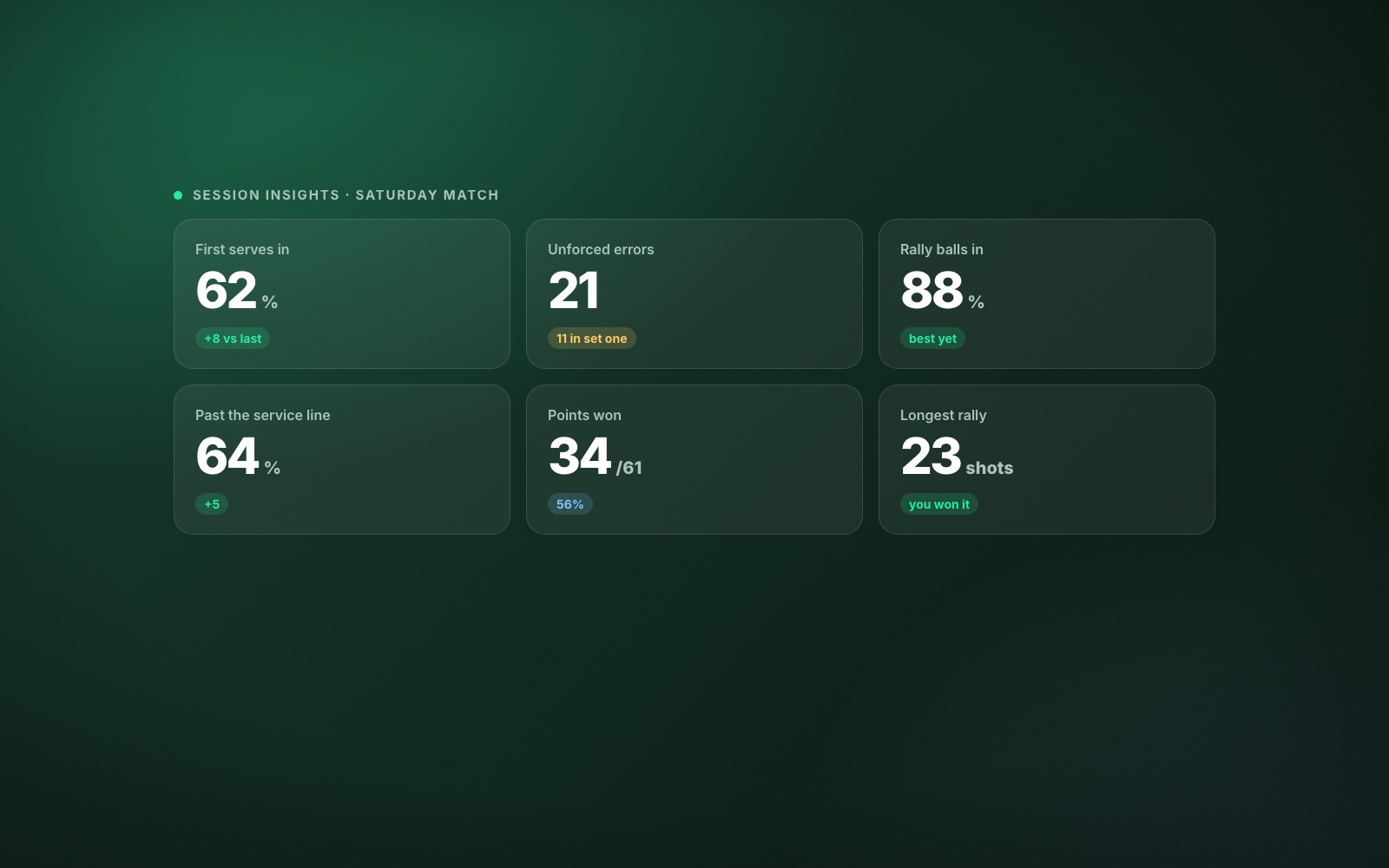
Look at where they went as well. Balls in the net and balls long have different causes. ContactFrame lists winners, forced errors and unforced errors in Session insights, and the shot placement map shows where the misses landed. For what to do about them, see how to cut unforced errors.
2. First serves in
Every service point starts with this number. A low first-serve rate means you are playing most of your service games off your second serve, which is the weaker shot for nearly everyone.
If the rate is low and the speed is high, the trade is wrong. Slower and in beats faster and out.
3. Double faults and the second serve
A double fault is the only point in tennis you lose without your opponent touching the ball. Three or four a set is a game or more given away.
Look at second serves in and second-serve speed together. A second serve that goes in but sits up slowly gets attacked. One that is hit with spin and lands deep keeps you in the point.
4. How many of each shot land in
This is the simplest reliability measure there is. ContactFrame breaks a session down by shot type, serve, forehand, backhand, slice and volley, with how many of each landed in.
The gaps are what you are looking for. Say 78% of your forehands land in and 61% of your backhands. Your opponents already know which side to play to. Now you do too.
5. Depth
Depth does not appear on a television graphic, and it may be the most important rally stat at club level. A ball that lands near the service line invites your opponent forward. A ball that lands in the back third of the court keeps them behind the baseline and buys you time.
You read this from the shot placement map. If your in shots cluster around the service line, your consistency numbers may look fine while you lose rallies anyway. There is a practical guide in how to hit deeper shots.
6. Points won, and how long they lasted
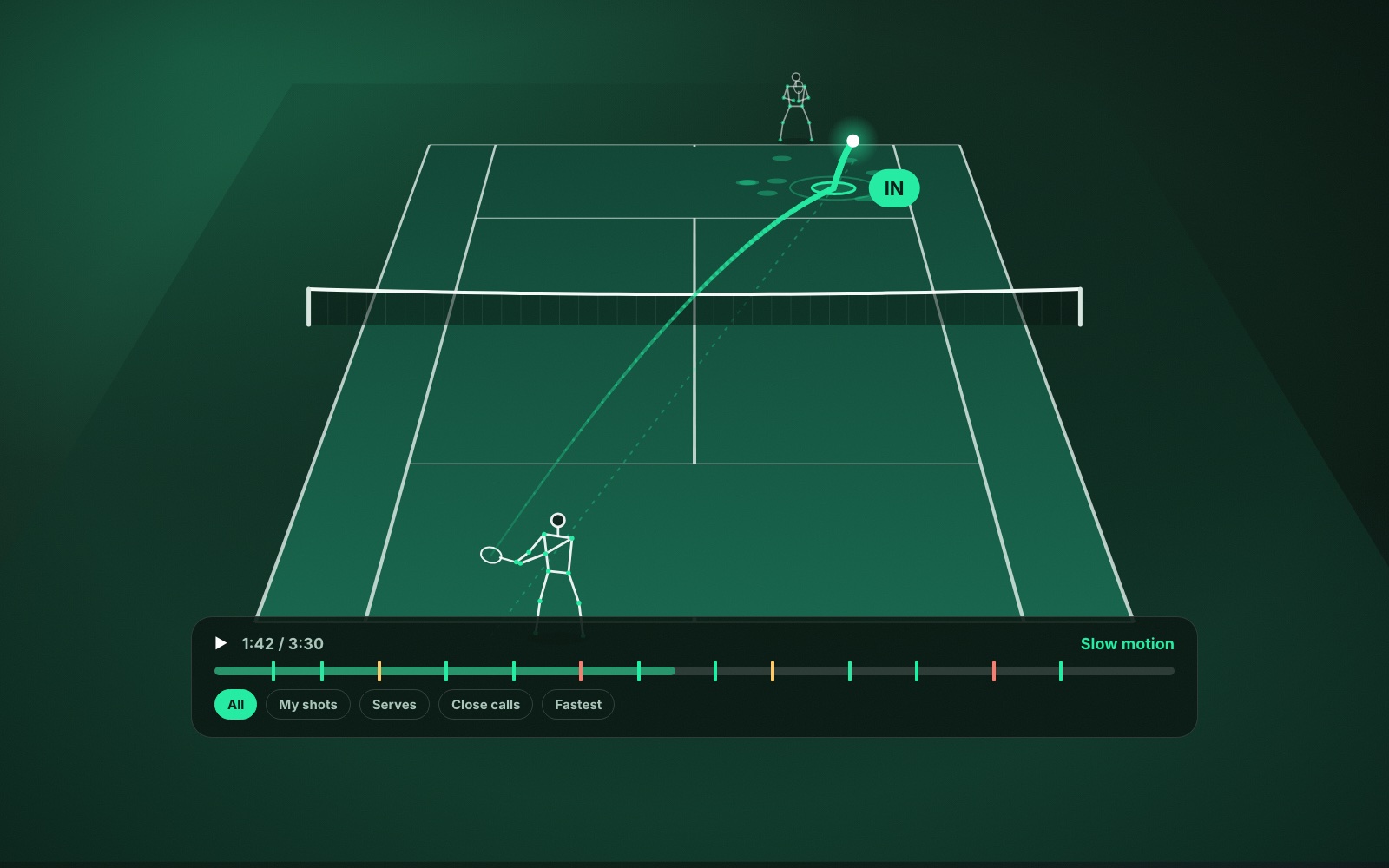
Points won is the result. The rally summary and playback add the useful part: whether you tend to win the short points or the long ones.
A player who wins most rallies of five shots or more but loses the short ones should work on serve and return. A player with the opposite pattern needs a more reliable rally ball. More on reading this is in how to win more tennis points.
Tennis statistics that are useful second
These help once the basics are steady, or when you have a specific question.
- Serve placement. Where serves landed on the deuce and ad sides: wide, body or T. Most club players have one favourite spot and returners learn it quickly.
- Speed and spin by shot type. Useful for comparing forehand with backhand, or first serve with second, and for checking whether a technical change has had any effect.
- Movement. How well you recovered to the middle and how often you were ready when your opponent hit. These often explain errors that look like stroke problems.
- Shot quality. A score out of 100 for each shot and for the session. It is a good single number for comparing one session with the next, covered in tennis shot quality explained.
Stats that look good and tell you little
- Your fastest shot. Enjoyable, shareable and no guide to how you played. One ball in two hundred is not your game.
- Total winners, without errors. Fifteen winners sounds impressive until you see the thirty-five errors that came with them.
- Distance covered. More running can mean great effort or poor positioning. The number alone cannot say which.
- Longest rally. A good memory, and a sample of one.
None of these are wrong. They simply do not answer the question “what should I practise?”
How to read tennis stats after a match
Start from the result. If you lost 6-4 6-4, you were a few points a set short. Look for where a few points could come from: two fewer double faults, three fewer backhand errors, a first serve that goes in a little more often.
Then compare with your own previous sessions, not with anyone else. ContactFrame’s trends show the same measures session after session, so you can see whether a figure is your normal or a bad day.
Finally, pick one stat to move. Trying to fix serve percentage, depth and backhand errors in the same fortnight usually moves none of them.
A stat is worth your attention if it explains points and points at something you can practise.
How to collect your match stats
There are three ways. A friend with a clipboard can chart errors and serves, which works well and costs a favour. You can tally from video yourself, which is slow but teaches you a lot, as described in how to analyse your own match video.
Or you can let an app do it. Record a Match session in The Lab with one phone on a tripod behind the baseline, and ContactFrame groups shots into points, drafts a score you can correct and fills in Session insights. No sensors or court hardware are involved.
What tennis stats cannot tell you
Numbers describe what happened. They say little about why you went for a low-percentage shot at 30-40, or what your opponent did to rush you. The forced and unforced split is a judgement, whoever or whatever makes it, so treat it as a guide and check a few on the video.
One match is also a small sample. A windy day or an unusual opponent can bend every figure. Wait until the same pattern shows up in three or four sessions before you rebuild your practice around it. If the pattern is clear and you cannot shift it, take the numbers and the clips to a coach. They will get to the cause far quicker with evidence than without.
Common questions
What are the most important stats in tennis?
For club players: unforced errors, first serves in, double faults, how many of each shot type land in, depth of shot and points won. Together they explain most results at this level.
What is the difference between a forced and an unforced error?
An unforced error is a miss on a ball you had time and position to play. A forced error is a miss caused by the quality of your opponent’s shot. The line between them is a judgement, so treat the split as a guide.
What is a good first serve percentage?
It depends on how hard you are serving, but as a rough rule most coaches like to see club players land clearly more than half of their first serves. If you are well under that, taking some pace off is usually worth it.
Are winners or unforced errors more important?
At club level, unforced errors. Most points end in a mistake, so cutting a few errors per set changes more results than adding a few winners.
How can I track my tennis match stats?
You can ask a friend to chart the match on paper, tally it yourself from video, or use an AI video app. ContactFrame records a Match session from one phone and shows the stats in Session insights.
Get the numbers that matter.
Record a match with ContactFrame and see errors, serves, placement and points won without a clipboard.
Explore the Lab