The short version
- Depth is hard to judge from your own baseline. A shot placement map shows where the ball actually bounced.
- Depth comes mostly from height over the net, with topspin to bring the ball down, not from swinging harder.
- Judge every depth drill on two things together: where the bounces sit and how many shots landed in.
- Film the same drill in the same way each week and compare sessions in Trends.
- Expect a visible shift in four to six weeks of regular practice, not in one session.
If you want to know how to hit deeper in tennis, start with an awkward fact: you probably hit shorter than you think. A ball that feels solid off the strings can still bounce on the service line and sit up at a comfortable height for your opponent. From then on you are defending, and you may never work out why.
Depth is one of the cheapest improvements in the club game. It does not need a new stroke. It needs an honest picture of where the ball lands and a few weeks of practice aimed at the right thing.
Why you can’t judge your own shot depth
You watch your shots from almost 24 metres away, at eye level, looking along the length of the court. From there the far half is squashed into a thin strip. A ball that lands on the service line and one that lands two metres past it look much the same.
Memory makes it worse. You remember the three balls that pinned your partner on the baseline and forget the fifteen that landed mid-court. And because a short ball often comes straight back, it does not feel like a mistake at the time.
The fix is to stop guessing. Film a session and look at where the ball bounced.
What to film to measure shot depth
Put your phone on a tripod two to three metres behind the baseline, in landscape, at around net height or higher, with the whole court in view. Do not move it once you start, and do not point it into the sun. In ContactFrame you then line up the four corners of the court on screen. There is a fuller walkthrough in the best phone setup for filming tennis.
Choose a Practice session and set the focus to Depth. Then rally cross-court from the baseline for ten to fifteen minutes at your normal pace. Do not try to hit deep on purpose this first time. You want to see what you do by default.
The numbers that tell you how deep you hit
Open Session insights afterwards and look at four things.
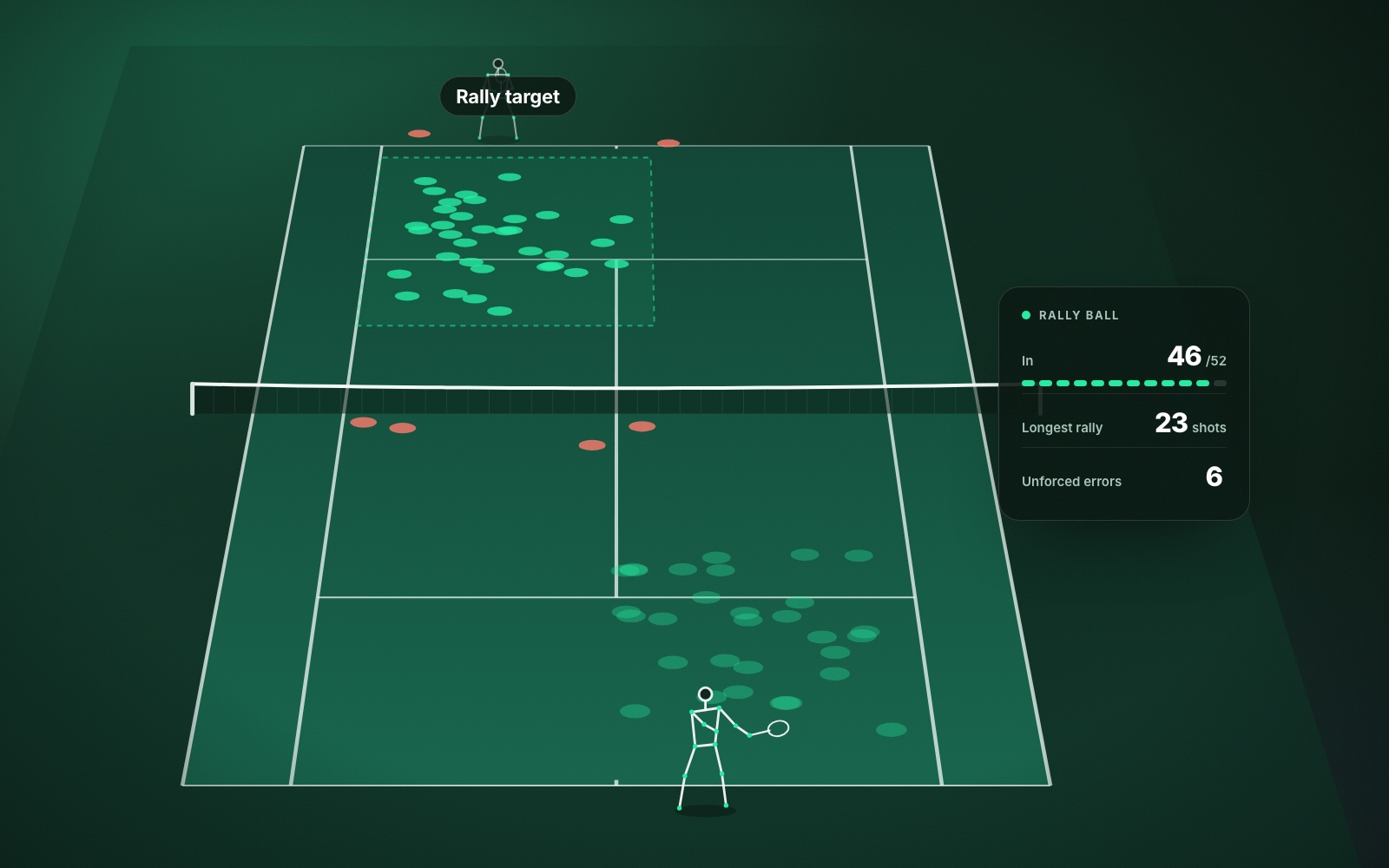
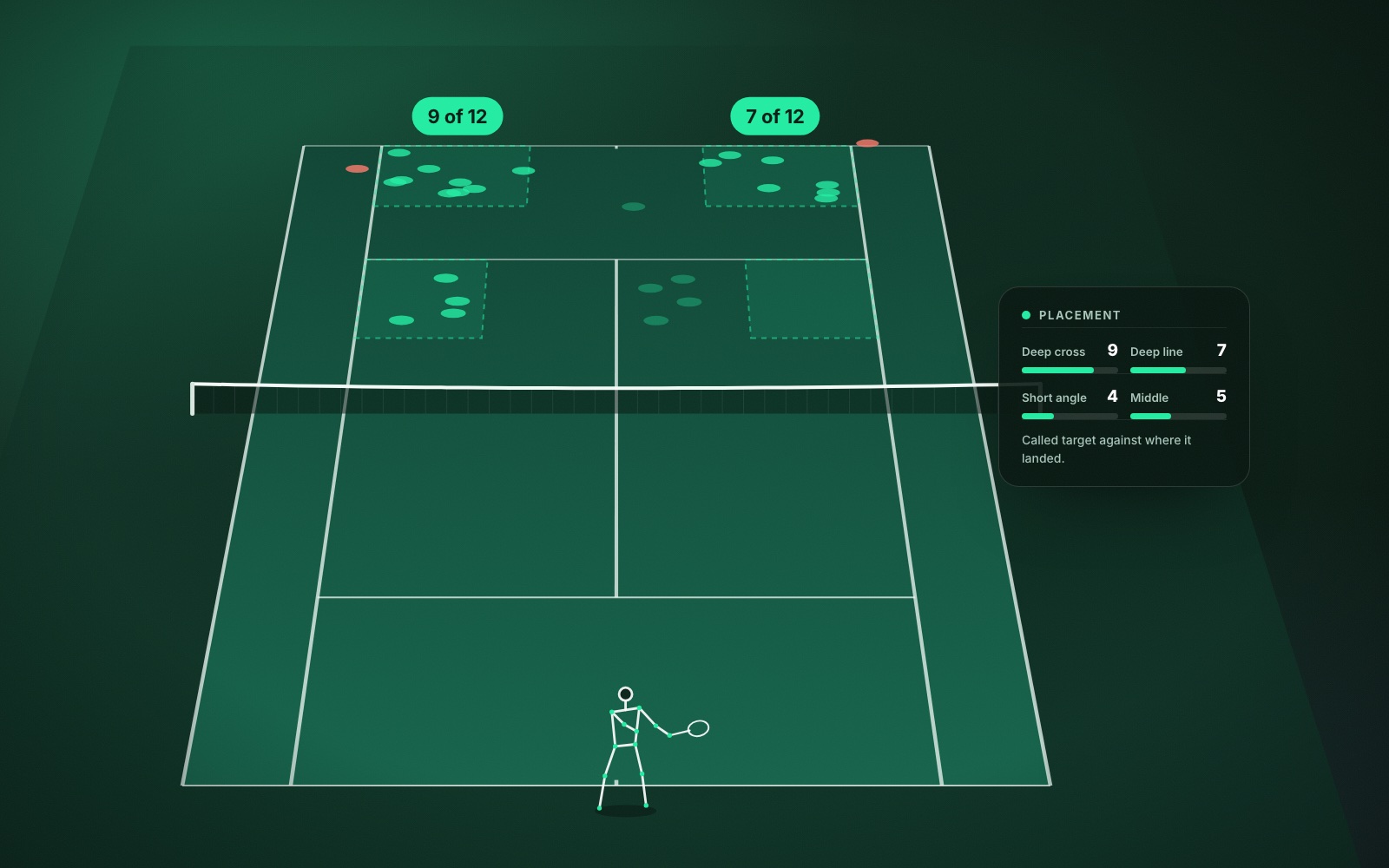
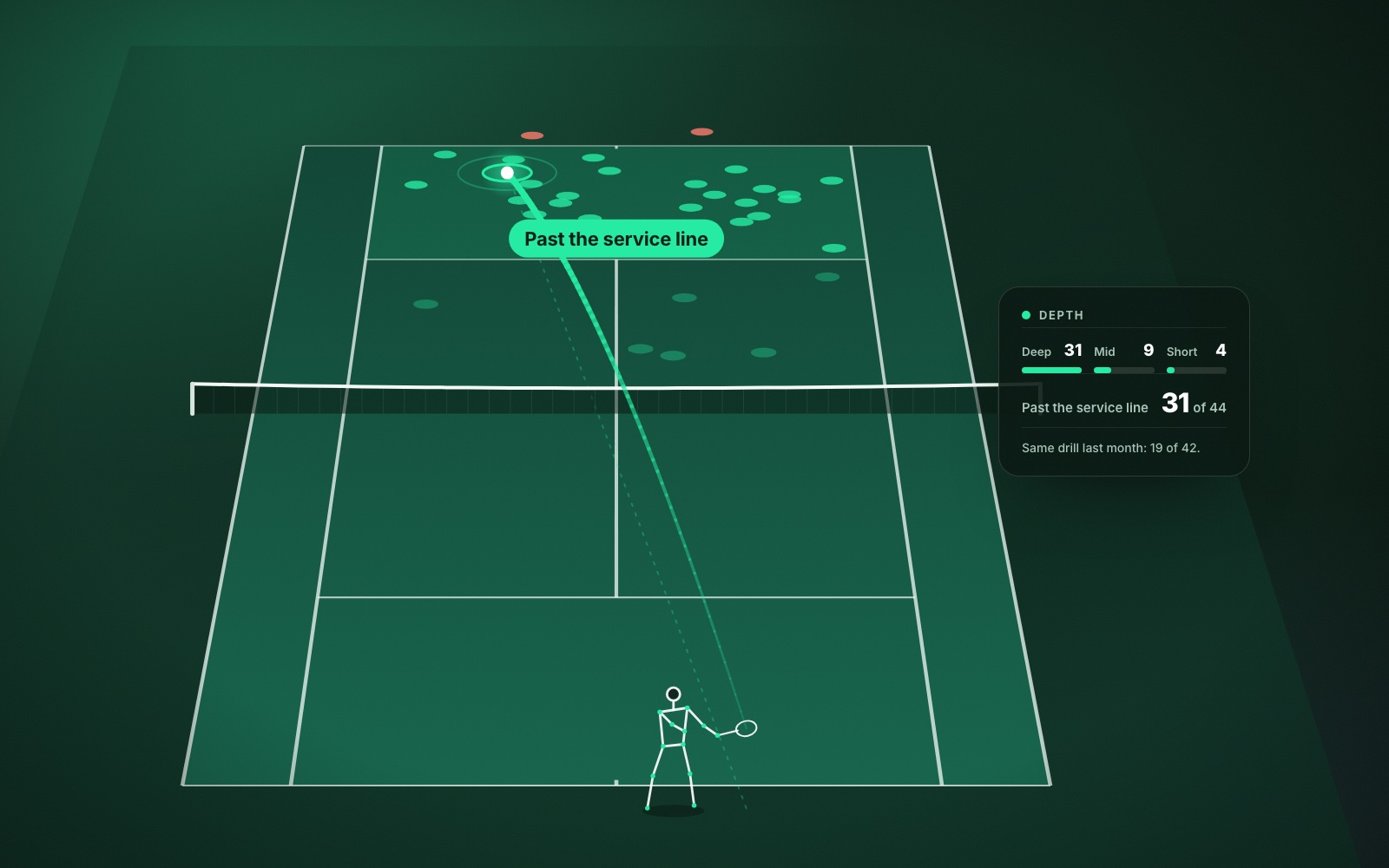
- The shot placement map. This is the main one. Look at where your bounces cluster. If most of them sit around the service line, you have found the problem.
- The in / out / close call. Depth is only useful if the ball stays in. Note how many shots went long, because that number must not climb as you push the ball back.
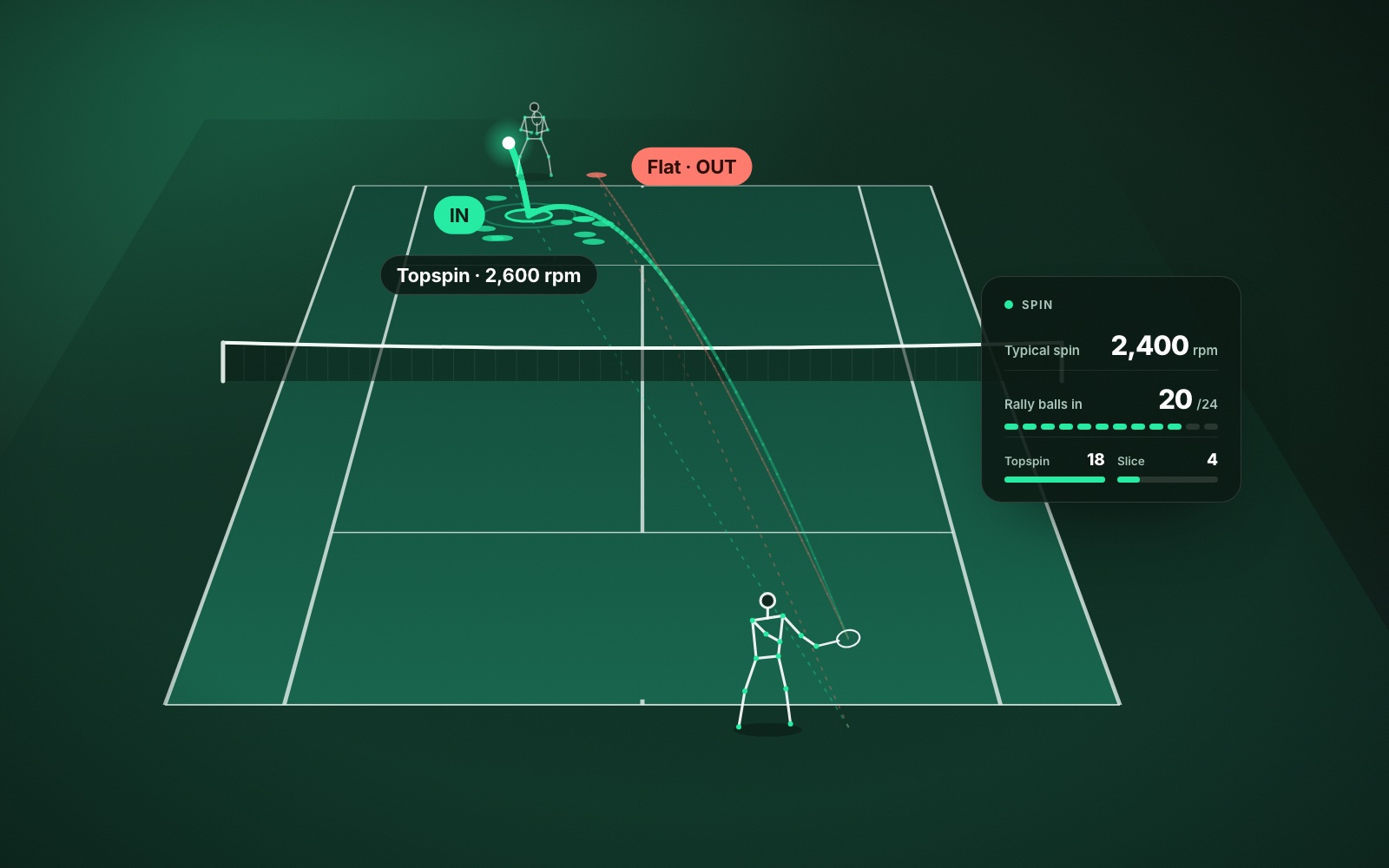
- Speed and spin by shot type. A slow, low-spin ball that lands short tells a different story from a fast, flat one that lands short. Compare forehand and backhand too. Many players are deep on one wing and short on the other.
- Shot quality. The score out of 100 for each shot gives you a quick check on whether your deeper balls are also your more effective ones.
Watch a few shots back as well. Playback draws the ball track and bounce marks on the video, so you can see how low your short balls cross the net.
Three drills to hit deeper groundstrokes
1. Raise the ball over the net
Height is where depth comes from. A ball that skims the tape has to be hit very hard to reach the baseline, and very hard is where errors live. Aim to clear the net by a metre or more on a normal rally ball. If it helps, pick a spot in the air above the net strap and send the ball through it.
The number to watch: the bounce cluster on the placement map should move back towards the baseline, while the count of shots landing in holds steady. If you start missing long, you have added height without spin. That is the next drill.
2. Add spin so the height stays in
Topspin is what lets you aim high without hitting the back fence. Swing from low to high and let the racket brush up the back of the ball. You are not trying to hit a different shot, only to put more shape on the one you have. There is a full method in how to hit more topspin.
The number to watch: spin in rpm on your forehand and backhand, next to the number of balls called out long. Spin going up while long misses come down is the pattern you want. ContactFrame only shows spin when the reading is solid, so judge it over a whole session and not on single shots.
3. The back-court game
Rally cross-court with a partner. Any ball that bounces in front of the service line loses the point, even if it is in. Play first to ten. The rule changes what you aim for without you having to think about technique.
The number to watch: the placement map again, plus rally length in the rally summary. Early on your rallies may get shorter as you push for depth. When they return to their old length with the bounces further back, the change has stuck.
How to re-measure, and how long it takes
Repeat the same ten-minute cross-court rally at the start of a session once a week. Same camera position, same focus, same partner if you can. Then open Trends and compare. One good session proves little. Three in a row heading the same way is a real change.
Most players who practise once or twice a week see their bounces shift back within four to six weeks. Matches lag behind. Under pressure the arm tightens, the swing shortens and the ball drops short again, so film a Match session once the drill numbers look settled. The gap between your practice map and your match map is the next thing to close, and working on consistency is usually how you close it.
What the video can’t tell you
The placement map shows where the ball went. It does not explain why your swing sent it there. On the Pro plan, shot mechanics adds swing scores and one Next fix for the player nearest the camera, which narrows things down. But ContactFrame does not analyse your grip or the angle of the racket face, and both can be behind a ball that keeps dying short.
It also cannot tell you whether deep was the right choice. A short angle or a drop shot is sometimes the better ball, and singles strategy is a separate subject. If your numbers have not moved after six weeks of honest work, book a lesson and take the session with you. A coach who can see your placement map and your swing will get to the cause much faster.
Common questions
Why do my tennis shots keep landing short?
The usual cause is a low, flat ball that clears the net by very little and so cannot carry far. Tension matters too: a tight arm slows the swing on the points that count. Aiming higher over the net fixes more short balls than hitting harder does.
How deep should a groundstroke land?
A useful club target is the area between the service line and the baseline, with the back half of it as the ideal. You do not need to hit the baseline. A ball that lands a metre or two inside it and still pushes your opponent back is doing its job.
Does topspin help you hit deeper in tennis?
Yes, indirectly. Topspin lets you aim higher over the net because the ball dips back into the court. That extra height is what carries the ball deep, and the spin is what keeps it in.
Can an app measure shot depth?
An AI video app such as ContactFrame records where each ball bounced and draws it on a placement map of the court, so you can see how many of your shots land short and how many land deep. It also marks each shot in, out or close.
How long does it take to hit with more depth?
With one or two focused sessions a week, most players can see their bounces move back within four to six weeks. Holding that depth in a match usually takes longer than holding it in a drill.
See where your shots really land.
One phone on a tripod, and a placement map for every session.
Explore The Lab