The short version
- Technique returns faster than timing, movement and match fitness. Expect the swing to feel fine and the ball to arrive sooner than you remember.
- Start short. Rally from the service line, keep early sessions under an hour and build up over weeks.
- Fresh strings, new balls and proper tennis shoes matter more than a new racket.
- Judge your level by results now, not by how you played ten years ago.
- Film one early session as a baseline, so you can see the progress that is hard to feel.
You used to play. Then came work, children, a move, an injury, or simply a summer when you did not pick up the racket, and somehow that was eight years ago. Now you are thinking about getting back into tennis and wondering how much is left.
More than you fear, and less than you remember. This guide sets out what to expect in the first few sessions, how to plan the first month, and how to find the right people to play with now.
What comes back, and what does not
The swing comes back first. Grips, the shape of a forehand, the rhythm of a serve: these are deeply learned and they return within a session or two. You will hit a few balls that feel exactly as they used to.
Timing comes back more slowly. The ball will seem to arrive early, and you will hit late and off the frame more than you expect. That is normal. Your eyes and feet need a few hours of live ball to recalibrate.
Movement and match fitness come back last. Tennis is a game of short sprints, stops and changes of direction, and that particular fitness goes quickly when you stop. It is the main reason returning players feel fine for twenty minutes and ragged after forty.
The other thing that fades is judgement. Shot selection, patience, knowing when to go for it. Expect to lose to people you would once have beaten, and try to find it interesting.
Check your kit before you return to tennis
You probably do not need a new racket. If the frame has no cracks, it will do. What it does need is new strings, because strings go dead with age whether or not they are used. A restring and a fresh grip make an old racket feel new for a fraction of the price.
Buy new balls. A tin that has sat in a cupboard for years has lost its pressure, and flat balls are heavy to hit and teach you nothing.
Wear proper tennis shoes. Running shoes are built to go forwards, and tennis goes sideways. This is the one item worth spending on.
Your first session back
Find a patient partner or a wall, and start small.
- Warm up off the court. A few minutes of brisk walking or light jogging, then some gentle movement for shoulders, hips and ankles.
- Mini tennis. Both of you on the service lines, rallying softly into the service boxes. Ten minutes. It rebuilds timing without strain.
- Move back gradually. Three-quarter court, then the baseline. Aim down the middle and count how many you can keep going.
- A few volleys and serves. Twenty easy serves at most. The shoulder has not done this for years.
- Stop while it is still fun. Forty-five minutes to an hour is enough.
Do not play a match in the first session. You will learn little and ache a lot.
A four-week plan for getting back into tennis
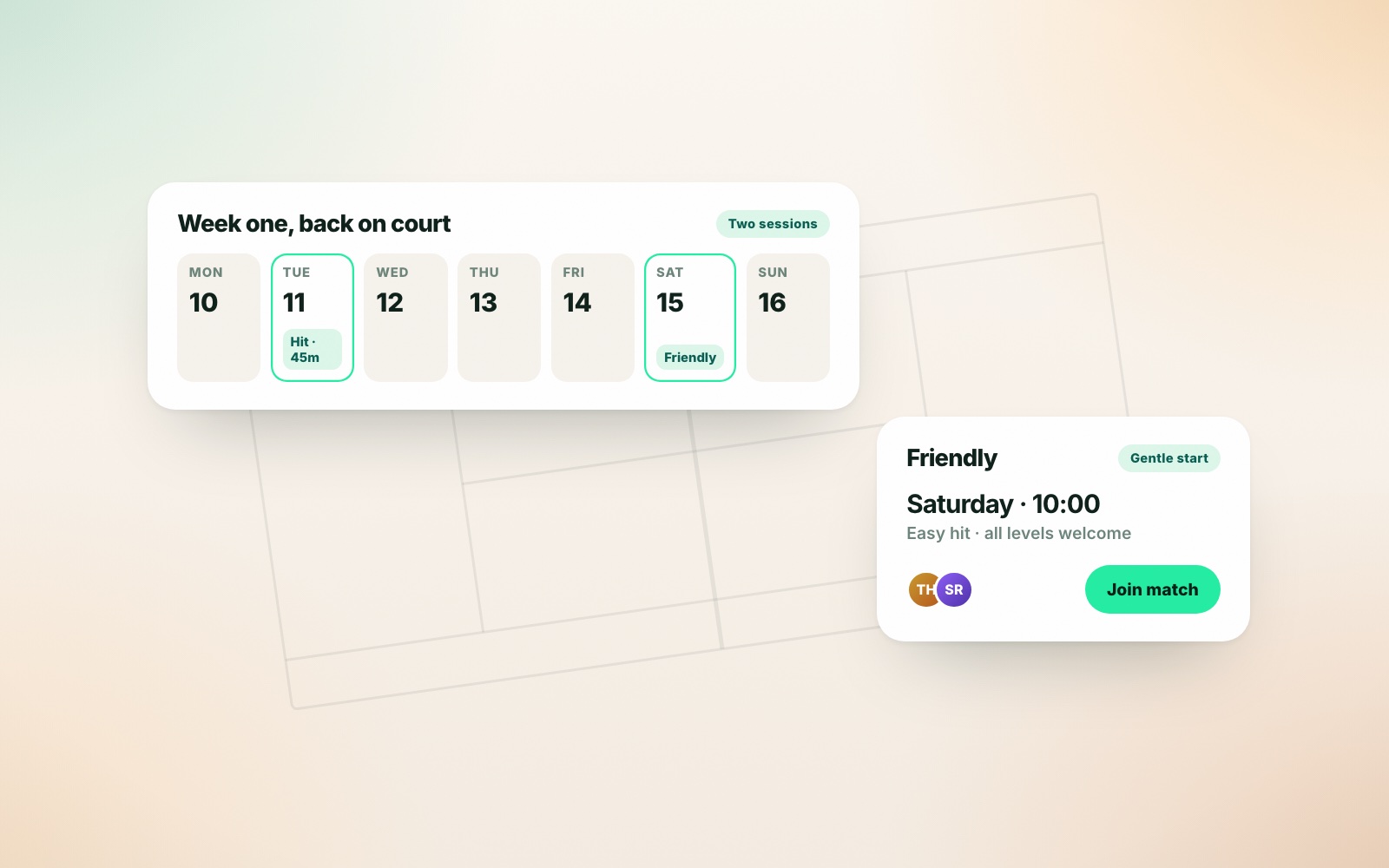
Week one: touch. One or two short sessions. Mini tennis, rallying down the middle, a handful of serves. The only aim is clean contact.
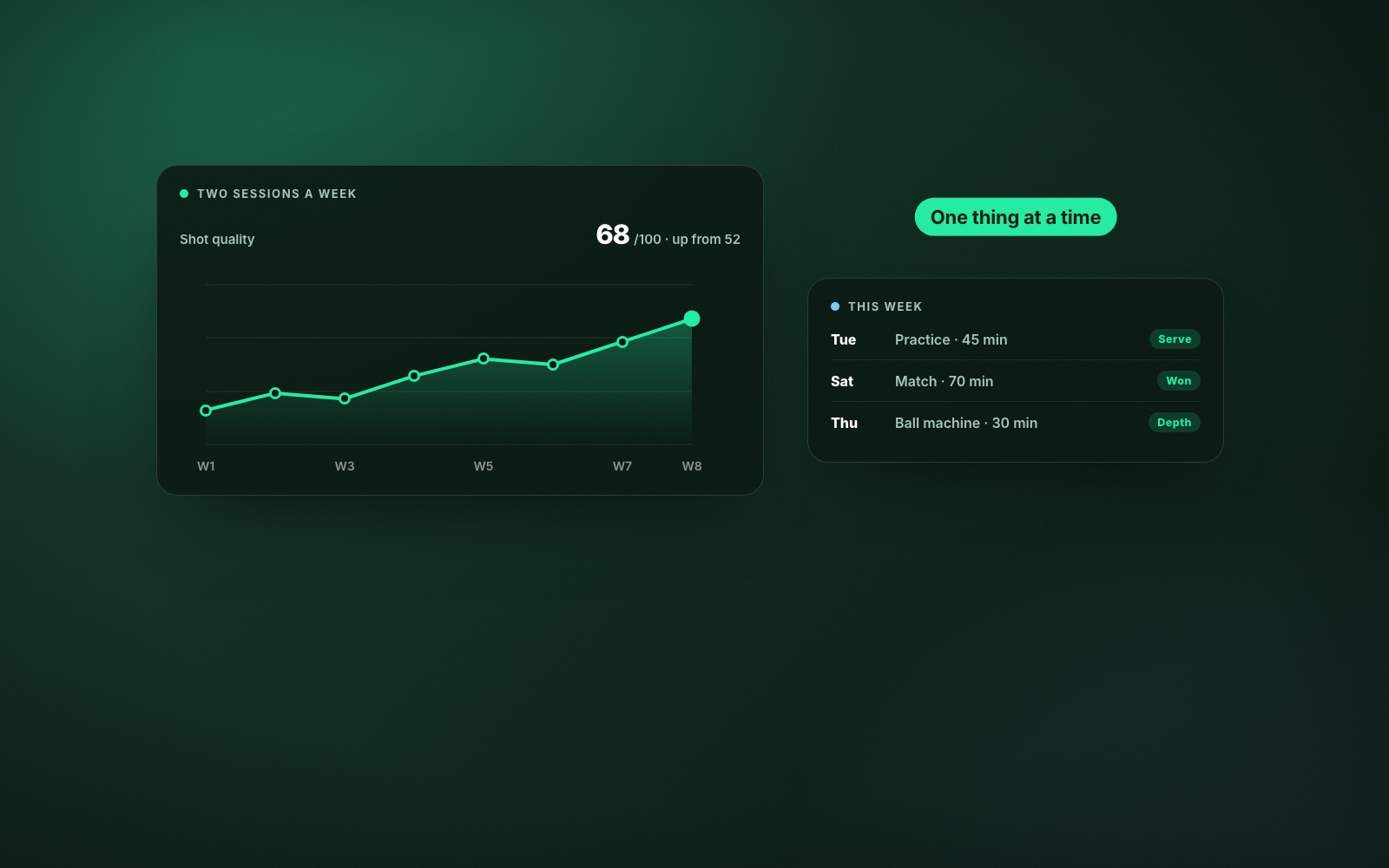
Week two: rhythm. Rally crosscourt on both sides. Count rallies and try to beat your best. Consistency is the fastest thing to rebuild and the most useful, and improving your consistency is a good theme for the whole first month.
Week three: serve and return. Add a proper block of serving, then play some points starting with a serve. Play a tie-break or two at the end.
Week four: a set. Play one set against someone at about your level. Then decide what needs work, based on what happened and not on what you feared.
If you cannot find a partner for every session, a wall, a ball machine or a basket of serves all count. There are ideas in how to practise tennis alone.
Find your new level honestly
Returning players make two opposite mistakes. Some describe themselves by how they played at nineteen and walk into matches they cannot yet win. Others assume they are beginners again and end up bored.
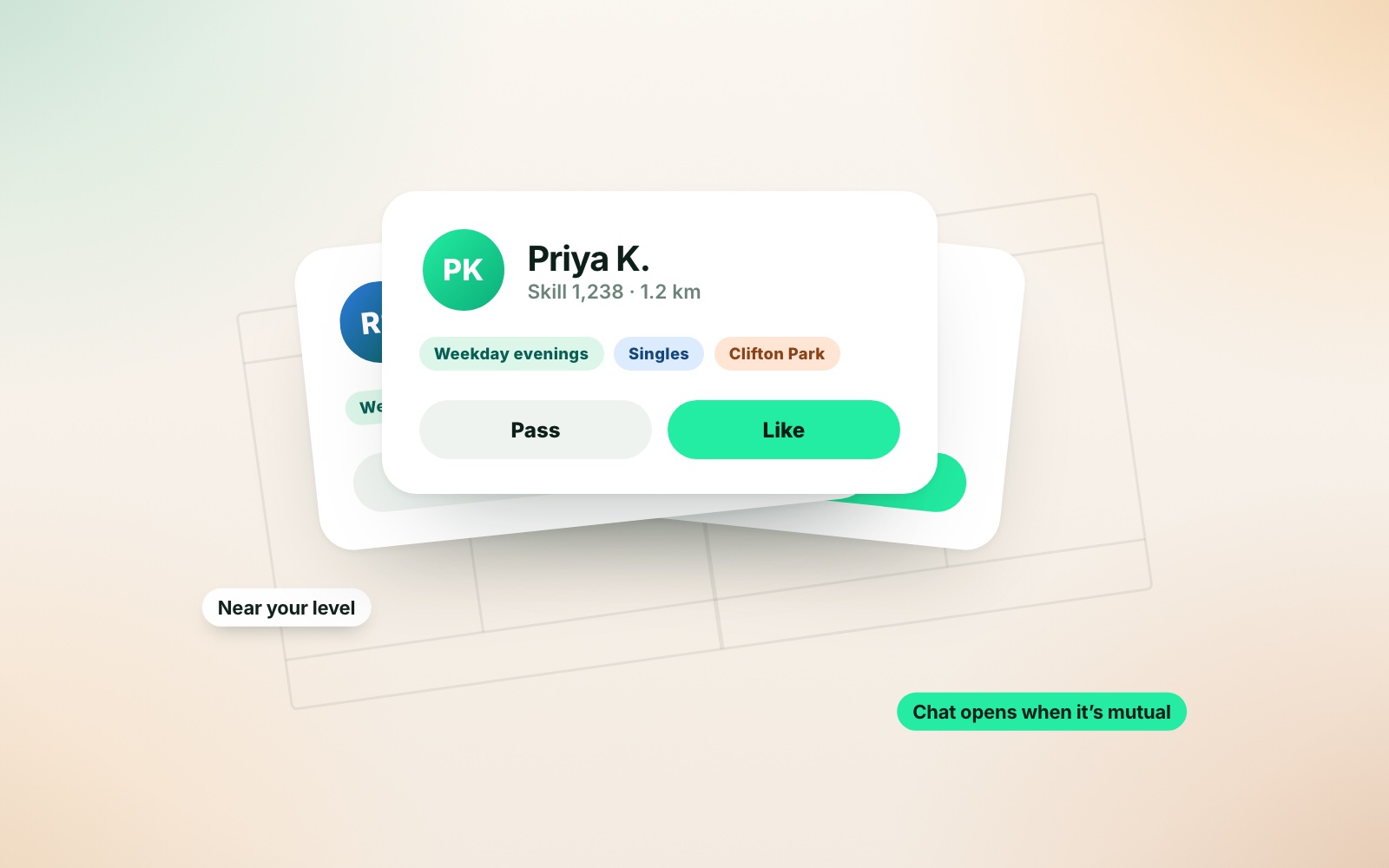
The fix is the same for both: let a few results tell you. On ContactFrame nobody picks their own level. Your Skill rating is built from confirmed results, so after a handful of matches it reflects how you play now. Finding your level in local tennis explains why that works better than a label.
When you look for people to play, say that you are returning. It sets expectations and most players are generous about it. There is a full guide to finding tennis partners near you, and a friendly on ContactFrame with a sensible skill range is a low-pressure first match.
Film an early session so you can see the progress
Progress after a break is real and oddly hard to feel, because your standards come from memory. Every session feels worse than you used to be, even when it is better than last week.
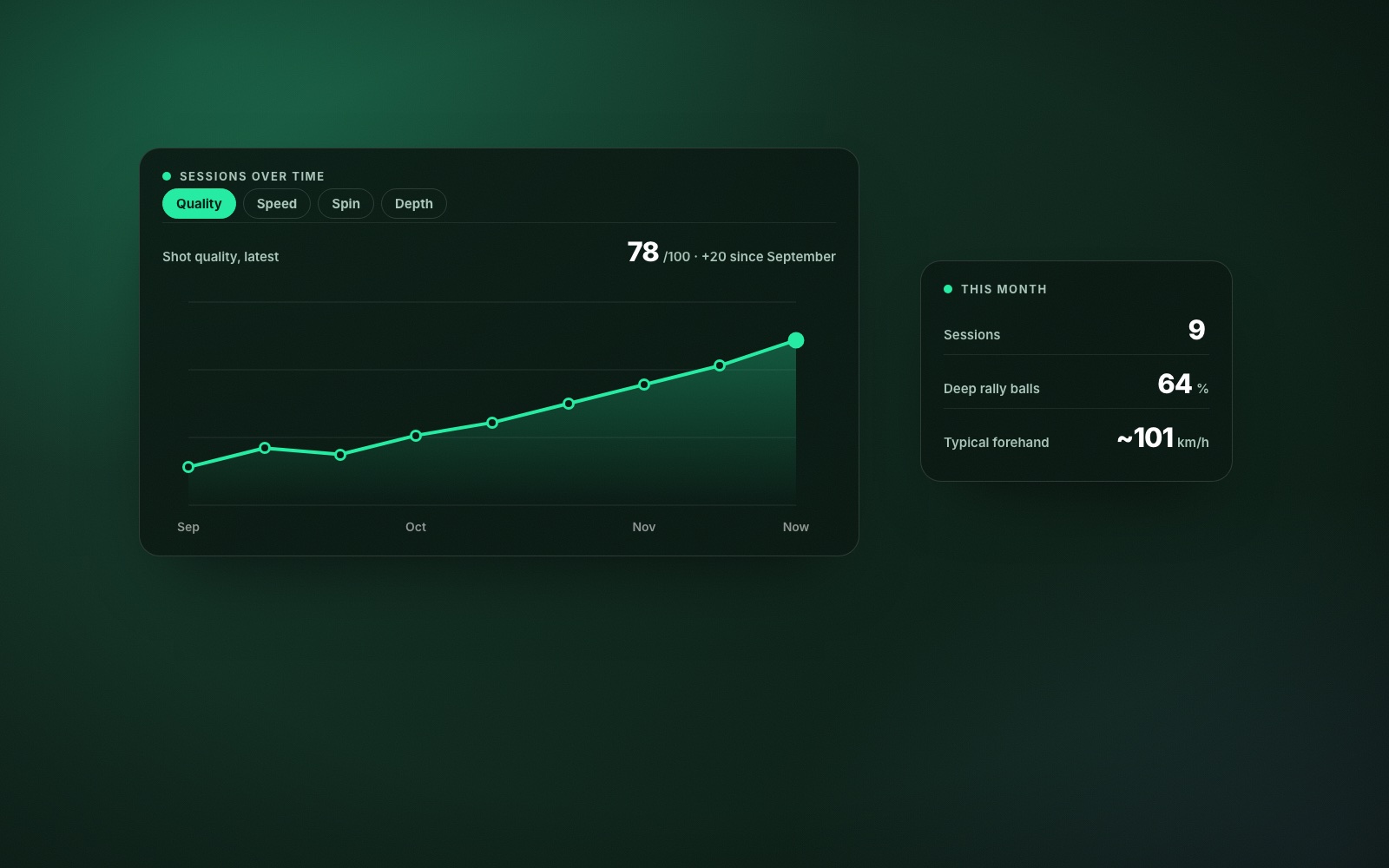
A recording gives you something firmer. With ContactFrame you film from a phone on a tripod behind the baseline, and The Lab measures each shot: ball speed, spin, where it bounced, and whether it was in, out or close. Session insights break that down by shot type, so you can see how many forehands and backhands landed in.
Do it once in the first fortnight and you have a baseline. Do it again a month later and compare. Say your backhands went from 55% in to 68% in: that is not a feeling, and it is very encouraging on a day when your timing has gone missing. ContactFrame’s free plan includes 15 minutes of recording a month, which is enough for a short check.
For what to compare and how often, see how to track your tennis progress.
Common mistakes when returning to tennis after years away
- Too much, too soon. Three sessions in the first four days, then a fortnight off with a sore elbow. Little and regular wins.
- Hitting at your old pace. Swing at about three-quarters until your timing returns. Speed follows timing.
- Serving flat out on day one. Build serve volume over weeks.
- Skipping the warm-up. You got away with it at twenty.
- Comparing yourself with the past. Compare this month with last month. It is the only fair comparison and the only useful one.
What you gain second time round
Adults who come back tend to practise better than they did when they were younger. You are more patient, more willing to work on one thing, and less bothered about looking good. Those are real advantages, and improving at tennis as an adult makes the case in more detail.
Give it a month of steady sessions before you judge. By then the ball will have stopped arriving early, and you will remember why you liked this game.
Common questions
How long does it take to get back into tennis after years away?
Most returning players feel their strokes come back within a few sessions. Timing, movement and match sharpness take longer, often a couple of months of regular play. It varies with how long you were away and how much you played before.
Can I still use my old tennis racket?
Usually, yes, as long as the frame is not cracked. Have it restrung, because strings lose tension and feel over time even when unused, and put on a fresh grip. That is a cheaper and better first step than buying a new racket.
Should I take lessons when returning to tennis?
One or two lessons early on are worthwhile. A coach can spot habits that have crept in and tell you what to prioritise, which saves weeks of practising the wrong thing.
How often should I play when getting back into tennis?
Once or twice a week is plenty for the first month. Leave a day between sessions and add time on court gradually. If you have an injury or a health concern, speak to a medical professional before you start.
How do I find people to play with after a long break?
Look for social sessions at parks and clubs, tell people honestly that you are returning, and suggest a rally before a match. A rating built from results will place you at your current level after a few matches.
Come back with a baseline.
Film your first sessions with ContactFrame and see what is returning, shot by shot. Join the list for the app.
See The Lab