The short version
- Look at four things in order: preparation, footwork, the kinetic chain and contact.
- Most swing problems start before the swing, with late preparation or poor position.
- Judge a swing by what it produces. A stroke that looks unusual and lands deep and in is not broken.
- Work on one fix at a time, and check the ball numbers to see whether it helped.
- Software can show you the pattern. A coach is still the best person to rebuild a stroke.
You film your forehand, play it back in slow motion and see a swing that looks nothing like the one in your head. Then what? Without knowing what to look for, slow motion mostly shows you things to feel self-conscious about.
A tennis swing analysis app can help by pointing at specific parts of the movement. It still helps to know what those parts are and which ones matter. This guide covers what swing and mechanics analysis shows, how to film for it, and what to look for when you watch.
What tennis swing analysis is
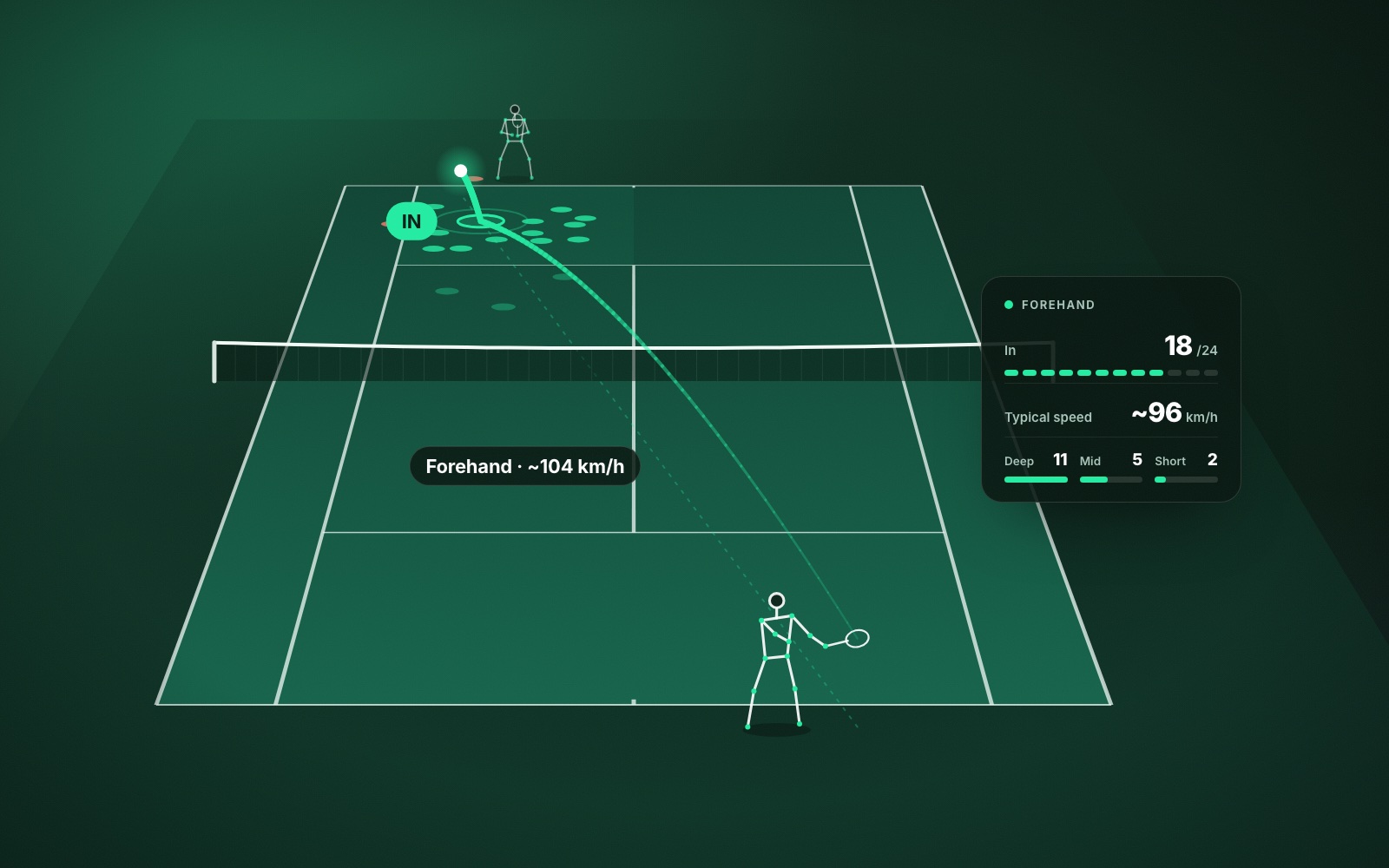
There are two ways to look at a tennis shot. One is by what the ball did: how fast it went, how much it spun, where it landed. The other is by what your body did to produce it. Swing analysis, also called mechanics or technique analysis, is the second.
Both matter, and they answer different questions. The ball numbers tell you whether there is a problem. The mechanics give you clues about where it comes from.
A warning before going further: there is no single correct swing. Good players differ a great deal in style. What they share is a small set of fundamentals, and those are what analysis should focus on.
What a tennis swing analysis app shows you
In ContactFrame, shot mechanics are part of the Pro plan. The app tracks body points through the swing and gives you:
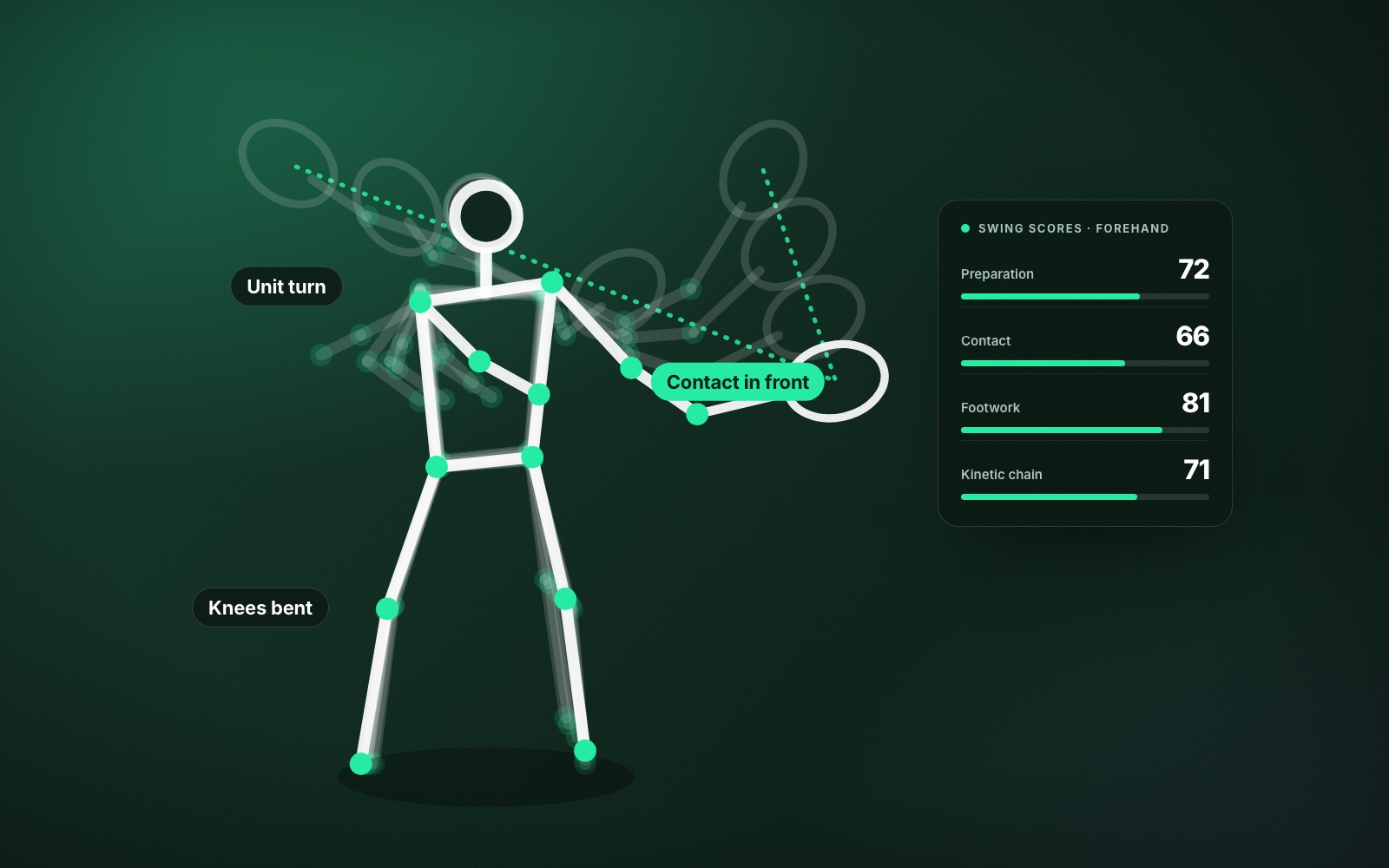
- Swing scores for things like preparation, contact, footwork and kinetic chain.
- A stick-figure replay of each contact, so you can see your body shape without the distraction of the background.
- One Next fix to work on, with a drill for it.
Mechanics cover the player nearest the camera. The setup is the same as for any session: one phone in landscape on a tripod two to three metres behind the baseline, at net height or higher, with the whole court in view and the camera left alone. No sensors or wearables are involved.
It is worth being clear about the limits. ContactFrame does not analyse the ball toss, grip or racket-face angle, and it reviews a recorded session. It does not coach you live while you hit.
What to look for in your tennis swing
Whether you are reading ContactFrame’s swing scores or just watching slow motion, look at these four things in this order. Problems early in the list usually cause the ones later on.
1. Preparation
Good preparation means turning the shoulders and getting the racket back early, as soon as you know which side the ball is coming to. A useful check: by the time the ball bounces on your side, are you turned and ready, or still taking the racket back?
Late preparation is the most common fault in club tennis. It makes everything after it rushed, and it shows up as late contact, mishits and balls sprayed wide.
2. Footwork and balance
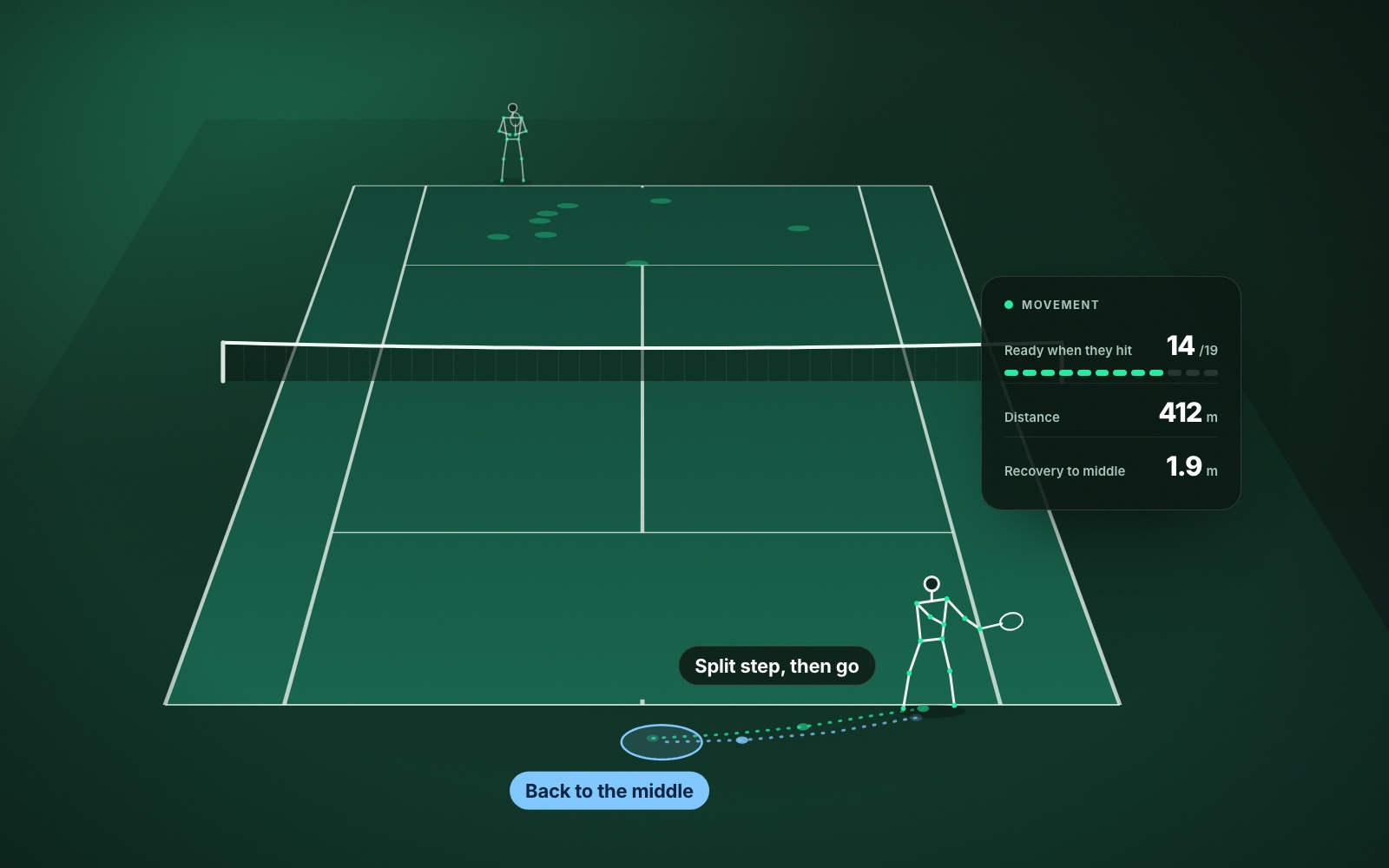
Look at your feet before the swing starts. Did you take small adjusting steps to get the right distance from the ball, or did you plant early and reach? Is your head still and your body balanced as you hit, or are you falling away?
Many faults that look like arm problems are spacing problems. If you are too close, the swing is cramped. If you are too far away, you lunge. More on this in how to improve tennis footwork.
3. The kinetic chain
The kinetic chain is the order in which the body passes energy to the racket: legs, hips, trunk, shoulder, arm, then racket. When it works, the swing looks unhurried and the ball still travels.
The usual club fault is an arm-only swing. The legs stay straight, the hips and shoulders barely turn, and the arm does all the work. It limits pace and tends to tire the arm. In slow motion, watch whether your hips and chest start to turn before the racket comes forward.
4. Contact
For groundstrokes, sound contact is out in front of the body, at a comfortable distance, at a height you can control, with your head steady. Contact that drifts back beside or behind the hip is usually the result of late preparation, which is why contact comes last in this list.
The stick-figure replay is helpful here. Freeze a few contacts on shots that went well and a few that did not, and compare the body shapes.
How to film your swing for analysis
- Play from the near end. Mechanics cover the player nearest the camera, so do your hitting from that side.
- Hit a decent number of the same shot. One forehand tells you little. Thirty show a pattern. A Ball machine session is ideal, because the feed is consistent.
- Include some match play. Swings often change under pressure. A stroke that is tidy off a feed may shorten in a tight game.
- Keep the light behind the camera. A clear view of your body makes for a clearer analysis.
The basics of camera position are in how to record a tennis match on your phone.
How to use swing scores and the Next fix
The temptation with mechanics is to fix everything at once. Resist it. A player thinking about five things mid-swing hits worse, not better.
That is why ContactFrame gives one Next fix and a drill for it. Work on that one thing for two or three weeks. Then check two things: has the swing score for that area moved, and have the ball numbers improved?
The second check is the important one. Say your preparation score has gone up and your forehands are landing deeper and going in more often. The change is doing its job. If the swing score rose and the ball results did not, keep practising a little longer, then consider whether the real issue is elsewhere.
A better-looking swing only matters if the ball does something better.
For stroke-specific versions of this process, see how to improve your forehand and how to improve your backhand.
Common mistakes in tennis technique analysis
- Copying one frame of a professional. A still image hides the timing and the athleticism that make the position possible.
- Judging by looks. An unusual swing that produces deep, reliable shots does not need fixing.
- Changing something every session. A movement needs weeks of repetition to settle.
- Analysing only your best shots. The misses hold the information.
- Ignoring the dip. Results often get slightly worse while a change beds in. Give it time before you judge it.
What swing analysis cannot tell you
Software can show a pattern in how you move and suggest a place to start. It cannot feel what you feel, give you a cue in the moment or decide that a quirk in your stroke is harmless. Those are a coach’s skills, and the comparison is set out in AI tennis coach vs human coach.
If you want to rebuild a stroke, or if any shot causes pain, see a qualified coach or the appropriate professional. Take the recordings from The Lab with you. A coach who can see your swing scores, your contact replays and what the ball did will get to the cause much faster than one starting from a description.
Common questions
What is tennis swing analysis?
It is the study of how your body moves through a stroke, from preparation to follow-through. An app does it by tracking body points on video and scoring parts of the swing, so you can see patterns you cannot feel.
What should I look for in my tennis swing?
Start with preparation: were you turned and ready before the ball bounced? Then look at footwork and balance, whether the legs and body drive the swing before the arm, and where you meet the ball in relation to your body.
Can an app analyse my tennis technique?
Yes, within limits. ContactFrame’s shot mechanics on the Pro plan track body points through the swing and give swing scores, a stick-figure replay of each contact and one Next fix with a drill. It does not analyse the ball toss, grip or racket-face angle.
Where should I put the camera for swing analysis?
For ContactFrame, use the standard setup: phone in landscape on a tripod two to three metres behind the baseline, at net height or higher, with the whole court in view. Play from the end nearest the camera, because mechanics cover that player.
How long does it take to change a tennis swing?
A single, focused change usually needs several weeks of regular practice before it feels natural, and longer before it holds in matches. Expect your results to dip a little at first.
See your swing, one fix at a time.
Shot mechanics on the ContactFrame Pro plan score your swing and give you one Next fix with a drill.
See the plans