The short version
- Feel is a poor judge of a serve. You remember the aces and forget how many first serves missed.
- Three numbers matter most: how many went in, serve speed and where they landed on each side.
- Fix the percentage before the pace. A faster serve that misses more often is not an improvement.
- Serve at named targets, wide, body and T, and let the placement map tell you which ones you can actually hit.
- Re-film the same basket every week or two. Expect placement to move in weeks and speed to move in months.
Ask a club player how they served and you will get an answer about two or three points: the ace at 30–40, the double fault at set point. Nobody remembers the other forty serves. If you want to know how to improve your tennis serve, that gap between memory and reality is the first thing to close, because you cannot practise a problem you have misdiagnosed.
The serve suits measurement better than any other shot. You start it, nobody rushes you, and the target is a painted box. AI video analysis turns a basket of serves into a short list of numbers, and those numbers tell you what to practise next.
Why feel misleads you on serve
A serve that feels fast is often just a serve you swung hard at. A serve that felt “on” for a set may have gone in half the time. And very few players can say, without looking, whether they miss more to the deuce side or the ad side.
Feel is also biased towards pace. Hitting one flat serve past your partner is memorable. Landing seven out of ten into the backhand corner is not, even though it wins more games.
How to film your serve
You need a phone, a tripod and a basket of balls. Set the phone in landscape two to three metres behind the baseline, at around net height or higher, with the whole court in view. Do not point it into the sun, and do not move it once you have started. In ContactFrame you then line up the four corners of the court on screen so the app knows where the lines are.
Serve from the camera end. Shot mechanics, on the Pro plan, cover the player nearest the camera, so that is where you want to be standing. If you are new to filming, the phone setup guide covers tripods and heights in more detail.
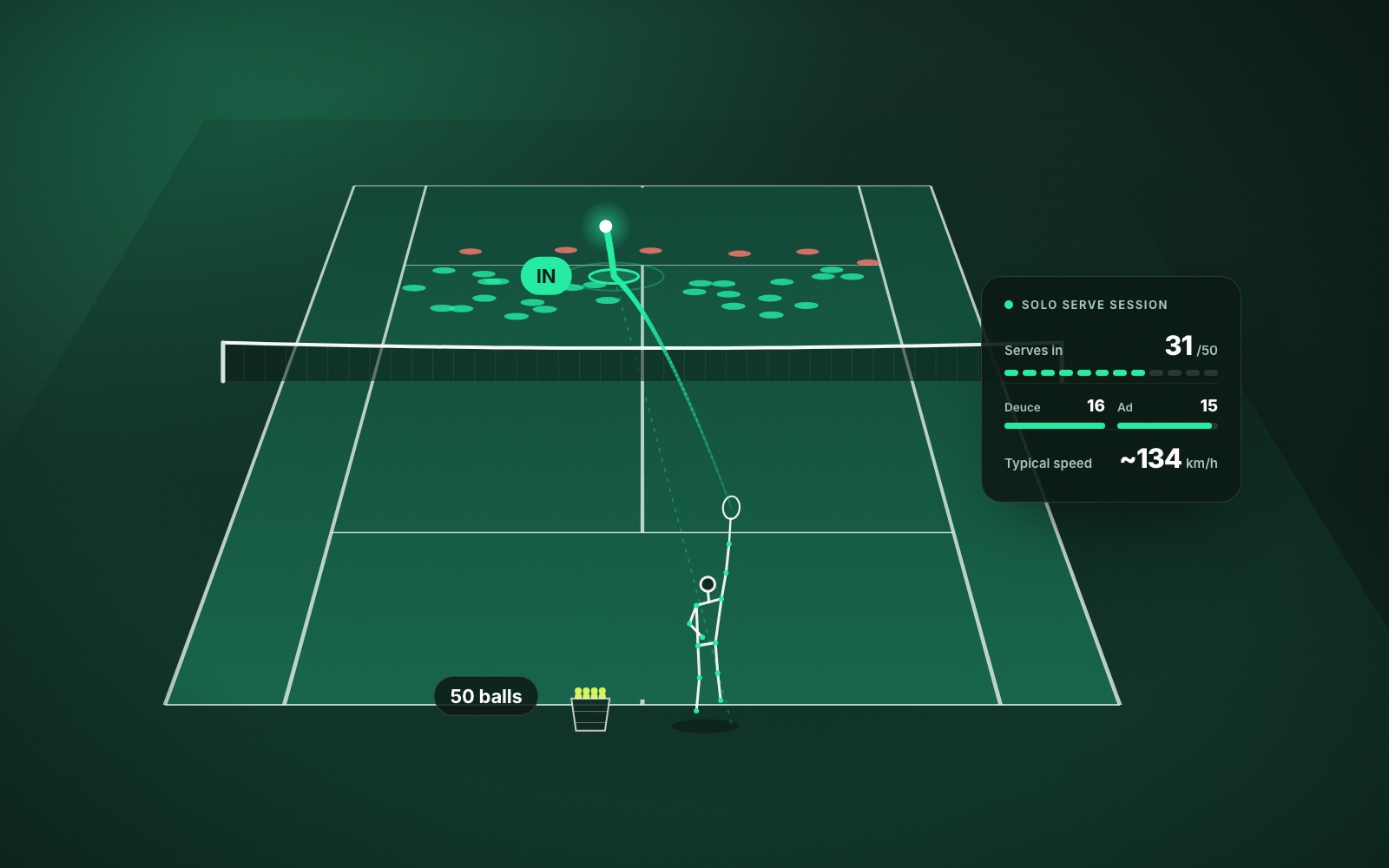
Hit at least thirty serves, split between the deuce and ad sides. Fewer than that and one good or bad patch distorts everything.
The serve numbers that matter in ContactFrame
Open Session insights after the session and look at three things.
- How many went in. This is the headline. If it is low, nothing else matters yet.
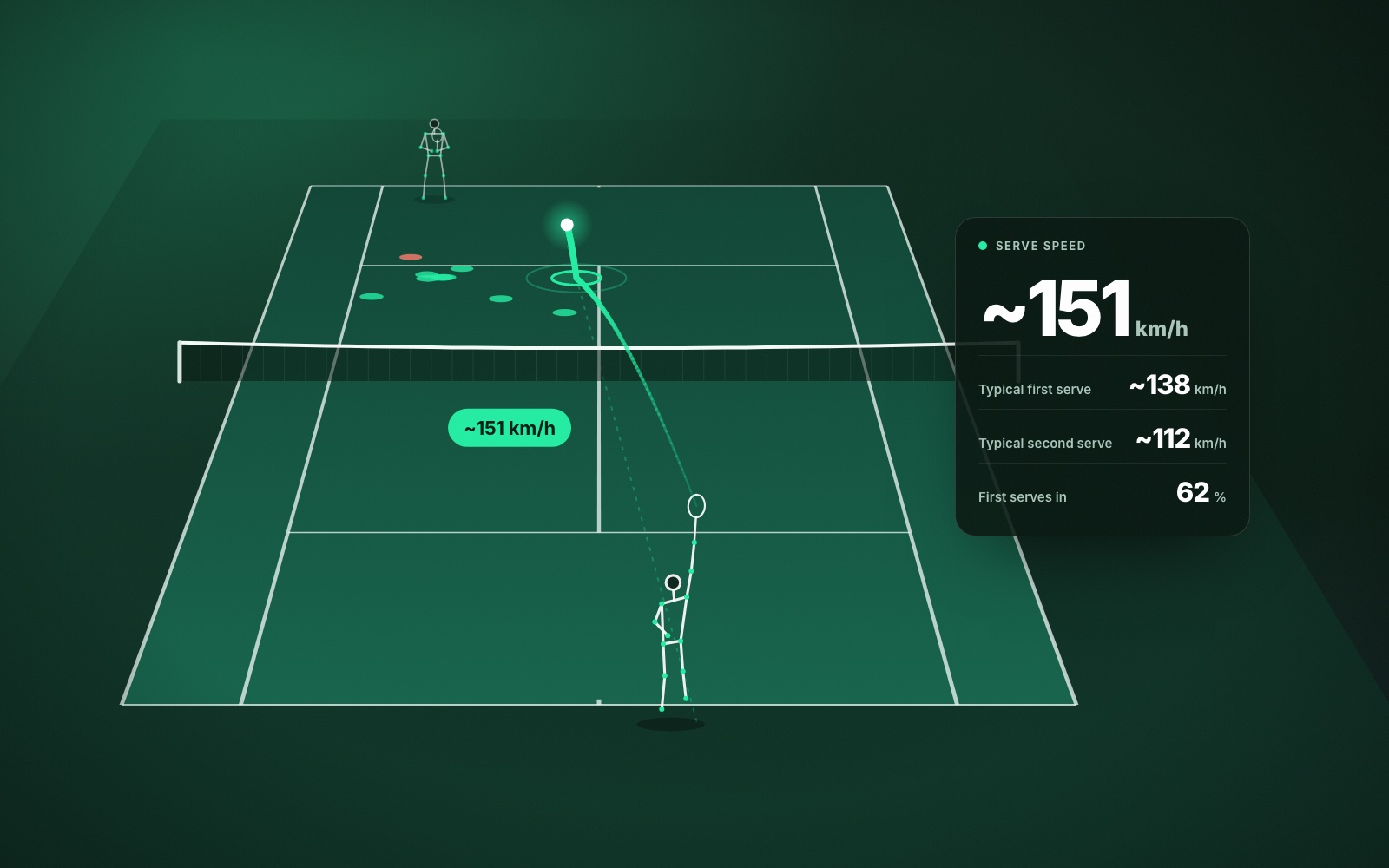
- Serve speed. Look at the typical speed of the serves that landed in, not the single fastest. Your fastest serve is a party trick. Your usual one is your serve.
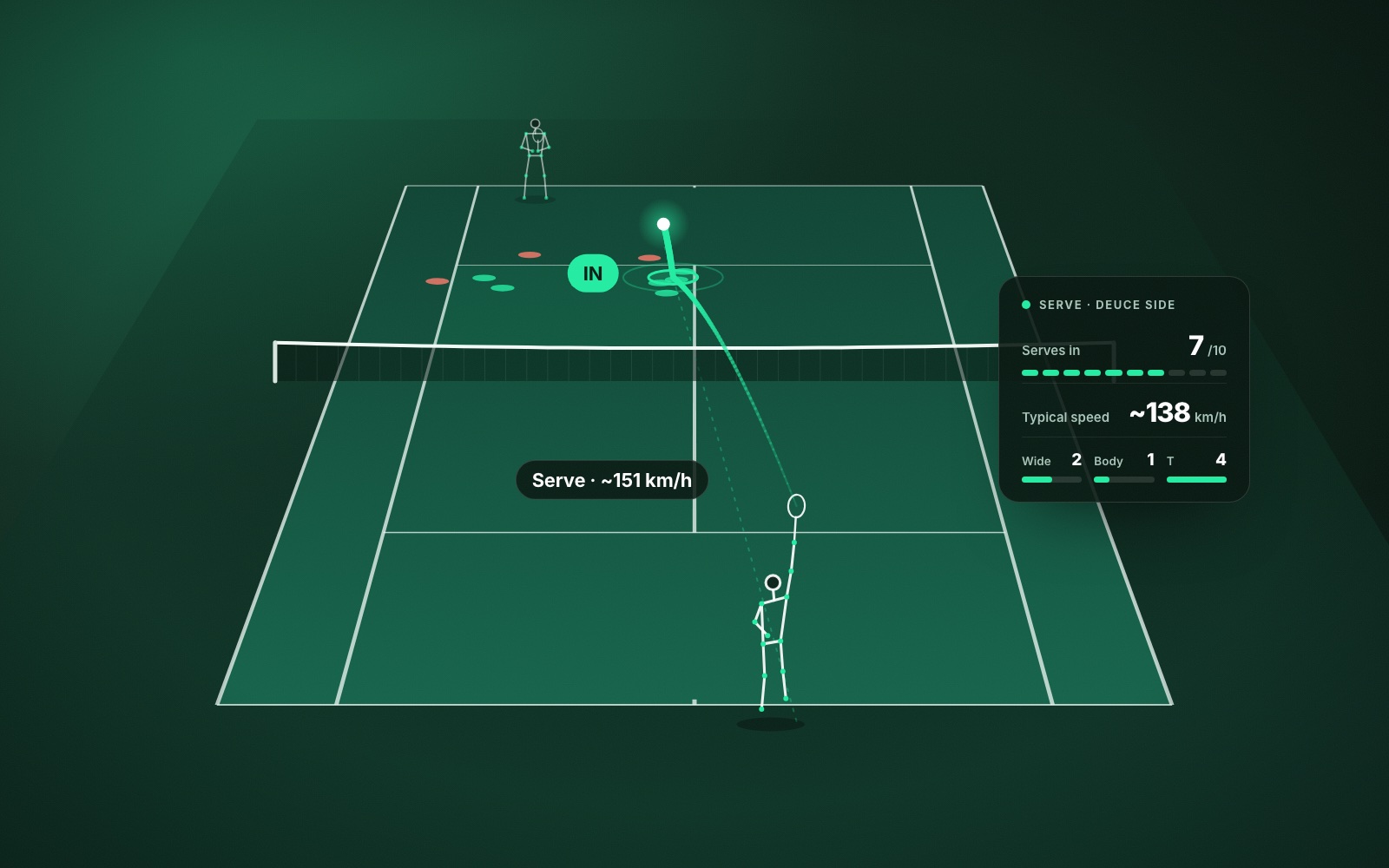
- Where they landed. ContactFrame sorts serves into wide, body and T on both the deuce and ad sides. Most players discover one target they hit by default and one they almost never find.
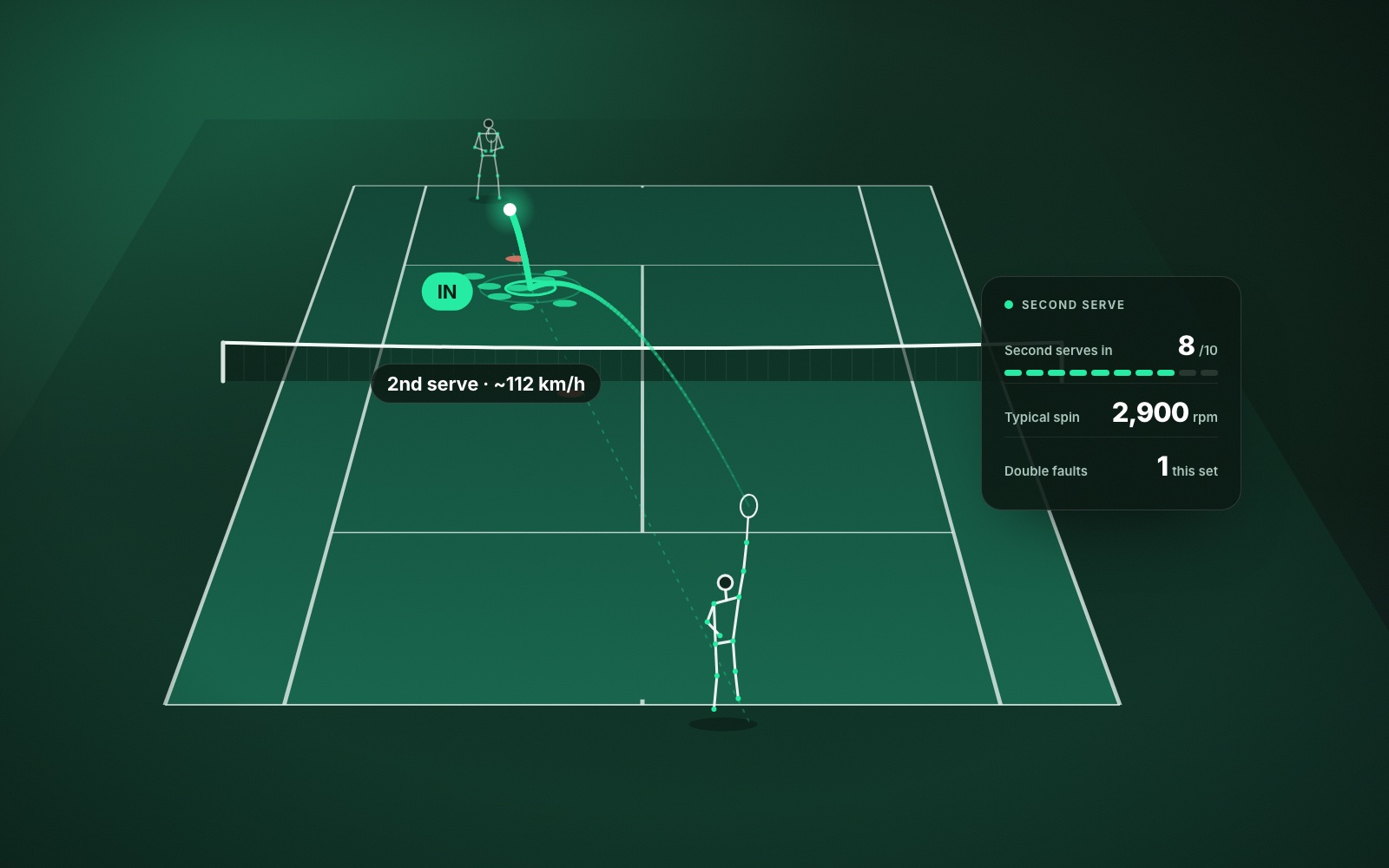
If you record a Match session, you also get first and second serves separately, which is where the honest picture is. A first serve number on its own means little without knowing what the second serve does when the first one misses. There is a full guide to that in how to improve your second serve.
Three drills to improve your serve, and the number each one moves
1. Six targets, five balls each
Before each serve, say the target out loud: deuce wide, deuce body, deuce T, then the same on the ad side. Five balls at each. Do not change target because you missed.
The number to watch: serve placement. Afterwards, compare what you called with where the serves landed. The aim over a few weeks is for each of the six zones to fill up when you ask it to. A target that stays empty is your next practice session.
2. The three-quarter basket
Serve a whole basket at what feels like three-quarters of your full swing, with the same rhythm every time. This is not about hitting softly. It is about finding the speed at which your motion repeats.
The numbers to watch: how many went in, and serve speed. Many players find the three-quarter serve is only a little slower than the full one and lands far more often. Say your full-effort serves average 150 km/h with four in ten landing, and your three-quarter serves average 138 km/h with seven in ten landing. That second serve is the better first serve.
3. Two in a row
Pick one target. You score a point only when two consecutive serves land in that zone. Play to five points, then switch sides. It adds the small pressure of having something to lose, which is what a match does.
The number to watch: the in-count on that side, compared with drill one. If your percentage falls sharply once a streak is at stake, the problem is not technique. It is routine, and the fix is a consistent pre-serve routine you use on every ball.
Using shot mechanics for your serve
On the Pro plan, ContactFrame tracks body points through the swing and gives swing scores for things like preparation, contact and kinetic chain, with a stick-figure replay of each contact. It then picks one Next fix and a drill for it.
Take the one fix seriously and ignore the temptation to change three things at once. A serve is a chain of movements, and changing several links together usually means you cannot tell which change helped. For what a sound motion looks like, see what to look for in a swing analysis.
How to re-measure, and how long it takes
Repeat the same session every week or two: same end, same number of balls, same drills. Trends in ContactFrame show the same measures session after session, so you can see whether a change stuck or was a one-off.
Be realistic about the order things improve in. Placement and percentage respond to target practice within three to six weeks for most players who serve twice a week. Speed is slower. It tends to arrive as a side effect of a cleaner motion, not from swinging harder, and it can take a few months. If you are curious how your speed compares, read what a good serve speed is before you chase a number.
What the video cannot tell you
ContactFrame does not analyse your ball toss, your grip or the angle of the racket face. Those three things cause a large share of serving problems, and they are exactly what a coach sees in the first two minutes of a lesson.
So use the two together. If your numbers have stalled for a month, or the same target stays empty however much you aim at it, book a lesson and take your session with you. A coach who can see that you miss the ad-side T eight times in ten has a much easier job than one working from “my serve feels off”. And if your shoulder or elbow hurts when you serve, stop and get it looked at by a professional before you hit another basket.
You can film your first serving session on the free plan. See what each plan includes.
Common questions
How can I improve my tennis serve on my own?
Take a basket of balls, film the session and serve at named targets rather than just into the box. Check how many went in and where they landed, then repeat the same basket a week later. Practising alone works well for the serve because nobody else has to feed you the ball.
What is a good first serve percentage for a club player?
It varies a lot with level and how hard you are swinging, but most coaches would rather see a club player land around six in ten first serves than hit a few big ones and miss the rest. Your own number from last month is the most useful comparison.
Can AI analyse my tennis serve from a phone video?
Yes. ContactFrame measures serve speed, how many serves went in and where they landed on the deuce and ad sides from a single phone on a tripod. On the Pro plan it also tracks your body through the swing. It does not analyse your ball toss or your grip.
Should I work on serve speed or serve placement first?
Placement and percentage first for almost every club player. A serve you can put on the backhand side at will wins more points than one that is 10 km/h quicker but lands anywhere. Add pace once the percentage holds up.
How long does it take to improve a tennis serve?
With two short serving sessions a week, most players see their percentage and placement change within three to six weeks. Speed gains usually take longer because they come from technique changes that need time to settle.
Find out what your serve really does.
One phone, one tripod, a basket of balls. ContactFrame shows speed, percentage and placement for every serve.
See The Lab