The short version
- Most club points end with an error, not a winner. Start by counting whose errors they were.
- Split errors into forced and unforced. Only the second kind is fully in your hands.
- Getting more first serves in is the simplest way to start more points on your terms.
- Short rallies decide a lot of matches, so practise the serve and the next ball together.
- Change one pattern per match and judge it over several matches, not one.
You come off court having lost 6-4, 6-4. It felt close. Ask yourself why you lost and the honest answer is a shrug, or a story about one bad game. If you want to know how to win more points in tennis, that shrug is the thing to fix first. You cannot change a pattern you cannot see.
Matches are decided by a small number of repeated situations: the second serve under pressure, the short ball you overhit, the backhand that breaks down on the fourth shot. A filmed match shows you which of them is yours.
Why you can’t remember how you lost points
A two-set match can easily run past a hundred points. Nobody holds that many in their head. What you keep is a highlight reel: the double fault at break point, the passing shot that clipped the line. Vivid points crowd out common ones.
Emotion bends the record too. Players who feel they were “hit off the court” often find their opponent struck only a handful of winners. The rest were their own misses, on balls they would make nine times out of ten in practice.
How to film a match so the points can be counted
Set a phone on a tripod two to three metres behind the baseline, in landscape, at net height or higher, with the whole court in view. Do not move it at the change of ends, and keep it out of direct sun. In ContactFrame, choose a Match session and line up the four corners of the court. A step-by-step filming guide is here.
Play as you normally would. A practice set against a regular partner is fine, though a match that counts tells you more, because that is when habits show. Afterwards, check the draft match score and correct it if needed, so the points are attached to the right games.
The match numbers that explain who won the points
Open Session insights and read them in this order.
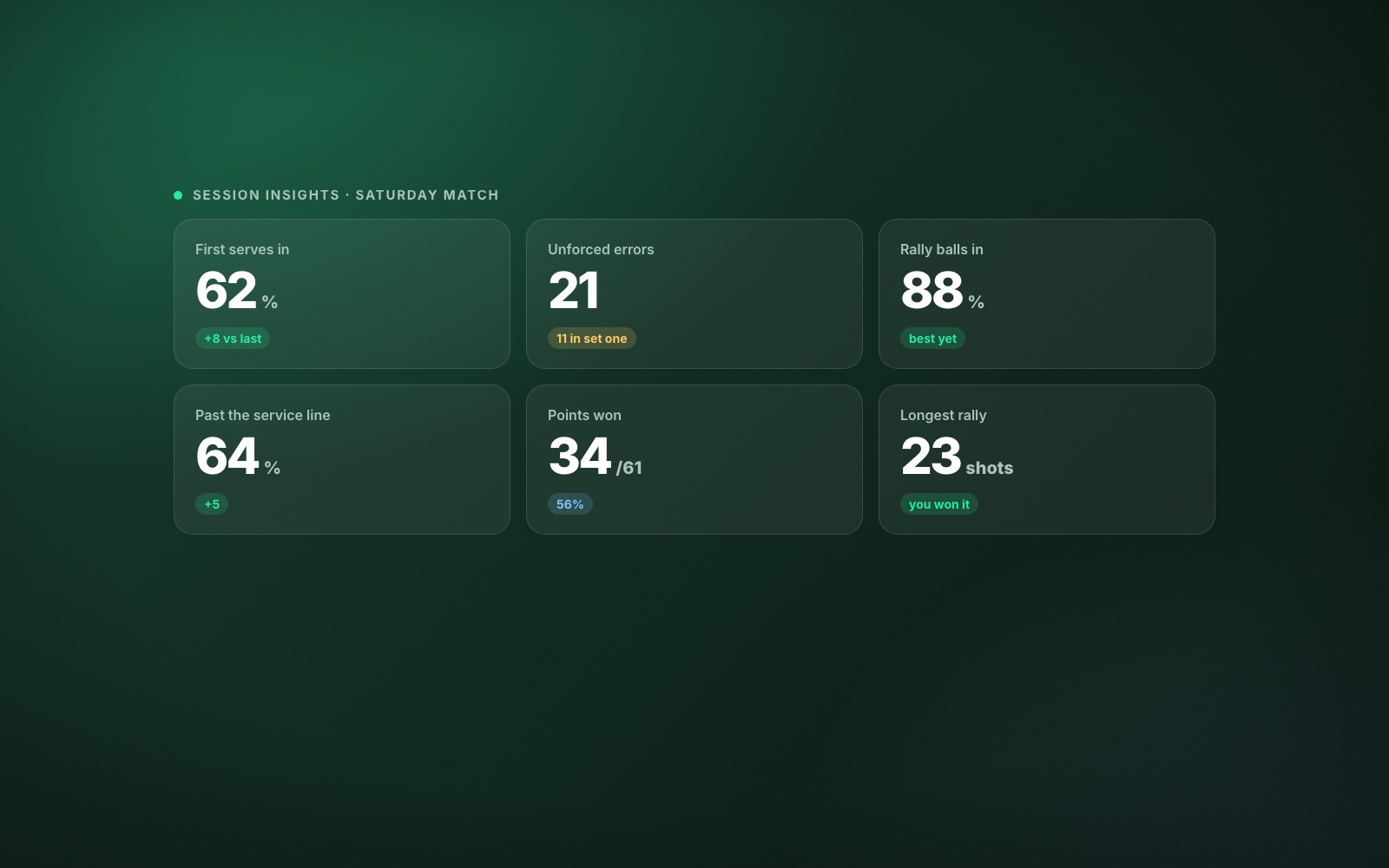
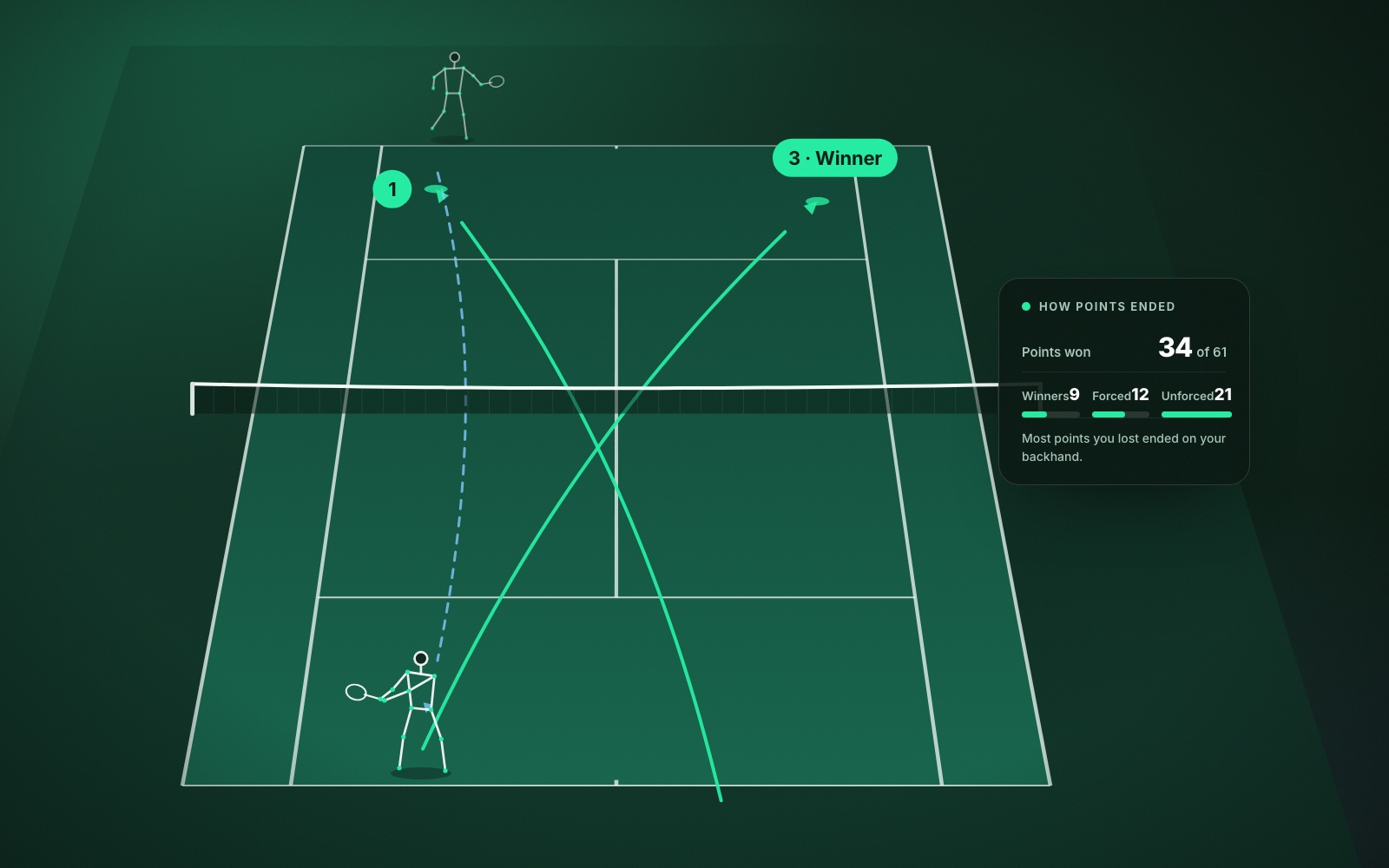
- Points won. The headline. It is often closer than the score suggests, which tells you that a few points in the right places would have changed the result.
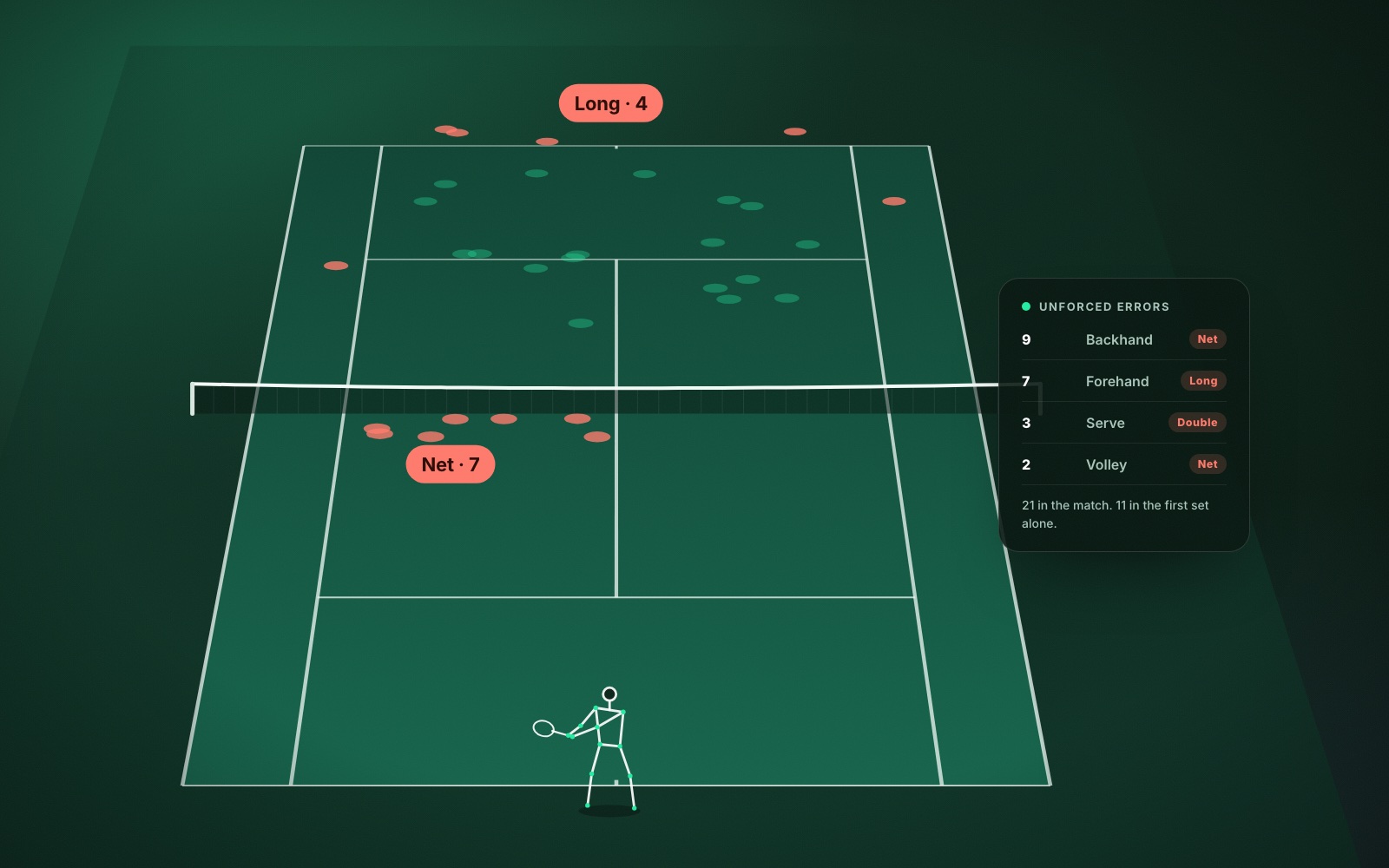
- Winners, forced errors and unforced errors. This is how the points ended. If your unforced errors are well ahead of your winners, you already know your first job.
- Serves. How many first and second serves went in, how fast, and where they landed on the deuce and ad sides.
- Rally summary and longest rallies. Do you tend to do well when the ball crosses the net a few times, or do your points end early?
- Shot type breakdown. How many forehands, backhands, slices and volleys you hit and how many of each landed in. One shot usually stands out.
Then use playback to jump through your shots and watch the points you lost. Ten minutes of this is worth more than the numbers alone. For a wider view of which figures deserve attention, see the tennis stats that matter for club players.
Four changes that win more tennis points
1. Stop giving points away
If unforced errors are your biggest category, raise your margins before anything else. Aim higher over the net, aim further inside the lines, and send the neutral ball cross-court. It sounds dull and it works. The full method is in how to cut unforced errors.
The number to watch: unforced errors per set in your next filmed match, alongside points won.
2. Put more first serves in
A first serve that lands gives you the first strike. A second serve hands it to the returner. Take a little pace off and add a little shape until more first serves go in, and pick a target for each one before you bounce the ball.
The number to watch: first serves in, and double faults falling as a side effect. Check serve speed as well, so that you have traded only a little pace for the gain.
3. Practise the serve and the next ball as one move
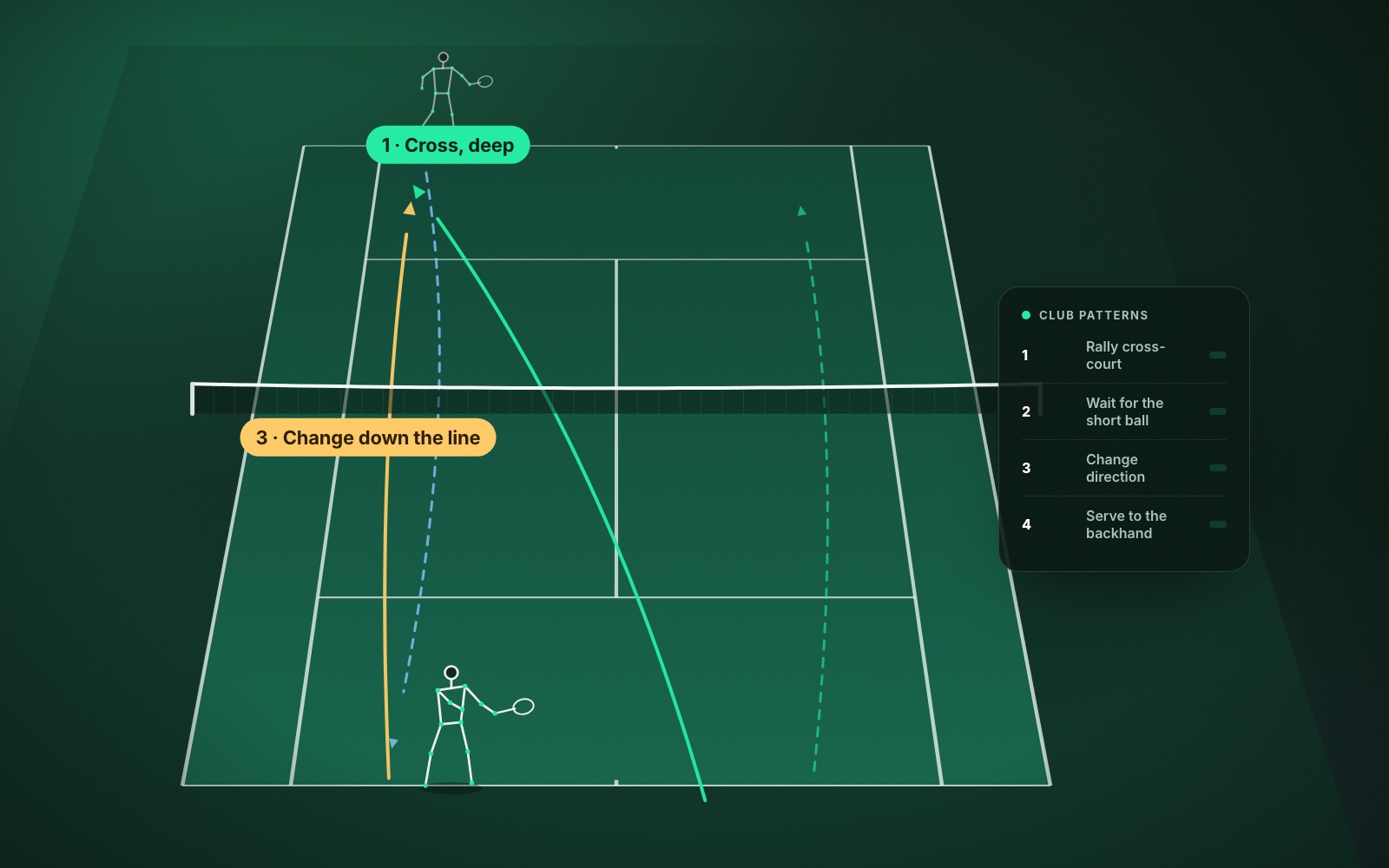
Many points are over within four shots. So the ball after your serve, and the ball after your return, carry a lot of weight. Practise in pairs: serve, then hit the next ball deep to the bigger side of the court. Do the same with a deep return down the middle followed by a solid cross-court ball.
The number to watch: the rally summary. You want fewer of your points ending on your own miss in the first couple of shots.
4. Play to the shot that lands in
Your shot type breakdown will show one wing landing in more often than the other. In tight moments, build points with the reliable one and keep the other safe and cross-court. Use the placement map to see where your stronger shot does its damage.
The number to watch: forced errors drawn from your opponent. If your steady play is pushing them into mistakes, that figure rises without your winners needing to.
How to re-measure, and how long it takes
Pick one of the four changes and take it into your next two or three filmed matches. Then compare the same figures in Trends. Opponents differ, so a single match can flatter or punish you. Three matches moving the same way is evidence.
Tactical changes can show up quickly, sometimes within a fortnight, because you are choosing differently and not rebuilding a stroke. Changes that depend on technique, such as a more reliable second serve, take a couple of months.
What match video can’t tell you
The split between a forced and an unforced error is a judgement call. Treat it as a guide and watch the points yourself. The video also cannot know what your opponent was thinking, how nervous you were at 4-5, or whether a different tactic would have worked better. ContactFrame reviews the match afterwards and does not give live coaching during play, and it analyses singles, not doubles.
If the numbers keep pointing at one shot that will not improve, that is the moment for a lesson. And for the tactical side, read singles strategy for club players, then test what you learn in a league match on The Ladder.
Common questions
How do I win more points in tennis?
Find out how your points currently end, then fix the most common way you lose them. For most club players that means fewer unforced errors, more first serves in and a safer first ball after the serve or return. Hitting more winners is rarely the answer.
What is the difference between a forced and an unforced error?
A forced error is a miss caused by a good shot from your opponent. An unforced error is a miss on a ball you had time and balance to play. The line between them is a judgement, but the split still shows whether you are being beaten or beating yourself.
Are winners or errors more important in club tennis?
Errors, by some distance. At most club levels far more points end with a mistake than with a clean winner. A player who cuts a few unforced errors per set usually gains more than one who adds a few winners.
Can AI analyse a tennis match for me?
Yes. In a Match session ContactFrame groups shots into points and shows winners, forced errors, unforced errors, points won and serve figures, with a draft score you can correct. It reviews singles matches after the fact and does not coach you during play.
How many matches should I film before changing my game?
One match gives you a hypothesis and two or three confirm it. Different opponents pull your numbers in different directions, so look for the pattern that shows up every time before you rebuild anything.
See how your points really end.
Film a match on one phone and get the winners, errors and score.
Explore The Lab