The short version
- Shot quality is a score out of 100 for how effective a shot was. ContactFrame gives one for each shot and one for the session.
- It is a summary. Use it to find where to look, then use the other numbers to see why.
- Compare like with like: the same session type, against your own earlier sessions.
- The gap between your shot types is often more useful than the overall score.
- A higher score is the result of better tennis, not a target to chase shot by shot.
After a session you have speeds, spin rates, a placement map, in and out counts and a list of errors. It is all useful, and it is a lot. What most players want to know first is simpler: was that a good session, and which shots let me down?
That is the job of tennis shot quality. This piece explains what the score is for, how to read it and how to use it in practice. It does not explain how the score is put together, because ContactFrame does not publish that, and you do not need it to use the number well.
What is tennis shot quality?
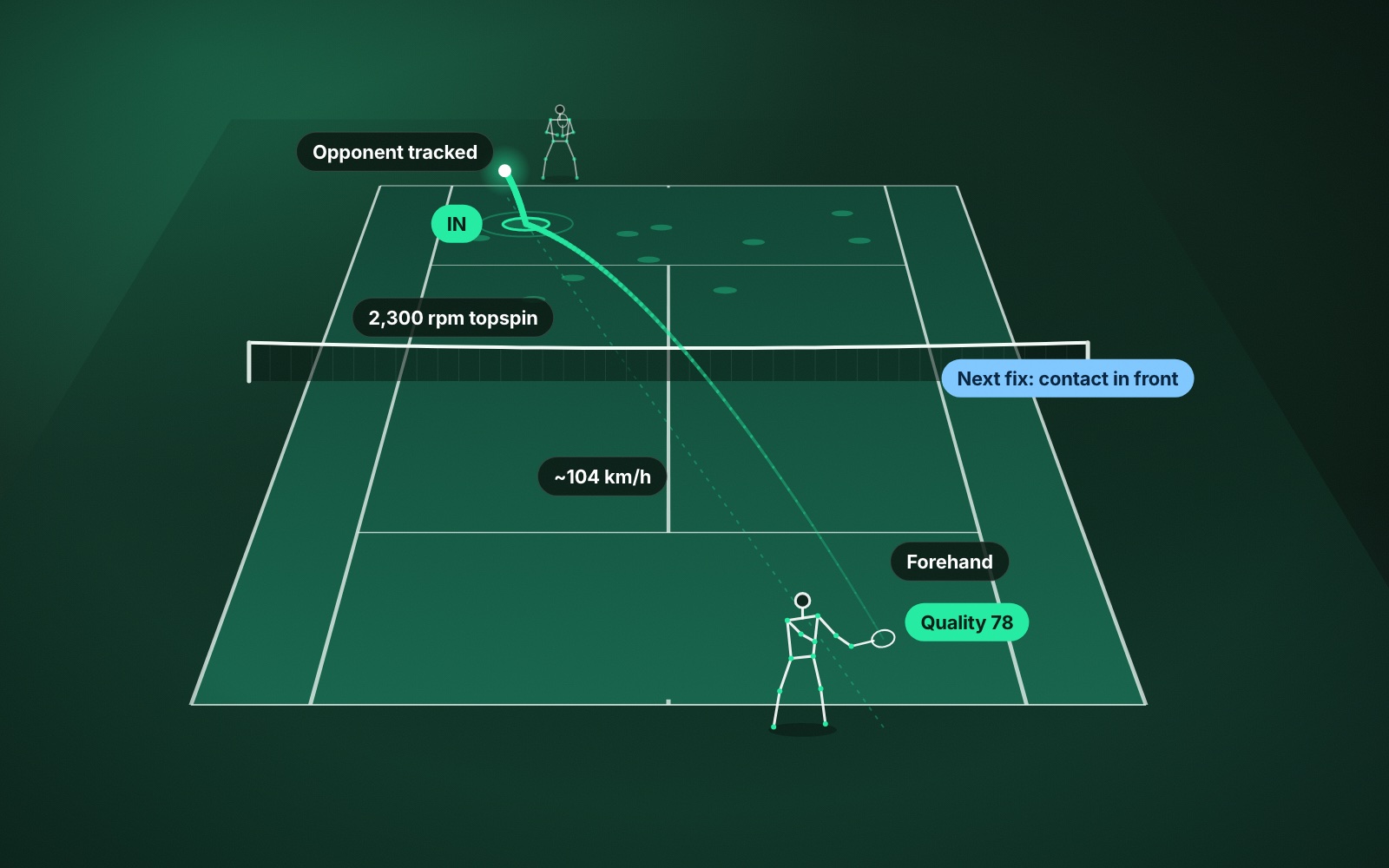
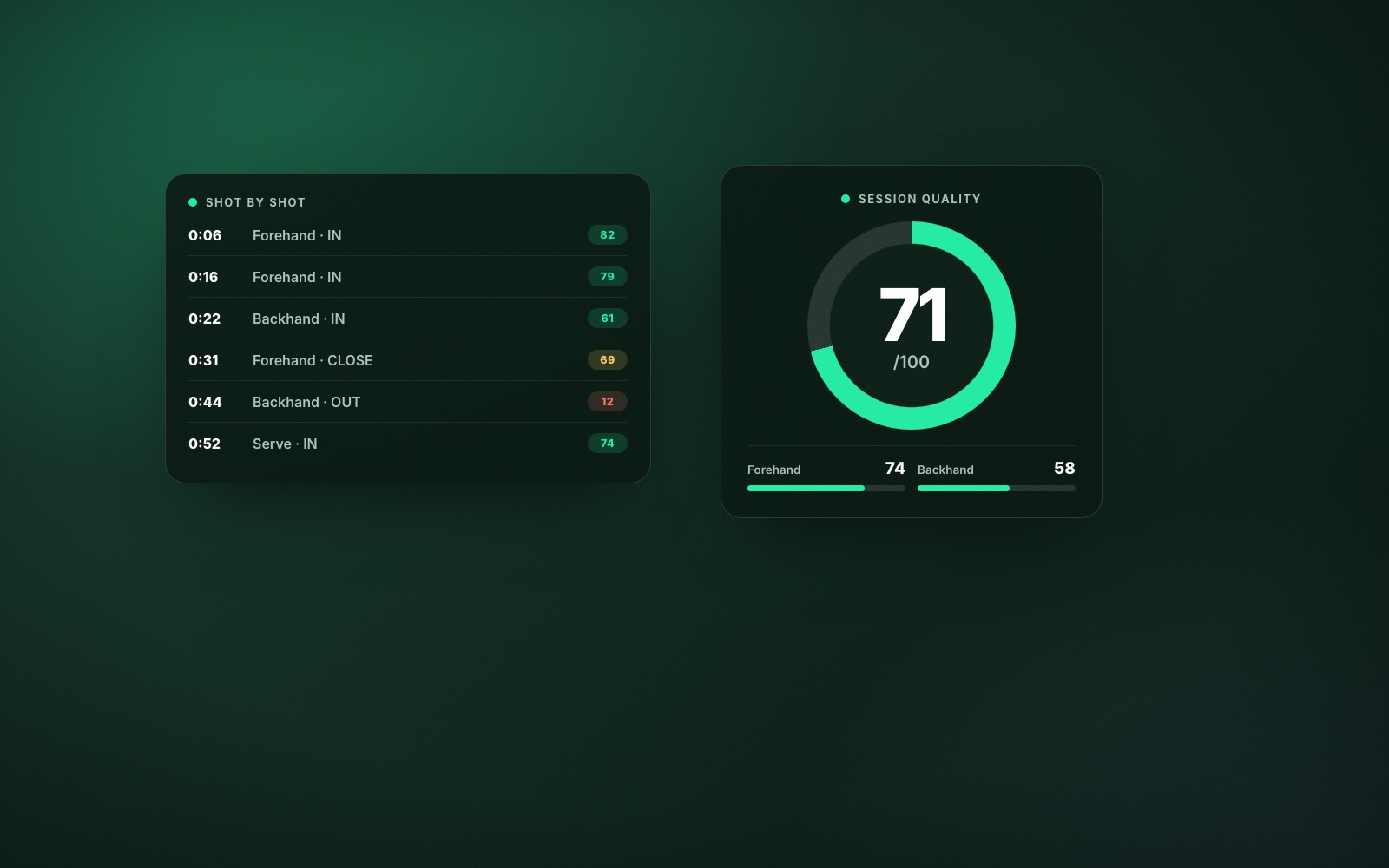
Shot quality is a single rating of how effective a shot was. In ContactFrame it is a score out of 100, and you get it at two levels: one for each shot, and one for the session.
Think of it as the answer to a coach’s shorthand. When a coach says “good ball” after one forehand and nothing after the next, they are making a quick overall judgement. A shot quality score is a consistent version of that judgement, applied to every shot you hit, including the ones nobody was watching closely.
It sits alongside the detailed measures, ball speed, spin, where the ball bounced and whether it was in. Those tell you about one aspect of a shot. Shot quality gives you one figure for the shot as a whole.
Why a single shot quality score is useful
Detailed stats pull in different directions. Your forehand might be faster this week, with a little less spin, landing slightly shorter, and going in a bit more often. Is that better or worse? Reading four numbers and weighing them up takes effort, and it is easy to pick the one that flatters you.
A single score cuts through that. It gives you:
- A quick read on a session. One number to compare with last week before you look at anything else.
- A way to compare shot types. Forehand against backhand, first serve against second.
- A way to find the shots worth watching. Your highest and lowest scoring shots are the ones to look at in playback.
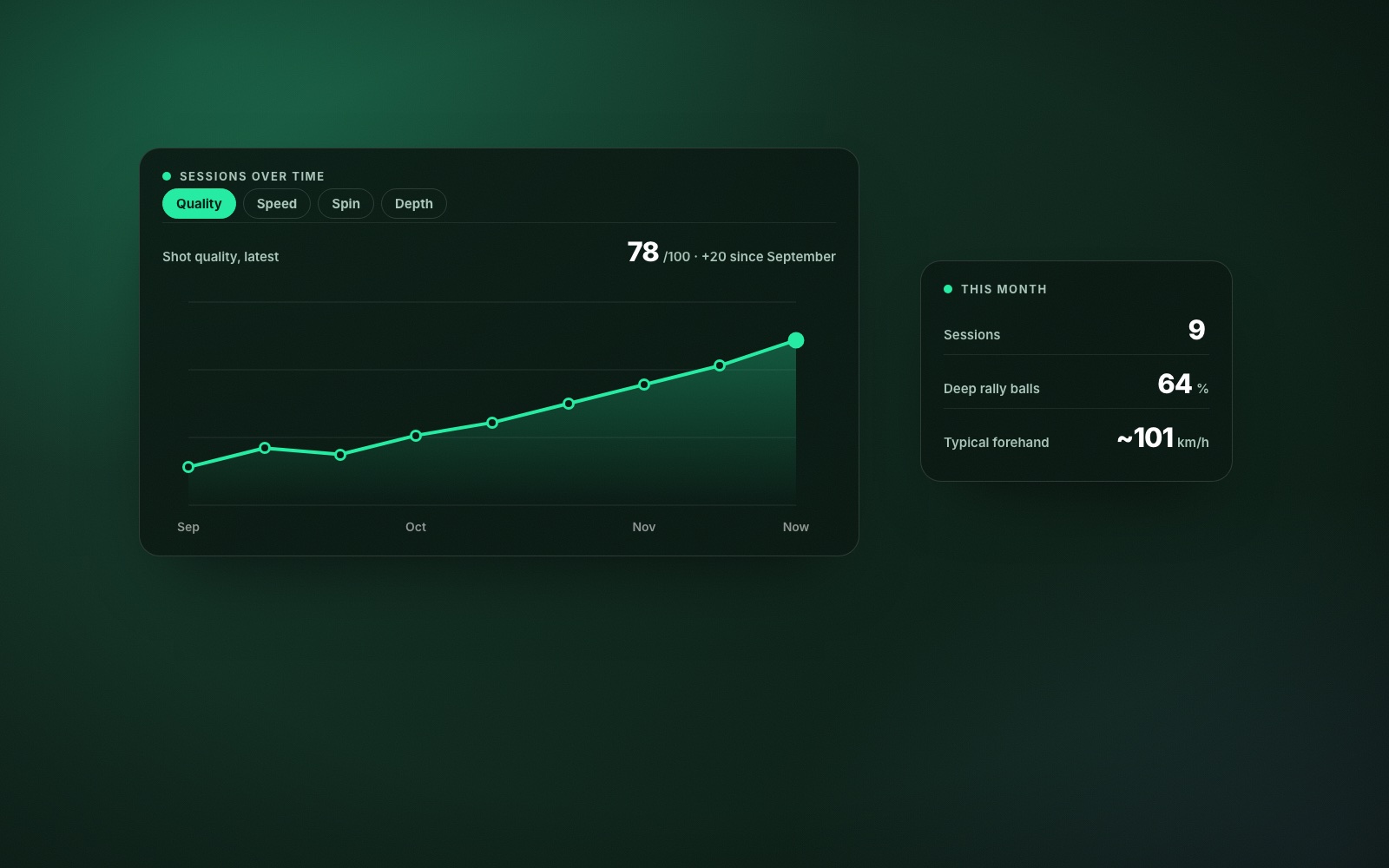
- A simple line to follow over time. Trends show the same measure session after session.
How to read your shot quality score
The session score
The session score is a summary of the whole recording. Its main use is comparison with your own earlier sessions of the same kind.
The same kind matters. A Ball machine session, where every feed is friendly and predictable, is a different test from a Match against someone trying to make you uncomfortable. Expect them to score differently, and compare match with match and practice with practice.
The score for each shot
At shot level, the score shows the spread in your game. Every player hits some excellent balls and some poor ones. What separates levels is how wide the spread is and how often the poor ones turn up.
Look at the range for one stroke. If your best forehands score very well and a large share score badly, your problem is reliability, not ability. You can already hit the shot. You cannot yet hit it on demand.
How to use shot quality to decide what to practise
The score tells you where to look. The other numbers tell you what you are looking at. A simple routine:
- Find the gap. Compare your shot types. Say your forehands average 71 and your backhands 54. The backhand is where your practice time will pay back most.
- Open the detail for that shot. Look at how many landed in, where they bounced on the shot placement map, and their speed and spin. This is where you find the reason. It might be that the backhands are going in but landing short, or that too many are in the net.
- Watch a few. Jump to those shots in playback and use slow motion. Check the numbers match what you see.
- Pick one change and practise it. If the issue is depth, see how to hit deeper shots. If it is reliability, see how to improve consistency.
- Re-measure. After three or four weeks, record the same kind of session and look at the shot quality for that stroke again, along with the detailed number you were working on.
The order matters. Starting from the score and working down to the detail is quick. Starting from every stat at once is how people give up on analysis altogether.
What is a good shot quality score?
There is no pass mark, and ContactFrame does not ask you to hit one. A score means most in comparison:
- With your own past. Is the session score for your matches drifting up over two months?
- Between your strokes. Which shot type sits lowest, and is the gap closing?
- Between situations. Does your backhand score hold up in a match, or only on the practice court?
Comparing your number with a friend’s is less useful than it sounds. You were filmed on different days, against different opponents, hitting different balls. Your own trend is the fair test, and how to track your tennis progress explains how to set one up.
Common mistakes with shot quality scores
- Chasing the number shot by shot. Trying to hit a high-scoring ball every time leads to overhitting. Play sensible tennis and let the score follow.
- Reading one session as a verdict. Wind, a tricky opponent or tired legs all move it. Wait for several sessions.
- Panicking during a technical change. A stroke you are rebuilding often scores worse for a couple of weeks. That is expected.
- Stopping at the score. It tells you that something is off. The detailed stats and the video tell you what.
- Ignoring the shots without a full set of readings. ContactFrame does not show a number it is unsure of, so a speed may be blank or marked approximate and spin appears only when the reading is solid. Base your conclusions on patterns, not on a single shot.
Where to find shot quality in ContactFrame
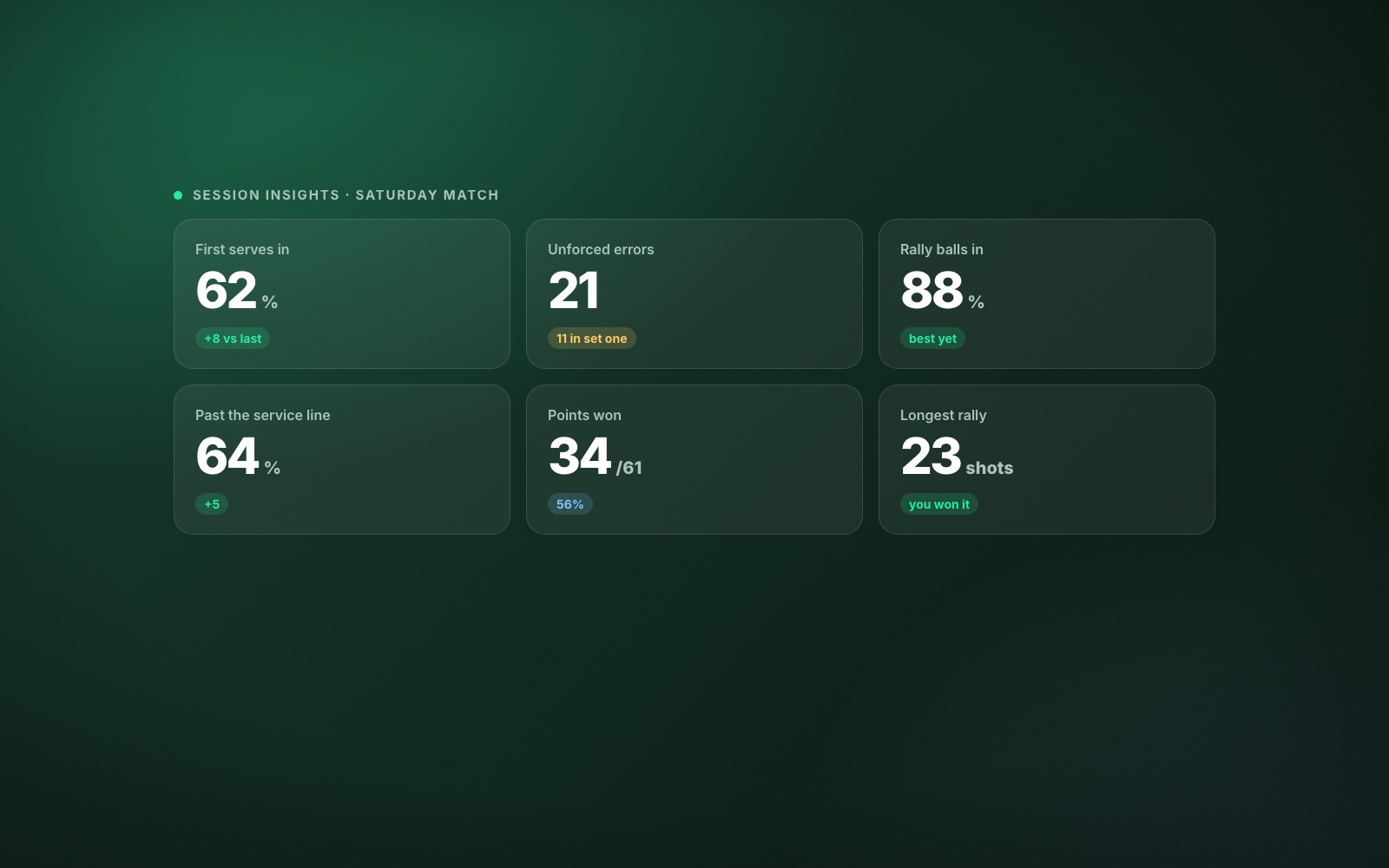
Record a Match, Practice or Ball machine session in The Lab with one phone on a tripod behind the baseline. Shot quality appears for each shot and for the session, next to the rest of Session insights, and it carries through into trends so you can follow it over time. For everything else the recording produces, see what AI tennis video analysis measures, and for which figures deserve most of your attention, the tennis stats that matter for club players.
What a shot quality score cannot tell you
It rates the shot. It does not know whether the shot was the right choice. A well-struck ball hit to your opponent’s favourite wing can score well and still lose you the point, and a scrappy defensive lob can be exactly what the moment needed.
It also does not tell you how to change your technique. When one stroke stays low across several sessions and the detailed stats do not make the reason obvious, take the clips to a coach. The score will have done its job by showing both of you exactly where to start.
Common questions
What is shot quality in tennis?
Shot quality is a single rating of how effective a shot was. In ContactFrame it is a score out of 100, given for each shot and for the session as a whole.
What is a good shot quality score?
There is no universal pass mark. The useful comparison is with your own previous sessions of the same type, and between your own shot types, such as forehand against backhand.
How is shot quality calculated?
ContactFrame does not publish how the score is put together. What matters for a player is what it is for: a quick, consistent way to compare shots and sessions.
Why did my shot quality score go down?
Sessions differ. A tougher opponent, a windy day, a match after several practice sessions or a change you are working on can all lower the score for a while. Look at the trend over several similar sessions before drawing a conclusion.
Does a high shot quality score mean I will win?
Not necessarily. It describes how effective your shots were, and matches also depend on your opponent, tactics and how you play the big points. It is a guide to your hitting, not a prediction of the result.
One score for every shot.
Record a session with ContactFrame and see shot quality for each shot, each stroke and the session as a whole.
Explore the Lab