The short version
- Topspin makes the ball dip and kick up. Slice makes it float and stay low.
- Spin is measured in rpm: how many times the ball turns in a minute.
- For club players, topspin is mostly about margin: aiming higher over the net and still landing in.
- Read spin next to speed and depth. A big rpm number on a ball that lands short is not an improvement.
- Compare your own sessions, not your numbers against the professionals.
You hit what feels like a heavy topspin forehand, and it sails a metre long. Your opponent hits what looks like a slower ball, and it dips inside the baseline and jumps at your shoulder. The difference is spin, and until recently a club player had no way to put a number on it.
Now you can. Tennis spin in rpm appears in apps and on television graphics, but a number is only useful if you know what it means. This guide explains what topspin and slice do to the ball, why spin matters at club level, and how to read your own figures sensibly.
What tennis spin rpm means
Rpm stands for revolutions per minute: how many times the ball would turn in a minute at the rate it is spinning when it leaves your strings. A ball in flight for a second or two only turns a few dozen times, but the rate is what shapes its path.
A spinning ball curves in the air. The direction of the spin decides which way it curves, and the amount of spin, together with the speed, decides how sharply. That is all a spin number describes: how hard the ball is turning, and in which direction.
What topspin does to a tennis ball
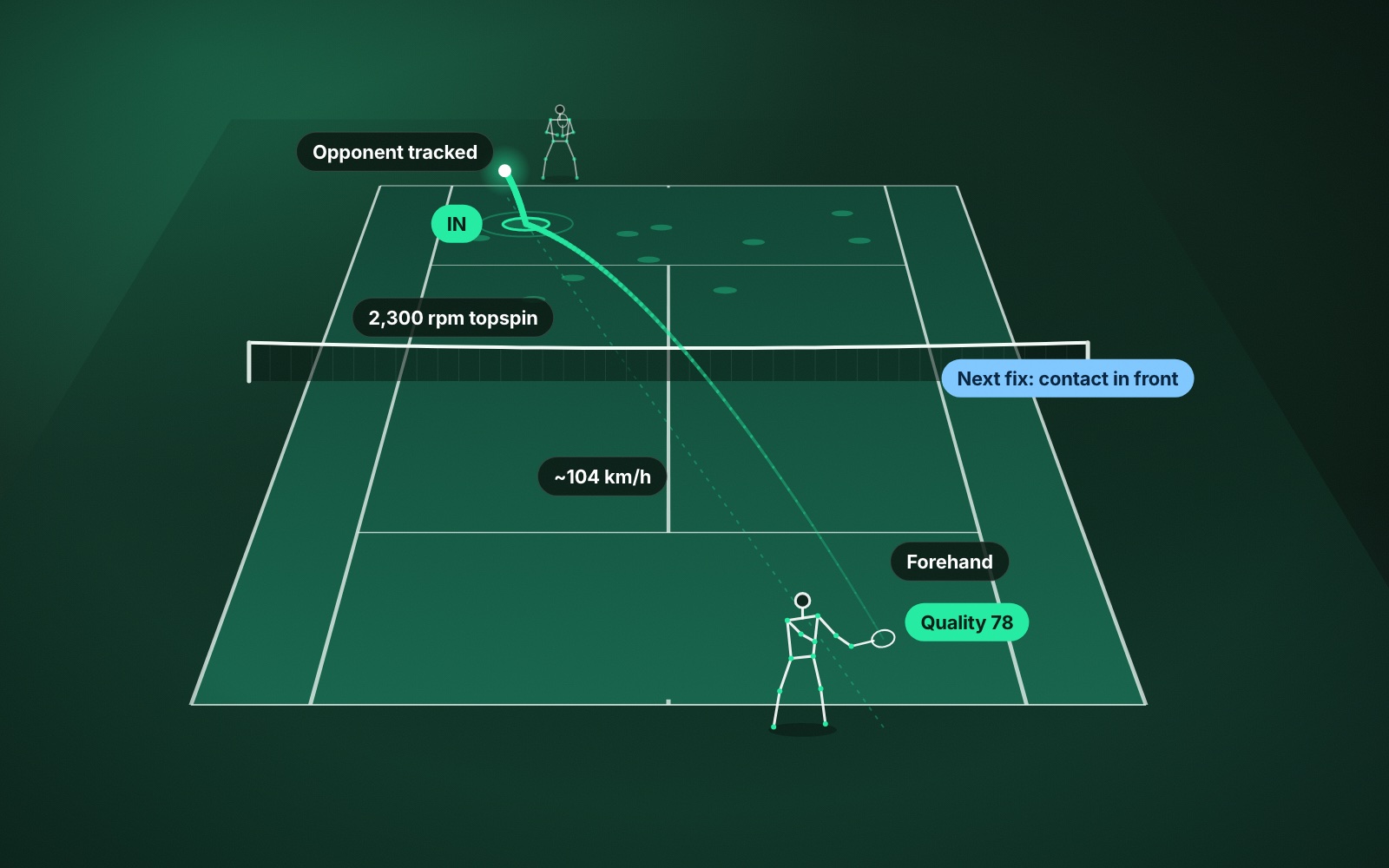
Topspin is forward rotation. The top of the ball turns in the direction it is travelling. You create it by swinging from low to high so the strings brush up the back of the ball.
It does three things:
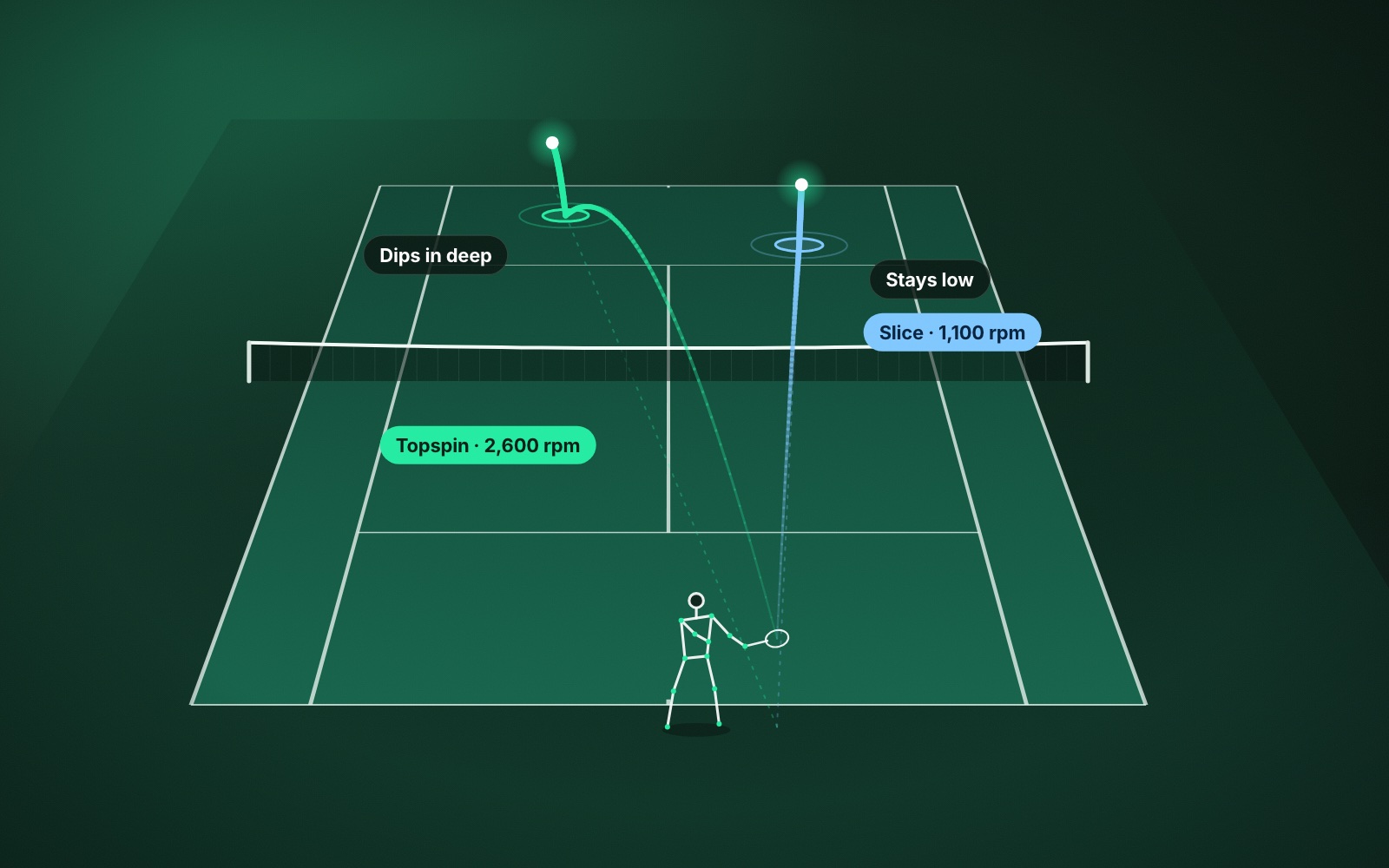
- The ball dips. A topspin shot drops into the court sooner than a flat one hit at the same speed and height.
- It bounces higher and pushes through. The ball kicks up off the court, which pushes your opponent back or makes them hit above their comfortable height.
- It gives you margin. Because the ball dips, you can aim well above the net and still land it in.
The third is the one that matters most. Hitting higher over the net removes the most common error in club tennis, the ball in the net, without sending the ball long.
What slice does to a tennis ball
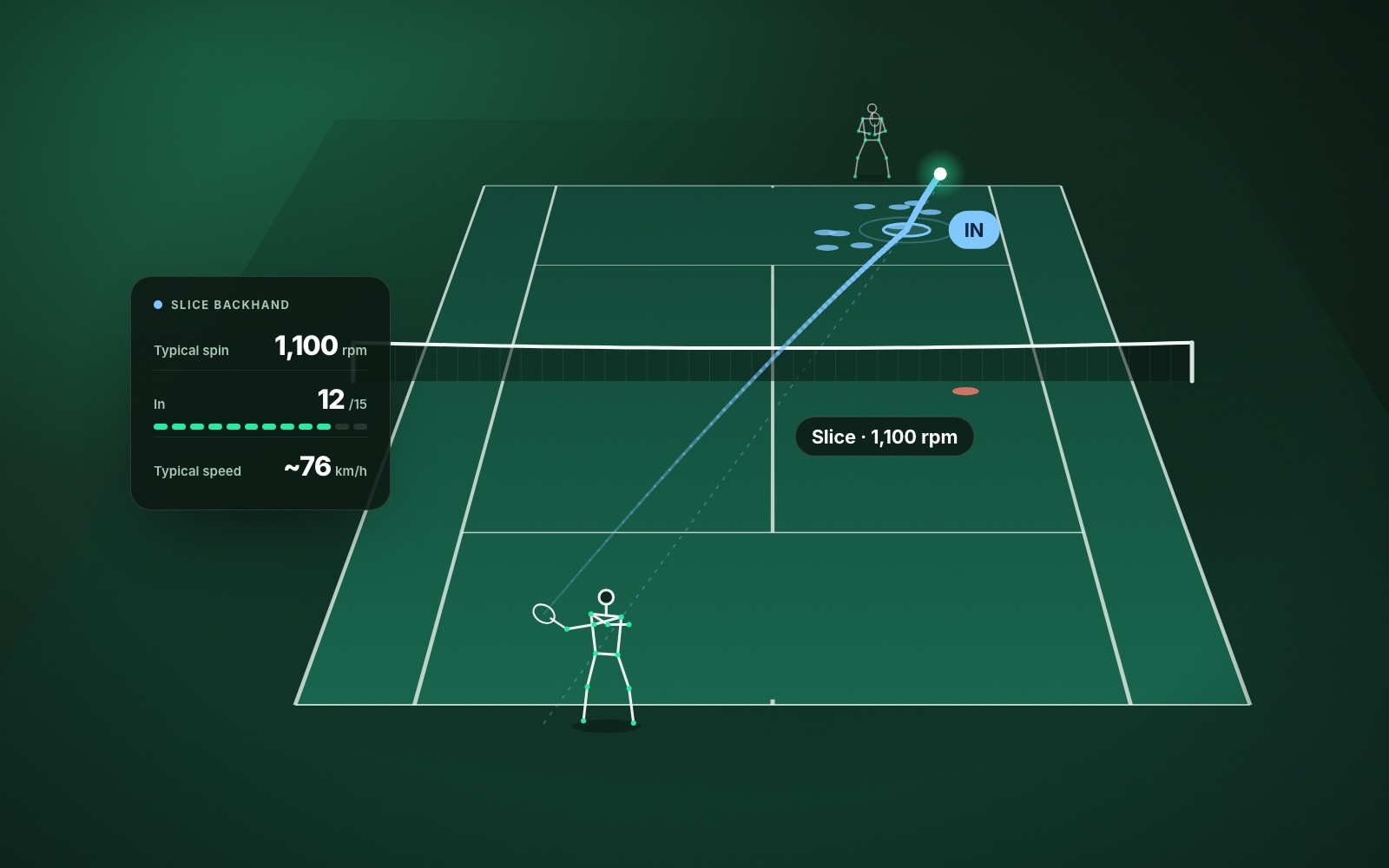
Slice is backspin. The bottom of the ball turns in the direction of travel. You create it with a high-to-low swing and a slightly open racket face, cutting under and through the ball.
Backspin holds the ball up, so a slice travels on a flatter, floating path and takes longer to come down. When it lands it skids and stays low, and on some surfaces it almost stops.
That makes slice useful in specific situations: a defensive backhand when you are stretched, an approach shot that stays low and makes passing difficult, a change of pace against someone who likes a steady rhythm, and the drop shot. There is a practical guide in how to improve your slice.
Serves use spin as well. A slice serve curves sideways and a kick serve dips and jumps, which is why second serves usually carry more spin and less speed than first serves.
Why spin rate matters for club players
It is tempting to see spin as something for advanced players. In practice it is the thing that lets ordinary players swing freely.
Without spin, the only way to keep a hard-hit ball in is to hit it low over the net, and low over the net means a lot of balls in it. With topspin you can swing faster, aim higher and let the spin bring the ball down. More spin means a bigger window above the net that still results in a ball landing in.
It also changes what your opponent has to deal with. A ball that bounces above the hip is harder to attack than one that sits up at waist height, and a low skidding slice is harder to lift than a ball with no spin at all.
What is a good topspin rpm?
Any figures here are rough and vary widely with level, age, racket, strings and style, so treat them as orientation only.
Professional groundstrokes are commonly quoted in the region of a few thousand rpm, and the heaviest hitters go higher than that. Club players sit well below, often in the low thousands or less on a forehand, and plenty of perfectly effective club shots are close to flat. Slice backhands vary just as much.
Comparing yourself with a professional is not very useful. Three comparisons are:
- You against yourself. Is your forehand spin higher this month than last, with the ball still landing in?
- One stroke against another. Many players find their backhand carries much less topspin than their forehand, which explains why it lands in the net more often.
- Rally ball against attacking ball. If spin vanishes whenever you try to hit hard, that is usually where the errors come from.
How to measure spin on your own shots
You can judge it by eye. A topspin ball has a visible arc and a lively bounce. A flat ball travels on a straight line and comes through at a predictable height. A slice hangs and skids.
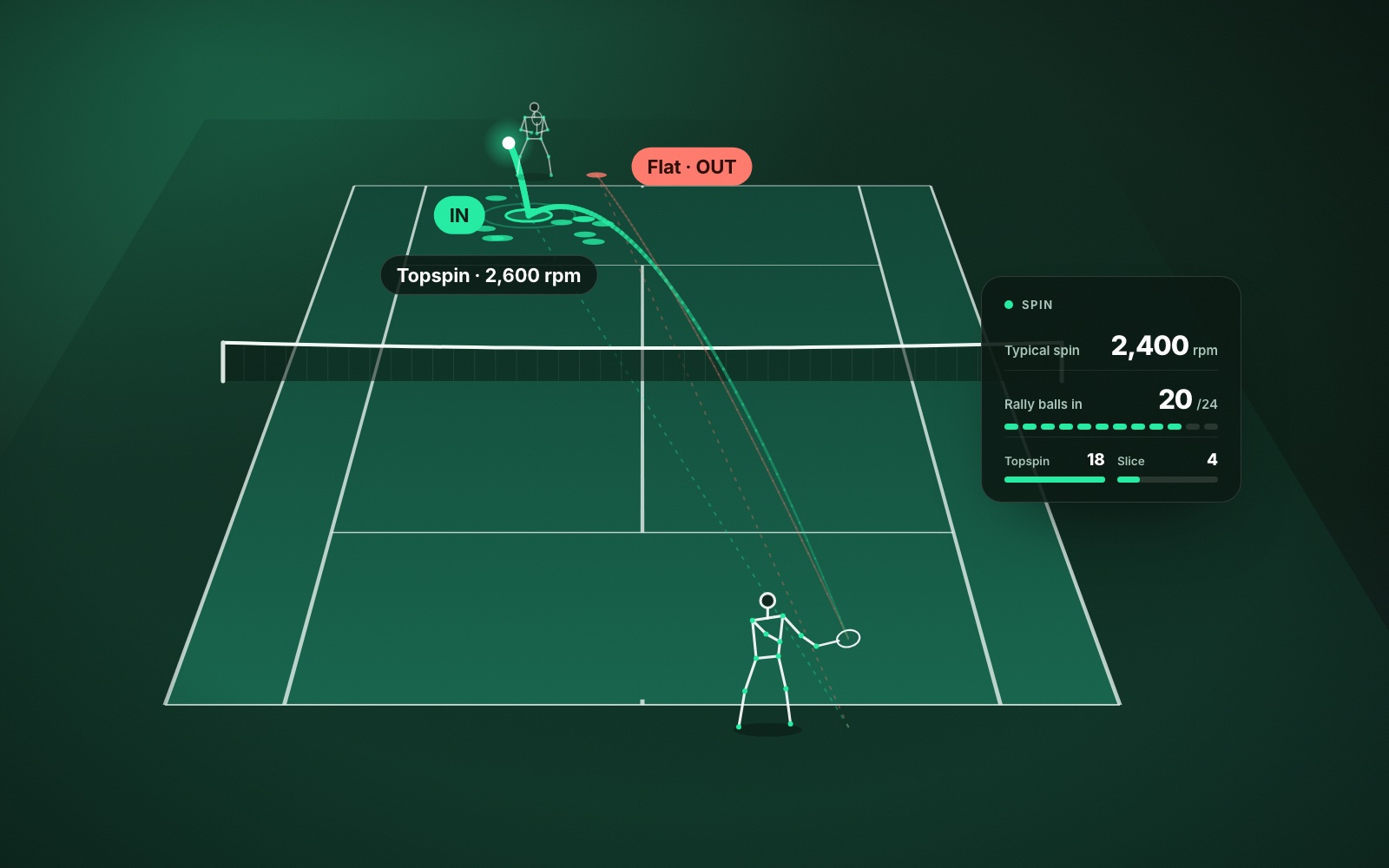
For a number, you need a tool. ContactFrame measures spin in rpm for each shot from one phone on a tripod behind the baseline, labels it topspin or slice, and shows speed and spin by shot type in Session insights. It only shows spin when the reading is solid, so some shots will have a speed and a bounce location but no spin figure. That is deliberate: a blank is better than a guess.
If you want spin to be the theme of a session, you can set Topspin as the session focus in The Lab. The full list of what the app records is in what AI tennis video analysis measures.
How to use your spin numbers
Never read spin alone. Put it next to three other things from the same ContactFrame session:
- How many landed in. The point of more topspin is fewer errors. If spin went up and the in rate did not, something else changed too.
- Where they bounced. A common side effect of chasing spin is the ball landing short. Check the shot placement map for depth.
- Speed. A small drop in speed for a clear gain in spin and consistency is a good trade. A large one may mean you are brushing the ball without driving through it.
Say your forehands average 1,400 rpm and half of your errors are in the net. A sensible aim is to raise the spin and the net clearance together, then check after a few sessions whether the net errors have fallen. The steps for that are in how to hit more topspin.
What an rpm number cannot tell you
Spin is an outcome. The number shows how much the ball was turning, not what your grip, wrist or racket face were doing to produce it. ContactFrame does not analyse grip or racket-face angle, and if your spin will not move despite sensible practice, that is the moment to show the clips to a coach.
Conditions matter too. Old balls, a damp court and worn strings all change how much the ball spins and how it bounces. Compare sessions filmed in similar conditions, use ContactFrame’s trends to see the same measures session after session, and look at the trend over several weeks before deciding a change has worked.
Common questions
What does rpm mean in tennis?
Rpm stands for revolutions per minute. It is how fast the ball is spinning after it leaves the strings, and a higher number means the ball curves more in the air and reacts more at the bounce.
What is a good topspin rpm for a club player?
There is no single figure, and it varies a great deal with level, age and style. As a rough guide, club forehands tend to sit well below professional levels, often somewhere in the low thousands of rpm or less. Your own trend matters more than any target.
What is the difference between topspin and slice?
Topspin rotates forwards, so the ball dips into the court and bounces up and through. Slice, or backspin, rotates backwards, so the ball stays in the air longer, skids and keeps low after the bounce.
Does more spin mean less power?
To a degree, yes. For the same swing, more brushing up the ball means less of the effort goes into forward speed. The aim is a mix that gives you enough pace with enough spin to keep the ball in.
How can I measure spin on my tennis shots?
You can judge it roughly by the shape of the ball’s flight and how it bounces. To get a number, an AI video app such as ContactFrame can show spin in rpm for your shots from a phone on a tripod, when the reading is solid.
See your spin in rpm.
ContactFrame shows speed and spin by shot type, so you know what your topspin and slice are doing.
Explore the Lab