The short version
- Everyone starts at the same rating and is marked provisional until they have played enough rated matches.
- Only confirmed results move the rating. Your opponent confirms the score, and a result nobody disputes stands after 24 hours.
- Beating a higher-rated player moves you more. Losing to one costs you less.
- Skill is all-time. XP is the monthly board. They answer different questions.
- Your rank is shown at every scale, from your home court to the whole country.
Most tennis apps ask you to pick a level. Beginner, intermediate, advanced. It takes ten seconds, and then the label sits there for years, quietly wrong. The player who chose “intermediate” two seasons ago is still intermediate on paper, even though they now beat half the club.
ContactFrame doesn’t ask. It starts everyone in the same place and lets the results move them. This piece explains what the Skill rating is for, what moves it and how to use it. It does not publish the arithmetic, for the same reason a ladder does not let you mark your own homework.
A tennis rating you don’t pick yourself
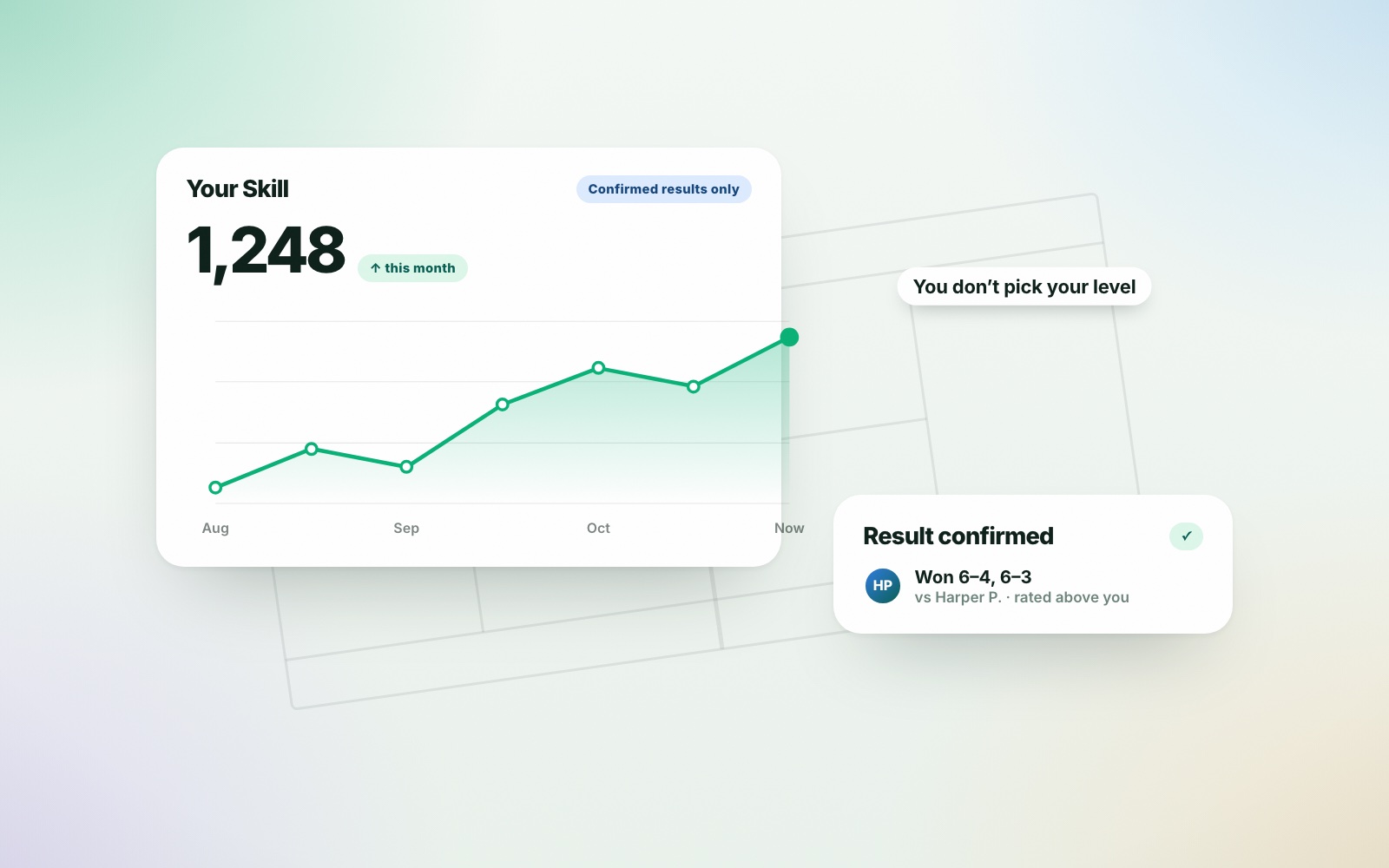
Skill is a results-based rating, the same family of idea that chess has used for decades. It has two jobs. The first is to predict how likely you are to beat the person across the net. The second is to move when that prediction turns out to be wrong.
If you are rated well above your opponent, you are expected to win. When you do, your rating barely changes, because nothing surprising happened. When you lose, it moves a lot, because something did.
New players are marked provisional. You appear on the ladder straight away, but the number is still finding its level, and it moves faster in those early matches so that it finds it quickly. Once you have enough rated matches behind you, the label drops away.
What moves your Skill rating
Three things:
- The result. A win moves you up; a loss moves you down.
- Who you played. The gap between your ratings decides how much is at stake.
- Whether the result is confirmed. An unconfirmed result does not count.
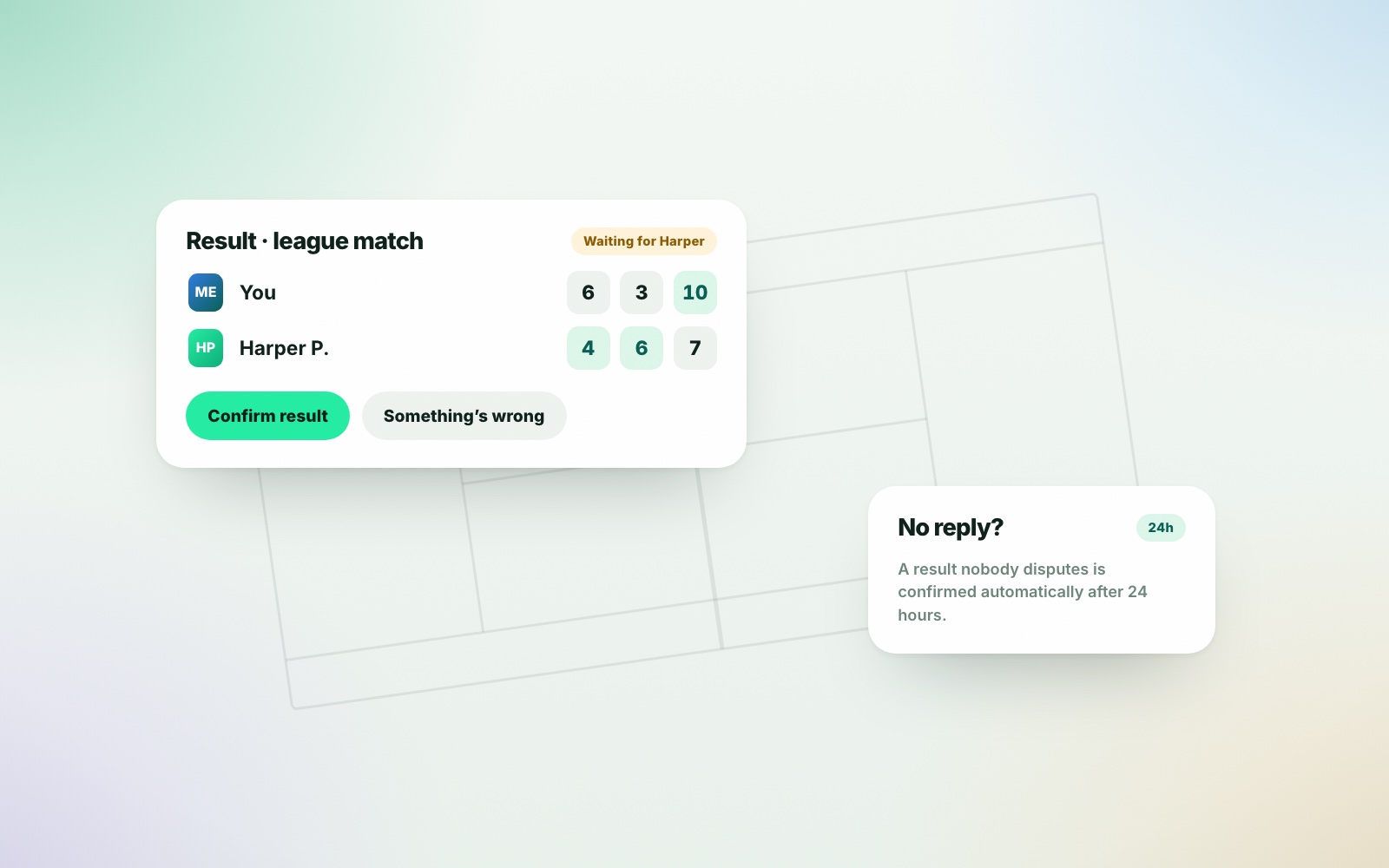
That last one matters most. A rating is only useful if the person across the net agrees with it. On ContactFrame one player logs the score and the other confirms it. If nobody disputes it within 24 hours, the result stands, so a match cannot be held hostage by someone who has stopped checking their phone. There is more on that in how to log and confirm a result.
A rating is only useful if the person across the net agrees with it.
What doesn’t move it
The margin of the scoreline is not the point: the rating cares about who won. It does not know you were 4–1 up and lost, or that you were playing on a bad ankle. Practice sessions, lessons and casual hits you do not log leave it untouched.
That is deliberate. A rating that tried to account for every excuse would stop being a rating. It measures one thing: what happened when the result counted.
Skill is not XP
ContactFrame shows two numbers side by side, and they are different on purpose.
Skill is your rating. It is all-time and it only moves on results. It answers: how good are you right now?
XP is the monthly board. It rewards the work you put in, such as playing matches, winning them and confirming results promptly, and it resets every month. It answers: who is playing?
Keeping them separate is useful. A player who sits mid-table on Skill and near the top on XP is doing something worth noticing. They are not the best player in the area, but they are one of the most active, and that deserves its own table.
Where you rank
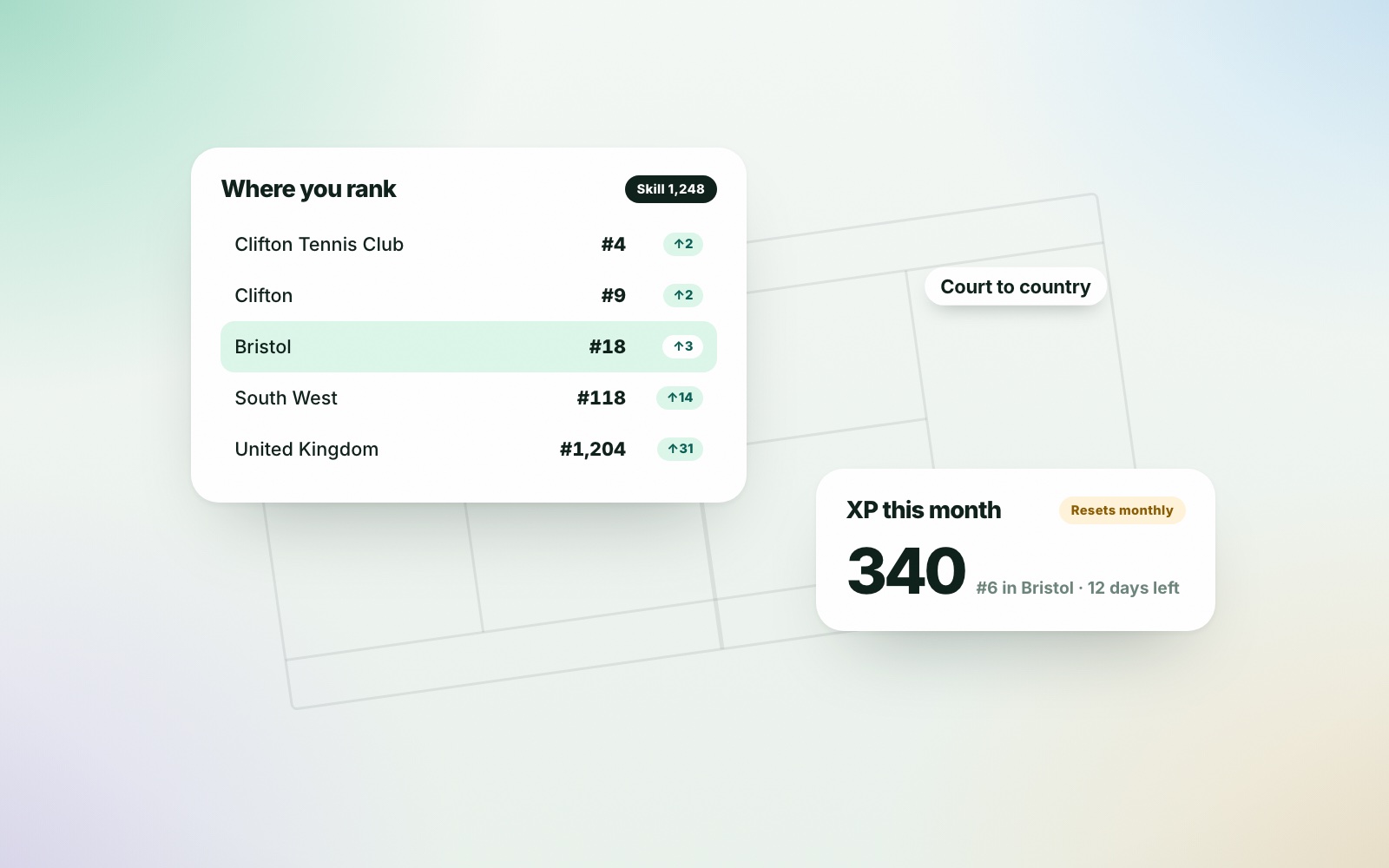
Your rating places you on a ladder at every scale at once: your home court, your local area, your town or city, your region and the country. The numbers nest, so climbing at your court is the first step to climbing anywhere else.
The narrowest scope is usually the one worth repeating. “18th in Bristol” means something to another player. A four-digit national position does not. For how the scopes fit together, see how rankings work from court to country.
How to move up the tennis ladder
Play. Confirm the result. Play again.
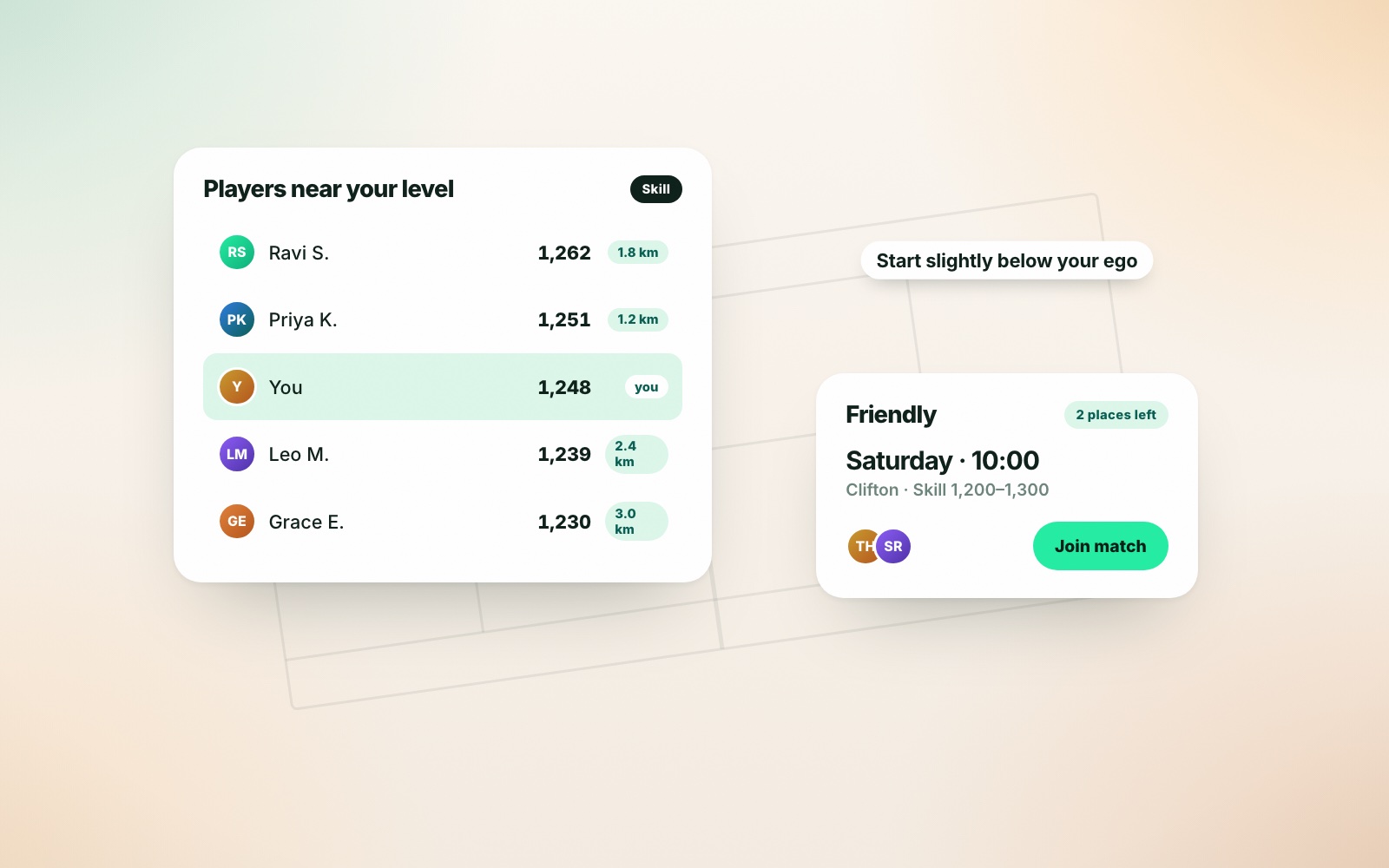
The fastest way up is not to collect easy wins; it is to beat people rated slightly above you, because the rating rewards the upset. The most reliable way up is the boring one: play regularly, at your level, and let the number settle. If you are not sure where your level is, start with finding your level in local tennis.
And if you want to know why the results are going the way they are, that is what AI video analysis is for. The ladder tells you that you lost. The video tells you which shot cost you the points.
Common questions
Do I choose my own tennis level on ContactFrame?
No. Everyone starts at the same rating and results move it from there. After a handful of matches the number reflects how you actually play, not how you describe yourself.
Do friendly matches count towards my Skill rating?
A match counts when it is logged as a competitive result and confirmed. League and tournament matches are competitive by default. A casual hit you choose not to log changes nothing.
What happens if my opponent never confirms the score?
A logged result that nobody disputes is confirmed automatically after 24 hours, so a match cannot be held up by someone who has gone quiet.
Can my rating go down if I win?
No. A win always moves you up and a loss always moves you down. How far depends on who you played.
Is Skill the same as an LTA rating or a World Tennis Number?
No. Skill is ContactFrame’s own rating, built only from results confirmed in the app. It is designed to match you with local players, and it sits alongside any other rating you hold.
Find your level. Then raise it.
Join the UK ladder and let the results do the talking.
Explore the ladder