The short version
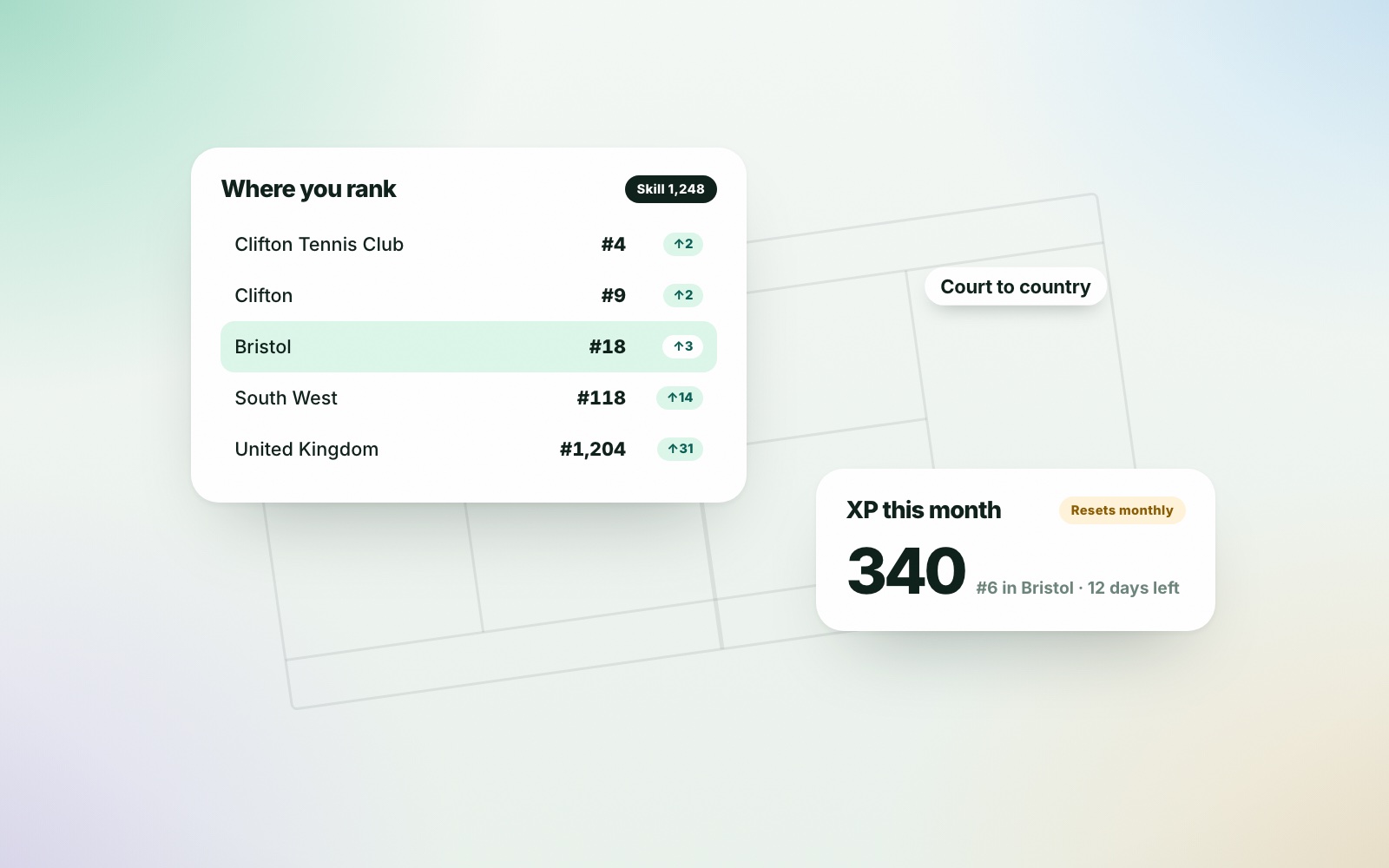
- ContactFrame ranks you at five scales at once: home court, local area, town or city, region and country.
- Every scale uses the same Skill rating, which moves only on confirmed results.
- Gender and age-band filters let you compare yourself with the players you actually want to compare with.
- The monthly XP board rewards activity and resets each month. It is separate from Skill.
- The smallest scale is the most useful one: it is a list of people you can go and play.
Ask most club players where they stand and you get a shrug. UK tennis rankings feel like something that happens to other people: juniors on a pathway, county players, the names on a national list. A park regular who plays twice a week has no position anywhere, and no easy way to tell whether they are getting better relative to the people around them.
ContactFrame is built to give that player a position. Several, in fact. This piece explains how its rankings are arranged from your home court up to the whole country, what the filters are for, and how the monthly XP board fits alongside. It describes what each ranking is for. It does not go into how any number is worked out.
One rating behind every ranking
Start with the distinction between a rating and a ranking. A rating is a number attached to you. A ranking is your place in a queue once everyone is sorted by that number.
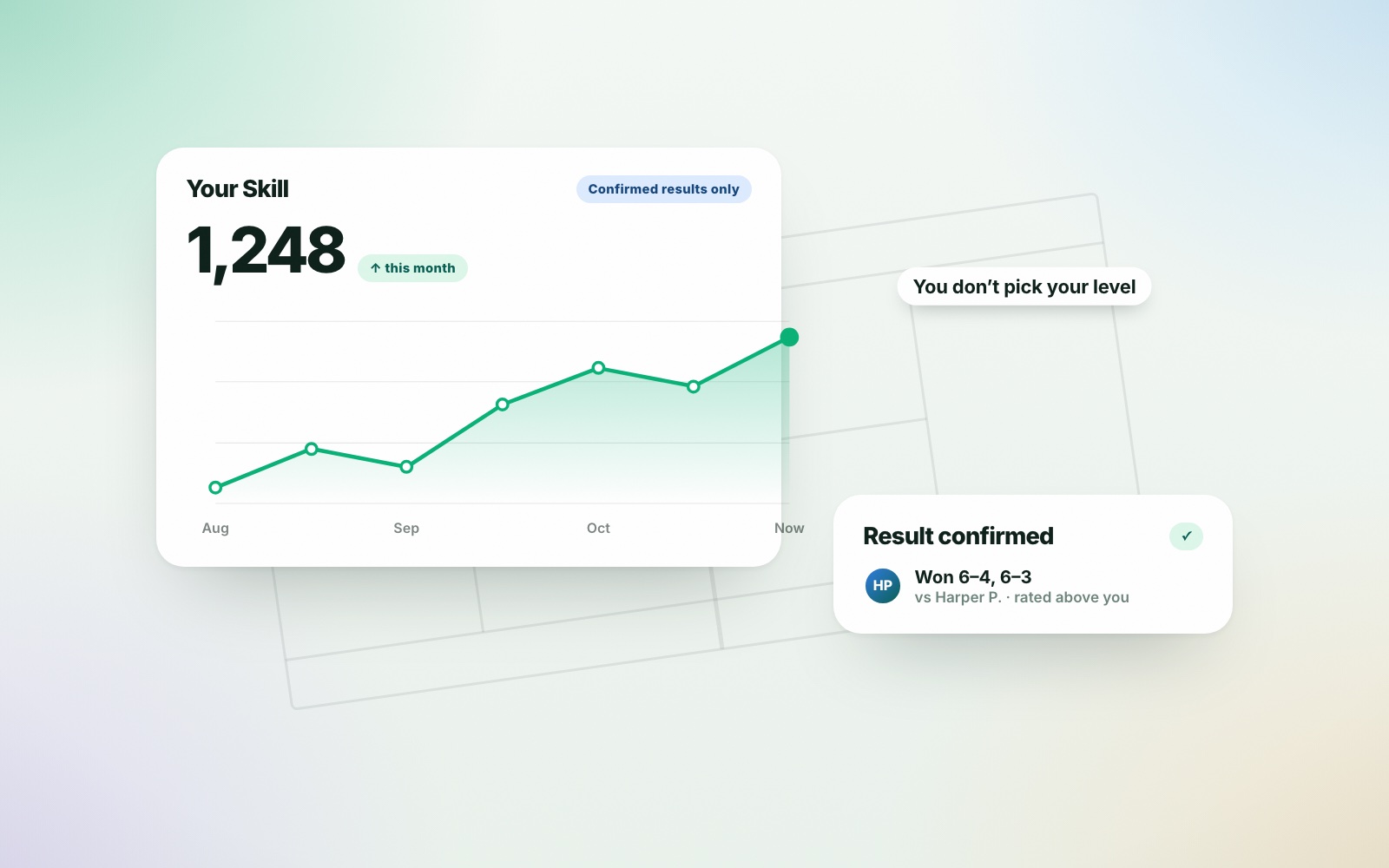
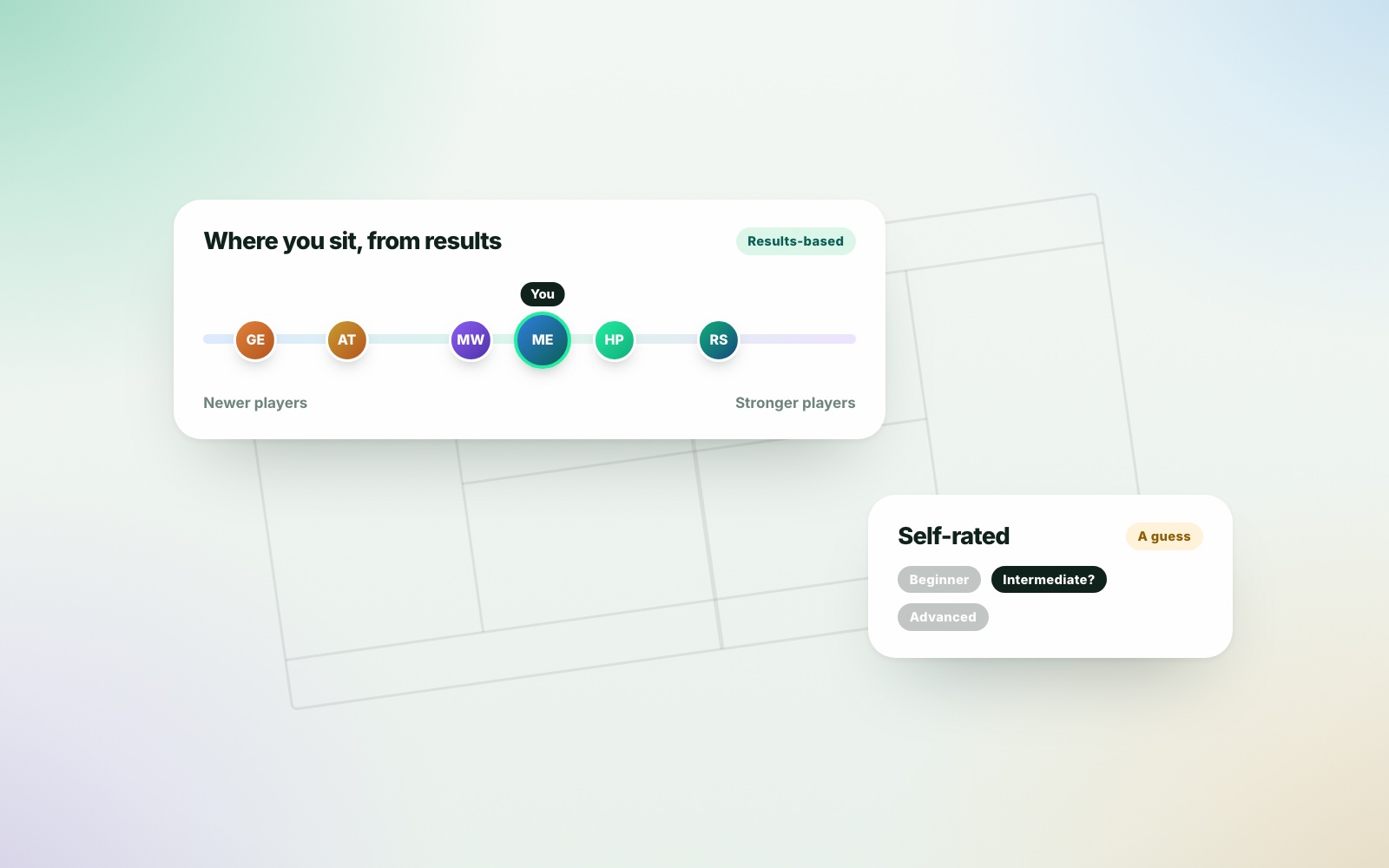
On ContactFrame the rating is called Skill. It is built from confirmed results, you do not pick your own level, and it moves when you win or lose a match that counts. If you want to understand the number itself, read how the Skill rating works.
Every ranking in the app is that same Skill rating, viewed across a different group of players. You do not have five separate scores to look after. You have one, and five ways of looking at it.
How ContactFrame tennis rankings work from court to country
You are ranked at every scale at the same moment:
- Home court. The players who have set the same court as home that you have.
- Local area. The neighbourhood around you.
- Town or city. Everyone in the same place.
- Region. Your part of the country.
- Country. Every player on the ladder, which covers the UK.
Each scale answers a different question, and it helps to know which one you are asking.
Home court: who should I play next?
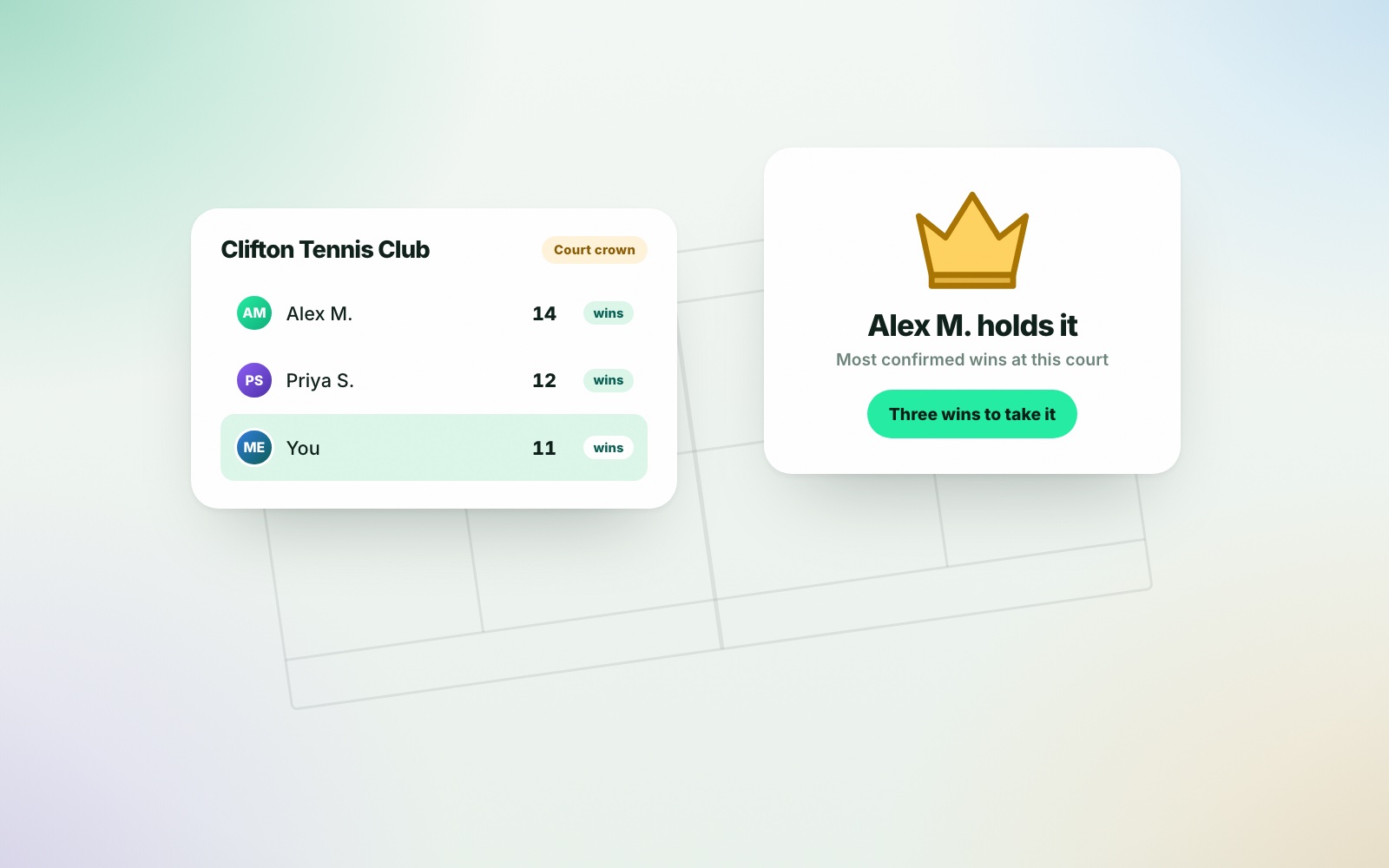
This is the list that changes what you do on Saturday. The names just above and just below you are people who play where you play, at about your standard. They are your most convenient and most even matches.
Setting a home court takes a moment. ContactFrame has a map of more than 1,300 UK courts, with filters for surface, distance and whether a court is bookable, and you can see who plays at each one. If you have not settled on a regular venue, finding tennis courts near you will help you choose.
Local area and town: how do I compare round here?
These are the rankings people actually quote. A position in your town means something to another player in a way a long national number does not. They are also where you find new opponents once you have played everyone at your own court.
Region and country: where does this sit in the bigger picture?
The wider scales are for context. They move slowly, and a single match rarely shifts them much. Check them now and then, the way you would glance at a map of the whole route when you are really concentrating on the next turning.
The smallest ranking is the most useful one, because it is a list of people you can go and play.
Filters: gender and age band
An overall list is honest, but it is not always the comparison you want. ContactFrame lets you filter the rankings by gender and by age band.
The filters do not change your Skill. They change who is in the list beside you. A player in their sixties can see how they stand among everyone at their court, and then how they stand among players of a similar age in their city. Both are true. They answer different questions, and each can be the more motivating one on a given day.
The monthly XP board
Skill has a weakness as a motivator. Once it has settled, it moves slowly, and a player who is mid-table on ability may stay mid-table for a long time however keen they are.
That is what XP is for. The XP board is a separate monthly table that rewards activity, and it resets each month.
Two things follow from that.
It is winnable by anyone. You do not have to be the best player in town to top the board. You have to be one of the busiest. A committed improver has a real chance of finishing above the local number one.
Last month does not weigh on this month. Everyone starts level again when the board resets. If work swallowed October, November is a clean start.
Keep the two numbers apart in your head. Skill says how good you are. XP says how much you have been playing lately. Chasing XP will tend to help your Skill over time, simply because you are playing more, but they are not the same thing.
What these rankings are not
They are not official national rankings, and they are not a substitute for any rating you hold through a governing body. They count only results confirmed in ContactFrame, between players on its ladder.
That is a narrower thing, and for most adults a more practical one. National systems exist to organise sanctioned competition. A local ladder exists to find you a good match within a short drive. For the general background on how these ideas differ, see tennis ratings explained.
A new ranking is also only as full as the number of players near you. In a busy city, the court and local lists will be lively from the start. Somewhere quieter, the town or region list may be the more useful one for a while.
How to move up the rankings in your area
There are no tricks here, but the order of priorities is worth stating.
- Play matches that count. League matches, tournament matches and competitive results you log all feed your Skill. A hit you never log changes nothing.
- Get results confirmed. Only a confirmed result moves anything. See how to log and confirm a result.
- Play slightly up. Beating a higher-rated player moves you more than beating a lower-rated one. The home court list shows you exactly who those players are.
- Keep playing. A rating settles through repetition. A steady run of matches tells the ladder more about you than one good week.
- Watch the small list. Climbing at your court comes first. The wider scales follow.
Rankings are useful for one thing above all: turning a vague wish to play more into a specific name to message. Find the player one place above you at your court and ask them for a match. You can join the list for the app on the Ladder page.
Common questions
How do UK tennis rankings work on ContactFrame?
Every player has a Skill rating built from confirmed match results. ContactFrame orders players by that rating and shows your position at your home court, in your local area, in your town or city, in your region and across the country.
Are ContactFrame rankings official UK tennis rankings?
No. They are ContactFrame’s own rankings, built only from results confirmed in the app. They are designed for finding even local matches and sit alongside any rating or ranking you hold elsewhere.
What is the difference between Skill and XP on ContactFrame?
Skill is your all-time rating and it moves only when a result is confirmed. XP is a monthly board that rewards activity and resets each month, so it shows who is playing a lot right now.
How do I move up the tennis rankings in my area?
Play matches, make sure the results are confirmed, and seek out opponents rated a little above you. Regular play against the right standard moves you further than a string of easy wins.
Does it cost anything to appear in the ContactFrame rankings?
No. Joining the ladder, playing friendlies, appearing in the rankings and using the court finder are all free. Credits are only needed to enter leagues and tournaments.
See where you stand.
Join the UK ladder and get a rank at your court, in your town and across the country.
Explore the ladder