The short version
- Effort and ball speed are different things. Only a measured speed tells you which swings are fast.
- Power comes from the ground up: legs, hips and trunk first, arm last.
- A loose arm and a clean hit usually beat a tight arm and a huge swing.
- Always read speed next to how many shots landed in. Pace that misses is not power.
- Give it six to eight weeks, and stop if anything hurts.
Almost everyone who searches for how to hit harder in tennis has already tried the obvious answer: swing harder. It tends to end the same way. The shoulders tense, the ball catches the frame or flies long, and the one you did time well was no quicker than a normal rally ball.
That is the first lesson of power. The effort you feel and the speed the ball leaves at are only loosely connected. Until you measure the second one, you are training the first.
Why swinging harder doesn’t add power
Racket speed at contact is what sends the ball away fast, and tight muscles are slow muscles. When you try to force a shot, the arm stiffens and takes over from the legs and trunk, which are far stronger. The swing feels violent and delivers less.
Your senses mislead you as well. A mistimed ball jars the arm and feels heavy, so it registers as a big hit. A clean one feels like nothing. Players regularly rate their smoothest, fastest shots as their softest.
How to film a power session
Put your phone on a tripod two to three metres behind your baseline, in landscape, at net height or above, with the full court in frame. Leave it where it is for the whole session and avoid shooting into the sun. Line up the four court corners in ContactFrame when it asks.
A Ball machine session is ideal, because every feed arrives at the same pace and your own contribution is easy to compare. A Practice session with a steady partner works too. Set the focus to Power. Stand at the end nearest the camera if you are on the Pro plan, since shot mechanics covers the player nearest the camera.
Which numbers show real power
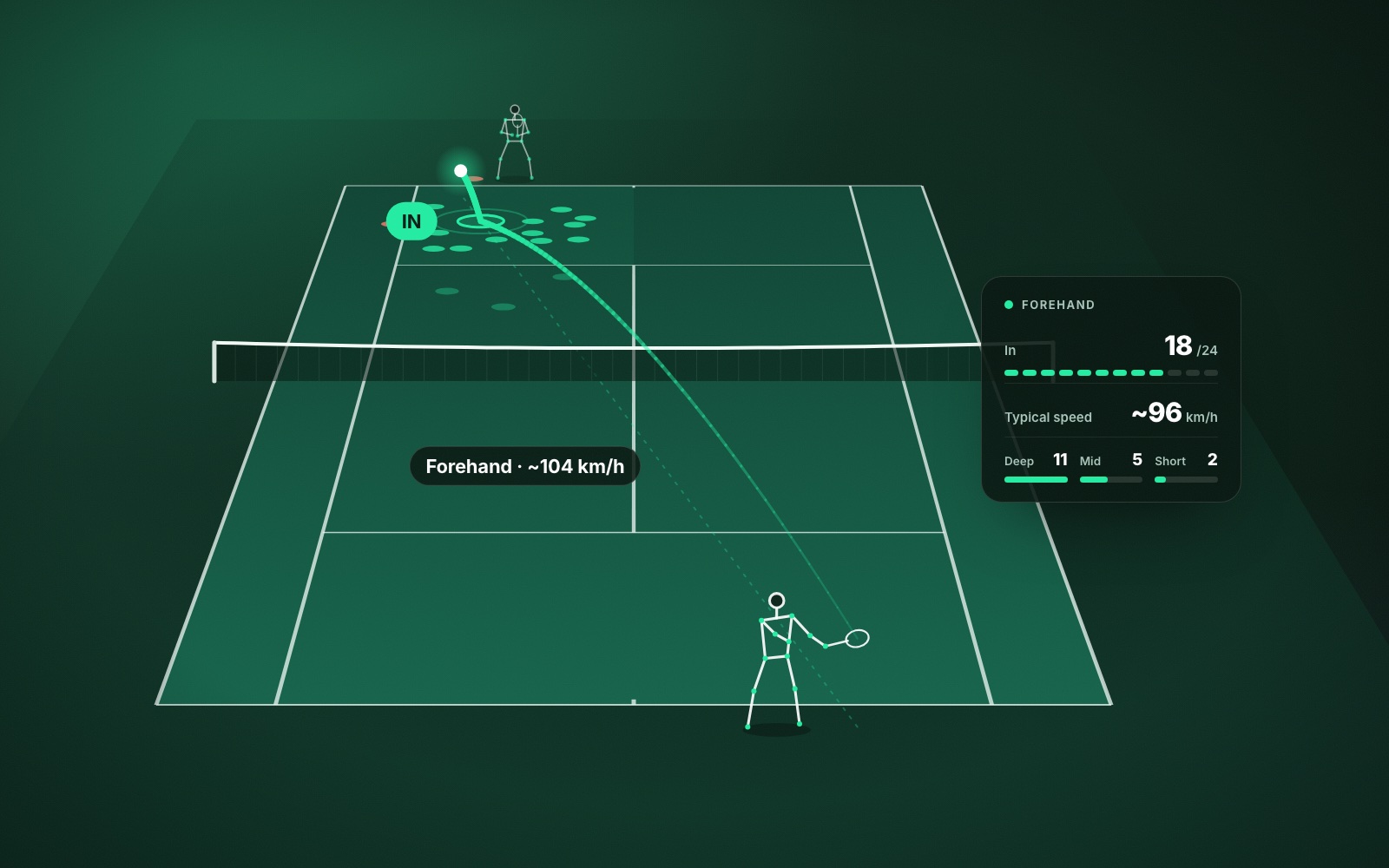
- Speed by shot type. Your average forehand and backhand speed is the baseline. The average matters more than the peak.
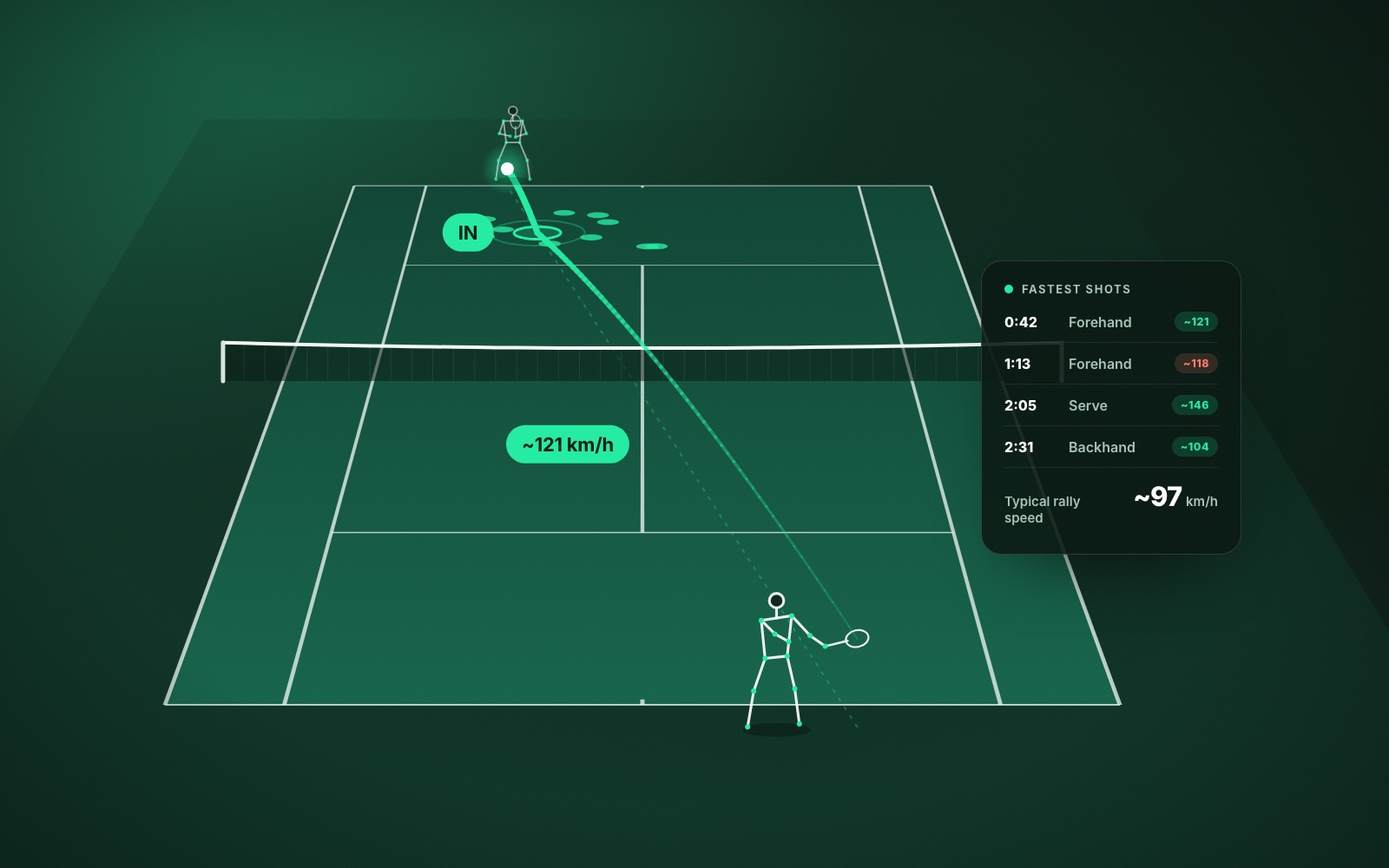
- Fastest shots. Jump to these in playback and watch them in slow motion. They usually look relaxed and early, and that is the swing to copy.
- How many landed in. Read this beside speed every time. Say your forehands average 95 km/h but only 60% land in. That is not a powerful forehand. It is a gamble.
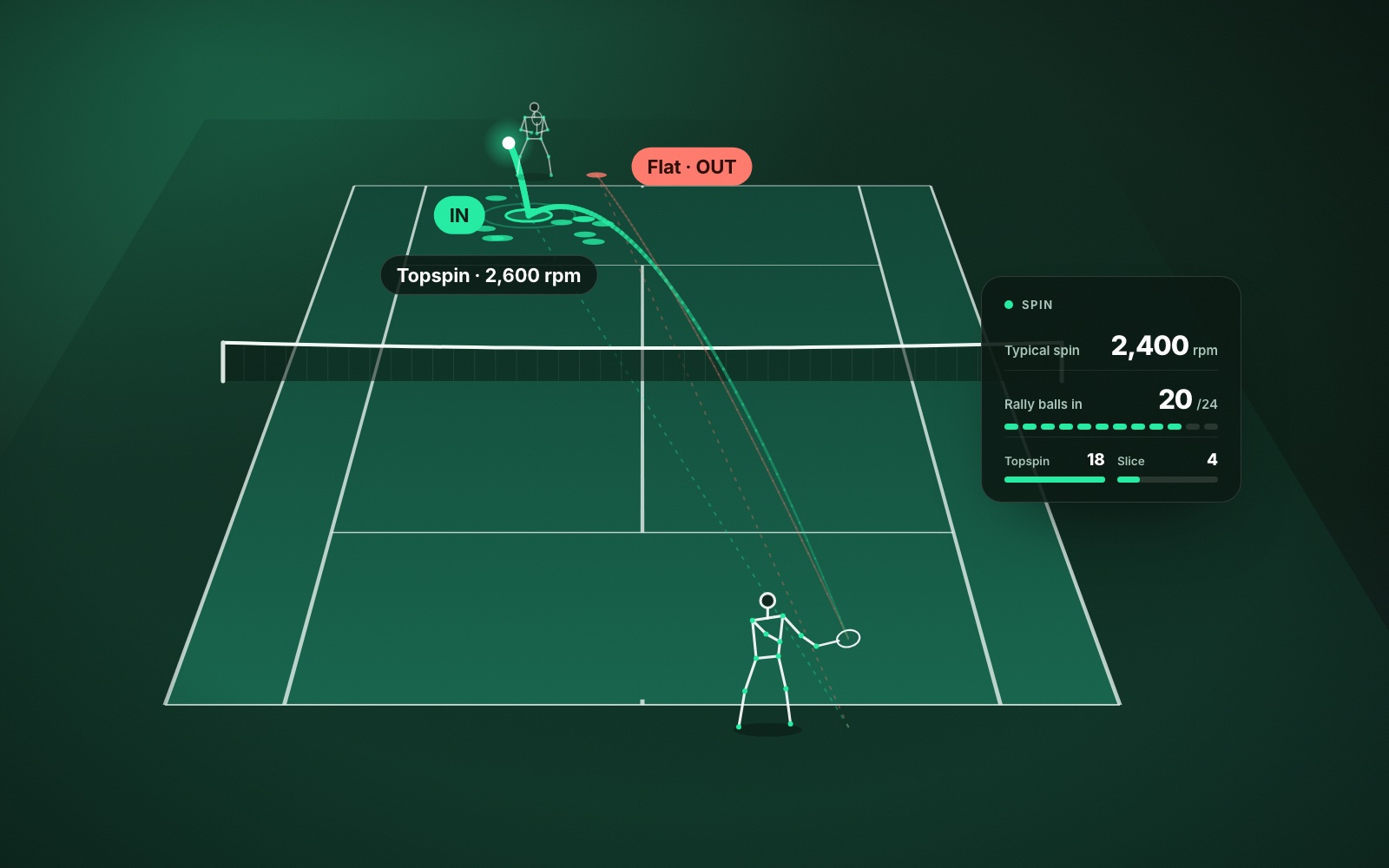
- Spin. Faster balls need more topspin to stay in the court. Speed up and spin flat is a warning sign.
- Shot quality. The score out of 100 tells you whether the harder ball was also a more effective one.
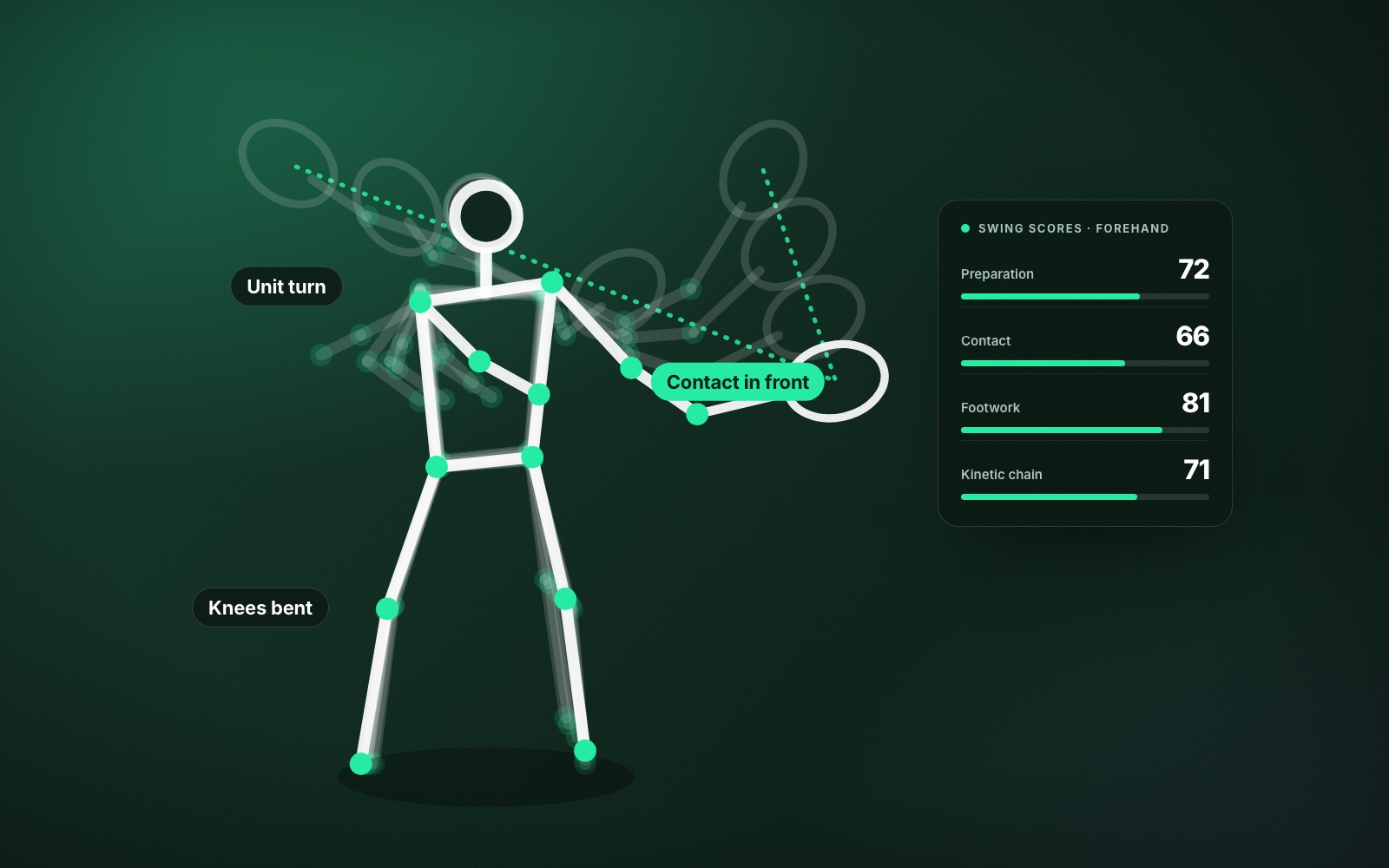
On the Pro plan, swing scores for things like preparation, contact, footwork and kinetic chain show whether the body is doing its share. What to look for in a swing analysis explains how to read them.
Four changes that add power to your tennis shots
1. Swing at seven out of ten
Hit twenty balls at what feels like 70% effort with a deliberately loose arm and a relaxed grip. Then hit twenty at full effort. Compare the two blocks.
The number to watch: average speed and shots in for each block. Many players find the relaxed block is nearly as fast, sometimes faster, with far more balls in court. If that is you, the cheapest power you will ever find is doing less.
2. Load the legs and turn
Before the ball arrives, turn your shoulders, bend your knees and put weight on the back foot. Then push up and rotate through the shot so the hips lead and the arm follows. Think of the arm as the end of a whip, not the engine.
The number to watch: average speed by shot type across the session. With shot mechanics, also watch the kinetic chain and preparation scores, and check whether your Next fix changes.
3. Meet the ball earlier
Late contact means the racket is still accelerating when the ball arrives. Prepare sooner and aim to hit the ball comfortably in front of your leading hip. On a ball machine, try taking the racket back as the ball leaves the machine, not as it bounces.
The number to watch: speed again, and the contact score if you have mechanics. In the stick-figure replay, look at where your hitting arm is at contact compared with your fastest shots.
4. Add spin to keep the pace in
Once speed is up, swing a little more from low to high so the ball dips. The aim is a heavier ball, fast and spinning, not a flat one that needs perfect timing. See how to hit more topspin.
The number to watch: spin in rpm next to balls called out long. You have succeeded when speed has risen and long misses have not.
How to re-measure, and a realistic timescale
Use the same feed or the same drill each week and compare sessions in Trends. Watch three figures together: average speed, shots in, and spin. If speed rises and shots in falls, slow down by a notch and rebuild.
Expect small, steady gains. A few km/h on your average over six to eight weeks, with the same number of balls landing in, is a real improvement that opponents will feel. A sudden jump in one session is more likely a good day or a livelier feed. For the forehand in particular, this forehand guide goes further.
What video analysis can’t do for power
Video measures the ball and, on Pro, tracks your body through the swing. It does not analyse your grip or the angle of the racket face, and it knows nothing about your strings, your racket or your fitness. Any of those can cap your power.
It also cannot feel pain. More racket speed puts more load on the shoulder, elbow and wrist. If anything hurts, stop and get it looked at before you chase another number. And if your speed has not moved after two months, take your recordings to a coach. A trained eye beside the court will often spot in a minute what a set of scores can only hint at. Plans are compared on the pricing page.
Common questions
How do I hit harder in tennis without losing control?
Build the swing from your legs and body rotation, keep your arm loose and meet the ball in front of you. Then add topspin so the faster ball still dips into the court. Check that the number of shots landing in holds up as the speed rises.
Why are my tennis shots so weak?
The common causes are hitting with the arm alone, meeting the ball late, and gripping too tightly. All three stop the racket from moving freely through contact. Off-centre hits also lose a lot of pace, so cleaner contact often adds more than a bigger swing.
What is a good forehand speed for a club player?
It varies widely with age, level and style, so treat any figure as rough. Many club rally forehands sit somewhere between 70 and 110 km/h. Your own average, and whether it rises while your shots keep landing in, is a far more useful benchmark.
Can an app measure how hard I hit the ball?
Yes. ContactFrame measures ball speed for every shot from a single phone on a tripod and shows it by shot type, along with your fastest shots. When it is unsure of a speed it leaves it blank or marks it approximate.
Does a heavier racket give you more power?
Equipment can make a small difference, but it will not fix a swing that uses only the arm. Sort out timing and body rotation first. If you then want to try a different racket, test it with measured ball speed and not just feel.
Know how fast you really hit.
Ball speed for every shot, with no sensors on your racket.
Explore The Lab