The short version
- The forehand is usually a club player’s biggest shot and biggest leak. Measure both sides of that before changing anything.
- Read forehand speed alongside how many landed in. Either number alone is misleading.
- The placement map shows depth. Forehands that bounce short give your opponent time, however hard they were hit.
- Find your rally pace: the fastest speed at which most of your forehands still go in.
- Change one thing at a time and re-film the same drill after two to three weeks.
The forehand is the shot most club players would bet on. It is also, in most club matches, the shot that goes long or into the net more than any other, simply because it is the one you swing hardest at and hit most often. If you want to know how to improve your tennis forehand, start by finding out which of those two forehands you actually own.
That is hard to judge from the inside. A forehand winner feels wonderful and stays in the memory for a week. The four you sprayed in the same game do not.
Why your forehand feels better than it is
Feel rewards effort. A forehand you hit flat out feels like a good forehand whether it landed on the baseline or the back fence. Your opponent and the scoreboard experience it differently.
Feel also cannot judge depth from your own end of the court. A ball that lands a metre past the service line and one that lands a metre inside the baseline look much the same from where you are standing. To your opponent they are completely different shots: one can be attacked, the other pushes them back.
How to film your forehand
Use a Ball machine session if you have access to one, or a Practice session with a partner who is happy to feed your forehand side. Aim for at least forty forehands so the averages mean something.
Put your phone in landscape on a tripod two to three metres behind your baseline, at around net height or higher, with the whole court visible. Keep it out of the sun’s direct line and do not move it during the session. Line up the four court corners when ContactFrame asks. Stand at the camera end, because shot mechanics on the Pro plan cover the player nearest the camera.
If you are using a feeder, practising with a ball machine and AI explains how to set up a session that gives clean numbers.
The forehand numbers that matter
ContactFrame breaks a session down by shot type, so you can look at forehands on their own. Four things are worth reading.
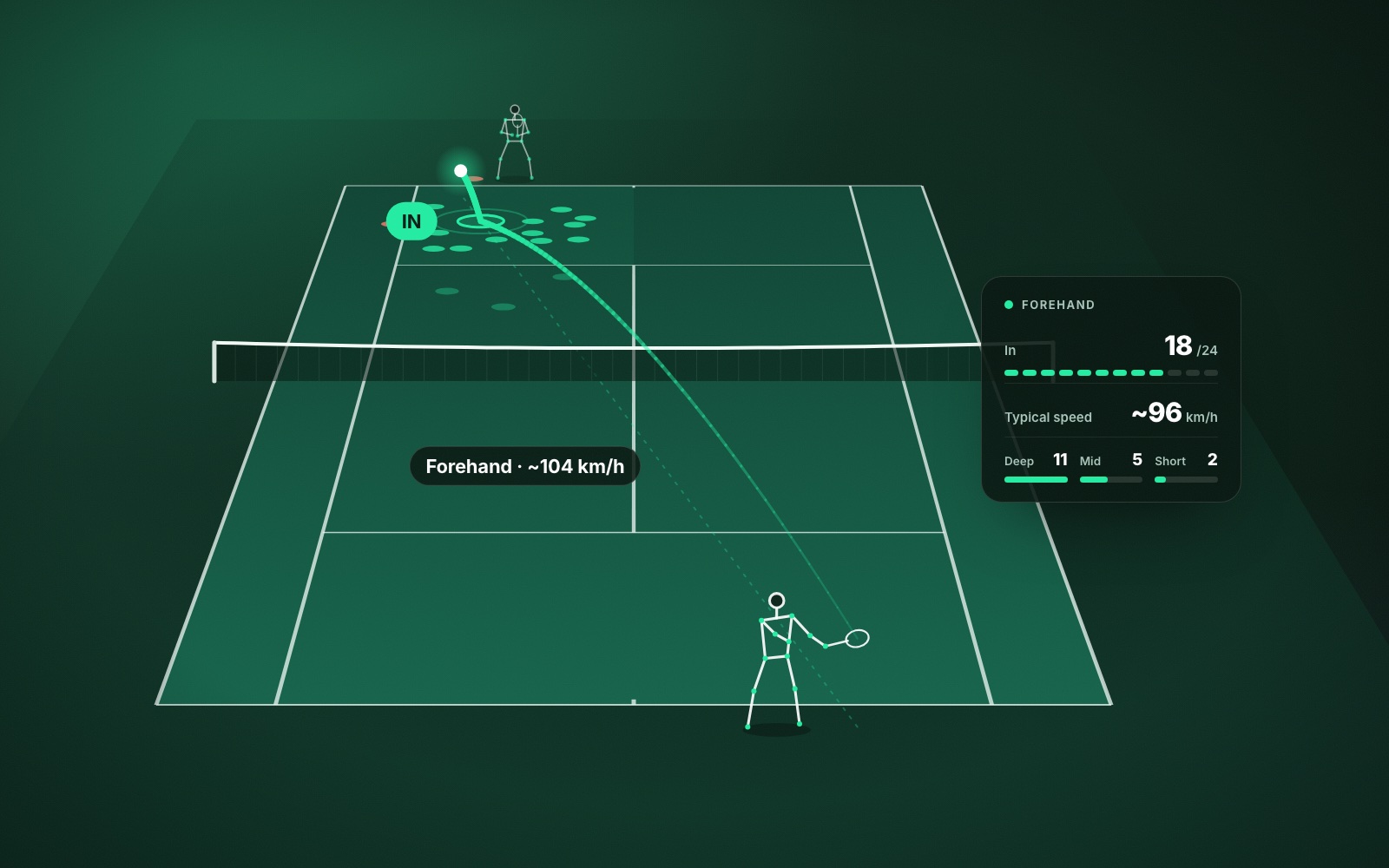
- How many landed in. Your starting point. A forehand that lands fewer than two times in three is costing you more than it earns, whatever it looks like.
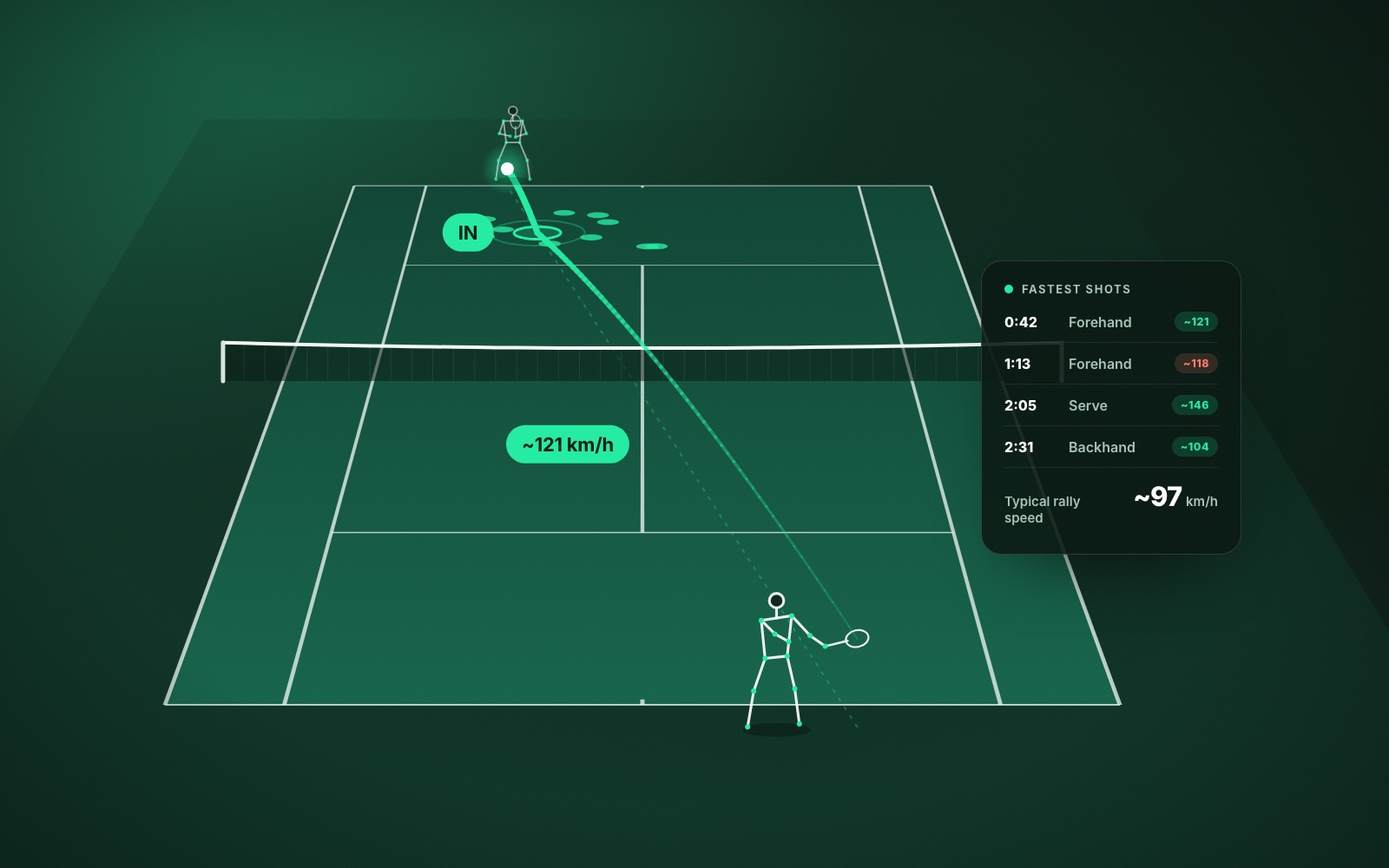
- Speed. Look at the typical speed, and compare it with the in-count. Say your forehands average 95 km/h but only 60% land in. That is a forehand hit faster than you can control.
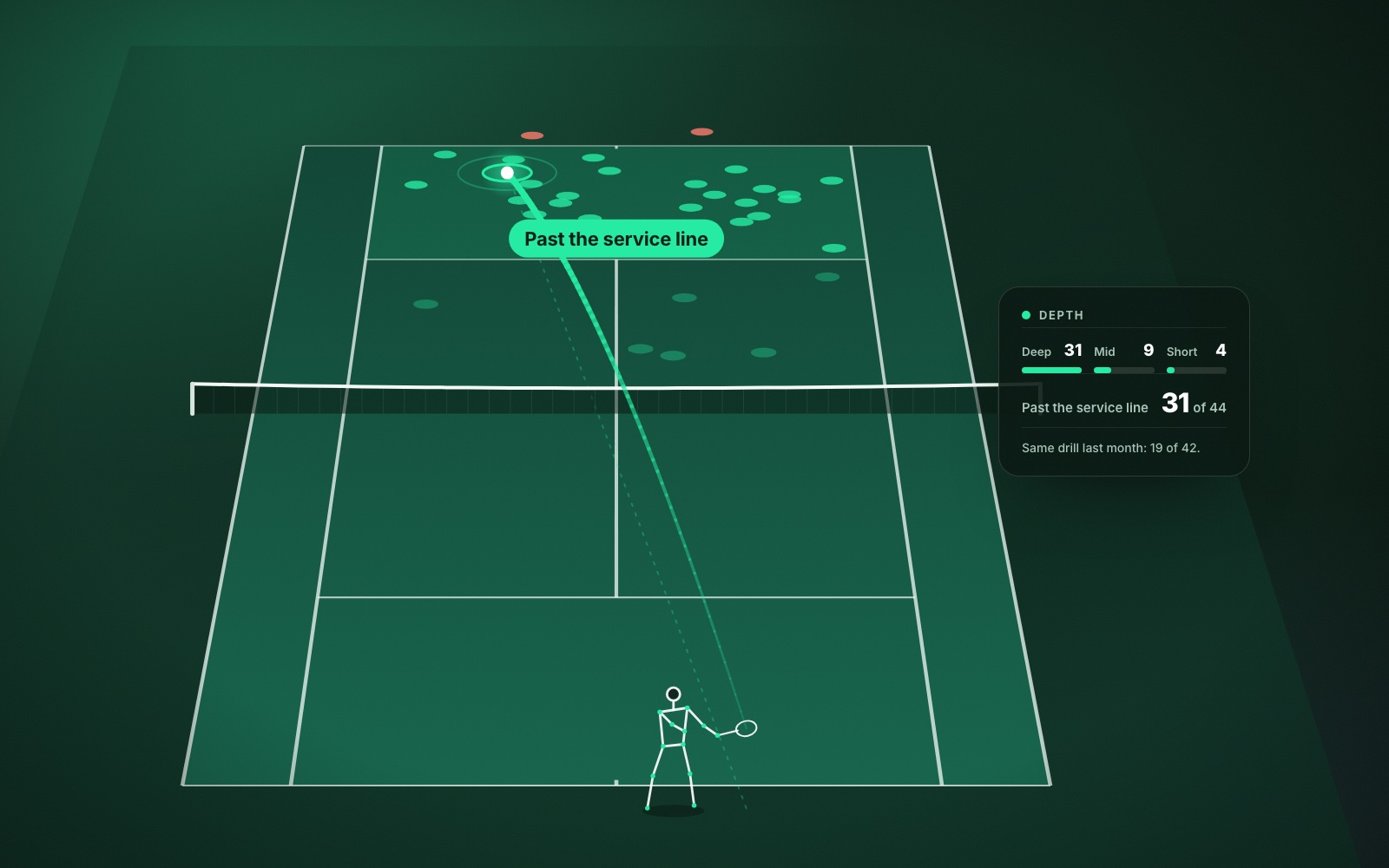
- Where they bounced. The shot placement map shows every bounce. Look for a cluster around the service line. That is the short ball habit, and it is very common.
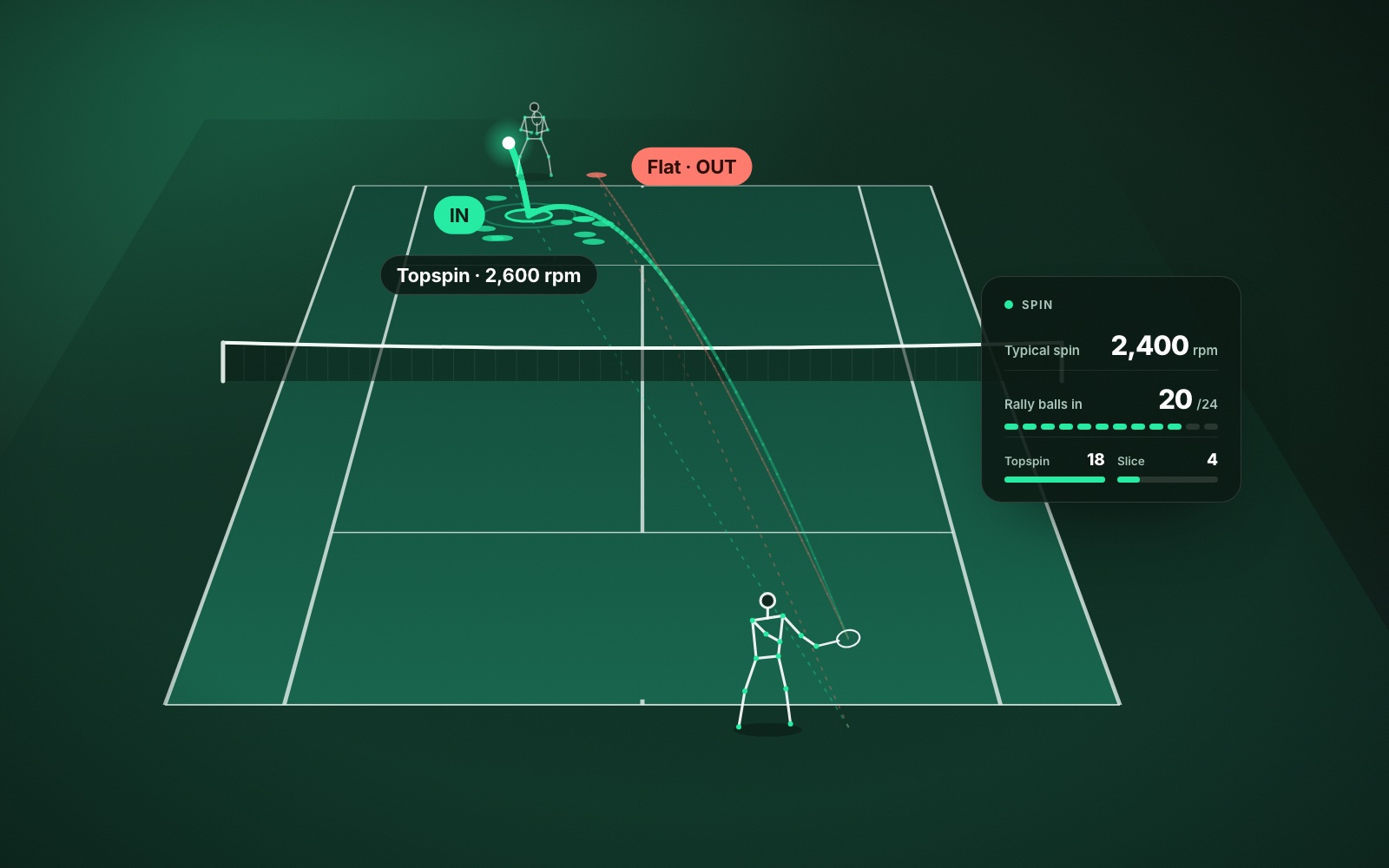
- Spin. Topspin is what lets you hit hard and still bring the ball down. Low spin with lots of long misses is a pattern worth noticing.
Shot quality, a score out of 100 for each shot and for the session, is a handy single figure for tracking whether your forehand is becoming more effective overall. Shot quality explained covers how to use it.
Three changes to improve your forehand, each tied to a number
1. Find your rally pace
Hit three sets of fifteen forehands crosscourt: the first at what feels like 60% effort, the second at 75%, the third at 90%. Rest between sets and note the time of each so you can find them in playback.
The numbers to watch: speed and in-count for each set. Most players find the middle set is only slightly slower than the hard set and lands far more often. That middle speed is your rally pace. Build points at it and save the top gear for short balls.
2. Past the service line, every ball
Put two cones a couple of metres inside the baseline on the crosscourt side. Hit thirty forehands aiming to land between the service line and the baseline, with good height over the net. Height is what produces depth, far more reliably than extra pace.
The number to watch: bounce positions on the placement map. You want the cluster to move back from the service line towards the cones without the in-count falling. There are more depth drills in how to hit deeper shots.
3. Two crosscourt, one down the line
With a partner or machine, hit two forehands crosscourt and then change direction down the line on the third. Recover to the middle after the change. Changing direction is where club forehands break down, because the ball has to travel over the higher part of the net into a shorter court.
The number to watch: in or out on the third ball. Use playback to jump through your shots and check the down-the-line attempts separately. If they miss mostly wide, aim a metre further inside the sideline. If they miss long, add height and spin instead of easing off.
Using shot mechanics on your forehand
On the Pro plan, ContactFrame tracks body points through the swing, gives swing scores for areas such as preparation, contact, footwork and kinetic chain, and shows a stick-figure replay of each contact. It then gives you one Next fix and a drill.
For forehands, late preparation is the classic club fault: the racket starts back when the ball bounces instead of when it leaves the opponent’s strings. If preparation is your lowest score, that single change often improves contact with nothing else touched. What to look for in a swing analysis goes through the checkpoints.
How to re-measure your forehand
Repeat the same drill, with the same feed and the same number of balls, every two to three weeks. Trends in ContactFrame show whether your in-count, speed and depth are moving together or whether one has improved at the expense of another.
A sensible expectation is that depth and in-count respond within a month of practising twice a week. Speed that holds up in matches takes longer. If you want more pace specifically, adding power to your shots is the next read, but only once the forehand is landing.
What the video cannot tell you
ContactFrame does not analyse your grip or the angle of your racket face, and both shape a forehand. A grip that is too far one way can cap your topspin or make low balls awkward, and no amount of drilling around it will fix that.
It also cannot watch you live and say “earlier” at the moment you need to hear it. That is what a coach does. If your numbers stall for a month, or your forehand holds in drills and falls apart in matches, take a session to a lesson. The data gives the coach a head start, and the coach gives you the correction the camera cannot.
The free plan covers placement, speed, spin and in or out, enough to run every drill above. See the plans for what Basic and Pro add.
Common questions
How can I improve my forehand in tennis quickly?
The quickest gain for most club players is hitting crosscourt with more height and depth instead of more pace. Film a session, find the speed at which most of your forehands land in, and practise at that pace until the depth improves.
Why does my forehand keep going long?
Usually because the ball is hit flat and hard with little topspin to bring it down, or because contact is late. More spin and an earlier preparation both help. Check your spin and depth numbers on video before deciding which it is.
How fast should a club forehand be?
It varies widely by level, age and style, so there is no single target. A more useful question is how fast you can hit while still landing most of your forehands in play. That speed is your real rally pace.
Can AI analyse my forehand technique?
ContactFrame measures the speed, spin, bounce position and in or out call for every forehand. On the Pro plan it also tracks your body through the swing and scores things like preparation and contact. It does not analyse your grip or racket-face angle.
Should I hit my forehand crosscourt or down the line?
Crosscourt is the safer default: the net is lower in the middle and the court is longer on the diagonal. Go down the line when you have a short ball or you are balanced and inside the baseline.
See what your forehand really does.
Speed, spin, depth and in or out for every forehand, from one phone on a tripod.
See The Lab