The short version
- You are ready to compete when you can get a serve in, keep score and sustain a short rally. Nothing more is required.
- A league is the gentlest start: several matches against players at your level, with no knockout pressure.
- Good formats group you by results, so your first matches are close and not embarrassing.
- Match play is a separate skill. Practise serving, returning and playing points before your first fixture.
- Decide beforehand what a good first match looks like, and make it something other than the score.
You have been rallying with a friend for a year, having the odd lesson, and you are starting to wonder what a real match feels like. The thought is also slightly terrifying. Competitive tennis for adults has a reputation for being full of people who have played since they were six, and you suspect you will be found out.
You will not be. Adult competition in the UK is wider and friendlier than it looks from outside, and most of it is played by people exactly like you. This guide covers when you are ready, which format to try first and how to get through the first match.
Are you ready for competitive tennis?
The bar is lower than most people set it. You are ready if you can do three things:
- Get a serve in. It does not have to be fast. It has to start the point more often than not.
- Keep score, including a tie-break.
- Sustain a short rally of three or four balls.
That is all. You do not need a topspin backhand or a second serve with kick. You need to be able to play a point from start to finish, and to enjoy the idea of doing it against a stranger.
Waiting until you are “good enough” is the commonest mistake. Matches are what make you good enough.
Competitive tennis options for adults in the UK
There are four main routes.
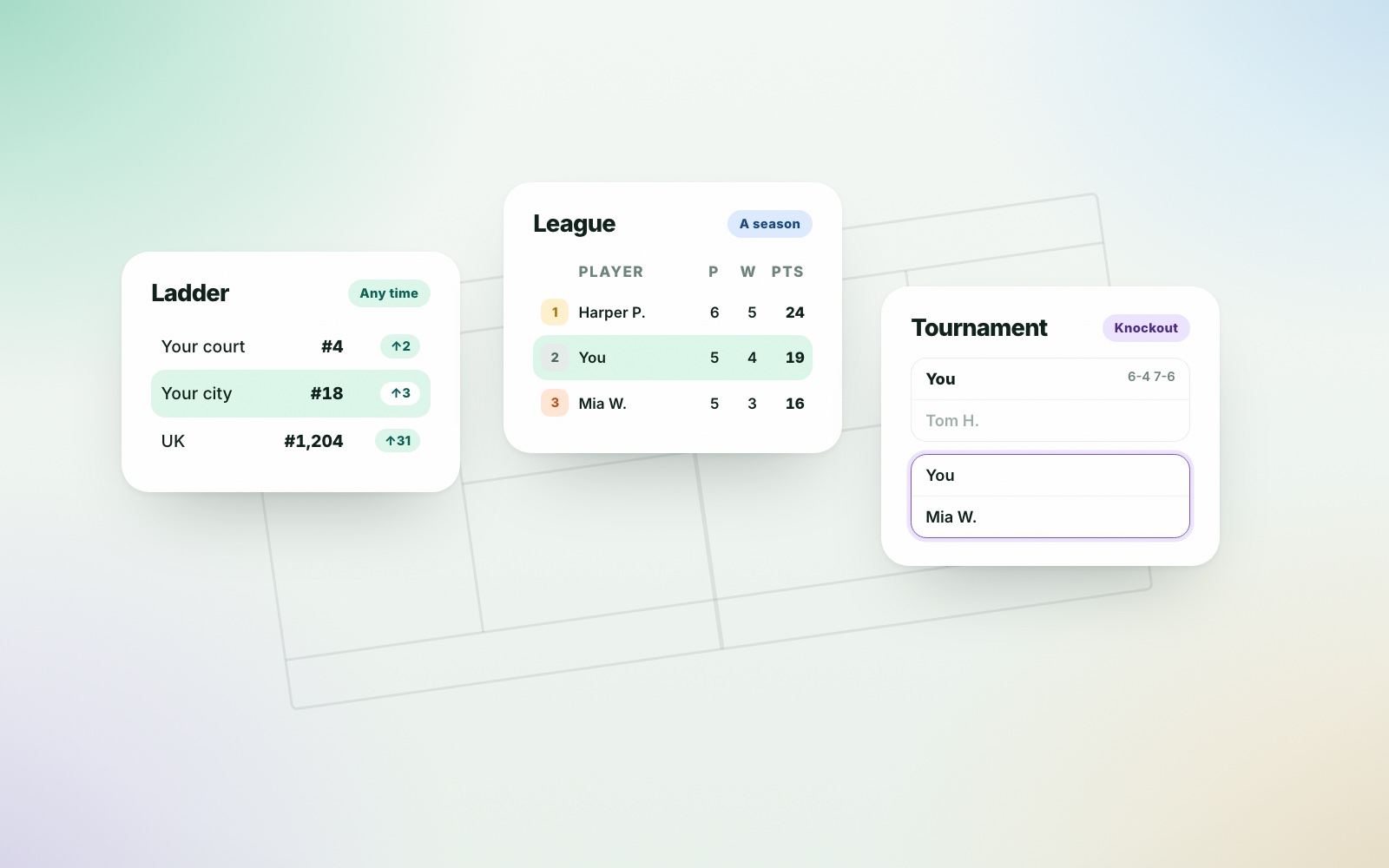
- Ladders. A standing ranking you move up and down by playing matches whenever you can arrange them. Very flexible, no fixed schedule.
- Leagues. A small group of players at a similar standard, each playing the others over a set period. You arrange the matches between you.
- Tournaments. A knockout draw. Win and you go through, lose and you are out.
- Club team tennis. Teams from clubs playing each other, mostly doubles. You need to be a member and be picked.
Each suits a different temperament and diary. The differences are set out in ladder vs league vs tournament.
Why a league is the best first step
For a first taste, a league is hard to beat. You are guaranteed several matches whatever happens, so one bad day does not end it. Your opponents are grouped by standard, so the scores are usually close. And you have weeks, not a single afternoon, to get used to the feeling.
A tournament is more intense. It is great fun once you have a few matches behind you, and a hard place to play your very first one. There is a guide to tennis tournaments for adults in the UK for when you are ready.
A friendly on ContactFrame that you agree to log as a result is gentler still. It is one match, at a time you choose, against someone at about your level.
How leagues and tournaments work on ContactFrame
On The Ladder, which covers the UK, nobody chooses their own level. You have a Skill rating built from confirmed results, and the competitions use it to give you fair matches.
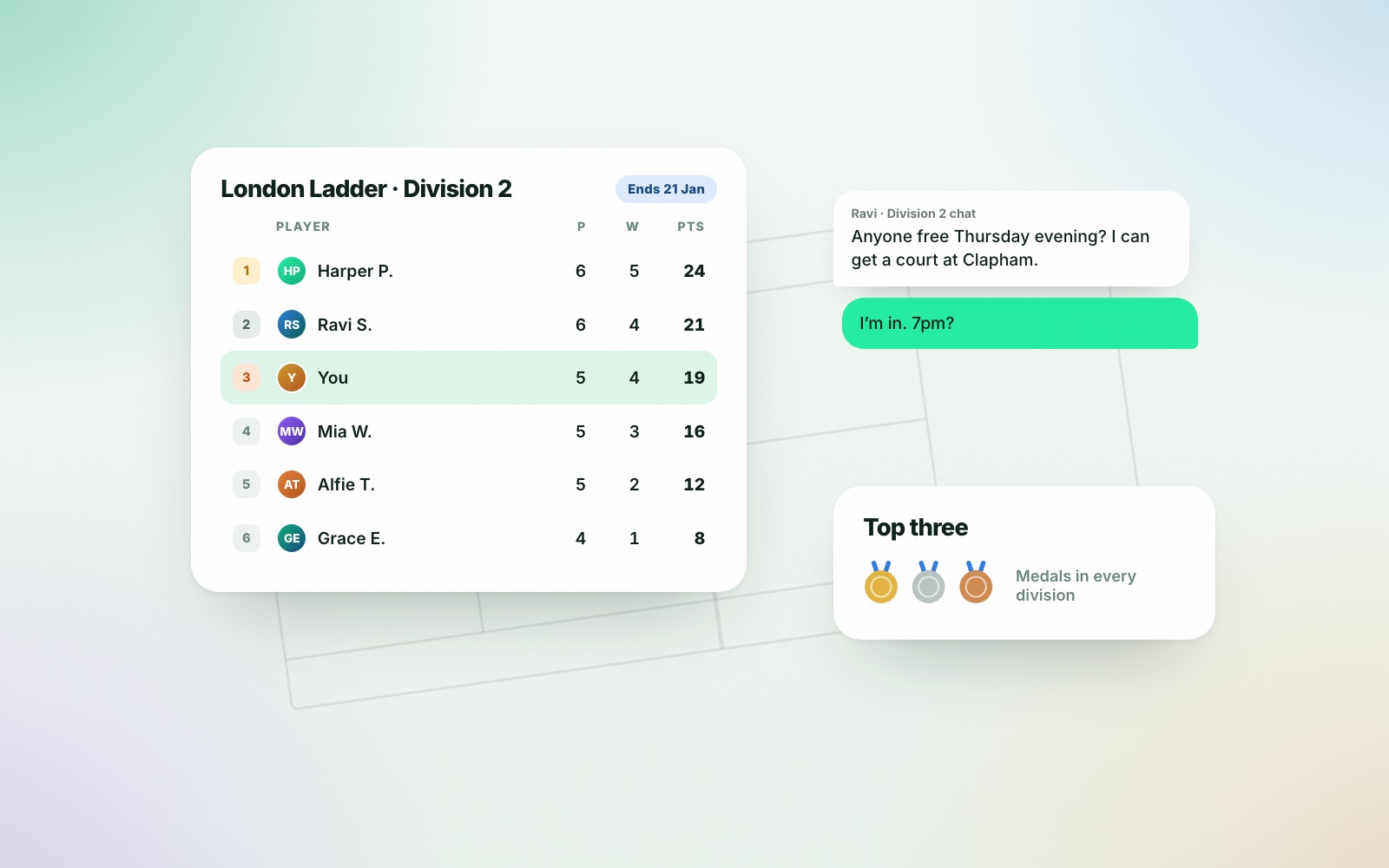
In a league you are placed in a division with players at your level. Each division has its own table and its own group chat, which is where fixtures get arranged. The top three in each division earn a medal.
Tournaments are knockout draws seeded by Skill, with the first round drawn close to home so you are not travelling far for your opening match. Every round has a deadline. A match still unplayed at the deadline is decided at random so the draw always finishes, and the result says so. Champion and finalist earn a trophy.
After each match one player logs the result and the other confirms it. If nobody disputes it, it is confirmed automatically after 24 hours.
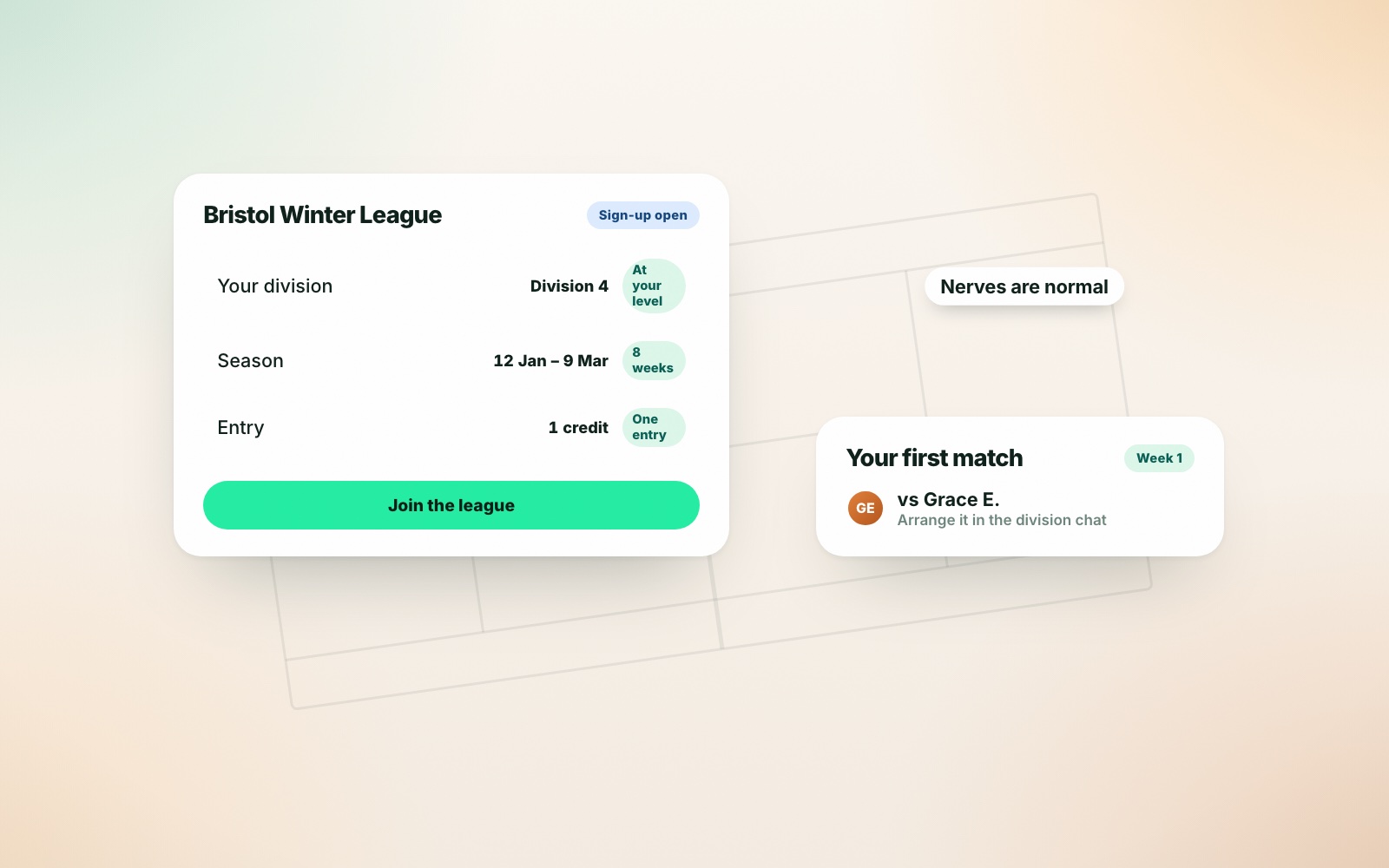
Joining the ContactFrame ladder is free. Each league or tournament entry costs one credit.
Preparing for your first tennis match
Rallying and match play are different skills. Before your first fixture, spend two or three sessions on the parts that only matches have.
- Serve under a little pressure. Play games where you serve the whole game and count double faults. A reliable second serve is the most valuable shot a new competitor can own. See how to improve your second serve.
- Return serve. Friends tend to feed each other nice balls. Ask your partner to serve properly and practise getting the return back deep down the middle.
- Play tie-breaks. They teach scoring, changing ends and playing when every point matters.
- Play one full practice set. So that the length of it is not a surprise.
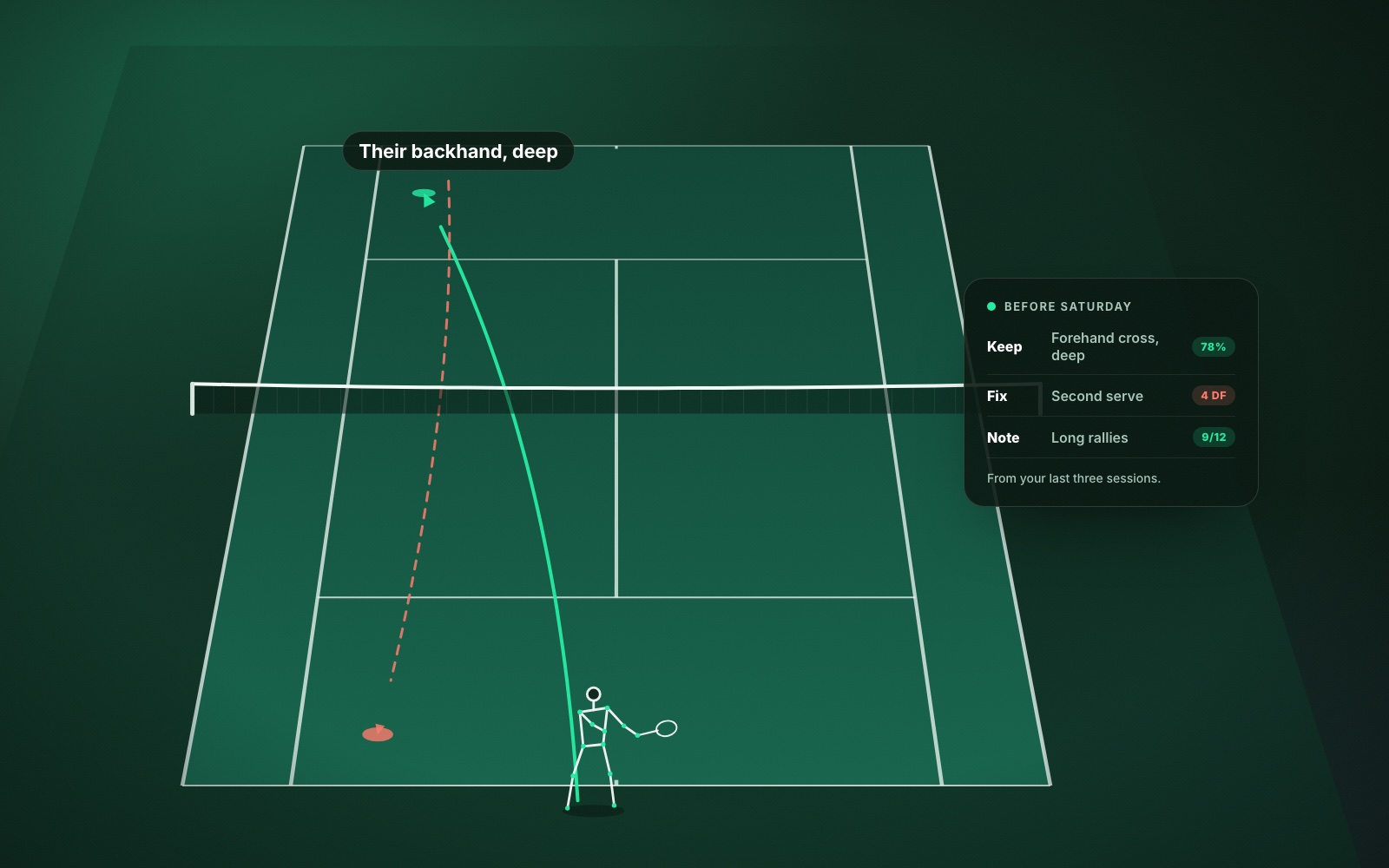
Filming a practice set helps too. In ContactFrame’s Match session type, the app tracks points, serves and a draft score you can correct, and Session insights show your winners, forced errors and unforced errors. If most of your lost points are unforced errors, you know to play safer on match day. More on that in how to prepare for a tennis match.
What your first match will feel like
Tight, at first. Your arm will feel shorter than usual and your feet slower. Nearly everyone double faults in their first service game. This passes, usually within three or four games.
A few things help:
- Arrive early and warm up properly. Five rushed minutes makes the nerves worse.
- Aim for big targets. Crosscourt and well inside the lines until you have settled.
- Use a routine before each serve. Bounce the ball the same number of times, breathe out, serve.
- Play one point at a time. A cliché because it works.
- Remember the other person. They are probably just as nervous.
Unofficiated matches run on trust. You call the lines on your side, your opponent calls theirs, and the server calls the score. If that is new to you, read tennis etiquette for local matches first.
Waiting until you are good enough is the commonest mistake. Matches are what make you good enough.
Set a goal that is not the score
You cannot fully control whether you win your first match. You can control other things. Pick one before you walk on court:
- No more than one double fault a game.
- Get every return back in play.
- Stay calm after a bad game.
Judge the match by that. It gives you something to be pleased with whatever the result, and it is how experienced players think too.
After the match
Shake hands, thank your opponent and log the result promptly. Then write down two things: what worked and what cost you points. That short note is your practice plan for the week.
Whatever the score, you are now someone who plays competitive tennis. The second match is much easier than the first, and by the fifth you will wonder why you waited.
Common questions
Can adults start playing competitive tennis as beginners?
Yes. Adult leagues and ladders group players by standard, so newer players meet each other. If you can serve, score and rally a little, there is a level of competition that fits you.
Should my first competition be a league or a tournament?
For most adults, a league. You get several matches whatever the results, which gives you time to settle. A knockout tournament can end after one match, though it is exciting once you have some experience.
How do I deal with nerves in my first tennis match?
Expect them and plan for them. Use a simple routine before each serve, aim for big targets early on, and remember your opponent is probably nervous too. Nerves ease after the first few games.
How much does it cost to enter a league or tournament on ContactFrame?
Joining the ladder is free. Each league or tournament entry costs one credit. Credits come with the Basic and Pro plans and can also be bought in a pack of five for £20.
What happens if I lose all my matches?
You will have played several real matches, learned what your game needs and been placed more accurately for next time. A results-based rating adjusts, and your next opponents will be closer to your level.
Your first match is closer than you think.
Join the list for ContactFrame and start on a UK ladder that places you by results.
See The Ladder