The short version
- A backhand does not need to be a weapon. It needs to be a shot opponents gain nothing from targeting.
- Compare your backhand and forehand side by side: how many landed in, speed and depth.
- The usual backhand problem is depth, not errors. Short backhands hand over the point two shots later.
- Early preparation matters more on the backhand than anywhere, for one-handers and two-handers alike.
- Four to eight weeks of crosscourt work is enough for most players to see the gap narrow.
Three games into most club matches, your opponent has worked out which wing to aim at. From then on, every serve, every approach and every ball they are unsure about goes to your backhand. Learning how to improve your tennis backhand is less about building a second weapon and more about removing the reason they keep going there.
That changes the goal. You do not need a backhand that hits winners. You need one that comes back deep enough, often enough, that targeting it gains nothing.
Why feel gets the backhand wrong
Players tend to judge their backhand by errors. If it did not miss, it must have been fine. But the common backhand problem is not the miss. It is the ball that lands in, short and slow, and gets punished on the next shot. You remember losing the point to a forehand winner, not the backhand that set it up.
The second blind spot is volume. Most players believe they hit roughly as many backhands as forehands in practice. Count them on video and it is often one in three or fewer, because you run around the rest without noticing.
How to film a backhand session
In ContactFrame, record a Practice session with a partner, or a Ball machine session with the feed going to your backhand corner. Then, separately, record a Match session, because the match shows how your backhand behaves when someone is aiming at it on purpose.
Set up as usual: phone in landscape on a tripod, two to three metres behind the baseline, about net height or higher, whole court in shot, sun behind or beside the camera, and no moving it after you have lined up the four corners. Play at the camera end if you want shot mechanics on the Pro plan, since they cover the nearest player. The phone setup guide has more detail.
Backhand numbers to compare with your forehand
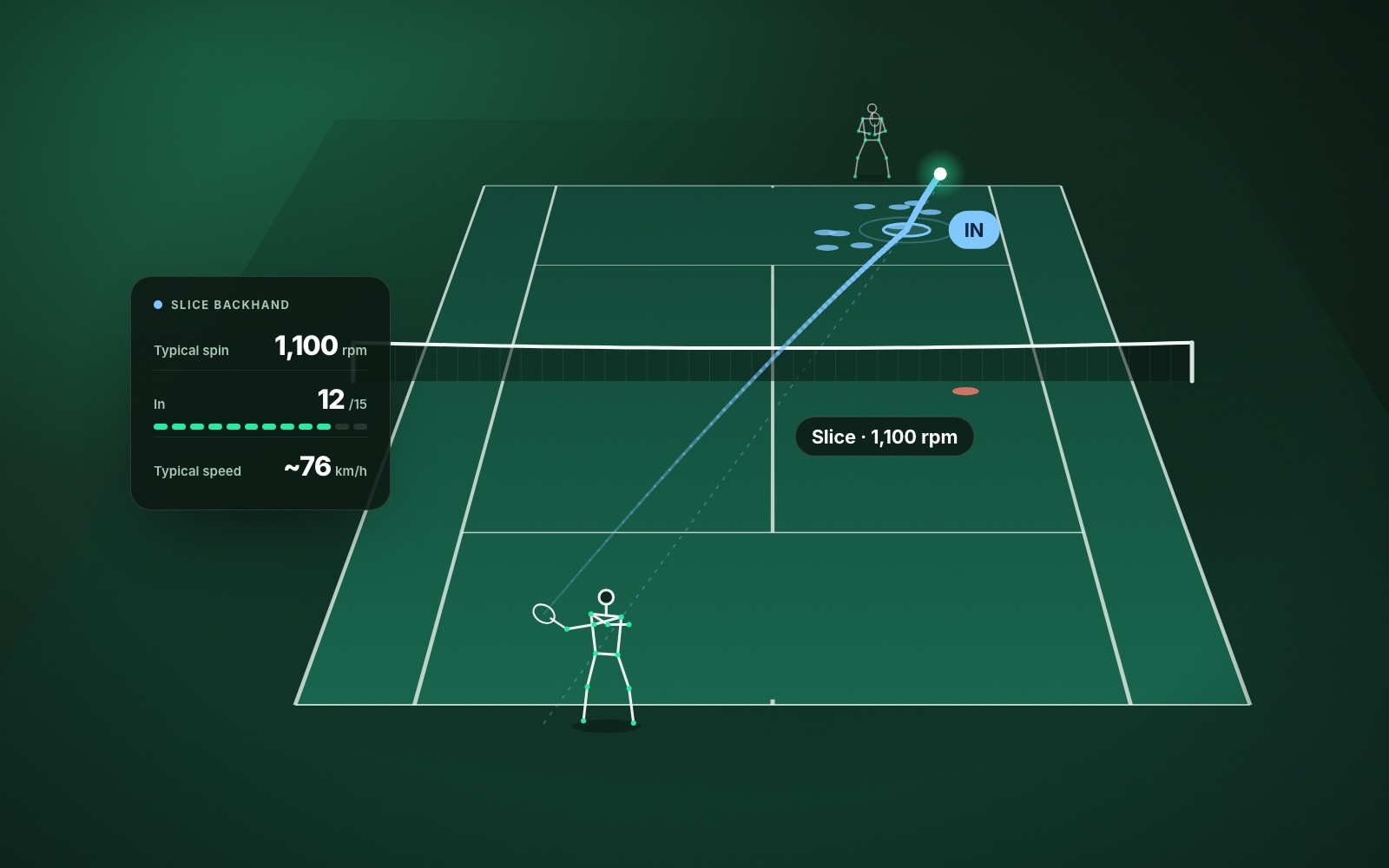
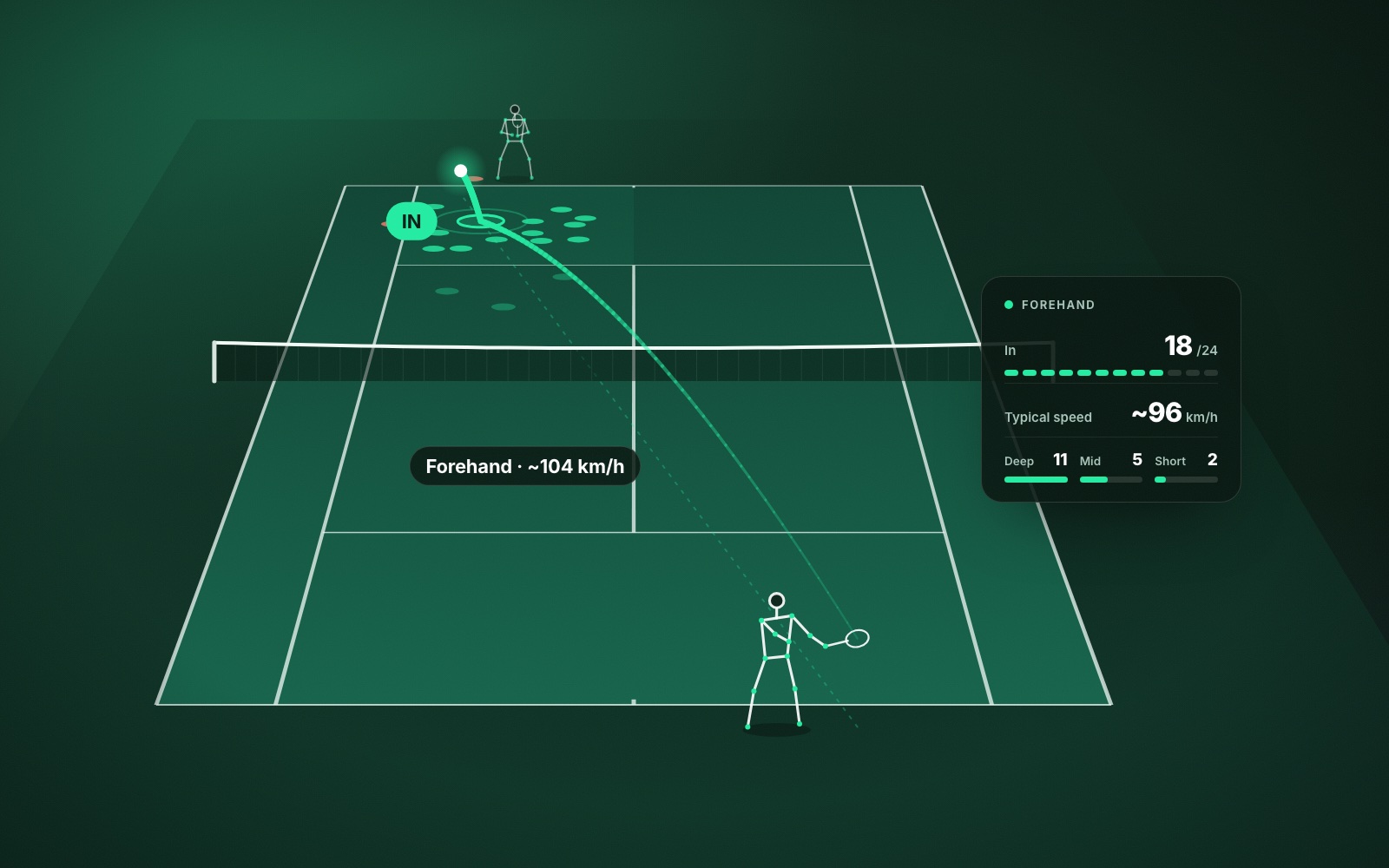
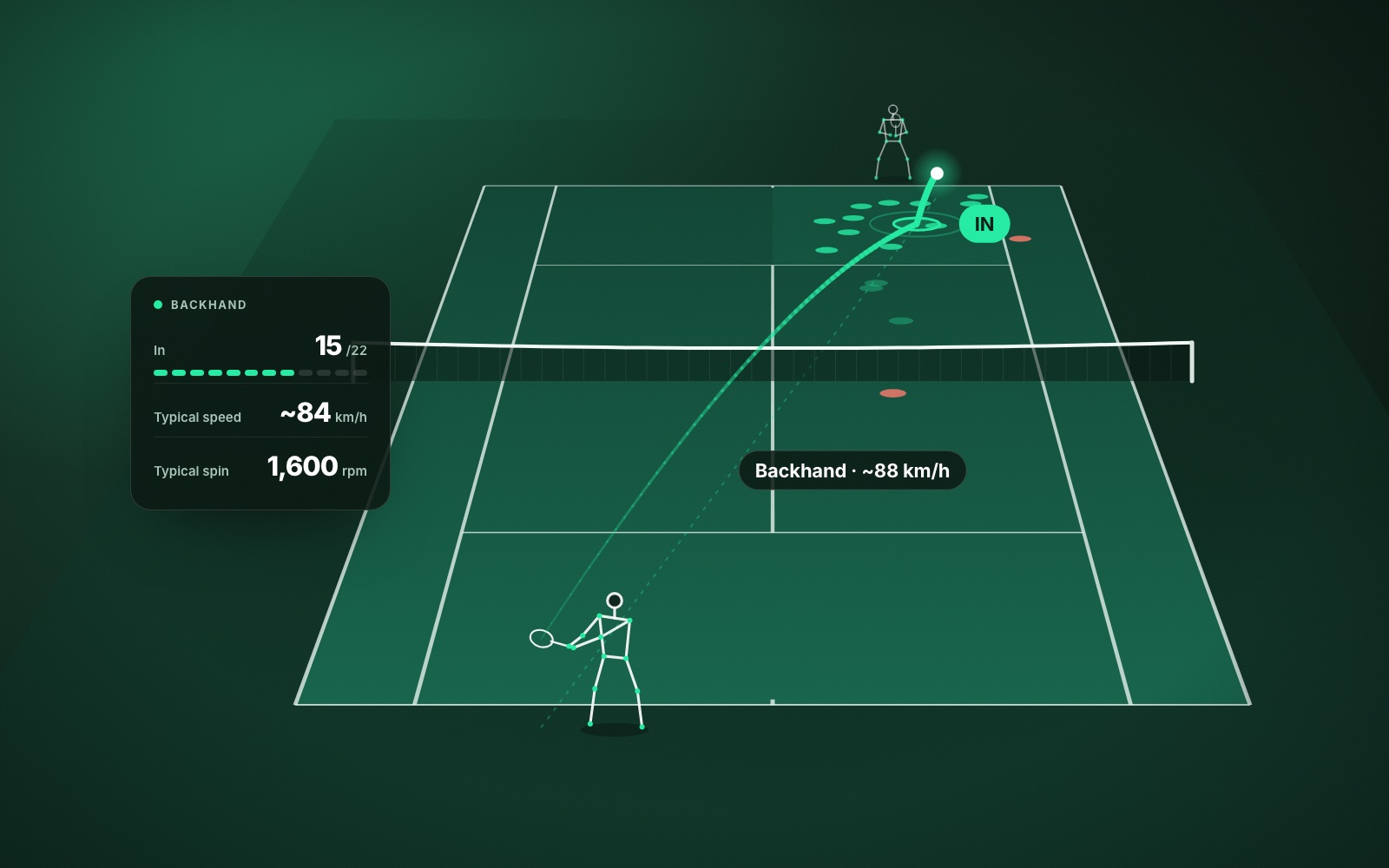
ContactFrame breaks every session down by shot type. Open Session insights and put the backhand line next to the forehand line.
- Shot count. How many backhands did you hit compared with forehands? In a practice session, a lopsided count is the first thing to fix.
- How many landed in. A backhand in-count close to your forehand’s is a good sign. A big drop means it is leaking points directly.
- Speed. Expect the backhand to be slower. What matters is whether it is so much slower that an opponent has time to set up on every ball.
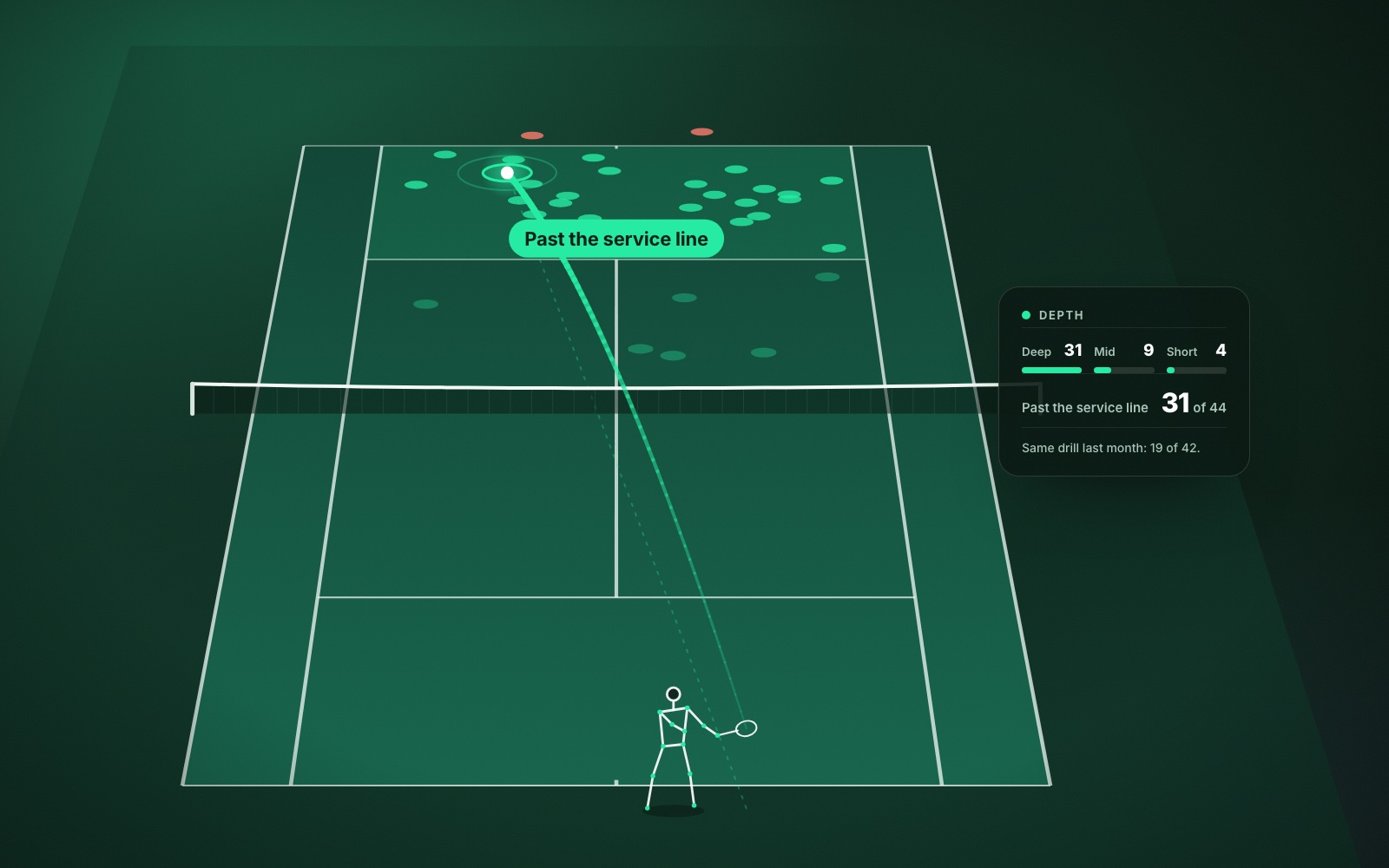
- Bounce positions. On the shot placement map, look at where your backhands land. A cluster in the service boxes is the real weakness for most club players.
Say your forehands average 92 km/h with 72% in, and your backhands average 70 km/h with 68% in but most of them bouncing near the service line. The error rate is fine. The depth is what your opponent is feeding on.
Three drills to improve your backhand
1. Backhand crosscourt, counted
Rally backhand to backhand with a partner, crosscourt only, and count shots. No running around. Aim well above the net tape. Do five-minute blocks and keep the total for each block.
The numbers to watch: backhand shot count and in-count. The first job is simply volume: a session where you hit more backhands than forehands. Over a few weeks the in-count should climb, and the rally summary should show longer backhand exchanges.
2. Deep target, any pace
Put a towel or a line of cones two metres inside the baseline in the crosscourt corner. Hit thirty backhands with the only goal of landing past the service line. Use height. Pace does not matter.
The number to watch: bounce positions on the placement map. The cluster should move back towards the baseline. If your in-count drops because balls go long, add topspin or lower the height slightly, but do not give the depth back. How to hit deeper shots has more on this.
3. The high one
Ask your partner, or set the machine, to send higher, loopier balls to the backhand. Practise two answers: step back and let it drop into your strike zone, or step in and take it early. Hit ten of each. One-handers should add a third option, the slice, which is covered in how to improve your slice.
The number to watch: in-count on those balls, checked in playback. You are finding out which answer works for you. Whichever lands more often becomes your default in matches.
One-handed and two-handed backhands: what changes
The drills are the same. The emphasis differs a little.
Two-handers tend to be steady but short. The top hand does much of the work on a two-handed backhand, and players who let the bottom hand dominate often push the ball. Depth is usually the number to chase.
One-handers have more reach and a natural slice, but they are more exposed by late contact and high balls. Meeting the ball well in front of the body is essential. On ContactFrame’s Pro plan, shot mechanics give swing scores for preparation and contact with a stick-figure replay of each hit, which makes a late contact easy to see. Follow the single Next fix it gives you before moving on to anything else.
How to re-measure, and how long it takes
Re-film the crosscourt drill every two weeks and a match every three or four. In ContactFrame’s Trends, watch whether the backhand in-count and depth are closing on your forehand’s. The match session is the real test: if opponents stop winning cheap points from that side, it is working.
With two sessions a week that deliberately favour the backhand, four to eight weeks is a fair timescale for a visible change. The shot count tends to fix itself in the first fortnight, which is half the battle.
What the video cannot tell you
ContactFrame measures the ball and, on Pro, your body through the swing. It does not analyse your grip or the racket face. On the backhand that matters: a poor grip on a one-hander, or hands in the wrong position on a two-hander, limits the shot however much you practise.
If your depth will not improve after a month, or you are considering switching between one and two hands, see a coach. That is a judgement about your body, strength and timing that needs a trained eye in person. For how the two fit together, read AI tennis coach vs human coach.
You can start with the free plan and a tripod. See how The Lab works.
Common questions
How do I make my backhand more consistent?
Turn your shoulders early, aim crosscourt over the low part of the net, and hit with enough height to land the ball deep. Then repeat it in volume. Filming the session shows whether your in-count and depth are actually improving.
Is a one-handed or two-handed backhand better?
Neither is better outright. The two-hander is generally easier to learn and steadier on high balls and returns. The one-hander offers more reach and blends naturally with the slice. Stick with the one you have unless a coach advises otherwise.
Why is my backhand so much weaker than my forehand?
Mostly because you hit far fewer of them. Club players run around the backhand in practice, so it gets a fraction of the repetitions. Late preparation is the other common cause, and it shows up as short, floating balls.
How do I deal with high balls to my backhand?
Move back to let the ball drop, or step in and take it early before it rises above your shoulder. One-handers can also slice the high ball. Trying to drive it hard from shoulder height is the low-percentage option.
Can AI tell me what is wrong with my backhand?
ContactFrame measures how many backhands landed in, their speed, spin and bounce position, and on the Pro plan it scores parts of your swing and suggests one Next fix. It does not analyse your grip or racket-face angle, which a coach can check.
Measure the gap. Then close it.
ContactFrame puts your backhand and forehand numbers side by side after every session.
See The Lab