The short version
- Most missed volleys come from too much swing or standing too far from the net, not from slow hands.
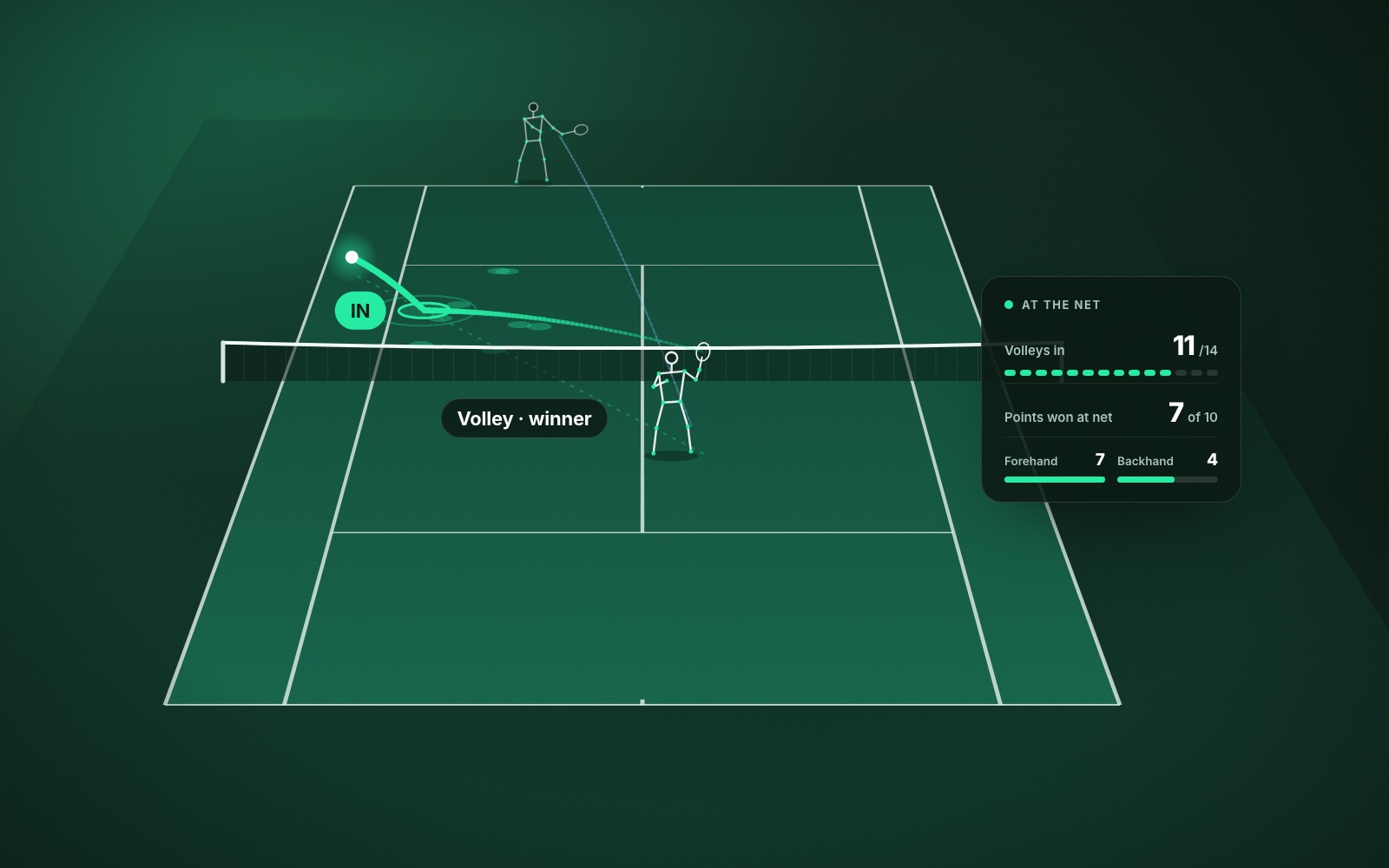
- ContactFrame counts volleys as their own shot type, with how many landed in.
- The placement map shows volley depth. A volley that lands short and sits up is a passing shot waiting to happen.
- Check where you stood. Volleys hit from around the service line are much harder than volleys hit closer in.
- The first volley after an approach is the one that needs practice. It decides most net points.
Plenty of club players will tell you they “can’t volley”. What they usually mean is that they hit about six volleys a week, miss three of them, and retreat to the baseline with the theory confirmed. If you want to know how to improve your volleys in tennis, the first step is to stop treating the net as a place you visit by accident.
The volley is the simplest stroke in the game. It has the shortest swing and the fewest moving parts. What makes it feel difficult is time, position and a lack of repetitions, and all three can be measured.
Why volleys feel worse than they are
A missed volley is public. You are close to the net, the point ends instantly, and it feels like a blunder in a way a missed forehand from the baseline does not. So one bad volley outweighs five good ones in your memory.
What you cannot feel is where you were standing. Most players think they are well inside the service line when they volley. On video they are often a step behind it, hitting the ball at knee height with the net looming. That is a hard shot for anyone.
How to film your net game
Record a Practice session with a partner feeding or rallying to you at the net, or a Ball machine session with the feed set to reach you on the volley. Then record a Match session to see how often you come forward and what happens when you do.
Use the standard setup: phone in landscape on a tripod two to three metres behind the baseline, at about net height or higher, with the whole court in view, not pointing into the sun, and not moved once the four corners are lined up. Volley at the camera end. You will be further from the lens than on a groundstroke, so higher is better for the tripod if you have the choice. The phone setup guide covers this.
The volley numbers that matter
- Volley count. ContactFrame lists volleys as their own shot type. In a match, the count alone is revealing. A handful of volleys across two sets means you are not finishing points you have earned.
- How many landed in. Your base figure. In a cooperative drill it should be high. If it is not, the swing is too big.
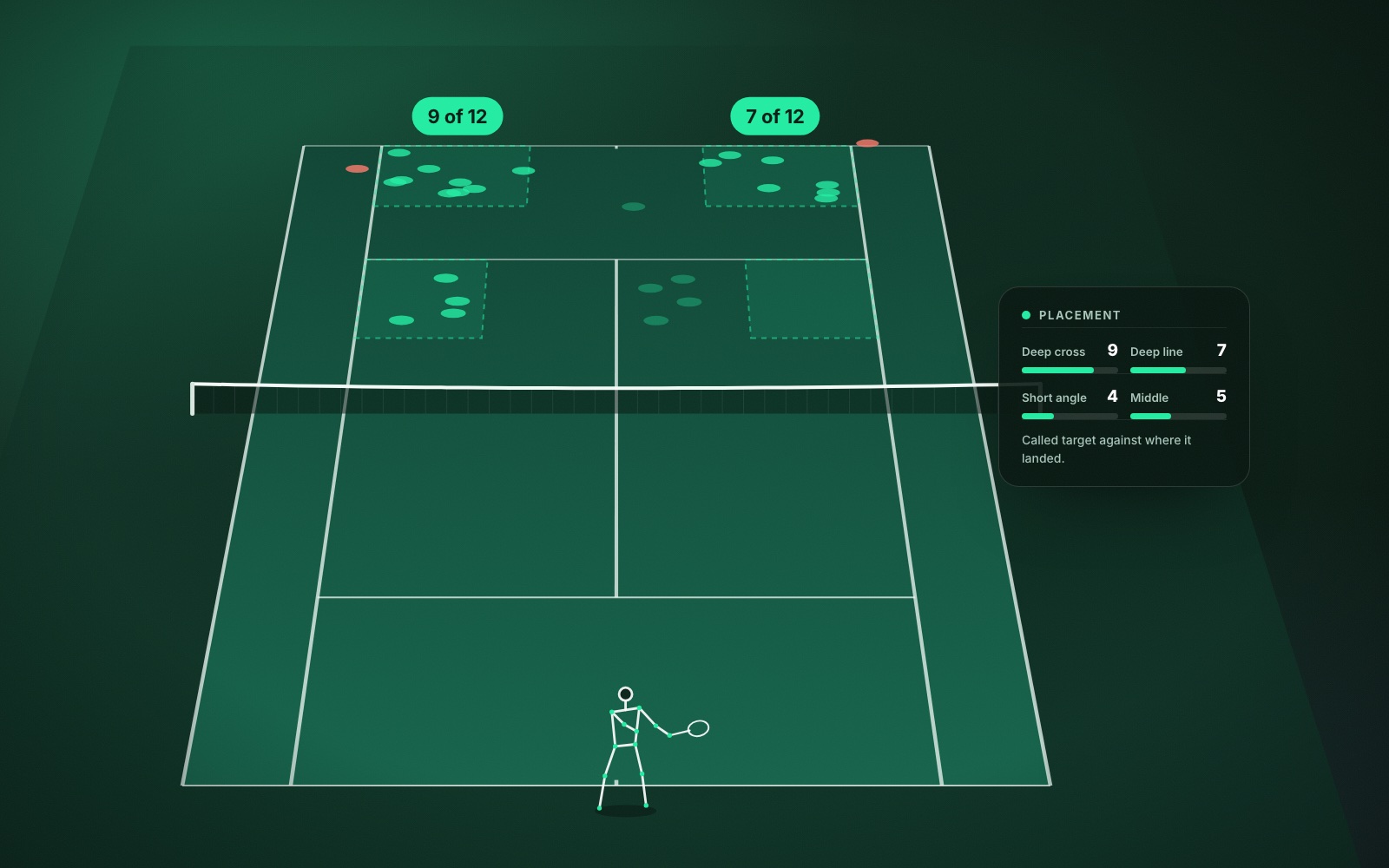
- Where they bounced. On the shot placement map, look at depth and direction. Volleys landing in the middle of the court around the service line give your opponent an easy pass.
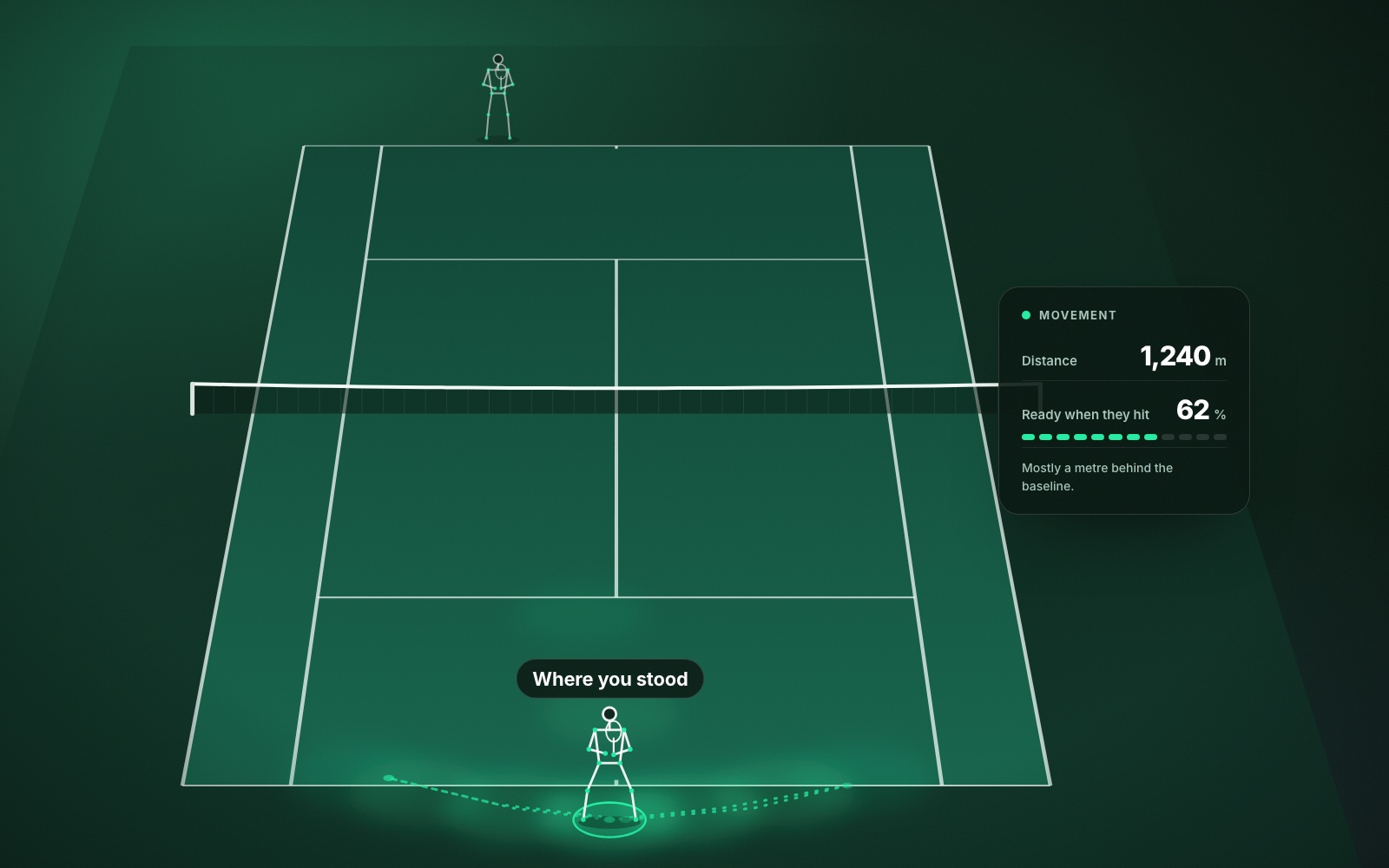
- Where you stood. ContactFrame’s movement measures show your court position. Check how close to the net you were when volleying.
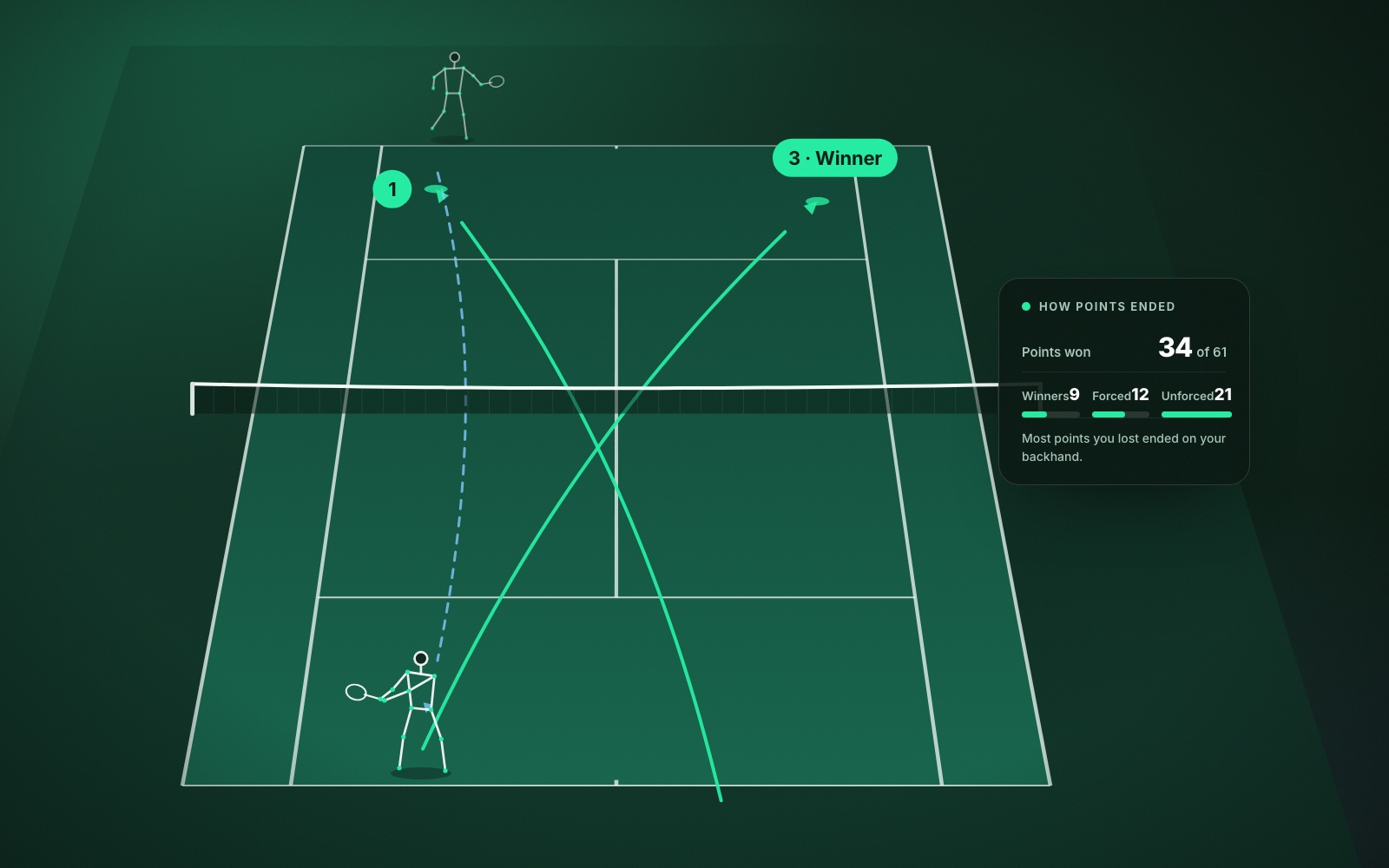
- Winners. In a match, Session insights list winners. Over time you want more of your points at the net to end with one.
Speed is the number to ignore. A good volley is placed, not hit hard. If your fastest volleys are also the ones that miss, that tells you something.
Four drills to improve your volleys
1. Volley to volley, no backswing
Stand opposite a partner, both of you halfway between the service line and the net, and keep the ball in the air between you. Count the exchange. The racket should never go back past your shoulder.
The number to watch: volley in-count, and the rally summary. You are building volume and a compact swing. A session with a hundred volleys in it does more for your net game than a month of occasional ones.
2. Deep to the corner
Place a towel in each back corner, a couple of metres inside the baseline and sideline. Your partner feeds from the baseline and you volley to a named towel. Fifteen forehand volleys, fifteen backhand volleys.
The number to watch: bounce positions on the placement map. You want the cluster to move away from the centre of the court and back towards the corners. A deep volley into a corner often wins the point without being struck hard. For more on aiming, see how to improve shot placement.
3. Approach, split, first volley
Start on the baseline. Your partner or the machine sends a short ball. Hit an approach down the line, move forward, split step as your partner hits, and play the first volley. Then stop and reset. Do twenty.
The numbers to watch: where you stood for the volley, and how often you were ready when your opponent hit. The first volley is where net points are won and lost, and it goes wrong when you are still running as the ball is struck. Readiness should climb as the split step becomes a habit.
4. Close after the first one
Repeat drill three, but after the first volley take two more steps forward and play a second ball. The first volley is for position. The second is for finishing.
The numbers to watch: your court position on the second volley, and its in-count. If your position does not change between the two, you are hitting and admiring. Movement around the net is part of improving your court coverage.
Using shot mechanics on the volley
On the Pro plan, ContactFrame tracks body points through the swing and scores areas such as preparation, contact and footwork, with a stick-figure replay of each contact. On a volley, the replay makes two faults obvious: a racket that travels a long way back, and contact beside the body instead of in front. Work on the one Next fix it gives you, then re-film.
How to re-measure your volleys
Film the corner drill and the approach drill every two weeks, and a match once a month. In Trends, look for three things moving together: more volleys per match, a higher in-count, and bounce marks nearer the corners.
Volleys respond quickly to volume. With ten minutes at the net in every session, most players see a steadier in-count within three or four weeks. Using it confidently in matches takes longer, perhaps two months, because it depends on you choosing to come forward. How to win more tennis points covers when that choice makes sense.
What the video cannot tell you
ContactFrame does not analyse your grip or racket-face angle, and both matter a great deal at the net. Most coaches teach a continental grip for volleys so that one grip serves both sides, and an open or closed racket face explains many volleys that float long or dive into the net. A coach can check both in minutes.
The app also does not do doubles analysis, where most club volleying happens. The technique you build in these drills carries over, but positioning with a partner is something to learn from a coach or an experienced doubles player.
All four drills work on the free plan. See what each plan includes.
Common questions
How do I get better at volleys in tennis?
Shorten the swing to a firm block, meet the ball in front of your body, and move forward through the shot. Then hit a lot of them. Ten minutes of volley-to-volley with a partner at the start of every session adds up quickly.
Why do my volleys go into the net?
Usually because you are standing too far back and the ball has dropped below net height, or because you are swinging down at it. Move closer, bend your knees for low balls, and keep the racket head up through contact.
Where should I stand at the net?
For most volleys, roughly halfway between the service line and the net is a good base. From there you can reach passing shots and still move back for a lob. Volleys hit from the service line are much harder because the ball arrives lower.
Should I swing at a volley?
Very little. A volley is a short punch with a firm wrist, using the pace already on the ball. A big backswing costs time you do not have at the net and is the main cause of mistimed volleys.
Can AI video analysis help with my net game?
Yes. ContactFrame counts your volleys and how many landed in, shows where they bounced and where you were standing, and on the Pro plan scores parts of your swing. It works for singles play and drills. It does not do doubles analysis.
Make the net a place you want to be.
Count your volleys, see where they land and where you stood, from one phone behind the baseline.
See The Lab