The short version
- Agree time, court, who books, balls, format and whether it counts before the day. Six short answers prevent most problems.
- Choose the format to fit the booking. An hour is one set, not best of three.
- Decide in advance what happens if time runs out or it rains.
- Say clearly whether the match will be logged as a result. Nobody likes finding out afterwards.
- Posting a friendly with a skill range, a court and a time lets the right opponent find you.
Two adults trying to arrange a tennis match can easily use a dozen messages and still turn up at different courts. One thought it was a hit, the other thought it was best of three. Nobody brought balls. The booking ran out at 5–5.
None of that is about tennis. It is about what was agreed, or not agreed, beforehand. This guide gives you a short checklist, a format for every length of booking and a message you can copy.
What to agree before a tennis friendly
Six things. Settle them in the first exchange and the rest is easy.
- When. A date and a start time. Add how long you have the court for.
- Where. The venue and, if it has several entrances or sites, which one. Mention the surface if it matters for footwear.
- Who books and who pays. One person books, the cost is split or you take turns. If lights cost extra, say so.
- Balls. Who brings them, and whether they are new. A match deserves a fresh tin or one that has had a single outing.
- Format. One set, two sets and a match tie-break, or something timed. More on this below.
- Whether it counts. Is this a hit, a practice match, or a result that will be logged?
The last one causes the most friction when it is left vague. Some players are relaxed in a friendly and try new shots. If they find out afterwards that the score was going on a ladder, they feel ambushed, and fairly so.
Choosing a tennis match format for your court time
The booking decides the format. Allow ten minutes for a warm-up and work back from the end of your slot.
One hour
Play one set, with a tie-break at 6–6. If you finish early, play a second tie-break for fun. An alternative is a pro set: first to eight games, with a tie-break at 8–8. It gives a slightly longer contest and one clear winner.
Ninety minutes
Two sets, and if it is one set all, a match tie-break in place of a third set. A match tie-break is usually first to ten points, two clear. This is the standard format for a great deal of league tennis, and it nearly always fits.
Two hours or more
Best of three full sets, if you both want it. It is a real physical test, so make sure the other person has signed up for that and not for a gentle Sunday knock.
Short on time, or mismatched
Play timed tennis: games for forty-five minutes, whoever is ahead when the time is up wins. Or play a series of tie-breaks. Both give plenty of points with pressure on them, which is what most people want from a friendly anyway.
A message that gets a yes
Be specific. Offer two times, name the court and state the format. The other person should be able to reply with a single word.
Fancy a match this week? I can do Thursday 6.30pm or Saturday 9am at the park courts. I’ll book and bring new balls. Ninety minutes, two sets and a match tie-break, and log the result if you’re happy to?
That message covers all six points in four sentences. Compare it with “we should play some time”, which has never once led to a tennis match.
Confirm the day before. A short “still on for tomorrow, 6.30?” prevents most no-shows.
How to arrange a tennis match on ContactFrame
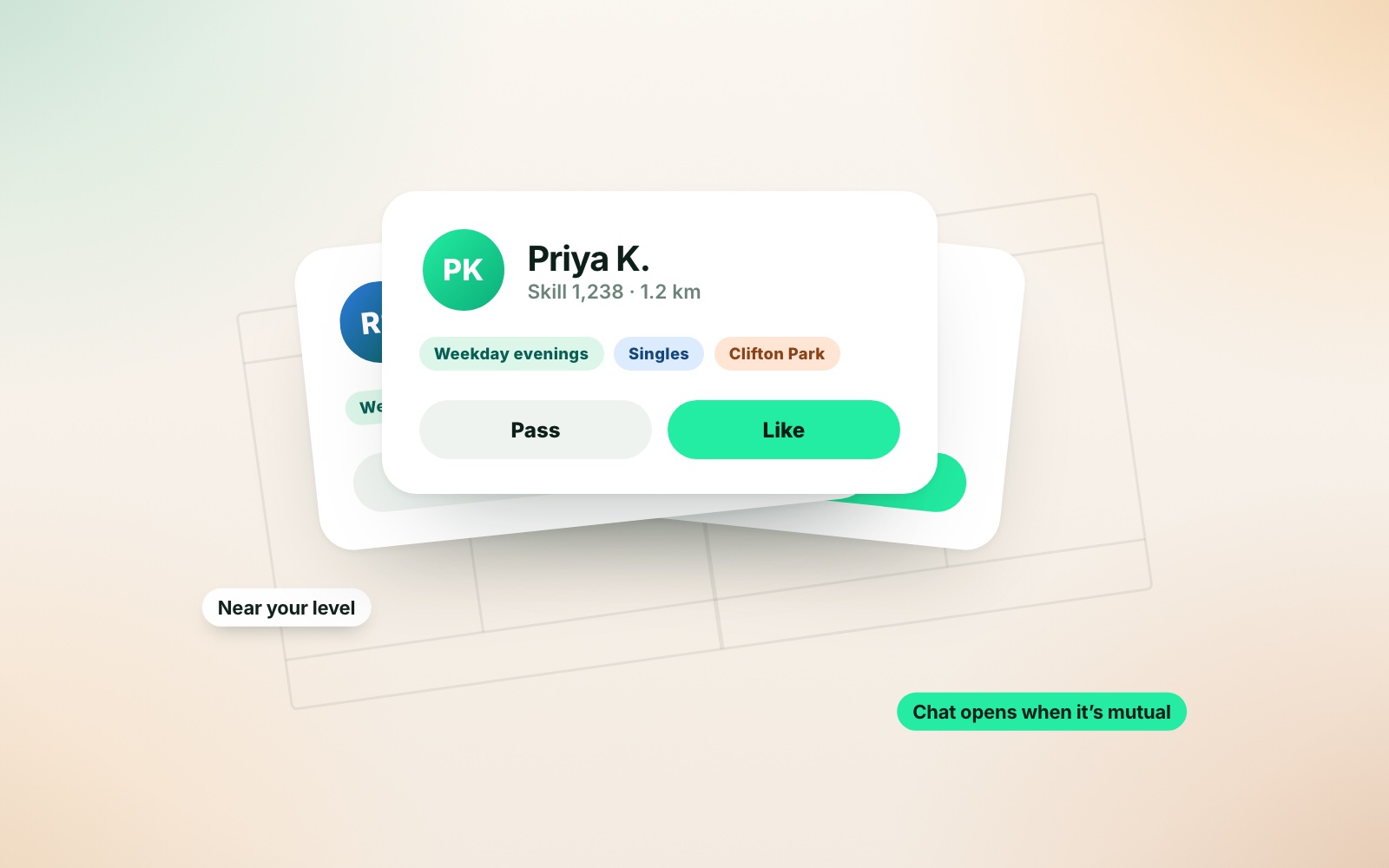
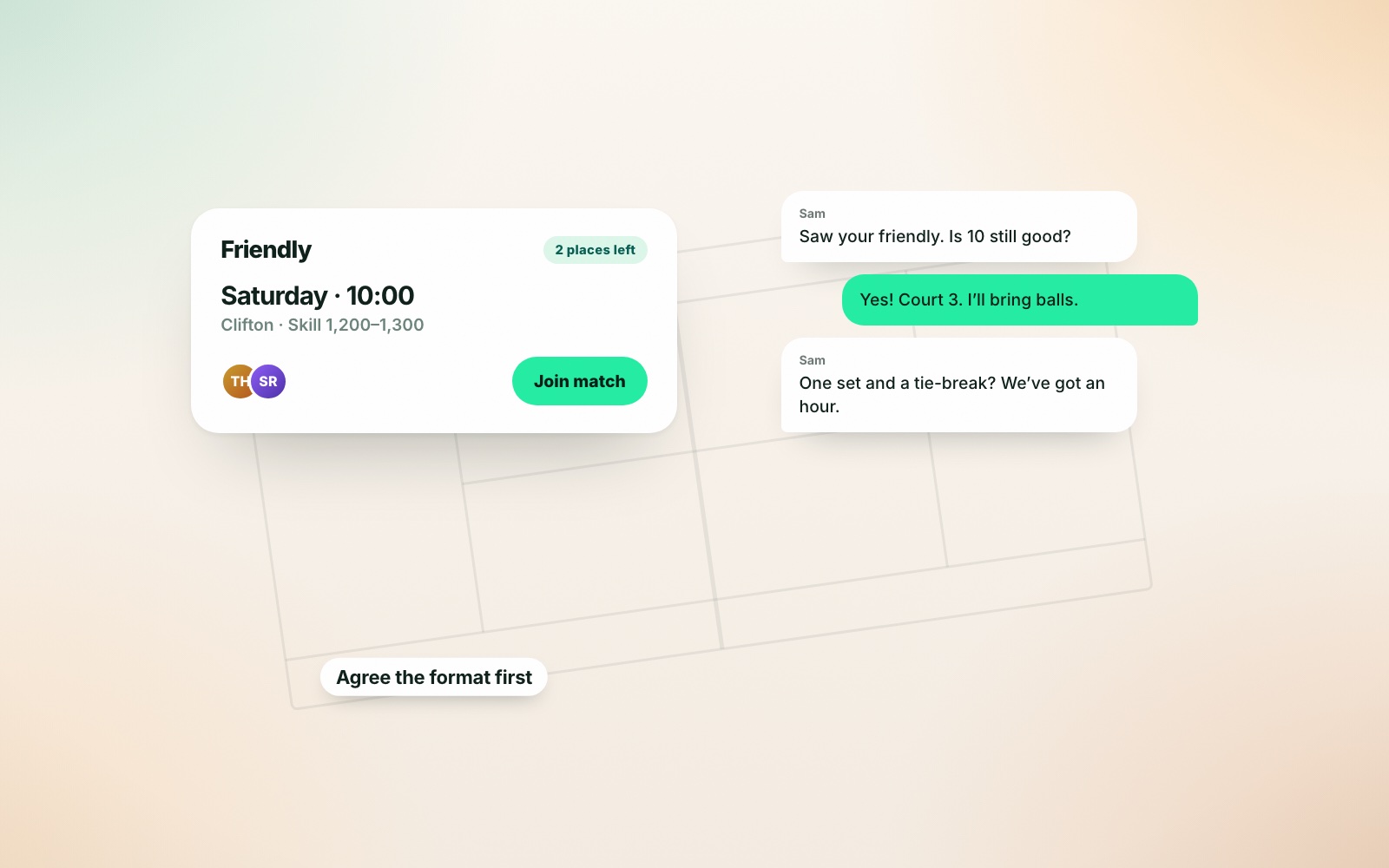
If you do not already have an opponent, a friendly on The Ladder finds one for you. You post a match with three things: a skill range, a court and a time. Players who fit the range and fancy the slot can join.
The skill range does the job that “what level are you?” does badly. Skill is built from confirmed results and nobody picks their own, so a range set around your own rating brings opponents who should give you a close match. If you want to stretch yourself, set it a little higher.
Once someone joins, the match gets its own chat, with the fixture card in the thread. Use it to settle the remaining details: who books, who brings balls, the format. ContactFrame shows courts and, where the venue publishes it, their availability, but the booking itself is made with the venue.
Friendlies on ContactFrame are free. If you are still looking for regular opponents, how to find tennis partners near you covers the other routes, and the court map is explained in finding tennis courts near you.
Weather, lateness and cancelling
British tennis needs a rain plan. Agree a simple one: check the forecast the evening before, make the final call an hour ahead, and if it is off, fix a new date in the same conversation. A postponed match with no new date is a cancelled match.
If you are running late, say so as soon as you know. Ten minutes matters when the court is booked for an hour. If you have to cancel, do it as early as you can and offer to cover your share of a court fee that cannot be refunded.
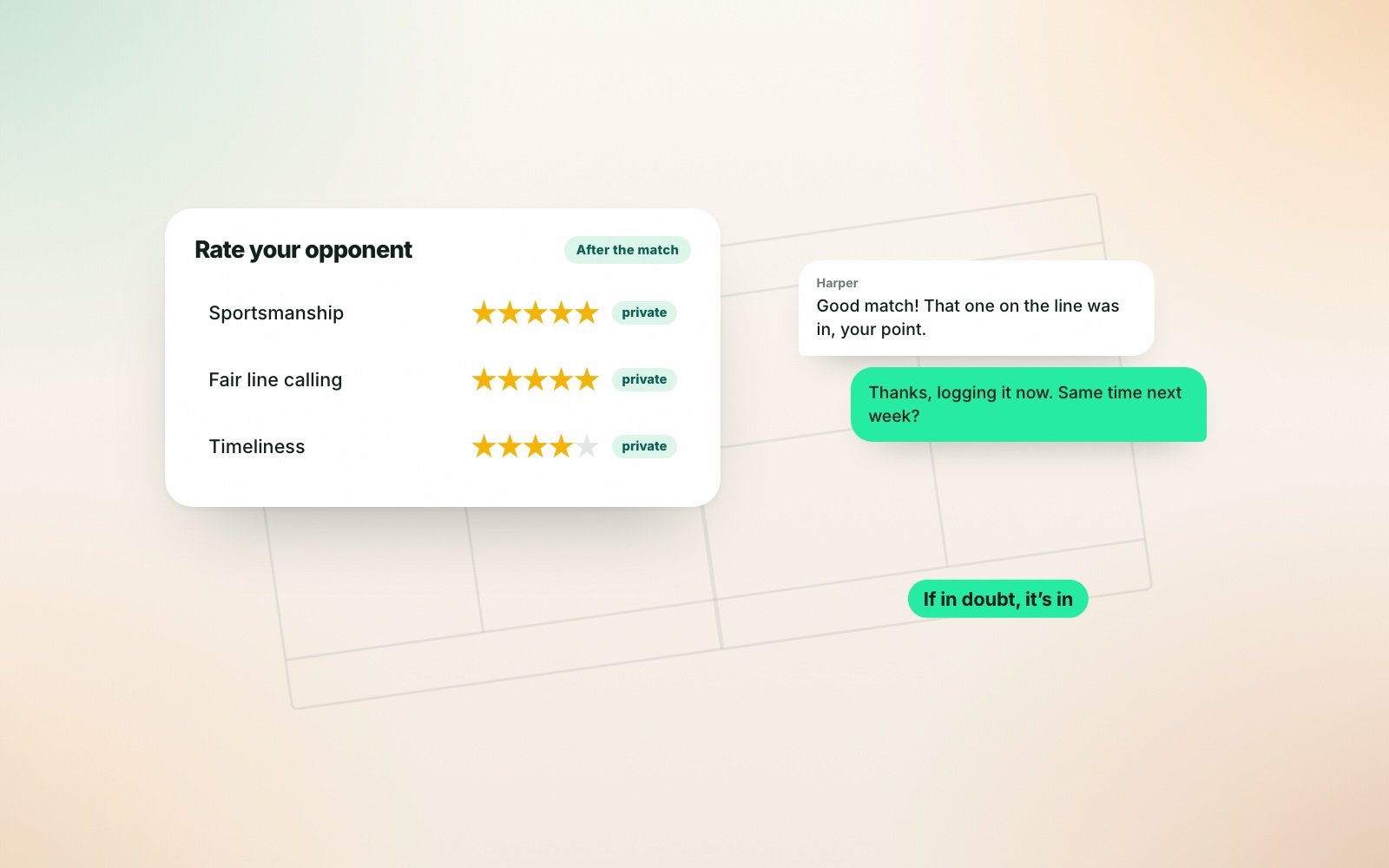
These small things are remembered. On ContactFrame, players can privately rate an opponent after a match on sportsmanship, fair line calling and timeliness, and that feeds the Trust score on a profile.
On the day
Arrive five to ten minutes early. Warm up together for about five minutes: groundstrokes, a few volleys each, some overheads, then serves. The warm-up is for both players, so hit the ball to your opponent, not past them.
Spin a racket for serve or end. Confirm the format once more out loud, including the tie-break rule, before the first point. Then play.
You will be calling your own lines and keeping your own score, which works well as long as both players know the conventions. They are set out in tennis etiquette for local matches.
After the match
Shake hands, collect the balls and clear the court on time for whoever has it next.
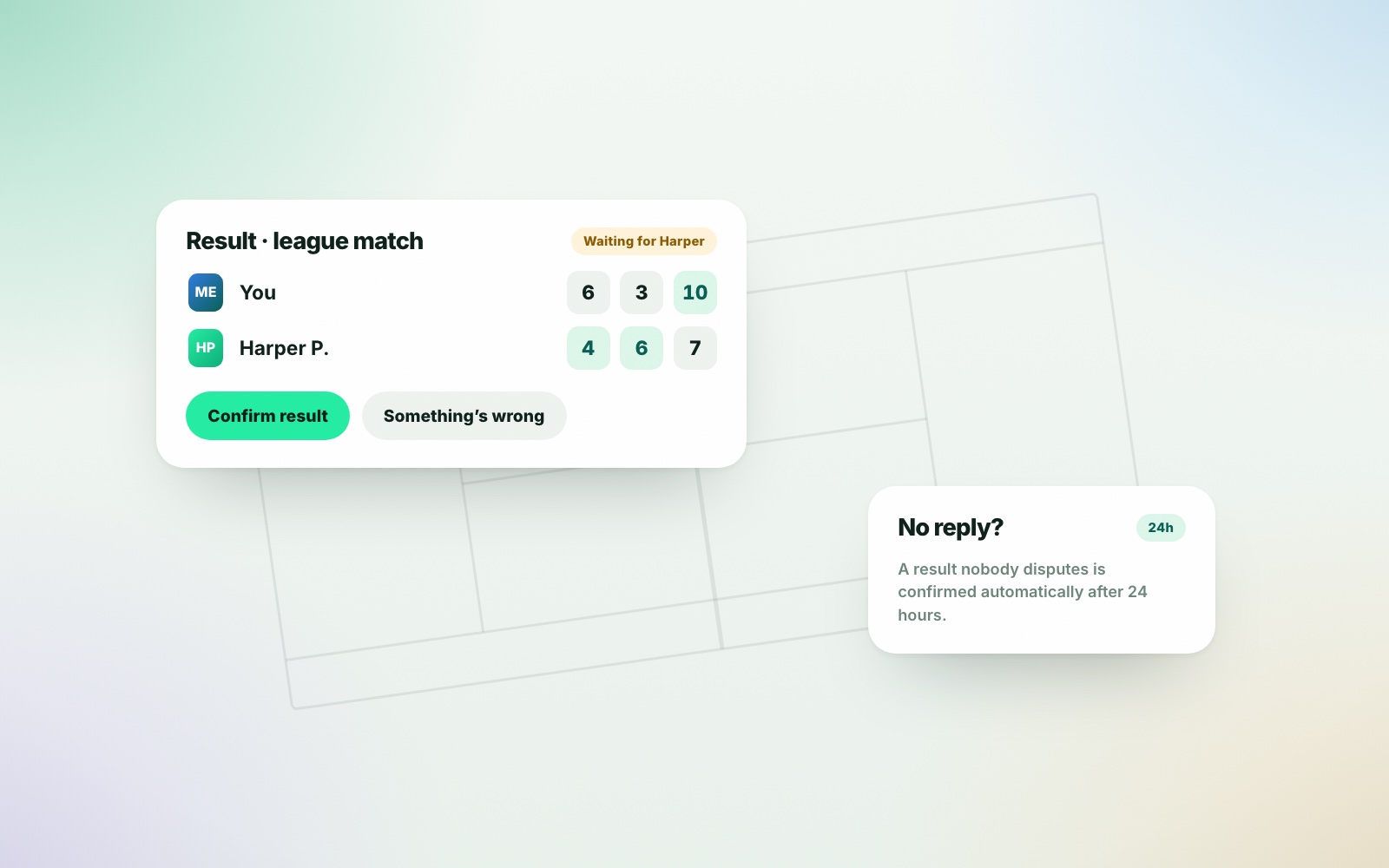
If you agreed the match would count, log the result while you are both still there. One player enters the score and the other confirms it. If it slips anyone’s mind, a result nobody disputes is confirmed automatically after 24 hours. The detail is in how to log and confirm tennis match results.
Then do the most useful thing of all, while you are both in a good mood: put the next one in the diary. A rematch arranged at the net takes ten seconds. One arranged next week takes a dozen messages.
Common questions
How do I arrange a tennis match with someone I have not played before?
Send a short message proposing a specific court, two possible times and a format. Agree who books the court and who brings balls. Being specific gets a quicker yes than an open question.
What format should a friendly tennis match be?
Fit it to your court time. One set suits an hour. Two sets with a match tie-break in place of a third suits ninety minutes. Best of three full sets needs two hours or more.
What is a match tie-break?
It is a longer tie-break, usually first to ten points and two clear, played in place of a deciding set. It is widely used in club and league tennis to finish a match on time.
Do friendly matches count towards my rating on ContactFrame?
A match counts when it is logged as a competitive result and confirmed. A casual hit you choose not to log changes nothing. Agree which it is before you start.
Who pays for the court in a friendly?
The usual custom is to split the cost equally, or take turns if you play each other regularly. Sort it out when you arrange the match so it is not awkward afterwards.
Post a match. See who turns up.
Join the list for ContactFrame and set up friendlies with players at your level, at courts near you.
See The Ladder