The short version
- A good partner is defined by level, availability and distance, in roughly that order of difficulty to find.
- Aim for two or three regular partners, not one. One person’s holiday or injury should not end your tennis for a month.
- Say what you want from the hit before you meet: rallying, drills, sets or a match that counts.
- A result-based rating is a better guide to level than anyone’s own description of how they play.
- Reliability keeps partners. Turn up on time, bring balls and confirm the day before.
You have a racket, a free evening and a court ten minutes away. What you do not have is anyone to hit with. Searching “find tennis partners near me” is how a lot of adult tennis starts, and it is a reasonable question, because the sport does not work alone and nobody hands you an opponent.
This guide covers where UK club and park players really find people to play, how to judge whether someone is a good fit, and how to turn one decent hit into a regular fixture.
What makes a good tennis hitting partner
Three things matter, and they are worth being honest about before you start looking.
- Level. Close enough that rallies last and sets are competitive. A partner slightly better than you is ideal now and then, but if the gap is wide, neither of you gets much from it.
- Availability. The best partner in the county is no use if they only play weekday mornings and you work nine to five.
- Distance. A partner twenty minutes away plays with you weekly. A partner an hour away plays with you twice a year.
There is a fourth, quieter one: what they want from the session. Some people want to rally for an hour and chat. Some want drills. Some only want to play sets. None of these is wrong, but a mismatch is why many first hits never become second hits.
Where to find tennis partners near you
Park and club sessions
Many parks and clubs run drop-in social sessions, sometimes called club nights or mix-ins, where you turn up and are rotated around. They are mostly doubles and the standard varies, but they are the fastest way to meet twenty local players in one evening. Ask the two or three you enjoyed playing with whether they fancy a singles hit.
You do not need a membership for all of these. If you are weighing that up, see how to play tennis without joining a club.
Coaches and group lessons
A local coach knows every adult player within a few miles and roughly how good each of them is. Ask. Group coaching is also a ready-made pool of people at a similar standard who are free at the same time each week.
Local leagues and ladders
A league gives you a list of opponents at your level and a reason to contact them. Plenty of regular hitting partnerships start as a league match that both players enjoyed. If competition sounds daunting, starting competitive tennis as an adult is less of a leap than it looks.
People you already know
Colleagues, neighbours, parents at the school gate. A surprising number of people played as teenagers and would play again if someone asked. They may be rusty, but rust comes off.
The court itself
If you see the same person practising serves alone at your local court every Sunday, say hello. Players who turn up alone are usually looking for the same thing you are.
Finding a tennis partner at your level
Level is the hard part, because people are poor judges of their own. “Intermediate” covers everything from someone who can keep a rally going to someone who played county juniors. Two players who both describe themselves that way can have a miserable hour together.
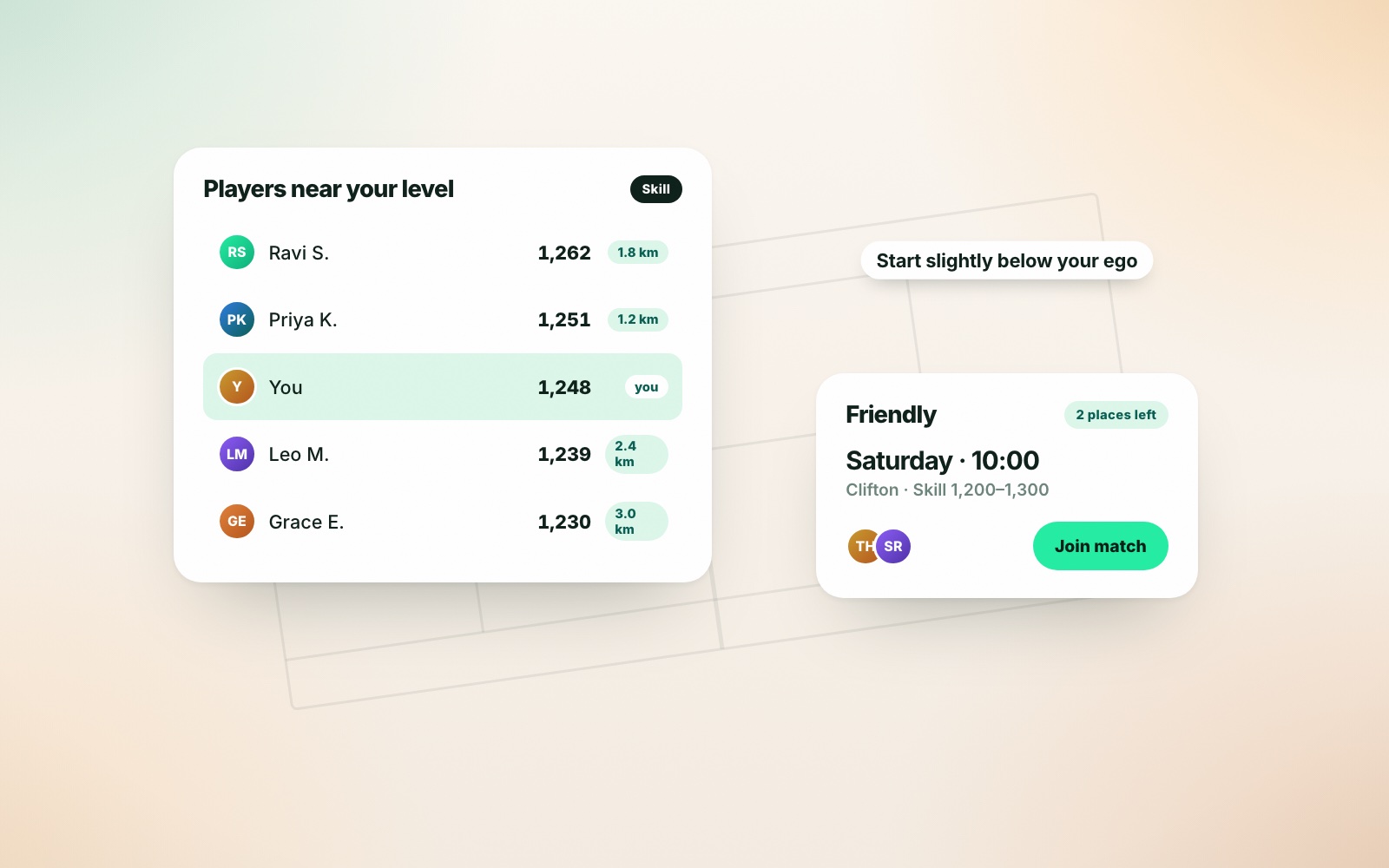
The reliable test is a result. Play a set and the score tells you more than any conversation. That is the thinking behind finding your level in local tennis, and it is why a rating built from confirmed results is more useful than a label.
How ContactFrame helps you find people to play
The Ladder side of ContactFrame is built around this problem for UK players, and joining it is free. A few parts are directly useful.
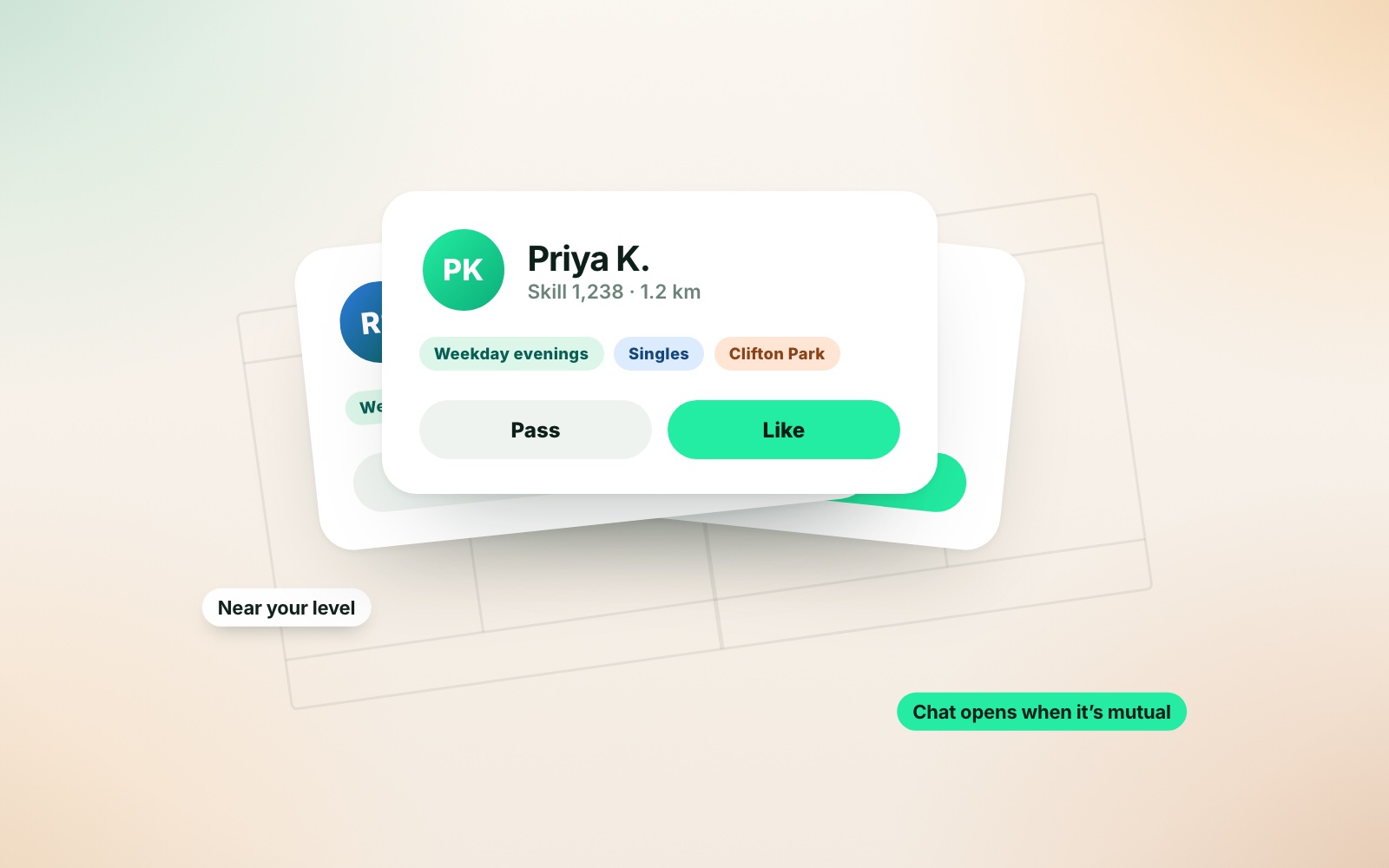
- MatchMe. You see nearby players and like or pass. When it is mutual, a chat opens. Nobody receives messages from people they did not choose.
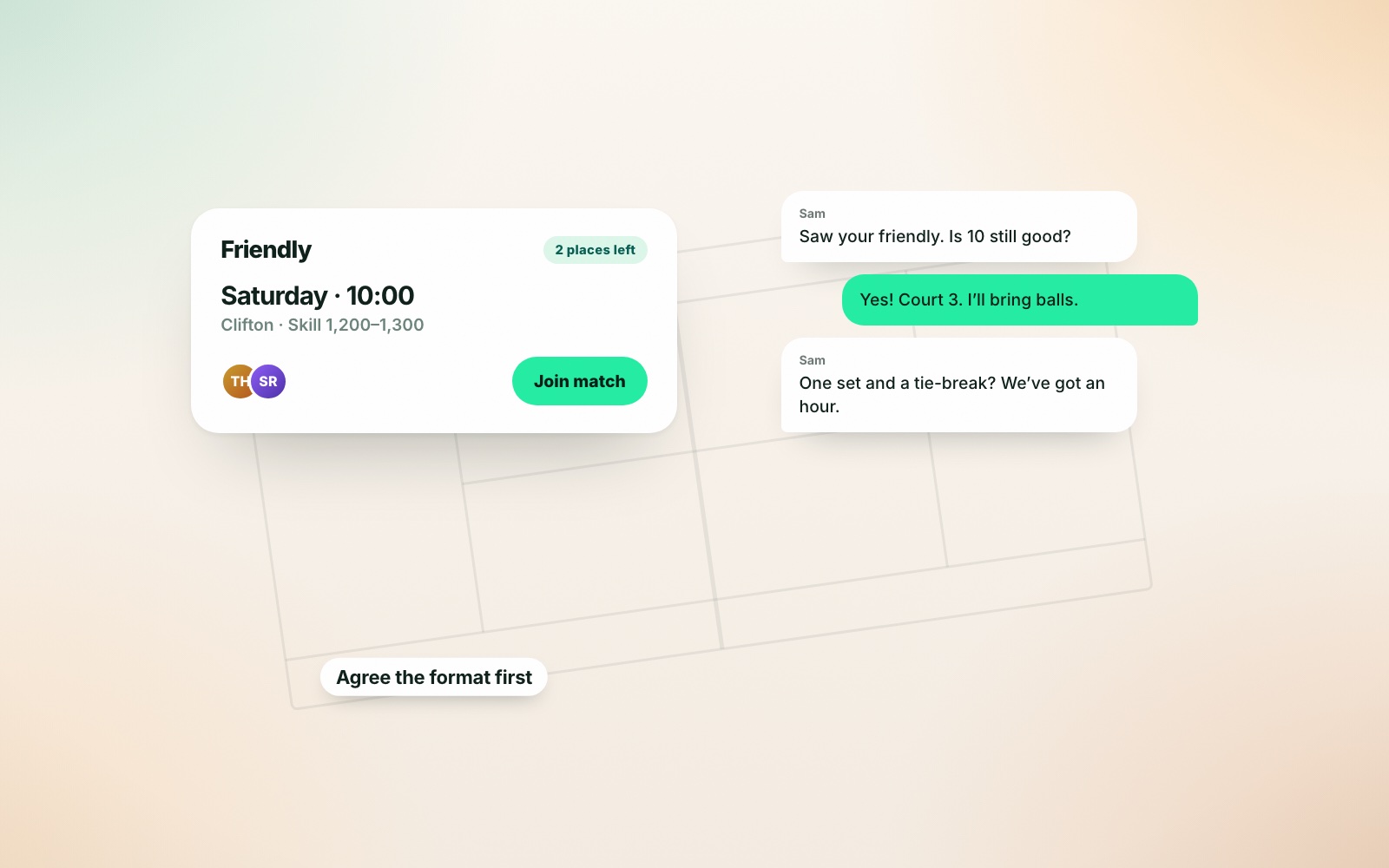
- Friendlies. Post a match with a skill range, a court and a time, and other players can join. It answers level, distance and availability in one go. There is more in how to arrange a friendly.
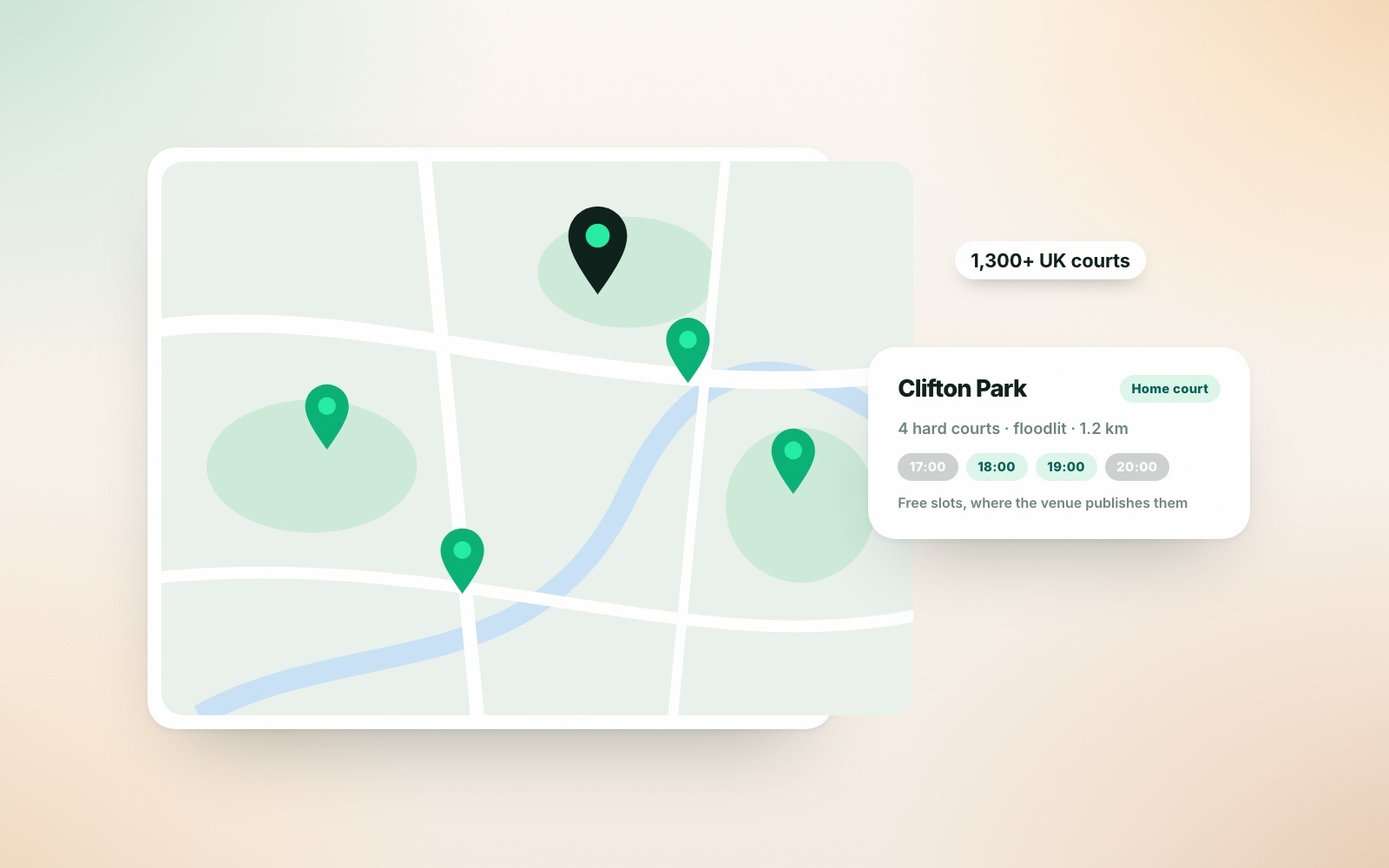
- Home court. Set one on the courts map and you can see who else plays there. Those are the people you are most likely to play regularly, and ContactFrame shows them without you having to hang around the gate.
- Skill. Every player has a rating built from confirmed results, and nobody picks their own. You can see at a glance whether a match is likely to be close.
ContactFrame profiles also carry a Trust score, fed by private ratings players give each other after a match on sportsmanship, fair line calling and timeliness. It is a useful hint about who is pleasant to play with. You can read more about the whole thing on The Ladder page.
What to say in the first message
Keep it short and specific. Vague messages get vague replies.
Hi, I play at the park courts most weekends and I’m after a regular singles hit. Free Saturday morning or Tuesday after six. Happy to rally for a bit then play a set?
That message names a place, two times and a format. The other person can say yes with one word. If you are a beginner or coming back after a long time away, say so. It saves you both an awkward hour, and many players are glad of a relaxed session.
For a first meeting with someone you only know online, use ordinary sense: a public court, daylight, and tell someone where you are.
How to keep a good hitting partner
Finding one is half the job. Partners drift away for boring reasons, and most of them are avoidable.
- Be reliable. Confirm the day before. Turn up five minutes early. If you have to cancel, do it early and offer another date in the same message.
- Share the costs. Take turns with court fees and balls without being asked.
- Fix a slot. “Same time next week?” beats a fresh negotiation every time. A standing fixture survives busy months.
- Give them a good session. If they want to practise returns for ten minutes, feed them serves. They will do the same for you.
- Be fair on calls. Nothing ends a partnership faster than a reputation for tight line calls. The basics are in tennis etiquette for local matches.
Do not rely on one person
Aim for two or three regular partners. Different styles make you a better player: one who hits flat and hard, one who slices everything, one who never misses. It also means a holiday, a new job or a sore knee on their side does not put your own tennis on hold.
The first hit is the awkward one. After that it is just tennis, and most people you ask are quietly pleased that somebody did.
Common questions
How do I find tennis partners near me?
Start with the places players already gather: park court sessions, club social nights, local leagues and coaching groups. Then use an app that shows nearby players by level, so you can message people who are a realistic match and live close enough to play regularly.
How do I find a tennis hitting partner at my level?
Play a few short sets with different people and notice who gives you close games. Self-described levels are unreliable, so a rating built from real results is the quickest filter. On ContactFrame, the Skill rating and the skill range on a friendly do that job.
Is it safe to meet a tennis partner I found online?
Use the same sense you would for any first meeting. Meet at a public court in daylight, tell someone where you are going, and keep the conversation inside the app until you have played once.
What if I am a beginner and worried about being too weak?
Say so plainly in your first message and suggest a rally session instead of a match. Plenty of players want a relaxed hit, and beginners’ group sessions at parks and clubs are a good source of partners at the same stage.
How many tennis partners do I need?
Two or three is a good number. It gives you different styles to play against and means you can still get on court when one of them is away.
Find someone to play this week.
Join the list for ContactFrame and see who plays near you, at your level.
See The Ladder