The short version
- Improvement needs two things most club players lack: better opposition and honest feedback.
- The Ladder finds you matches at your level in the UK, with a Skill rating built from confirmed results.
- The Lab measures every shot from one phone, anywhere in the world.
- Each session ends with one thing to change, and the next session tells you whether it worked.
- It is free to start. Paid plans add unlimited recording and swing mechanics.
Ask a club player why they are not improving and you will hear about time, age or talent. Watch them for a month and the real reasons are simpler. They play the same three or four people every week, and they have never seen their own game from outside. This article explains how ContactFrame helps you improve at tennis by dealing with those two things, and what a typical month of using it looks like.
The two things that hold club players back
The same opponents. You learn each other’s games, the results settle into a pattern, and nothing forces either of you to change. Improvement comes from problems you have not solved yet, and familiar opponents stop setting them.
No feedback. You remember a match as a feeling. “My backhand was off.” Was it? Or did you hit it well and lose the points on your second serve? Without a record, you practise the shot you noticed, which is rarely the shot that cost you.
ContactFrame has one half for each problem.
The Ladder: matches that stretch you
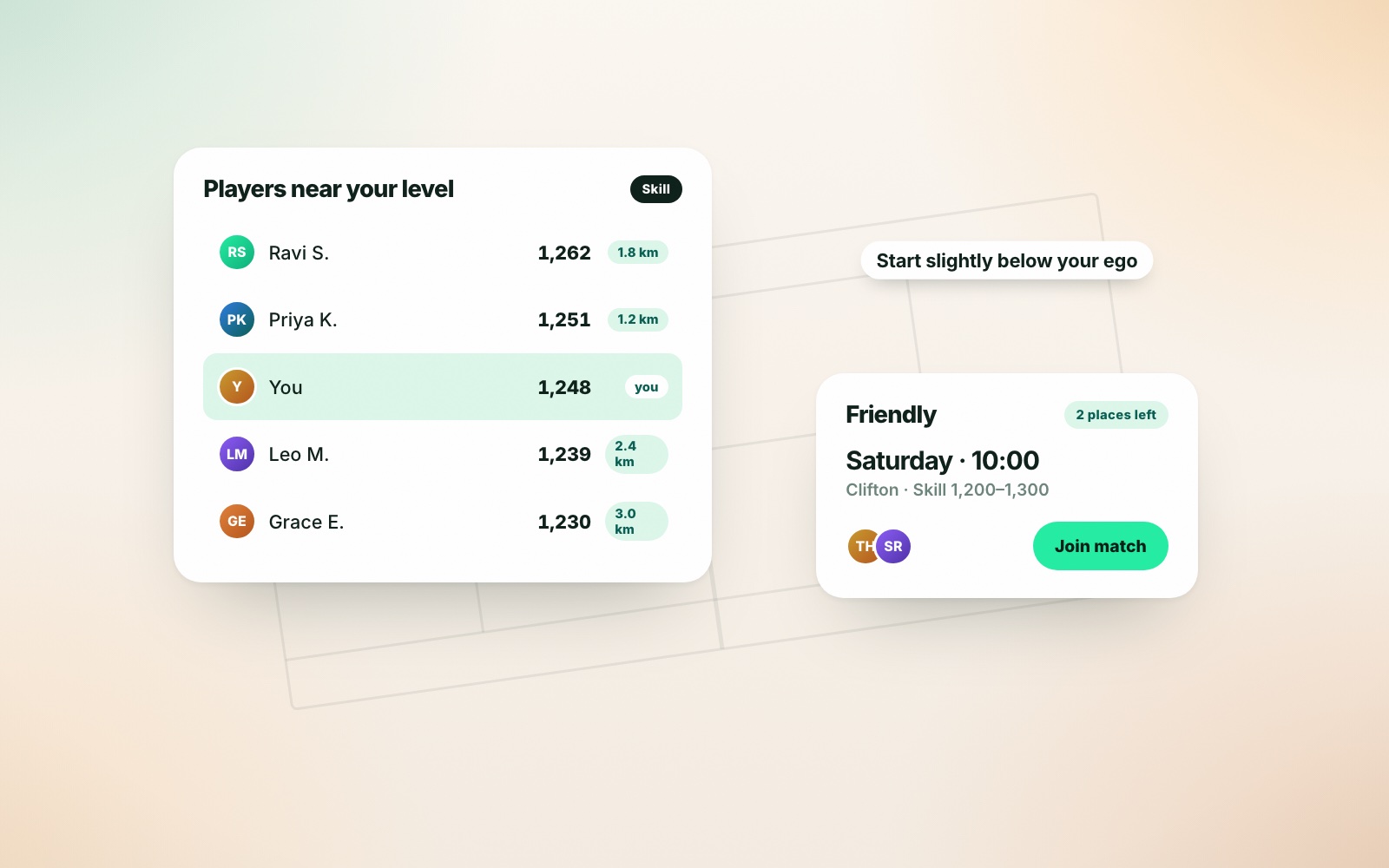
In the UK, ContactFrame runs a local ladder. You set a home court, and the app shows you players, leagues and tournaments around it.
- A Skill rating you earn. You do not pick a level. Everyone starts in the same place and confirmed results move the number. See how the Skill rating works.
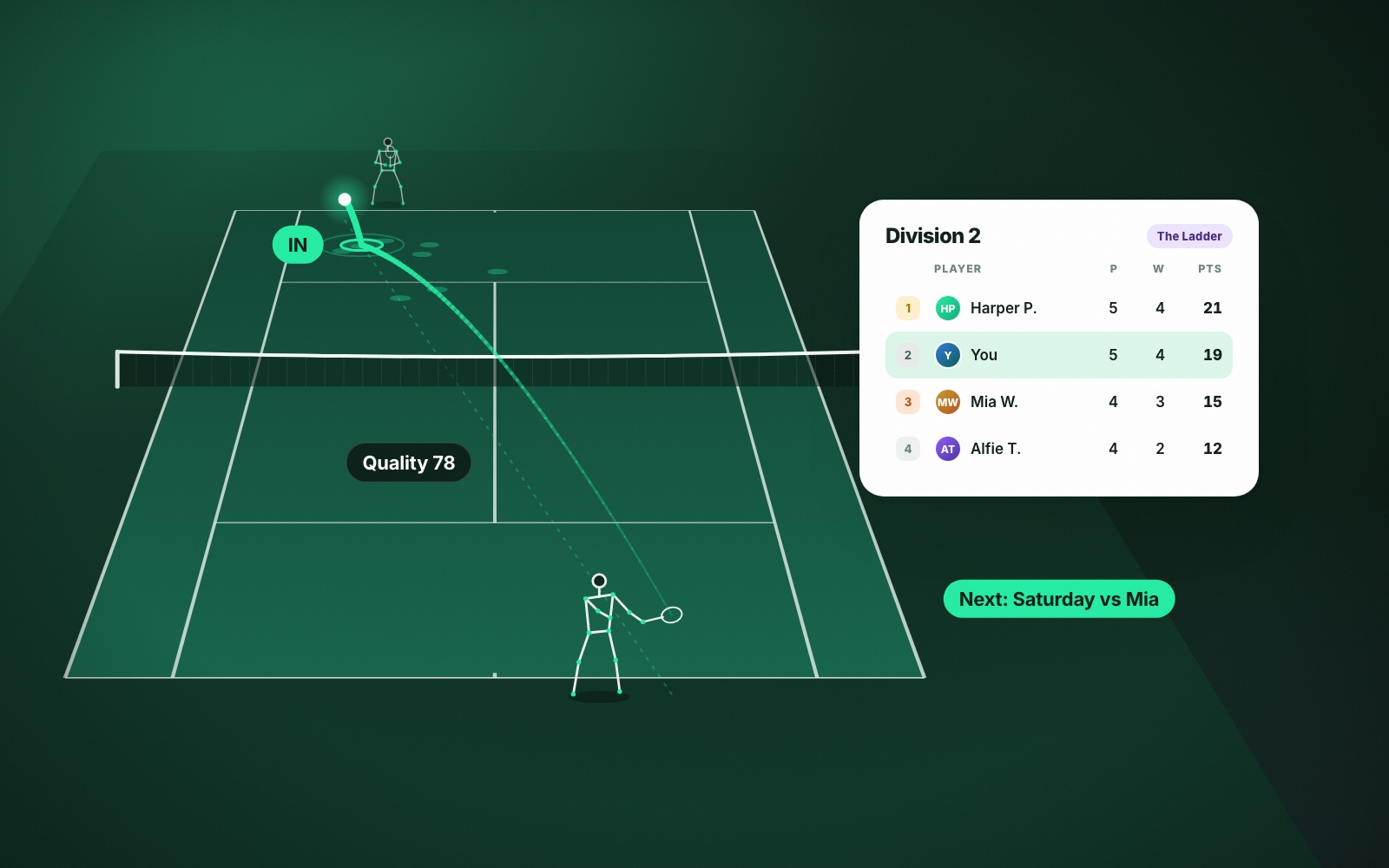
- Leagues put you in a division with players at your level, with a table to climb and a group chat for arranging matches. More in how local tennis leagues work.
- Tournaments are knockout draws with a deadline on every round, so they finish.
- Friendlies are the low-pressure way to meet someone new. Post a time, a court and a skill range.
- Rankings show where you stand at your court, in your area, your city, your region and the country.
The effect is that your next opponent is someone you have not played, at about your level, with something riding on it. That is the kind of match that makes you better.
The Lab: seeing your own game
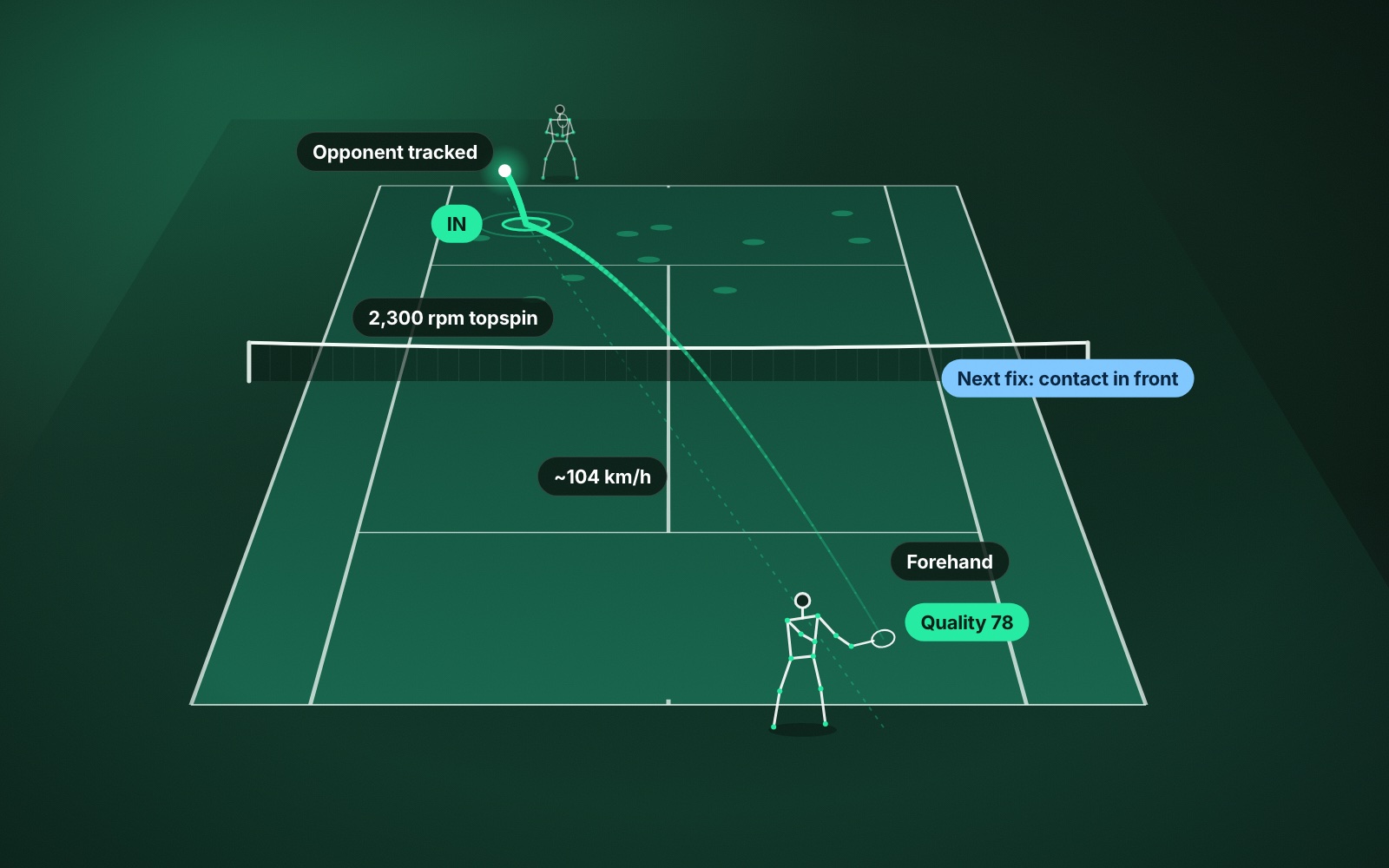
The other half works anywhere in the world. You put one phone on a tripod behind the baseline, record a match or a practice session, and ContactFrame measures it. There are no sensors and nothing to wear.
For every shot you get where it landed, whether it was in, how fast it was and how much spin it carried. The session is broken down by serve, forehand, backhand, slice and volley, each with a quality score out of 100. You also see how you moved: where you stood, how well you recovered and how often you were ready when your opponent hit. The complete list is in what AI tennis video analysis measures.
On the Pro plan the app also tracks your body through each swing and gives you one Next fix with a drill.
A month with ContactFrame
Here is how the two halves work together for a typical player.
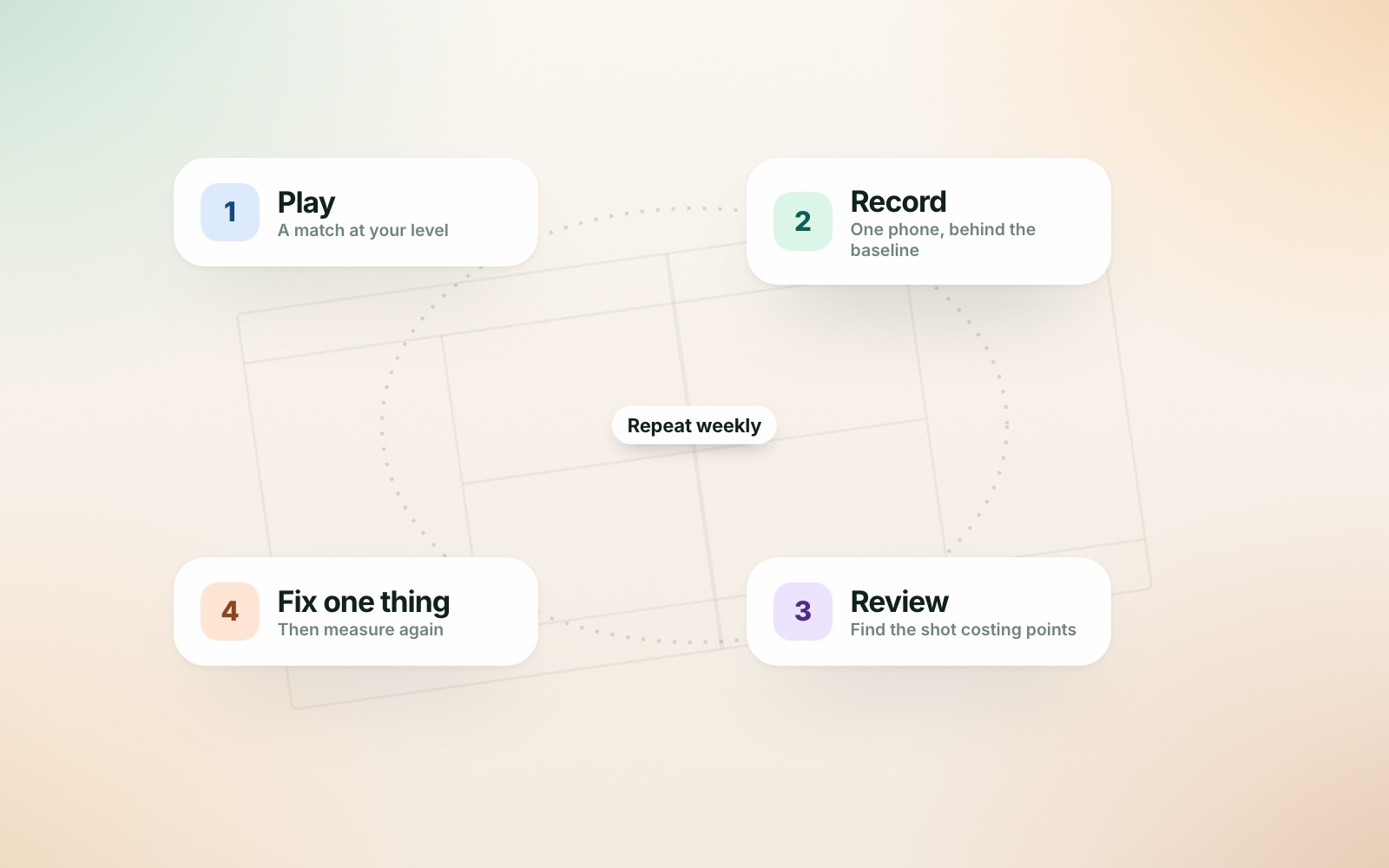
Week one: get a baseline. Film an ordinary match or hit. Do nothing special. Open Session insights and look at three things: which shot type has the lowest share landing in, which has the lowest quality, and where your shots are landing on the court. Most players find one surprise. A common one is a rally ball that lands much shorter than it feels.
Week two: change one thing. Pick the weakest area and one drill for it. If your second serve is the problem, spend twenty minutes on it with the camera running in Practice mode and a Placement or Consistency focus. Guides like improving your second serve with AI and hitting deeper shots give specific drills.
Week three: test it in a match that counts. Play a league match or a friendly against someone new from the ladder, and film it. Practice numbers are encouraging. Match numbers are honest.
Week four: compare. Trends put this month’s sessions side by side. If the number moved and stayed moved, pick the next thing. If it moved in practice and fell back in the match, you have learned something more useful: the change does not yet hold under pressure, so keep going.
Practice numbers are encouraging. Match numbers are honest.
Why the two halves belong in one tennis app
Analysis without competition turns into admiring your own forehand. Competition without analysis turns into losing to the same kind of player for the same reason. Together they make a loop: the ladder gives you a match worth analysing, and the analysis gives you something to prove in the next match.
It also keeps you honest about progress. A rising quality score is nice. A rising Skill rating means it is working against real opponents.
What ContactFrame does not replace
A coach, for one. The app can show you what happened and point at the most useful fix. A coach can watch you try it and adjust on the spot. Many players will get the most from both, as covered in AI tennis coach versus human coach.
It also does not replace hitting balls. Nothing does. The app’s job is to make sure the balls you hit are aimed at the right problem.
What it costs to start
Joining the ladder, playing friendlies, seeing your rankings and finding courts are free. Video analysis has a free plan with recording time each month, which is enough to get a baseline. Basic, at £9.99 a month, removes the recording limit. Pro, at £17.99 a month, adds swing mechanics. League and tournament entries use credits, which come with the paid plans or can be bought separately. The detail is on the pricing page.
If you want a plan to follow from day one, read how to get better at tennis fast, then see The Lab and The Ladder for what each half looks like.
Common questions
What is ContactFrame?
ContactFrame is a tennis app with two halves. The Lab analyses video of your tennis from a single phone and measures every shot. The Ladder is a local competitive ladder in the UK with leagues, tournaments, friendlies and rankings.
Can a tennis app actually make me better?
An app cannot hit the ball for you. What it can do is show you which shot is costing you points, give you one thing to work on, tell you whether the change has held, and find you opponents who stretch you.
How much does ContactFrame cost?
The ladder is free to join. Video analysis has a free plan with recording time each month, a Basic plan at £9.99 a month with unlimited recording, and a Pro plan at £17.99 a month that adds swing mechanics. League and tournament entries use credits.
Do I need to be a good player to use ContactFrame?
No. Everyone starts at the same rating and is matched with players at their level, and the analysis is as useful for someone learning to keep the ball in as for someone chasing a higher first-serve percentage.
Can I use ContactFrame outside the UK?
The video analysis works worldwide. The ladder, with its leagues, tournaments and rankings, is UK-only for now.
Play. Record. Review. Climb.
Join the list for early access to ContactFrame.