The short version
- Adults improve fastest by working on one thing at a time for several weeks.
- Film one ordinary session first. It replaces guesswork with a starting point.
- Split a short session three ways: a measured drill, the same shot under pressure, then points.
- Play matches that count. Results tell you whether the practice is reaching your game.
- Use video to measure and a coach to explain. A few lessons go much further with data behind them.
Working out how to improve at tennis as an adult is mostly a question of time. You have a job, perhaps a family, and two hours a week on court if nothing gets cancelled. Nobody is feeding you balls for an hour after school. Most of your tennis is a friendly hit with someone in the same position.
Under those conditions, plenty of adults play for years and stay exactly where they are. They are not short of talent. Their two hours are spent repeating what they can already do.
Why adult tennis players stop improving
Three habits account for most of it. Adults hit the shots they enjoy, so the forehand gets all the practice and the backhand none. They rally down the middle, which is pleasant and nothing like a match. And they judge a session by how it felt.
That last one is the trap. A session where you timed the ball nicely feels like progress. A session where you struggled with a new second serve feels like going backwards. Often the reverse is true, and without a record you cannot tell which.
Adults do have one real advantage over juniors: they can follow a plan. A plan needs a starting point, and that is where filming comes in.
Film one ordinary session first
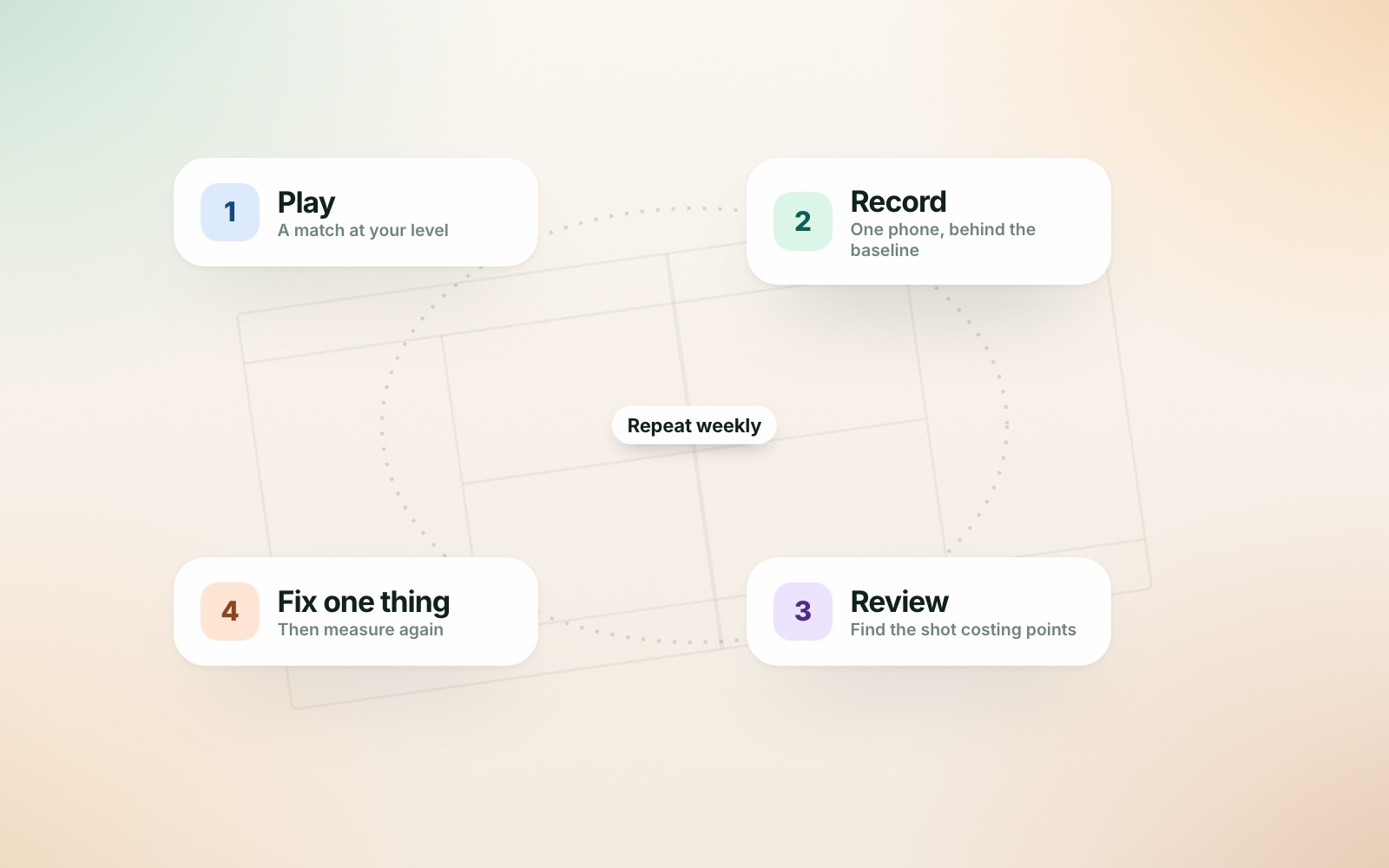
Before you change anything, record what you do now. Put a phone on a tripod two to three metres behind the baseline, in landscape, around net height or higher, with the whole court in the frame. Leave it still and keep it out of the sun. In ContactFrame, line up the four court corners and choose a Match session if you are playing a set, or Practice if you are rallying.
Play normally. This recording is for information only. The free plan gives you 15 minutes of recording a month, which is enough for a sample of games. Paid plans remove the limit.
The numbers an adult player should look at first
Session insights contains a lot. With limited time, look at four things and ignore the rest for now.
- Shot type breakdown. How many serves, forehands, backhands, slices and volleys you hit and how many of each landed in. The shot with the lowest share in court is your first candidate.
- Serves. How many went in, and in a match, first and second serves separately. A shaky second serve costs adults more points than almost anything else.
- Unforced errors. In a match, how many points you gave away, and on which shot.
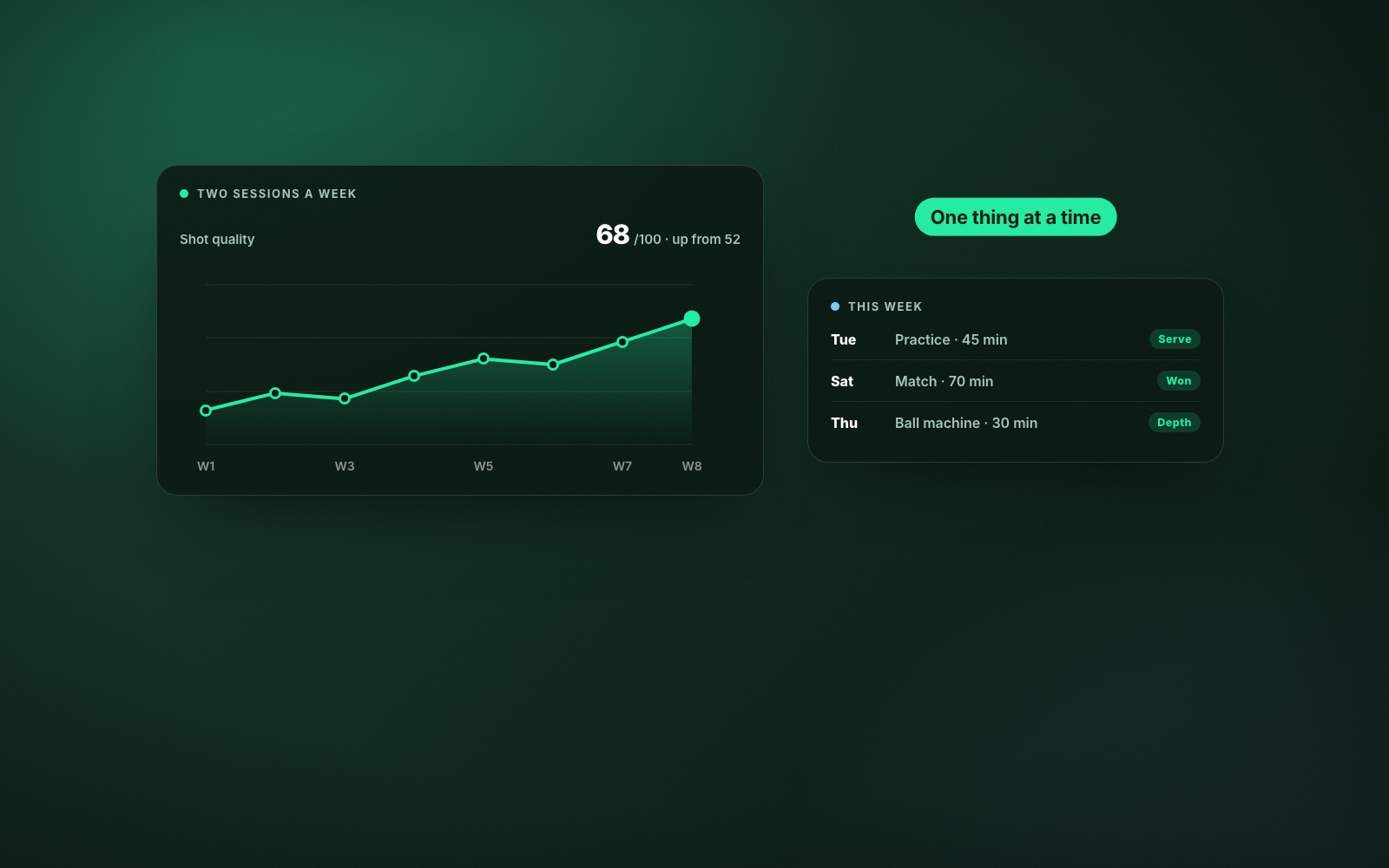
- Shot quality. The session score out of 100 is a simple figure to follow from month to month.
On the Pro plan, shot mechanics adds one Next fix and a drill for it. For a time-poor player that is useful because it makes the choice for you. How ContactFrame helps you improve explains how the pieces fit.
How to practise tennis as an adult with two hours a week
1. One priority for four weeks
Adults who try to fix the serve, the backhand and their footwork in the same fortnight fix none of them. Stay with one priority for at least four weeks. It will feel slow. It is the quickest route available.
The number to watch: the single figure tied to your priority. If it is the backhand, backhands landing in. Leave everything else alone until the month is up.
2. Split the hour in three
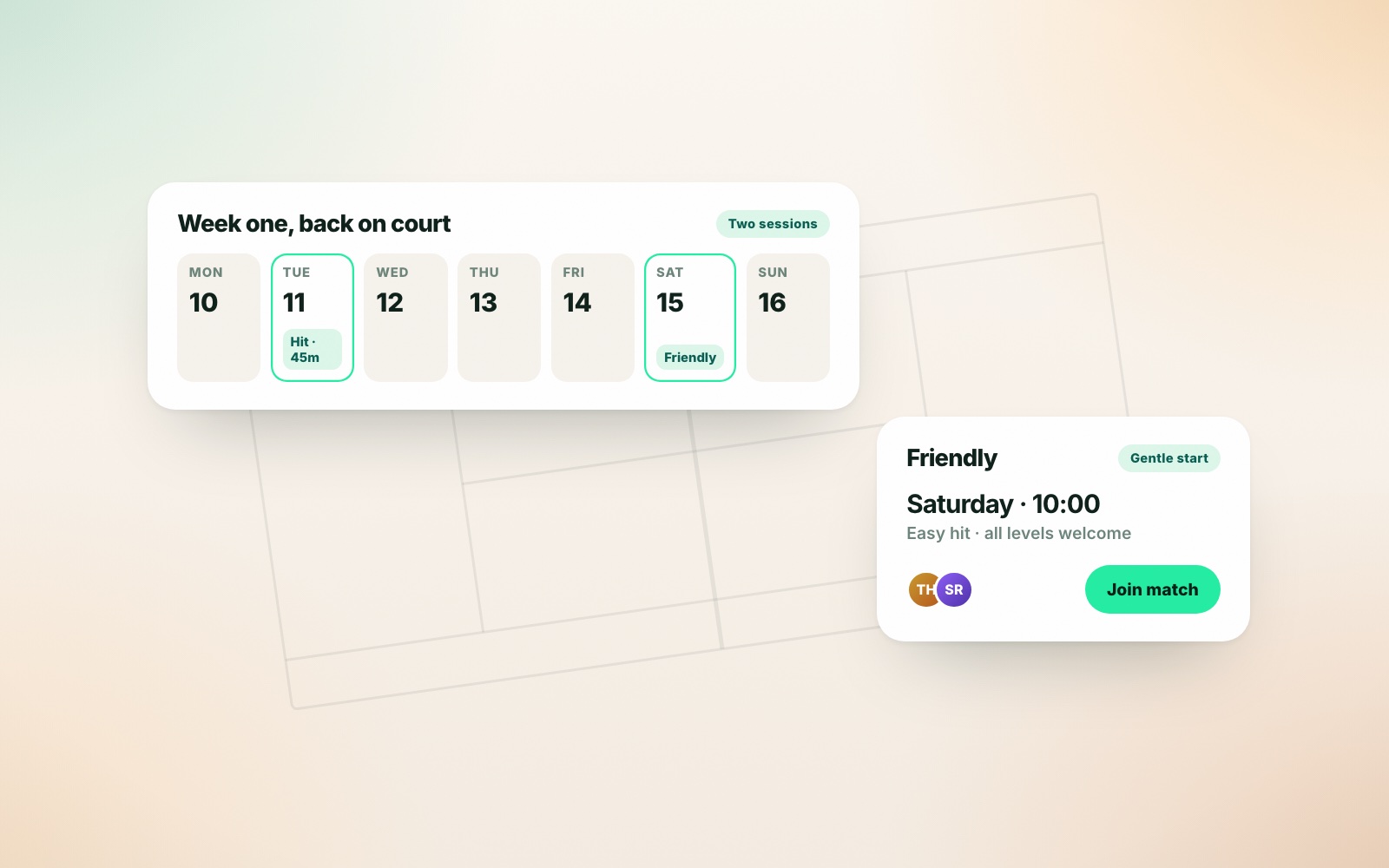
Ask your hitting partner for a deal: twenty minutes on your thing, twenty on theirs, twenty of points. In your twenty, do a drill that isolates the priority, such as backhand cross-court rallies only. Set the session focus in ContactFrame to match, for example Consistency.
The number to watch: shots in for that shot type during the drill, and rally length in the rally summary. Then see whether the same shot holds up in the twenty minutes of points.
3. Give the serve ten minutes every time
The serve is the one shot you can practise without anyone else, and adults rarely do. Arrive ten minutes early and hit second serves to a target. Count them.
The number to watch: serves in, and where they landed on the deuce and ad sides. How to improve your second serve has a full routine.
4. Play matches that count
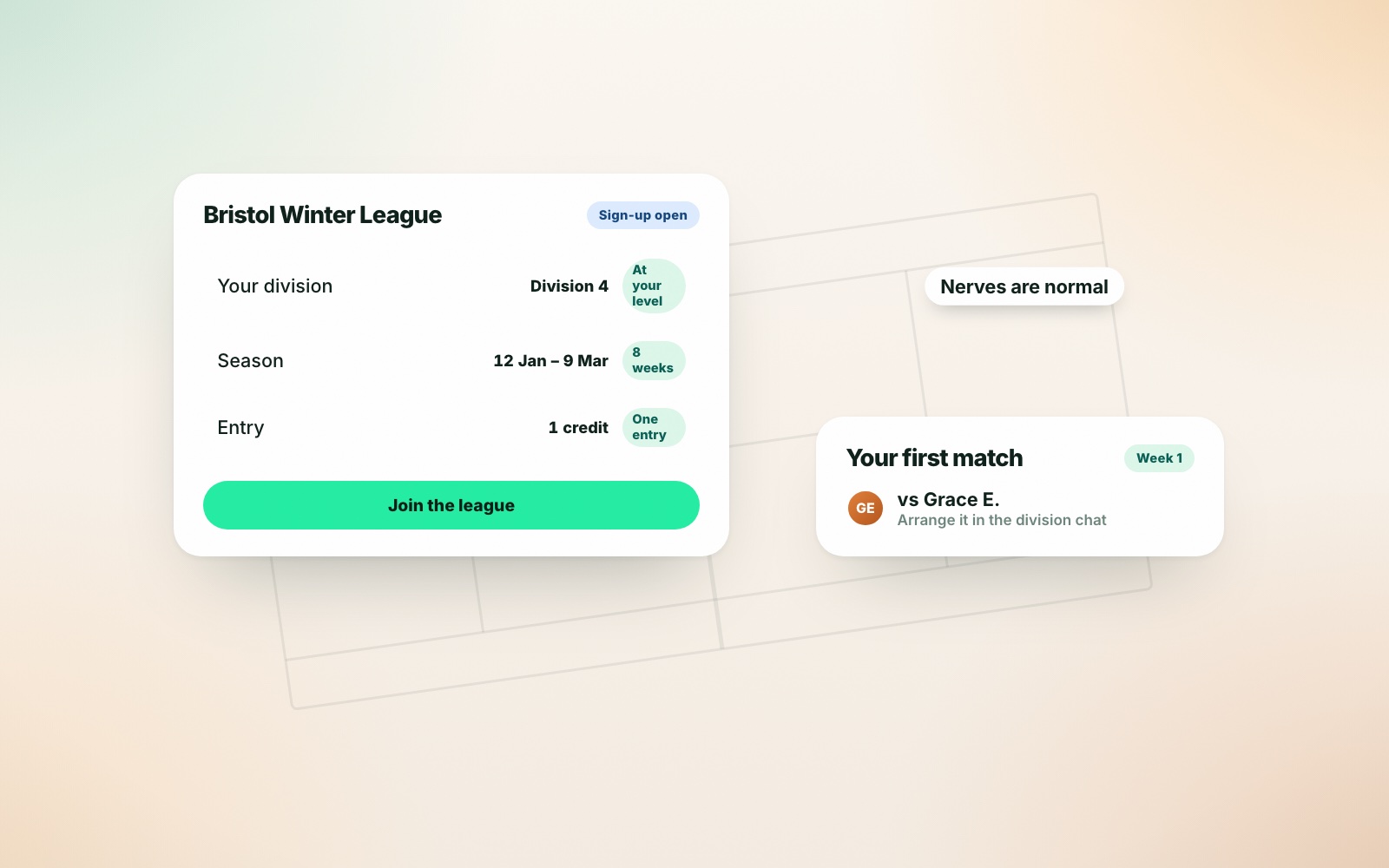
Practice only matters if it reaches your matches, and friendly sets with the same partner tell you little. Play people at your level with a result on the line. In the UK, The Ladder places you in a league division with players at your level and builds your Skill from confirmed results. If that is new to you, read how to start playing competitive tennis as an adult.
The number to watch: unforced errors and points won in a filmed match once a month. Over a season, your results.
How long improvement takes for adult players
Be realistic and you will not be disappointed. On two sessions a week, a single priority usually shows a clear change in its number within four to six weeks. Seeing it hold in matches takes two or three months. A noticeably better all-round game is a season’s work.
Film the same kind of session once a month and compare in Trends. Monthly is enough. Checking after every hit only shows you noise. If you have been away from the game, returning to tennis after a break covers how to build back sensibly, and how to get better at tennis fast has more on structuring practice.
Adults have one real advantage over juniors: they can follow a plan.
What video can’t do for an adult learner
Video tells you what happened to the ball and, with mechanics, how your body moved. It does not teach you a stroke from nothing. ContactFrame does not analyse grip or racket-face angle, and those are the foundations adult learners most often have wrong. It also does not coach you during play.
So use both. A block of three or four lessons to set the basics, then your own measured practice between them, is a sound and affordable pattern. Take your session to the lesson. A coach who can see which shot is failing, and by how much, will spend the hour on the right thing. And listen to your body: build up gradually, warm up properly, and see a professional about any pain that lingers.
Common questions
Can you get good at tennis as an adult?
Yes. Adults learn more slowly than children in some ways but practise more deliberately, and steady improvement is normal at any age. The players who progress are the ones who practise with a purpose and play regularly against people at their level.
How many hours a week do I need to improve at tennis?
Two focused sessions a week is enough for most adults to see progress. One session of structured practice and one match is a good balance. An hour with a clear aim beats three hours of casual hitting.
What should adult tennis players work on first?
Whatever loses you the most points, which for most club players is consistency on the weaker groundstroke or the second serve. Film a match to find out which it is before you decide. Working on a favourite shot is the common mistake.
Do I need a coach to improve as an adult?
You can make real progress on your own with good practice habits and honest measurement. A coach is still the quickest way to fix technique, especially grips and swing shape. A few well-timed lessons, with your own data to hand, are usually enough.
Is AI tennis analysis useful for adult beginners?
It is useful once you can sustain a short rally and serve into the court. From then on, seeing how many shots land in and where they bounce helps you practise the right thing. Complete beginners gain more from a few lessons first.